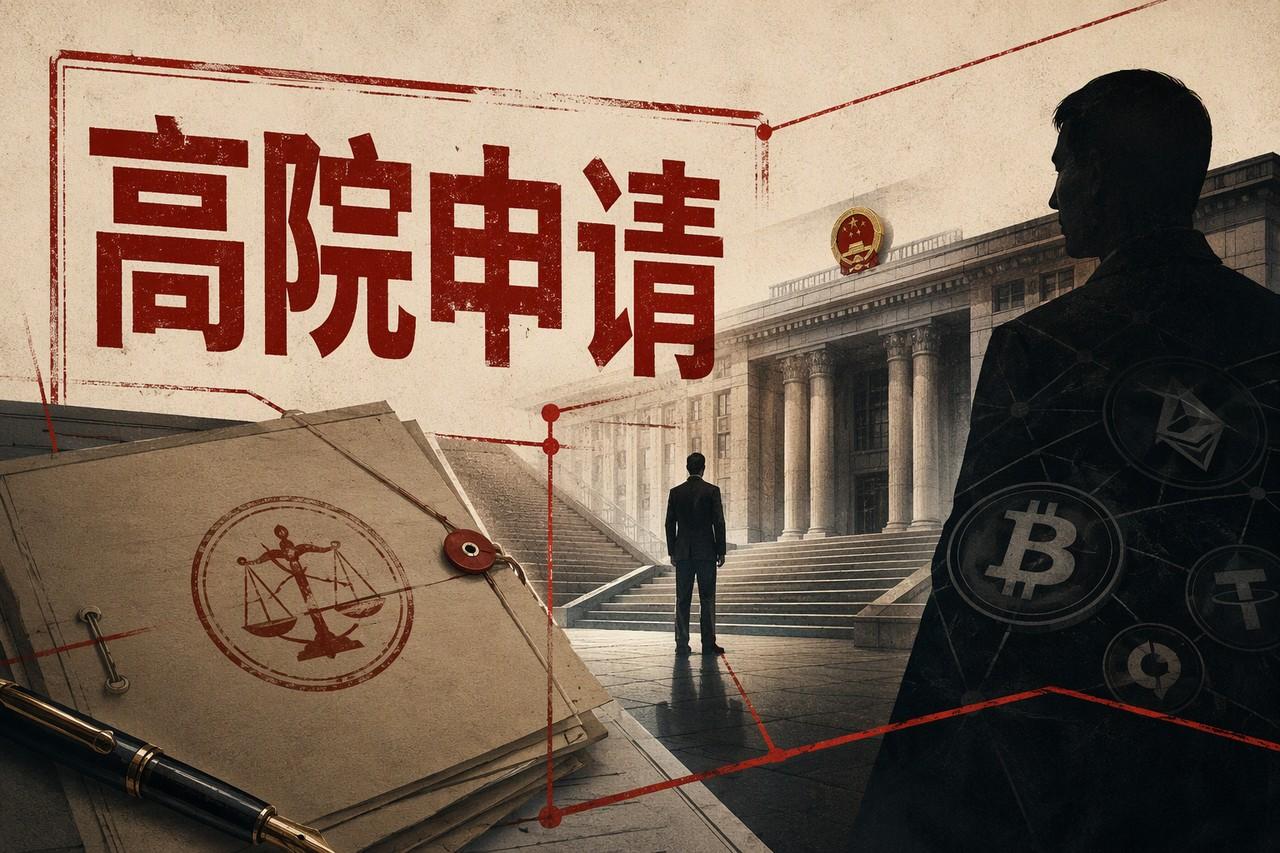
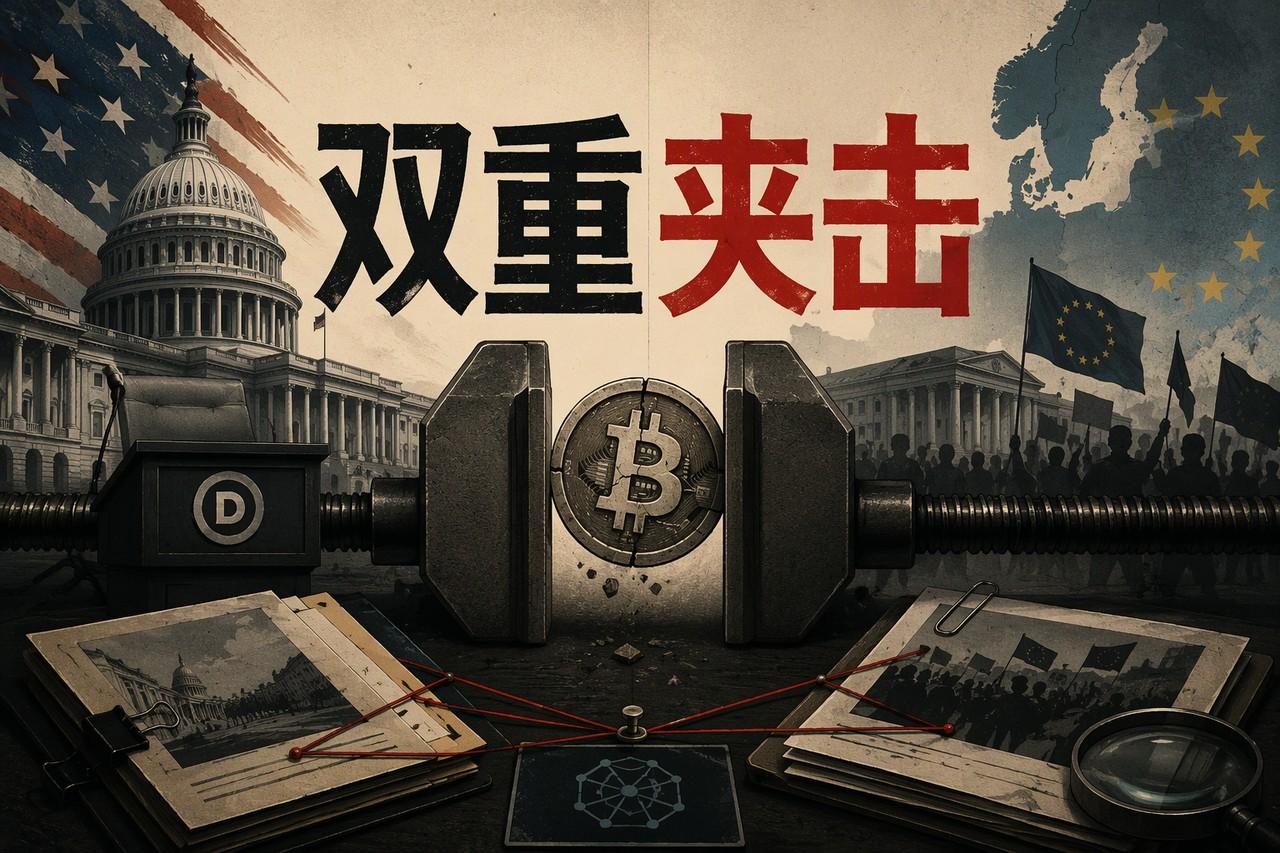
A series of recent actions from Brussels to several leading exchanges has pulled the cryptocurrency industry back into the narrative of "regulation and self-rescue": the European Commission announced the establishment of the EU Crypto Sanctions Task Force to specifically identify and combat behaviors that use cryptocurrency assets to evade EU financial sanctions under the existing regulatory framework; nearly simultaneously, OKX founder and CEO Star Xu issued a fund review warning, directly urging users to temporarily avoid transferring funds from MEXC to OKX, and linked this tightening measure to special measures from the U.S. FinCEN, reflecting the platform's proactive adjustment of its risk exposure under cross-border regulatory pressure; at the same time, Coinbase CEO Brian Armstrong chose to discuss "innovation" under the shadow of compliance, publicly supporting the tokenization of Coinbase stock, hoping to provide more people with the opportunity to hold company shares and attempting to extend the boundaries of traditional equity with new asset forms; meanwhile, another giant Binance saw its Chief Financial Officer Kaiser Ng resign, with Justin Yek taking over as CFO, a change observed in the context of intensified regulatory scrutiny and frequent security incidents, becoming a signal for the market to interpret its capital and compliance strategy. These seemingly independent decisions converged in the same timeframe, interweaving intensified regulatory actions, tightening self-discipline from platforms, and leading companies seeking innovative paths within the rules, signaling that the industry is about to enter a high-pressure game of reshaping rules and business models around compliance frameworks.
The EU Takes Action: Crypto Assets Officially Included in the Sanctions Arena
During this global tightening of regulations, the EU has chosen to directly extend the knife into the final weak link of sanctions enforcement. EU Commissioner Maria Luís Albuquerque stated that the establishment of the EU Crypto Sanctions Task Force aims to strengthen the identification and targeting of behaviors using cryptocurrency assets to evade EU financial sanctions. This is not an entirely new set of rules, but rather an extension of the existing financial sanctions framework into the on-chain world: previously focused on banks, brokerages, and cross-border payment channels, the same sanctions logic now begins to cover addresses, custody accounts, and on-chain flow paths, attempting to plug the regulatory loophole of "bypassing banks through crypto." The specific structure and authority of the task force have yet to be disclosed, but its positioning is already clear enough—adding a layer of analysis and collaboration mechanism specifically targeting crypto assets in the sanctions toolbox, transforming the assumption that "someone is using crypto to bypass sanctions" into a prioritized target for crackdown.
Viewed against the backdrop of the EU's increasingly stringent regulatory path for crypto in recent years, this move has significant phased meaning. Previously, the EU was more focused on legislative and regulatory initiatives around anti-money laundering, market abuse, and investor protection, emphasizing risk assessment and behavior norms; the establishment of the crypto sanctions task force signifies that regulation is transitioning from "writing rules" and "assessing risks" to "locking in targets" and "implementing punishments," with pressure on on-chain participants extending from compliance documentation to specific transactions and addresses. For exchanges, custodians, and on-chain service providers serving EU users, stricter address screening, systematic integration with the EU sanctions list, and transaction monitoring surrounding high-risk fund paths will likely shift from "best practices" to "minimum requirements," making cross-border compliance not just a licensing issue, but a question of whether they can withstand scrutiny over the source and destination of every fund under the sanctions enforcement layer.
OKX Emergency Warning: Funds from MEXC May Be Reviewed and Frozen
Just as regulation shifts from "documents" to "addresses," OKX founder and CEO Star Xu personally raised the risk alert to the user interface. He publicly stated: "Please avoid directly transferring funds from MEXC to OKX... funds from related platforms may be frozen for review." The wording does not specify concrete reasons or provide a time window and exemption criteria, but research briefs clearly indicate that this action relates to OKX’s risk management concerning special measures from U.S. FinCEN. In other words, this is an immediate feedback from a leading platform to upstream regulatory signals under the suddenly tightening global compliance atmosphere: it is preferable to first shut down potentially high-risk channels, and then slowly clarify the details, rather than wait until sanctions are enforced to be questioned about each source of funds flowing cross-platform.
Currently, public information has not revealed the scale of the funds involved, nor is there reliable data showing how many accounts have truly faced freezing or been included in review samples, but this warning itself is enough to change users' fund inflow and outflow paths. Once funds from certain platforms or regions enter top exchanges like OKX, they are likely to face greater uncertainty during compliance review, forcing users to replan their fund migration routes and avoid transfer points deemed "high-risk" to reduce the chances of being temporarily locked or subject to long-term review. For the industry, OKX's spontaneous risk control and public reminders mean that the flow of funds is being redefined: on one end are large platforms willing to actively take on regulatory frontline responsibilities and "allow for more checks," while on the other end are counterparties gradually bypassed by mainstream liquidity due to implicit risk labeling. This differentiation will compel more institutions and individual traders to incorporate the question of "whether funds can safely reach leading platforms" into their decision-making, making exchanges that control fund entry the first threshold of compliance screening and risk pricing in the new regulatory cycle.
Coinbase Bets on Equity Tokenization: A Gamble Under Compliance Pressure
During the same timeframe when top platforms redrew the boundaries of fund entry, Coinbase chose an almost opposite path. Brian Armstrong publicly stated, "As the CEO of a public company, I support the tokenization of Coinbase stock... There is no reason to shut out potential new shareholders." Behind this statement lies a proactive restructuring of shareholder composition and participation thresholds: today's Coinbase stock is still primarily circulating in the traditional U.S. securities market, with holders strictly screened by brokerage accounts, region, and identity; once tokenized, placing digitally linked tokens on-chain theoretically opens the door for a whole class of participants who were previously kept out, and introduces more globalized and fragmented potential liquidity for the company’s equity.
However, under the tightening regulatory backdrop, this vision of "allowing more people to hold shares" is itself a high-difficulty compliance experiment. Stock tokenization first touches upon the recognition of its securities attributes: how U.S. securities regulators define the issuance and trading of such tokens, and whether existing approval pathways are still needed; secondly, there is the overlay of trading venue regulation and cross-border issuance—if tokens are to circulate on-chain, they must meet KYC, AML, and investor appropriateness requirements, while also navigating the starkly different regulatory boundaries for "equity tokens" across jurisdictions. Compared to the EU tightening liquidity through the establishment of a crypto sanctions task force and OKX’s funds review warning, Coinbase is innovating asset forms to compete for a broader shareholder base and greater compliance internal liquidity under the same regulatory pressure, this choice of betting on equity tokenization is itself a public answer to the question of whether "regulation and innovation can coexist."
Binance Leadership Change: CFO Transition Reflects Governance Pressure
Compared to Coinbase’s search for a "new story" at the capital market level, Binance’s recent narrative has focused on the most traditional and sensitive variable—executive personnel. Recently, Binance announced the resignation of Chief Financial Officer Kaiser Ng, with Justin Yek taking over as CFO. The official explanation provided is very restrained: Ng has decided to pursue new ventures, and the transition plan is underway without any indication of internal disputes or compliance disagreements. This narrative, which remains at the level of "career choice," serves as both a standard rhetoric in the current environment and a deliberate attempt to maintain risk-neutral external expectations, leaving the market to infer the significance of changes within this limited information framework.
Research briefs place this personnel change against the backdrop of a "recent theft of approximately $6.3 billion in crypto assets," and it is this temporal proximity that has led to increased external questioning of Binance's governance structure, reserve management, and risk control capabilities. However, the brief also emphasizes that the theft incident has only a single source with low credibility, and the specific amount and details have not been corroborated by multiple sources, making it impossible to establish any causal inference regarding the CFO transition based solely on this. The larger context is that global regulatory bodies are strengthening compliance reviews, reserve proof, and customer asset security requirements for top exchanges, and frequent security incidents in the crypto industry mean that any executive changes will be seen as a "stress test" of governance structures, internal risk control systems, and regulatory communication abilities—but for external observers, the true internal decision-making logic remains elusive, and each personnel announcement seems more like a public test of the exchange's governance capabilities.
Regulatory Iron Curtain and Innovation Charge: The Next Chapter for the Crypto Industry
From the establishment of the EU Crypto Sanctions Task Force, to OKX proactively raising the thresholds for fund source reviews, to Coinbase attempting to expand its shareholder structure through stock tokenization, and Binance completing a CFO transition under intense security and compliance pressure, the recent series of actions presents a common picture: on one end are the EU and U.S. regulatory institutions continually ramping up anti-money laundering and sanctions enforcement tools, extending lists and scrutinizing platform compliance capabilities, while on the other end, leading institutions are searching for new survival strategies amidst self-discipline tightening, product form exploration, and governance structure adjustments. It is foreseeable that in the coming period, compliance thresholds and the intensity of sanctions enforcement will only continue to rise, with exchanges and large companies needing to redraw the boundaries of growth in terms of fund security, transparency disclosure, cross-border compliance costs, and tokenization endeavors. For practitioners and investors, what truly matters is no longer just a single positive or negative factor, but a continuous tracking of subtle changes in regulatory trends, interpreting every risk control signal issued by platforms, assessing the feasible paths for innovative asset forms under existing rules, and observing how large institutions' governance structures iterate under pressure, because whoever can maintain clarity and make more refined choices in the narrow gap between compliance and innovation will have a better chance of taking the initiative in the next chapter of industry reconstruction.
Join our community to discuss and become stronger together!
Exclusive Hyperliquid benefits for AiCoin: https://app.hyperliquid.xyz/join/AICOIN88
Exclusive Aster benefits for AiCoin: https://www.asterdex.com/zh-CN/referral/9C50e2
On-chain Telegram community: https://t.me/AiCoinWhaleData
On-chain community: https://www.aicoin.com/link/chat?cid=N6OVMor5g
AiCoin on-chain Twitter: https://x.com/aicoinwhaledata
免责声明:本文章仅代表作者个人观点,不代表本平台的立场和观点。本文章仅供信息分享,不构成对任何人的任何投资建议。用户与作者之间的任何争议,与本平台无关。如网页中刊载的文章或图片涉及侵权,请提供相关的权利证明和身份证明发送邮件到[email protected],本平台相关工作人员将会进行核查。