The two-headed bet of Ripple reflects the anxiety of crypto financiers.
Written by: Teresa Xie, Bloomberg
Translated by: Saoirse, Foresight News
Editor's Note: The crypto industry has been heavily investing in the 2026 midterm elections, hoping for a more lenient and friendly regulatory environment for cryptocurrencies, yet underestimating public resistance to capital intervention in politics. Teresa Xie reviews this political gamble, involving ballots, regulatory expectations, and the crypto market, ultimately providing an answer that is starkly different from what the industry anticipated. Here is the content of the article:
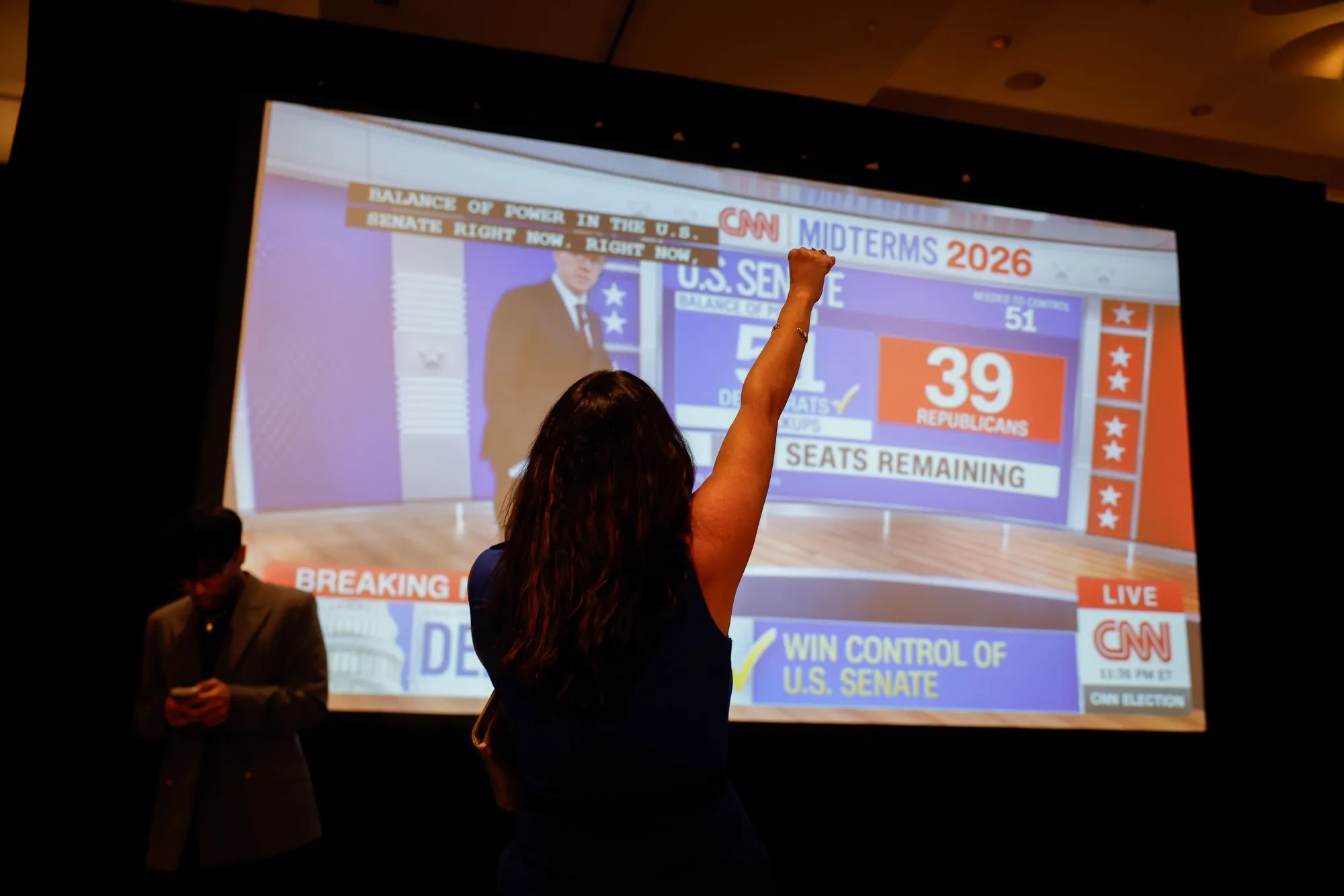
In an election night event in Los Angeles, an audience member cheers as news reports show election results. Photographer: Caroline Brehman / Bloomberg
Dust Settles
Billionaires in the crypto circle have always been unreserved in expressing their views, whether advocating for the advantages of blockchain or promoting various sci-fi like projects.
On political issues, this group, which prides itself as the dominant force in the digital world, insists that the crypto industry should have its own set of regulatory rules. To achieve this goal, they have been core financial backers during the last two U.S. election cycles (including this midterm election).
In 2024, they bet that Trump would adopt a pro-crypto policy path, and this political investment yielded returns as expected; however, this time, they came to realize that money is not omnipotent. The Democrats swept both the House and Senate, leaving the significant donors from the crypto industry in a predicament, mirroring the plight of other tech elites who faced criticism after failed gambles.
Peter Loge, Dean of the School of Media and Public Affairs at George Washington University, stated: "Cryptocurrency is just one part of a larger narrative: the tech industry seems to have gone off the rails, and the billionaires controlling it appear to disregard the interests of ordinary Americans. The Republican Party has tied itself to this image of unrestrained elites, and the crypto industry has been lumped into that label as well."
Candidates Supported by the Crypto Camp Suffer Consecutive Defeats
Regulatory winds may shift again in the future, but thanks to long-term lobbying efforts, the crypto industry has secured some favorable outcomes that are difficult to easily overturn. Trump signed the landmark GENIUS Act, establishing a federal regulatory framework for stablecoins; regulatory agencies have also gradually introduced policies to lower the operational thresholds for digital asset firms. With the Democrats controlling Congress, it is likely to push for stricter regulations, limiting the autonomy of regulatory agencies, although the officials appointed by Trump are still in office.
The public interest group Public Citizen has reported that, as of the first quarter of the 2026 midterm election cycle, crypto firms have donated a total of $189 million to various political action committees, up from $119 million invested in supporting pro-crypto factions in 2024; during the same period, super political action committees focused on artificial intelligence also added an extra $72.3 million for this election.
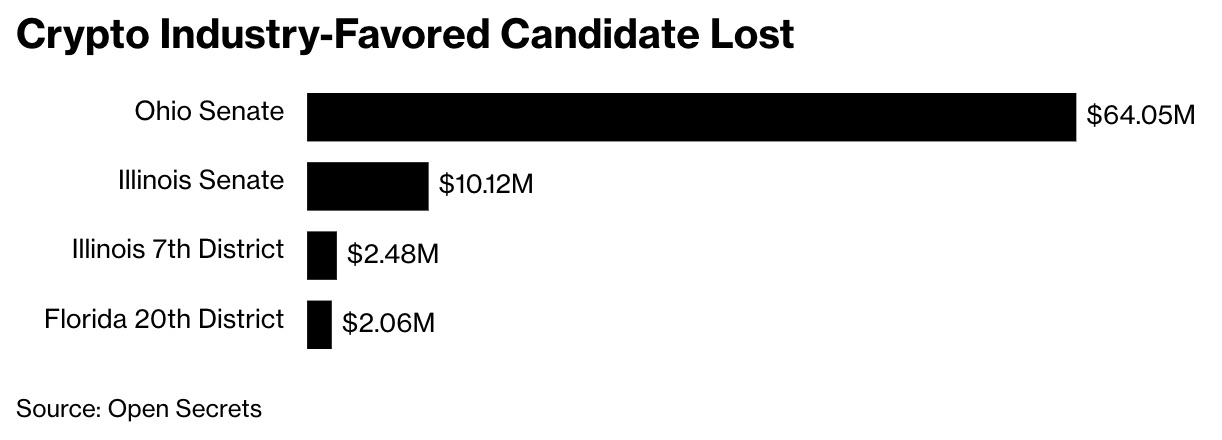
However, the political returns on these huge sums of money have been minimal. In the 12 hotly contested races heavily funded by AI and crypto-related super PACs, nine candidates they supported lost. The most significant defeat for the crypto industry occurred in Ohio: the largest crypto PAC in the country, Fairshake, invested $64 million to support Jon Husted, who ultimately lost to staunch opponent Sherrod Brown.
(Note: PAC, Political Action Committee, is a U.S. political action committee used for fundraising to influence elections; Fairshake is the super PAC for the crypto industry, which can fundraise without limit but cannot directly transfer funds to candidates.)
Molly White, a researcher in crypto and technology and columnist for the communication column "Citation Needed," commented: "Overall, this election was a total defeat for the crypto industry. The crypto side only invested small amounts in a few areas with solid wins, which was basically expected; however, in the swing districts they heavily invested in, the results were quite poor."
Industry propaganda, however, deliberately focused on favorable results. The grassroots advocacy organization Stand With Crypto, initiated with the help of Coinbase, claimed that pro-crypto lawmakers secured 228 House seats and 19 Senate seats.
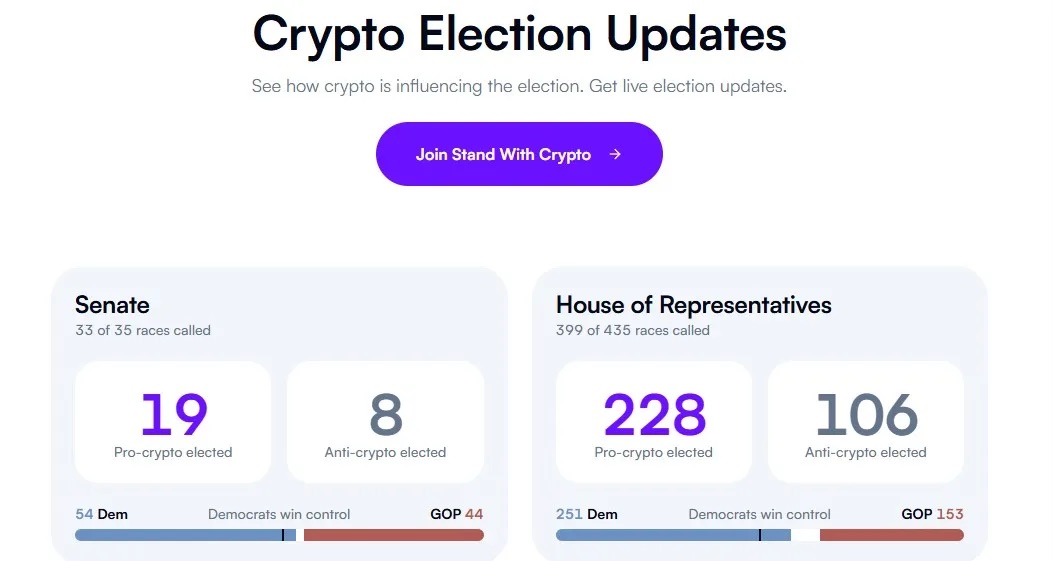
In this election, 19 pro-crypto senators, 8 anti-crypto senators were elected; 228 pro-crypto and 106 anti-crypto representatives were elected, with the Democrats winning control of both the House and Senate.
This crypto political action committee Fairshake stated in an email: "Fairshake played a substantial role in the victories in several competitive elections in 2026, and we will continue to participate in the 2028 elections. Newly elected and current lawmakers will have to make a choice: either protect consumers and safeguard American jobs, or hinder industry progress. We will keep watching; 2028 will be a brand new campaign landscape."
Meanwhile, there have also been hedging behaviors within the industry to spread risks. Even though Ripple remains one of Fairshake's most important contributors, its co-founder Chris Larsen still donated $4 million to support Brown. The crypto industry has been seeking clear and stable regulatory rules for many years, and with the Democrats' significant victory in the midterms, questions have arisen as to whether the political dividends hard-won by the crypto industry can be sustained and whether companies can continue to enjoy a lenient and friendly regulatory environment.
(Note: Sherrod Brown, Democratic senator from Ohio, is a staunch critic of cryptocurrencies. In this election, Fairshake spent $64 million supporting opponent Jon Husted to try to unseat him, but he still won; he advocates for strict regulation of crypto and stablecoins, emphasizing consumer protection, and has repeatedly blocked crypto-friendly bills during his tenure as chairman of the Senate Banking Committee. An interesting point: while Ripple donates large sums to Fairshake, its founder personally funds Brown, which is the hedging mentioned in the article.)
Molly White said: "Crypto capital bets on the right, while voters move to the left with their ballots. The public is highly opposed to external funding interfering in elections; this time, the attempts of crypto billionaires to sway elections with money have become a focal point of media attention."
WLFI Falls Amid Midterm Election Results Drag
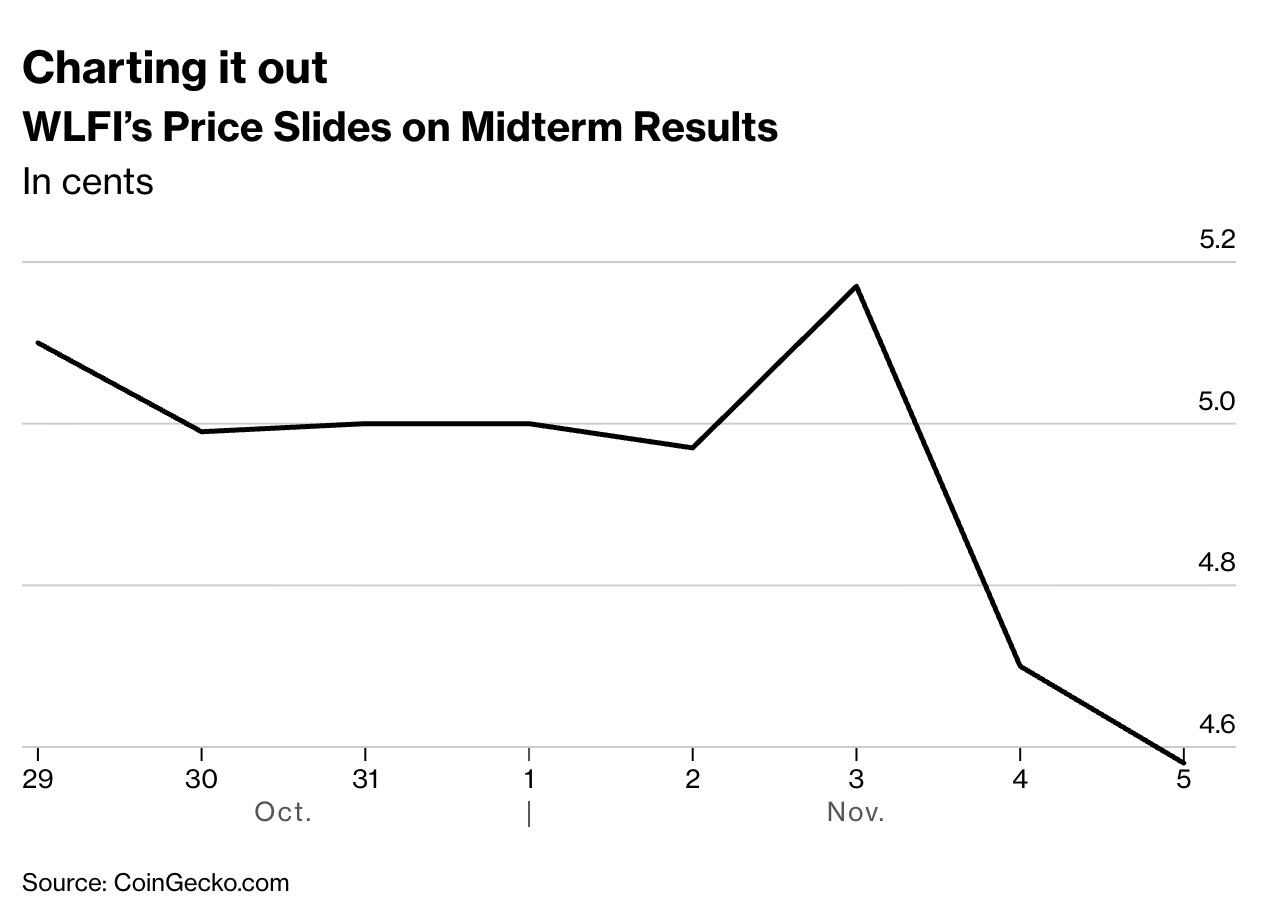
The Democrats' significant victory has severely impacted those crypto assets deeply tied to politics in the market. WLFI tokens issued by World Liberty Financial, co-founded by Trump, fell about 6% on Wednesday; meme coins named after him dropped by about 20%.
免责声明:本文章仅代表作者个人观点,不代表本平台的立场和观点。本文章仅供信息分享,不构成对任何人的任何投资建议。用户与作者之间的任何争议,与本平台无关。如网页中刊载的文章或图片涉及侵权,请提供相关的权利证明和身份证明发送邮件到[email protected],本平台相关工作人员将会进行核查。


