The difficulty of on-chain transactions often lies not in "whether there are tokens to buy," but in how to quickly filter out targets worthy of further research among a large number of new assets and multiple networks.
A popular token may appear on different chains simultaneously; the same project may have multiple trading pools, different liquidity, and different quoted assets; a price-increasing candlestick may also hide risks such as developer history, concentrated holdings, trading taxes, or insufficient liquidity.
Recently, OKX Wallet has undergone several upgrades related to "discovering opportunities" and "executing trades":
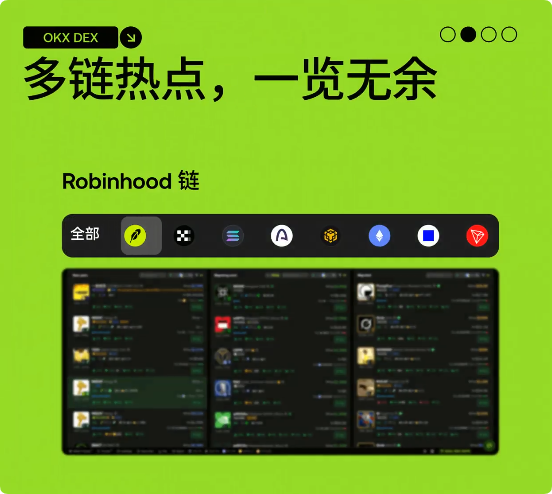
- Supports multi-chain synchronized scanning, scanning multiple chains simultaneously, discovering and trading tokens across networks;
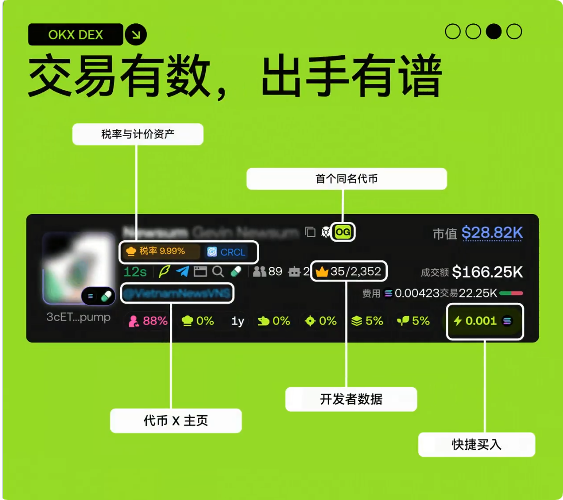
- Adds more comprehensive token information, including OG tags, analysis of Dev's coin issuance history, and direct access to token X homepage;
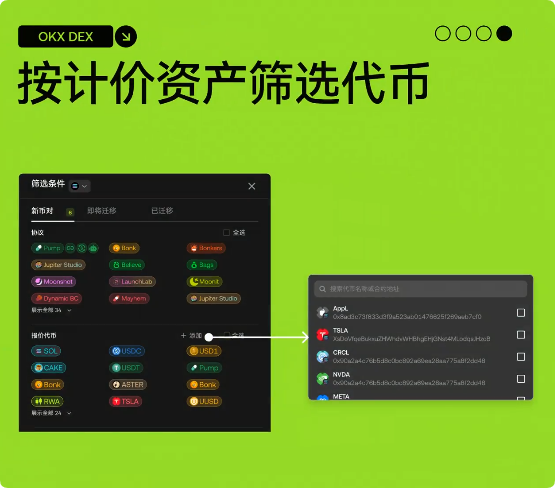
- Supports more flexible customized scanning settings, allowing users to set scanning conditions and preferred quoted assets to filter targets that better fit their strategies.
These functionalities combined mean that OKX DEX is not just an exchange entry point; it is also developing into an integrated tool for “on-chain asset discovery + preliminary data screening + trade execution.”
Why is multi-chain synchronized scanning important?
In the past, when users searched for new tokens, they usually had to open different networks, DEXs, or data pages separately and manually compare prices, liquidity, and trading situations.
This method has three obvious problems:
- Information is scattered: Assets and liquidity from different networks are spread across different pages;
- Opportunity windows are short: Prices and trading depths of popular tokens change rapidly;
- High filtering costs: Users need to repeatedly input contract addresses, switch networks, and verify quoted assets.
The value of multi-chain synchronized scanning lies in putting candidate assets from different networks into one observation process. Users can set their focus conditions first and then simultaneously discover tokens that meet the criteria from multiple networks, reducing the need for back-and-forth switching.
The official product page of OKX Wallet shows that OKX Wallet natively supports over 130 networks and provides functions such as cross-chain exchanging, DEX trading, and on-chain data analysis. The official DEX page introduces that X Routing will comprehensively compare multiple DEXs and liquidity providers, considering prices, slippage, and network fees, and obtain quotations from over 400 DEXs and more than 30 networks.
The practical significance of such multi-chain capabilities is not to guarantee that users will definitely find appreciating assets but to make the asset discovery and execution processes more centralized, comparable, and actionable.
“Discovering opportunities” does not equal “buying directly”
Scanning tools can help users see target tokens faster, but the faster the speed, the more data validation is needed.
The information density of new assets on-chain is very high, and at the same time, there may be:
- Prices rising rapidly;
- Trading volumes surging temporarily;
- New wallets concentrating purchases;
- Liquidity pools increasing or decreasing quickly;
- Increased social media heat;
- Changes in token contracts and developer addresses.
Any one of these cannot be used as a buying reason alone. A more reasonable usage method is:
Scan chain to discover candidates → Read token information → Check liquidity and trading structure → View project social channels → Assess slippage and risks → Then decide whether to trade.
The addition of token information and customized filtering features in OKX DEX fits perfectly into this process.
OG tags: Can be used as clues, but not a safety certification
The official updates mention that a new OG tag has been added to token information.
In the discovery of on-chain assets, OG tags can usually help users identify addresses and project clues with early participation, ecological history, or specific community backgrounds. However, users should be aware:
- The specific definition of the tag should be based on the current page description of OKX DEX;
- OG tags do not equal official endorsement;
- OG identity does not mean the token necessarily has value;
- Early participants may also sell, migrate, or change trading strategies;
- Tags cannot replace analysis of contracts, liquidity, holdings, and trading behaviors.
Therefore, OG tags are better understood as a "research hint" rather than a buy signal.
Users can combine it with the following indicators:
- Address holding changes;
- Early buying costs;
- Current holding proportion;
- Whether there is concentrated selling;
- Links between addresses and project parties or developers;
- Token liquidity and trading depth.
Dev's coin issuance history: looking at projects, not just one K-line
This upgrade also adds Dev's coin issuance history analysis.
For small-cap tokens and new projects, developer history is important background information. What assets a developer address has issued in the past, the lifecycle of projects, and whether there has been rapid withdrawal of liquidity or repeated issuances may all influence the risk judgments of new tokens.
Dev's coin issuance history can help users raise more valuable questions:
- How many tokens has this developer issued in the past?
- Was the liquidity of previous projects sustainable?
- Are there assets that rapidly rose and then quickly dropped to zero?
- Does the developer reuse similar names, contract structures, or marketing methods?
- Do past projects have real products and ongoing development?
- Is the current token's deployment address related to historical addresses?
However, historical behavior cannot directly determine future outcomes. Developers may change addresses, use multi-signatures, or deploy contracts through new wallets, and page data may also experience update delays. The correct use of Dev history is to reduce information asymmetry rather than replace independent research.
Direct access to token X homepage: combining on-chain data with project narratives
The official updates also mention that token information has added X homepage direct access.
For new projects, social media often serves as the main source of announcements, product progress, community activities, and narrative changes. Users can access the project X homepage directly from the token page, reducing the risk of copying addresses and encountering accounts with the same name or impersonating accounts during searches.
However, a direct access point does not mean the social content is necessarily genuine. When viewing the project X homepage, users should still verify:
- Whether the account is an official account;
- Account creation time and history of posts;
- Whether there is a large amount of bot interactions;
- Whether announcements provide verifiable on-chain or product information;
- Whether the community heat matches real trading and user activity;
- Whether links redirect to suspicious websites or request authorizations.
Social media is suitable for helping users understand project narratives but cannot replace on-chain data. Real research should cross-verify X content with contracts, holdings, liquidity, and trading behaviors.
Customized scanning conditions: shifting from "watching the popular" to "finding assets that fit the strategy"
The official updates show that OKX DEX supports users to customize scanning conditions and select preferred quoted assets.
This is the most suitable feature for data analysis users in this upgrade. Because different users define “opportunities” differently:
- Short-term traders may pay attention to sudden increases in trading volume;
- Trend traders may focus on price breakthroughs and synchronized increases in liquidity;
- Early project researchers may focus on new deployments, early addresses, and developer history;
- Low-risk users may care more about liquidity depth and lower slippage;
- Ecological participants may only want to observe a certain chain or a certain type of quoted asset.
The value of customized scanning lies in pre-emptive filtering logic, allowing users to define conditions first and then discover assets, rather than being led by a single popular list from the platform.
A relatively complete screening framework could include:
Price conditions
For example, focusing on price fluctuations, breakthroughs, and retracement levels over a certain time period. However, price signals must be combined with liquidity; otherwise, small trades may also create false fluctuations.
Trading volume conditions
An increase in trading volume may indicate growing attention, but it may also stem from short-term volume manipulation or high-frequency trading. It is important to observe whether the trading volume is sustained and whether the buying and selling directions are balanced.
Liquidity conditions
Liquidity directly affects actual execution. When liquidity is too low, even if page quotes look good, large trades may result in severe slippage.
Network and quoted asset conditions
Users can choose preferred quoted assets based on their own assets and trading habits, reducing unnecessary exchange steps. Also, confirm which network the target token is on and what type of Gas asset is required for trading.
Address and developer conditions
Combine OG tags, Dev issuance history, and changes in holding addresses to filter out projects with overly vague background information or high historical risks.
Transaction execution on OKX DEX: quotations are not just about price
The official page of OKX DEX explains that X Routing will aggregate multiple DEXs and liquidity providers and seek better execution paths by splitting orders, comparing prices, slippage, and network fees.
For cross-network and multi-pool trading, this aggregation mechanism can reduce the manual workload of comparing different DEXs for users. When executing trades, users should still look at:
- Expected final quantity;
- Price impact;
- Estimated slippage;
- Network fees;
- Routing paths;
- Transaction deadlines;
- Authorization and contract interaction content.
“Best quotes” are not an absolute guarantee. The market may change before confirming a transaction, while insufficient liquidity or rapid price fluctuations may also lead to transaction failures. The official explanation states that excessive slippage, insufficient network fees, and repeated transaction submissions are all possible causes of transaction failure.
Data-driven token discovery process
For users of news media and data analysis platforms, the new features of OKX DEX can be organized into a five-step research process:
Step 1: Multi-chain scanning to establish a candidate pool
Scan based on the focused networks, quoted assets, trading volumes, price changes, and liquidity conditions to first establish a pool of candidate assets.
Step 2: Check the basic information of tokens
View OG tags, Dev's coin issuance history, token X homepage, and contract addresses to confirm token identities and project backgrounds.
Step 3: Observe the trading structure
Analyze liquidity, changes in trading volumes, buying and selling depths, concentration of holdings, and the behaviors of large addresses to distinguish real demand from short-term noise.
Step 4: Confirm trading costs
Compare the price impacts, slippage, and network fees of different routings. For small-cap tokens, trading costs may significantly affect the final outcomes.
Step 5: Small-scale validation, then decide whether to expand
If you decide to participate after your research, you can first verify actual transaction prices, liquidity, and contract behaviors with small trades, rather than using large positions just because scanning results look strong.
This upgrade is most valuable for three types of users
1. Users interested in early assets
Multi-chain synchronized scanning can reduce the time spent switching between different networks, while Dev history and OG tags provide faster background clues.
2. Users tracking trends and fund movements
Customizing scanning conditions can help users set preferences for trading volume, price, network, and quoted assets, which is more suitable for continuously monitoring the market rather than conducting one-time searches.
3. Users needing cross-chain trading
OKX Wallet supports multi-chain asset management and DEX aggregation, allowing users to observe and trade assets within the same wallet, but they still need to confirm the network, gas, and final quotes before each trade.
Three misconceptions to be wary of
Mistake 1: Tags equal official endorsement
OG tags, Dev history, and X homepages are merely informational tools and cannot guarantee asset safety or price increases.
Mistake 2: Scanning speed equals trading advantage
Seeing tokens faster does not mean profiting faster. The earlier an asset is, the more it often accompanies high uncertainty, liquidity risks, and contract risks.
Mistake 3: Aggregated quotes equal no slippage
DEX aggregators can optimize routing, but cannot eliminate market volatility, insufficient liquidity, and price impacts. Users still need to control transaction sizes and slippage tolerance.
Conclusion: True "speed" means efficiency from discovery to validation to execution
The core of this upgrade to OKX DEX is not just to enable users to see new tokens faster, but to attempt to connect the key links of on-chain trading:
- Multi-chain synchronized scanning reduces information dispersion;
- OG tags and Dev's coin issuance history supplement project backgrounds;
- X homepage direct access links on-chain data with project narratives;
- Customized scanning conditions adapt to different trading strategies;
- DEX aggregation routing assists in comparing prices, slippage, and network fees.
For data analysis users, the most valuable approach is not to see a signal and immediately buy, but to establish a set of repeatable decision processes:
Discover faster, validate more thoroughly, execute more cautiously.
Exclusive benefits for AiCoin users
Use OKX Web3 wallet to "invest in assets worldwide"!
Bind invitation code 【AICOIN88】 to enjoy a 20% reduction in trading costs (Gas optimization and other benefits)!
Download/upgrade OKX Web3 wallet now and catch the trend:
https://jump.do/xlink?checkProxy=true&proxyId=24
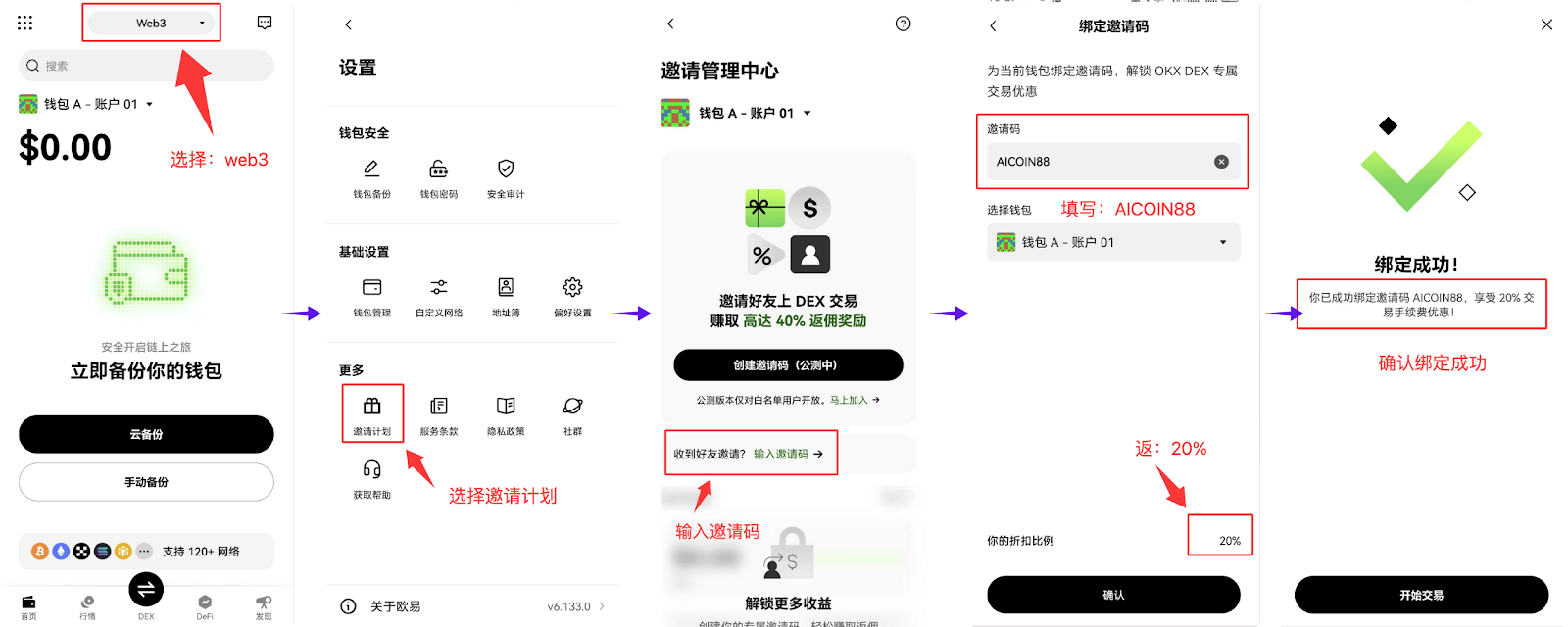
Use the exclusive invitation code 【AICOIN88】 to bind OKX wallet, and it can also be easily operated on the web!
https://web3.okx.com/ul/joindex?ref=AICOIN88
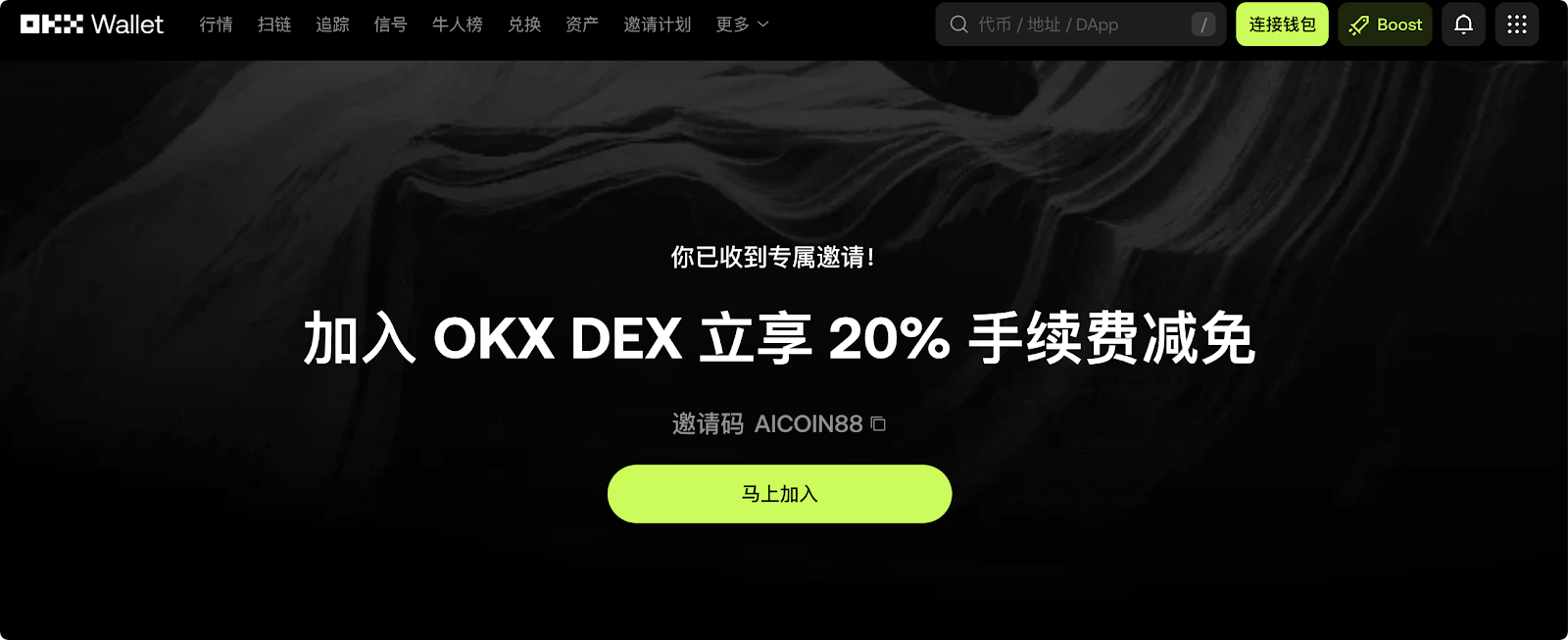
Don't wait, set up OKX wallet, bind discounts, and unleash new wealth!
免责声明:本文章仅代表作者个人观点,不代表本平台的立场和观点。本文章仅供信息分享,不构成对任何人的任何投资建议。用户与作者之间的任何争议,与本平台无关。如网页中刊载的文章或图片涉及侵权,请提供相关的权利证明和身份证明发送邮件到[email protected],本平台相关工作人员将会进行核查。