In the past two years, the most common statement we've heard from robotic companies is: there's a huge shortage of data.
While robot companies are still exploring models, algorithms, data, and deployment, a Silicon Valley company that does not produce robots has turned robot data into a business with hundreds of millions of dollars in annual revenue.
From $1 million to $250 million, a 250-fold increase happened in just a year. This data company is called Maxinsights. It allows ordinary people to wear cameras to record daily tasks like cooking, folding clothes, and cleaning, and then converts these videos into training data that robots can learn from.
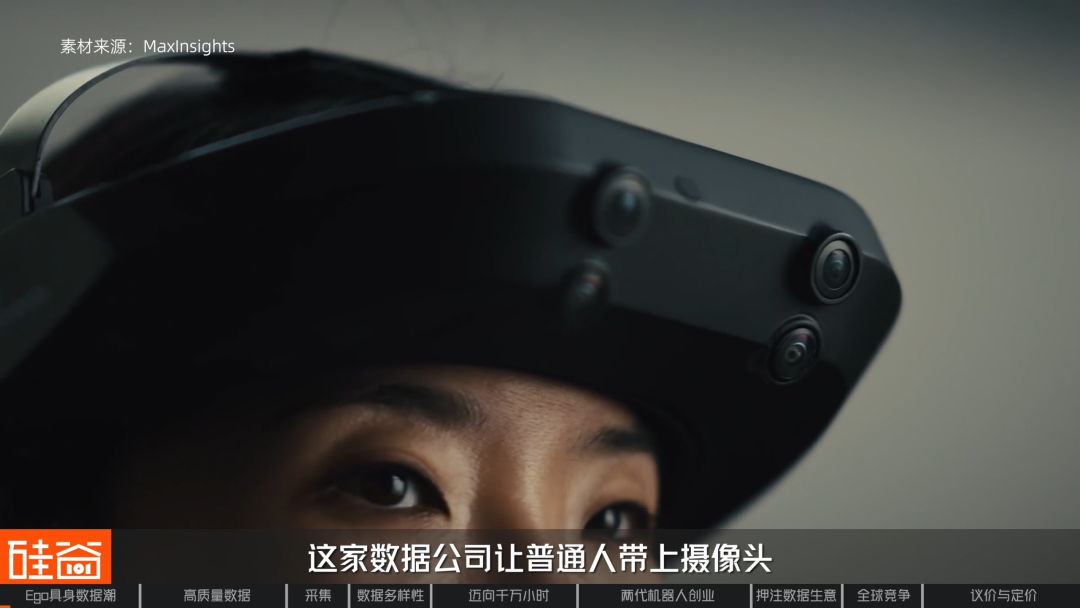
Today, they have accumulated 2 million hours of human first-person perspective data and established a network covering 4,000 data collectors worldwide, while the company's data collection operations team has fewer than 10 full-time employees.
We also recently interviewed Dyna Robotics, a Silicon Valley robotics company that claims to have found the robot's scaling law through 1 million hours of human first-person perspective data, with the next step being 10 million hours of data.
As the robotics industry begins to validate its data scaling law, does this mean we are witnessing the birth of the next Scale AI in the robotics field? In this article, we talked with Maxinsights founder Yuan Yuguang, starting with his experiences of two generations of robotics entrepreneurship, to the current business model of robot data, global data collection management, and data technology, discussing this newly started surge in robot data.
This article is a video rewrite. Welcome to watch the following video.

Chen Qian: Yuguang, welcome to Silicon Valley 101. I've heard that you are now one of the companies with the highest data business revenue in the robotics industry. What is your main business?
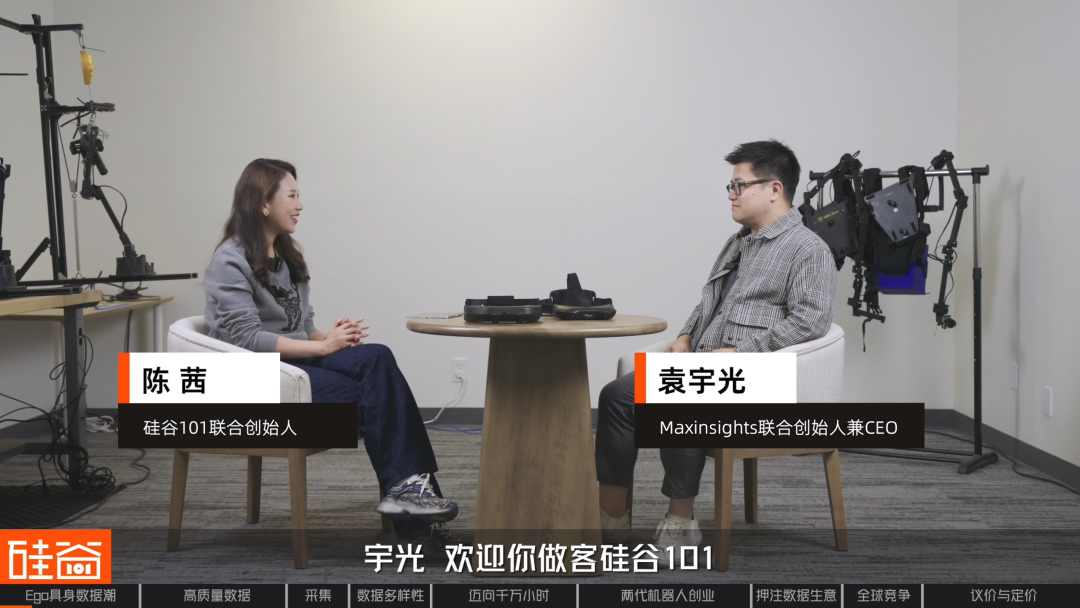
Yuan Yuguang: We mainly focus on human data. We convert human data into data usable by robots to help leading robotics companies train their models.
Chen Qian: What is the current scale? That's the annual recurring revenue (ARR) mentioned in Silicon Valley.
Yuan Yuguang: Our ARR (referring to the forecast for 2026 annual recurring revenue) is expected to reach about $250 million.
Chen Qian: Then the growth this year should be very rapid.
Yuan Yuguang: Yes, we were only at about $1 million last year, and this year's growth rate is very fast. This is also related to industry development—many clients have already used more high-quality data to help with model training, gaining some basic understanding.
These models not only perform better but also use at least 1 million hours of data. So currently, we can see that the Data Scaling Law in Physical AI has already been achieved.

Chen Qian: Over the past two years, I have consistently heard the robotics industry say it lacks data. In 2025, everyone mentioned the lack of teleoperation data, but recently in Silicon Valley, I've seen that everyone is starting to bet on human-centric first-person perspective data.
Yuan Yuguang: Indeed, some changes have taken place between 2025 and 2026. In early 2025, clients were working with us to develop new methods to help physical intelligence land in a more scalable way.
At that time, we explored many types of data, including teleoperation, simulation, egocentric data, and even glove data. We then found that, except for first-person perspective data, most data either had scaling limitations, such as teleoperation which always has a ceiling; or there were significant gaps during deployment, like the well-known Sim-to-Real problem.
When we thought about scaling, we realized if we could turn the special skills of each person into skills for robots, the scope for imagination would expand.
In 2025, as the foremost people in this industry, our first order was for 200 hours. At that time, 200 hours was still an abstract concept for us.
Chen Qian: Was it teleoperation data?
Yuan Yuguang: No, it was first-person perspective data.
Chen Qian: Can you disclose who the client is?
Yuan Yuguang: It was a leading large model company in the US. They were also exploring and we tried various types of data together, eventually settling on human first-person perspective data.
There were several reasons: First, it was useful; second, it could be scaled quickly; and third, it could convert some hidden human skills into new knowledge and skills for robots. Connecting these dots reveals that to truly achieve AGI, robots need to turn human thoughts into machine thoughts that can be realized.
Chen Qian: What are these hidden human skills?
Yuan Yuguang: Take folding clothes, for example—there might be hundreds of ways to fold clothes globally. If they are combined, the robot can iterate and fold a simple piece of clothing using various human methods.
The advantages are: first, it can fold more efficiently; second, it can be more reliable; and third, it can fold different items. I believe this greatly enhances the foundational intelligence of the robot itself.
Chen Qian: It essentially achieves its generalization through the first-person data approach.
Yuan Yuguang: Yes. Last year we noticed that this data can add some simple generalization to the models.
From the initial 200 hours, by mid to late last year, we accumulated a total of 20,000 hours, which is a 100-fold improvement. By early this year, those 20,000 hours became 200,000 hours. So as a pioneer in the industry, we've already taken three steps.
We discovered that pain points have changed in this direction: It shifted from lacking data to lacking high-quality data. Today, many people are still saying, "I have a lot of data", but what really determines whether you can stand your ground in the industry is the quality of the data.
Chen Qian: Let's clarify the categories: you collect the human-centric, first-person video data? How is that data collected?
Yuan Yuguang: Yes, this data comes from people's daily lives and is collected using head-mounted devices. This is our previous generation of products, and this is our latest product, which is worn on the head to record the entire hand's movement. This hand movement becomes our raw data, which after our high-quality processing pipeline turns into high-quality data.
Chen Qian: I saw that the previous generation equipment has six cameras. What is the field of view?
Yuan Yuguang: 270 degrees.
Chen Qian: Why 270 degrees?
Yuan Yuguang: This was also part of our early accumulated know-how. Initially, we used GoPros, small cameras. At that time, the data we collected was very real but uncontrollable, because in real life, your head sways and your hands might leave the frame. So we used a wide-angle view of 270 degrees to ensure that the hand stays at least in the frame to capture more and richer surrounding environment information for the models.
Chen Qian: There are two on each side and four in the middle. Why design it this way?
Yuan Yuguang: The four in the middle primarily capture the hands and some body parts, providing more information to the models. Human-centric data isn't just hands; it also involves body posture, so it includes pose tracking and hand tracking. In the future, the device will also provide richer information to assist the model in all-around tracking.
Chen Qian: So during collection, a collector needs to wear this helmet. How many hours do you collect in a day?
Yuan Yuguang: Our collection time is relatively long. We use relatively professional collectors and collection teams, which is somewhat different from the industry. Many companies now have their own outsourced collection networks, similar to the way Digital AI used to do: mobilizing people around to earn some supplementary income.
For us, data collection feels more like DoorDash, or Meituan in China. During collection, you need vast, high-quality, and diverse data, so it's essential to directly manage the collection teams. This direct management helps the team achieve higher quality and higher output, to gain a better position in the industry.
Chen Qian: This part is especially important; the management of the entire data collection team. We can discuss it in detail later. Let's continue with the data collection equipment: what are the differences and upgrades in the new generation compared to the previous generation?
Yuan Yuguang: It is lighter now, it’s more lightweight, and its battery lasts longer.
Chen Qian: It seems to be smaller, even.
Yuan Yuguang: Yes, the new product will be quicker to calibrate, resulting in more accurate information and results.
Chen Qian: I see it has only four cameras.
Yuan Yuguang: Yes, four is enough.
Chen Qian: So why did you need six initially, and now just four?
Yuan Yuguang: It’s actually an iterative process. With more cameras, people think there will be better output. But we also considered that the industry needs to move toward cost optimization in the future, so we aimed for a more optimized cost structure while still capturing equivalent information.
Chen Qian: Are the pixels the same for both generations of cameras?
Yuan Yuguang: Yes, similar. So reducing to four definitely lowers the cost.
Chen Qian: For the wearing experience, is there any difference?
Yuan Yuguang: This is very lightweight, and when worn, it feels like a cap. And there’s an app on your phone that you can directly connect to.
Chen Qian: So when I look up, down, left, and right, it follows my gaze.
Yuan Yuguang: Yes, and no matter how you move, your hands won’t leave the frame. We aim to make the collection approach easier to scale through hardware design.
Chen Qian: It's particularly interesting. So how many hours of data can you collect right now?
Yuan Yuguang: Our maximum monthly capacity can reach 450,000 hours.
ChenQian: So how many hours of data do you currently have?
Yuan Yuguang: Close to 2 million hours.
Chen Qian: What scale does this represent in the first-person perspective data industry? Is it the most?
Yuan Yuguang: Yes, it is the most and comparatively high-quality first-person perspective data set.

Chen Qian: You emphasize high quality. I've heard researchers from robotics companies say that some suppliers claim to have thousands of hours of data, but when used for training, they find the quality too low to be useful. How do you assess data quality?
Yuan Yuguang: Yes, quality itself is an iterative process. At the start of 2025, we did not have a clear concept of quality, but by today, we have a very rigorous quality pipeline that contains several main components.
First, the accuracy of tracking information must be high, reaching the millimeter level. Second, the data must have sufficient diversity to provide more varied information for the model. Third, there must be a certain quantity; providing only one hour per day is definitely not enough for clients. These three aspects combine to form a complete data package.
Besides the tracking accuracy that contains a lot of language annotation information, the videos themselves also need to contain meaningful task outputs. For example, playing with a phone or scratching various body parts aren’t effective outputs. Valid events, accurate tracking, and precise annotations packaged together comprise effective, high-quality data.
Chen Qian: After the collectors wear the helmet to complete tasks and record videos, what other processing do you need to do after receiving them before delivering to clients?
Yuan Yuguang: After collecting all the raw data, it needs to go through a long and complex data processing pipeline before it can be used by clients. The resulting sets from this pipeline are called Training-ready Datasets or High-quality Datasets, which can be used for training right away.
In the process, we annotate the hands, understand the videos, conduct language annotations, and index the entire video to classify what it is. Finally, we require QC (quality check), and we will also validate data quality through a human-in-the-loop approach.
Chen Qian: What is the elimination rate or screening rate from the raw data entering the pipeline to becoming trainable, deliverable data?
Yuan Yuguang: Honestly, this figure is difficult to gauge. Many of the screened data, such as those filtered through human participation, will also serve as part of subsequent processing formulas that return to the pipeline for reprocessing. We categorize the confidence level of data into different levels corresponding to different client requirements, so the entire dataset has various classifications.
Chen Qian: Are there some clients with high requirements, while others are more accepting of lower quality data?
Yuan Yuguang: Theoretically, all clients need high-quality data.
Chen Qian: Who gets the low-quality data?
Yuan Yuguang: It's just that clients have different requirements. We call relatively lower quality data more General Datasets, which will return to the pipeline for reprocessing. We will not give clients low-quality data.
These low-quality data can help us reassess what problems arose in the annotation process, and how the data pipeline should iterate. Today, our pipeline has gone through about six or seven iterations, which is the most critical part of the industry.

Chen Qian: Earlier, you mentioned three categories: teleoperation, first-person perspective, and synthetic data. What is the difference between first-person perspective data and UMI?
Yuan Yuguang: UMI data uses a hand holding a gripper to match its shape to that of a robot's gripper for direct retargeting. UMI also combines first-person perspective data; this is currently a popular method.
First-person perspective data is raw hand data, with no gripper involved; that is the distinction.
Chen Qian: Why use a gripper?
Yuan Yuguang: This depends on the three stages of model training. People know about pre-training, post-training, and now there is mid-training too. UMI is more frequently used in mid-training or even post-training.
The gripper is currently a more common approach because it is relatively more reliable for robots; of course, there will be more sophisticated hand designs in the future. Our first-person perspective data can correspond to both grippers and hands. UMI can directly redirect to the grippers, which is faster and more efficient.
Chen Qian: It’s akin to UMI being better suited for gripper robots. If my humanoid robot uses a five-finger dexterous hand, there's no need for the gripper UMI data.
So why combine first-person perspective data with UMI? Is it to hope the trained robots can operate both dexterous hands and grippers?
Yuan Yuguang: It really does depend on the robot's configuration. Some lean towards grippers and rely more on UMI; others mainly use dexterous hands, so redirecting directly from human hand shapes works better as they are similar.
Chen Qian: Is there a cost difference?
Yuan Yuguang: The data collection costs are not vastly different; the primary differences lie in the intermediate data processing pipeline. The collection efficiency of UMI is much lower than that of bare-hand data.
Chen Qian: Because using a tool to complete tasks is undoubtedly less convenient than using hands directly.
Yuan Yuguang: Correct, you wouldn’t cook with two grippers.
Using UMI for collection does reduce efficiency, but the processing during the data pipeline is relatively straightforward. Bare-hand data is very real and uncontrollable, with many edge cases, which means the pipeline needs to address these issues. For instance, hands are often obscured, sometimes you can’t see the hand, or multiple hands appear in the same shot, such as when we shake hands, making it very difficult to get stable hand outputs.
Therefore, the pipeline must be very robust to provide high-quality data.
Chen Qian: Currently, what data are clients mainly purchasing? Is there an increasing demand for human-centric data this year?
Yuan Yuguang: Fairly speaking, in clients’ data training recipes, there are demands for teleoperation, for human-centric, which is first-person perspective data, and for UMI too. From our observations, there is the highest demand for bare-hand first-person perspective data.
You can imagine that not having to first convert human hands into a gripper intermediate shape, but directly turning human hands into robot dexterous hands to work like a human, opens up much room for imagination.
Chen Qian: In terms of cost, teleoperation is the most expensive, simulation and synthetic data are the cheapest, and first-person perspective data lies in between?
Yuan Yuguang: Theoretically, yes. But we studied simulation data back in 2024. Because synthetic data is not a sellable product, since clients know it is very cheap, easily generated in large quantities, and they can do it themselves, it is not the primary direction for data companies.
Simulation companies can do something like environmental data, data assets, and those should be their true focus. But concerning the data itself, we believe the two main sources currently for buying data from suppliers are teleoperation and human-centric data.
ChenQian: How much cheaper is human-centric than teleoperation?
Yuan Yuguang: Different clients have different requirements. Looking at the overall development of the industry, I think it may be about half as cheap.

Chen Qian: This year, I've observed a trend wherein many world-model companies and those that previously focused on video generation have now transformed into robot data companies, also selling data to robot companies. What position do they hold in this chain?
Yuan Yuguang: We believe that many world model companies are also our clients. They require a considerable amount of real data to generate data and wish to collaborate with us. These companies are interdependent with our ecological niche, which may even elevate the entire industry.
Chen Qian: But if they buy your data and sell it to robot companies, doesn't that create competition with you?
Yuan Yuguang: Yes, indeed. Within the world model system, they will base their generative processes on some straightforward tasks we provide, making various generalizations, ultimately entering the overall data closed loop. To some extent, we are interdependent: we provide more raw data, and they generate videos; we can continue to use our high-quality annotation production line to help them label these videos into processed data usable for clients.
Chen Qian: They currently do not have a data pipeline. What if they build their own pipeline in the future?
Yuan Yuguang: Assuming these companies have a substantial cash reserve, and they want to build a data pipeline today, they are essentially doing what we have already established in 2023. As mentioned before, most of our production lines rely on models, and creating these models requires Ground Truth Data.
We have many ground truth data pipelines that we developed and researched ourselves, this part belongs to truly Proprietary Data, which no one else has. Therefore, even if they were to do it today, they would merely be replicating what we accomplished in 2023 and 2024.
Chen Qian: So there’s a gap of two to three years.
Yuan Yuguang: Yes. This is why we believe that many companies looking to create data have entered the game late, and the leading players have already emerged.
Chen Qian: This gap cannot be narrowed down through other means because this data pipeline is an asset and moat you’ve accumulated over the past two to three years.
Yuan Yuguang: Yes, I believe this is an important moat for data companies. The result of the production line is high-quality data, the process relies on different models, while the models depend on the proprietary data that has been accumulated previously. The scale of this proprietary data, we believe, has already reached a position of relative industry leadership.
Other companies who wish to catch up will require a significant amount of time to accumulate. These aspects belong to the physical process, which cannot be generated instantly.
Chen Qian: Data collection and management of the collection process are also a moat?
Yuan Yuguang: Yes, data collection and management are indeed a moat. A data company requires a robust Vertically Integrated production line—from hardware development and operations to the data pipeline and final output, the entire chain must be connected. Any company wishing to sell data cannot bypass these components.
As mentioned, the video distillation companies lack operations and hardware. For a pure data collection entity, without a data pipeline or proprietary data, it is hard to sustain. Only by connecting all these components can one produce the highest quality, largest scale, and most diverse data.

Chen Qian: This roughly 2 million hours of human-centric data, how many people collected it?
Yuan Yuguang: We have nearly 4,000 collectors globally, directly managed. This model is quite similar to DoorDash, as it allows us to quickly scale and find new scenarios while collecting higher quality data.
Chen Qian: Can you explain this DoorDash model?
Yuan Yuguang: This operation model is quite interesting. Today, companies including Figure are also implementing outsourced networks. We tried outsourcing back in 2025 but identified several significant issues: low quality, slow output, and low production.
In our thinking, operations resemble a factory, but instead of being concentrated in one place, they are spread out everywhere. This is akin to the direct management model of DoorDash: early on, DoorDash had more management over their drivers, directing them on where to go, how to operate, and the system provided directives.
Our operations team is self-built, with limited reliance on external suppliers. The value of suppliers is to provide some rare, uncommon scenarios. A large number of self-built teams help us quickly enter desired scenarios.
For instance, if we need scenarios in hospitals and nursing homes tomorrow, we can issue tasks directly to collectors, allowing them to enter those scenarios and provide quick feedback. If we first look for suppliers and let them arrange, the feedback loop would be extremely slow. This is a rapidly iterating industry; operations must quickly catch up with requirements and provide higher-quality feedback.
Chen Qian: Self-management sounds like a heavy model. What management experience does it require?
Yuan Yuguang: It is quite challenging; managing operations is a particularly difficult task. When we built the operational network, we took many detours. Initially, we also used many external suppliers, setting goals for them to collect thousands of hours.
In January 2026, our goal was 100,000 hours per month; if it fell below 20,000 hours, we wouldn't continue. The final outcome was 18,000 hours per month. So in February, we entered an adjustment period and decided that this approach wasn’t working. I worked with my team to examine how we could output more and higher quality data.
We later realized that the key was to center efforts around the equipment, making surrounding resources orbit around the equipment, as the device is the only resource. First, the device must be accurate; second, it should improve usage efficiency; third, it needs to be used correctly. All our components are developed around the equipment itself.
As previously discussed, we can collect many data in a day. In the entire industry, our equipment usage rate is the highest, enabling us to produce enormous amounts of high-quality data, returning to the production line for further use.
Chen Qian: It sounds like the hardware has to be good, and both training and management must be in place.
Yuan Yuguang: At the same time, technology support is needed; a platform is essential. We have nearly 4,000 data collectors globally, yet less than ten full-time employees manage the data collection operations team—a very efficient management model.
This pattern relies on an intermediary layer called the AI Agent in the Loop platform. It can manage equipment, personnel, and assist them in increasing quality and data output. The backend models rely on our vast amounts of data to provide direct feedback to the collectors; the agent even reminds them when the device isn’t worn correctly.
Chen Qian: The agent is akin to a “little supervisor” overseeing the collection process and offering feedback at any time.
Yuan Yuguang: We call them little helpers.
Chen Qian: "Little helpers" sounds much nicer. Where are these 4,000 collectors distributed?
Yuan Yuguang: They are spread across eight countries: the US, including a team in Los Angeles; also Mexico, Southeast Asia including Indonesia, Vietnam, and Thailand; China, Turkey, and as far as South Africa. To manage this, we even set up our own office in Indonesia.
Chen Qian: 4,000 people is not a particularly large scale; why not concentrate in one country, such as Indonesia or Brazil, and spread out to so many countries?
Yuan Yuguang: This relates to data needs. Models require diverse data to understand different types of data coming from various places. Different countries have different lifestyles; combining these lifestyles ultimately leads to the final intelligence. Thus, we need to gather from different countries, as everyone’s lifestyle varies.
Chen Qian: For example, different dishes being prepared, there’s French cuisine, Chinese dishes, with varying clothing folds, lifestyles, and environments.
Yuan Yuguang: Right, for instance, Southeast Asia often shows long sleeves and hats, while Los Angeles has many short-sleeve outfits.
Chen Qian: Ten people manage 4,000 through an agent; that model is rather interesting. Can you disclose who your clients are now?
Yuan Yuguang: Clients can be categorized into two types. One type is large model clients, like those AI you use every day. Due to certain reasons, we cannot specify names. The other type is clients involved in Robotics Intelligence.
Chen Qian: The large model clients use this data for training robots or for visual reasoning?
Yuan Yuguang: Yes, for training robots.
Chen Qian: So with the launch of Astra, they certainly used a lot of robot data.
Yuan Yuguang: Astra’s direction is particularly stunning.
Chen Qian: After its launch, the entire robotics industry became excited.
Yuan Yuguang: We are very excited too. Large models utilize a lot of first-person perspective data and robot data to help robots gain more generalization.
Robot companies are seeing changes, also starting to consider: whether it's essential to implement and make vertical applications, and what the company's future direction should be. We hope to help these two types of clients attain the foundational infrastructure they need—data, assessments, and future deployments—offering stack-wide support.

Chen Qian: Are you selling the same dataset to these clients?
Yuan Yuguang: We continuously provide licenses for datasets. The dataset expands consistently every day, so it will vary daily.
Chen Qian: Just a few days ago, we interviewed Dyna Robotics. They mentioned when releasing Dyna-2 that they found their Scaling Law using 1 million hours of human-centric data, much of which may have been purchased from you, and you might have sold around 700,000 to 800,000 hours of data to other clients.
From a business perspective, the current model for robot data seems a bit like SaaS. The same set of software can be sold to thousands of clients. If currently, the total amount of human-centric data is only so much, 1 million or 2 million hours, can it be sold to all major model companies and robot companies?
Yuan Yuguang: Data can be reused by clients. If one dataset has been validated by a client, it effectively brings the same, or even higher, value to other clients. Therefore, we must continuously raise our standards.
Chen Qian: If everyone buys the same dataset, then there’s no distinction in data for model training.
Yuan Yuguang: Their training recipes are different. Model architecture and usage vary. I think Dyna, Genesis, OpenAI, and other large companies all have their own sets of training methods. Beyond the data, they have their custom recipes.
Chen Qian: So, whether models can better leverage this data becomes the differentiator for final outcomes. Is post-training also a part of this? For instance, Dyna also collects teleoperation data for use in post-training or reinforcement learning (RL), which is something they have to do.
Yuan Yuguang: We believe so. Pre-training, post-training, and mid-training create feedback mechanisms to enable robots to land better. I saw a statement that 99% is just a starting point. The remaining 1% requires post-training to execute proper deployment.
As data partners, we can provide more varied values during post-training. But this does require closer collaboration with the clients to understand their needs and assist in deployment.
Chen Qian: Are clients mainly using your data for pre-training currently?
Yuan Yuguang: That’s the case at present, but tomorrow it may not be so.
Chen Qian: Why is that? What’s different?
Yuan Yuguang: We think the industry is changing considerably. With Astra 6 emerging, we feel that the basic generalization issues have been substantially resolved, but some long-term tasks, harder tasks still aren’t resolved and remain to be improved. Beyond that, the industry will transition into its next phase.
We believe two significant trends will emerge next year: The first is continued growth in data volume. Our view is that each client will need around 1 million hours as a baseline, with no upper limit set. Different clients have different needs, but generally, it’s a tenfold increase.
On this foundation, some clients will enter post-training. This heavily relies on specific environments, and our operational system can quickly provide various environments and scenarios to help clients test and evaluate hardware. This includes not only the models but also the reliability of the hardware itself. This is also why we are moving closer to clients: not just as data suppliers, but later including model feedback suppliers.

Chen Qian: When I was talking to Dyna, they said after completing 1 million hours with Dyna-2, they wanted to validate at the scale of 10 million hours to see if the Scaling Law still holds. If it does, it may indicate that the direction is correct.
The industry is moving towards 10 million hours of human-centric data, which is a great opportunity for you, but competition will also increase. When do you expect to reach this scale of training set? Can it be accomplished in a year?
Yuan Yuguang: I think it might not even take a year. That’s why we need to establish a sufficiently flexible team capable of producing high-quality data.
A jump from 1 million to 10 million hours, a tenfold increase, tests the operations the most. In outsourced networks, a person may only produce one or two hours of data in a day—how many people would be needed to meet the 10 million-hour demand?
Chen Qian: If you were to produce 10 million hours, how many people would you need?
Yuan Yuguang: I estimate we would need about 3 to 5 times the current number.
Chen Qian: If there are currently 4,000 collectors, would you need around 20,000?
Yuan Yuguang: Approximately between 15,000 and 20,000.
Chen Qian: What are the challenges for the company?
Yuan Yuguang: We are always looking at how to scale quickly, which is critical for company growth. The biggest challenges are threefold:
The first is whether we can maintain data quality while increasing quantity and ensuring diversity. All three need to be considered to see if the pipeline is sufficiently robust and reliable. If we can only produce one or two hours daily, I think we cannot meet the industry’s demands.
Second, given operations across so many industries and countries, can we switch quickly?
Third, based on the first two points, can we understand clients’ specific segmented requirements for 10 million hours? These requirements may be more than one and will iteratively depend on the client’s own needs; how do you work closely with them?
Currently, we have over thirty clients, each with different ideas about data needs. We also suggest how data should be handled and guide future directions. Transitioning from 1 million to 10 million hours requires ongoing communication with clients regarding the data iteration process. We are very keen to be part of the industry, helping the whole sector turn like a flywheel.
Chen Qian: If we liken this to large model data, the initial acquisition cost for Scale AI was not that high, but as model capabilities grew, high-quality research data required PhDs and Masters for annotation, increasing costs significantly.
Will robot data follow this trend: generic, broadly applicable scenarios are relatively cheap, while vertical specialized scenarios will be quite expensive?
Yuan Yuguang: I believe Physical AI will follow a similar route to Digital AI. Today, companies like Scale AI and Mercor provide more data to large language models, and embodied intelligence will move in that direction as well.
The initial 200 hours in 2025 had no limits; anything was permissible. By the latter half of the year, the aim was to collect thousands of hours of simple tasks, moving things around. Today, requests are significantly more demanding. There’s no longer a need for data from synthetic scenarios within a data factory; simple “sweeping” is also out.
Chen Qian: What does “sweeping” mean?
Yuan Yuguang: That refers to acts like wiping a table or glass, which is considered “sweeping.” Today, there’s no longer a need for merely organizing things.
Similar to Digital AI, future needs will demand increasingly complex data. One type aids large models in further enhancement, while the other meets the needs of deployment clients. For instance, if clients want to test in a nursing home, they won't need data from hospitals but rather help testing in nursing homes worldwide to achieve optimal success rates. How to raise the success rate from 99% to 99.99% constitutes our value proposition.
Currently, we have over thirty clients, and we believe we are one of the companies with the most clients in the industry. At the same time, our ARR (forecast for 2026 annual recurring revenue) can reach about $250 million. Industry expansion has indeed brought much joy, but it has also caused many annoyances.
Chen Qian: What bothers you?
Yuan Yuguang: The concern is how to scale rapidly while improving data quality. The infrastructure needed is different from going from 200 hours to 2 million hours, and even further to 10 million hours.
For example, how to set up an upload network more cost-effectively? How to label more effectively? Currently, many industry professionals use large models for text annotations, which are far too expensive and consume a massive budget. That’s why we create our models—to save costs and improve quality.
Moreover, figuring out how to connect individual activities, allowing them to form a network while maintaining large-scale and high quality is daunting—that is what we're considering for our next steps.

Chen Qian: Large language models have exhausted human corpus and data from the internet; will robot data face the same fate? Because robot data is not available on the internet but is collected. From 1 million hours to 10 million hours, where could the upper limit be?
Yuan Yuguang: I believe it will be, but it depends on the data type. Teleoperation has a relatively low upper limit; at a certain level, the quantity will be enough. First-person perspective data has a higher upper limit but will also plateau at a certain point.
Chen Qian: Why will there be a plateau?
Yuan Yuguang: The plateau indicates that under the assumption of the same model architecture, continuing to increase this data will yield very limited benefits in success rate enhancement.
Next, it depends on what you wish to do with the model. If achieving 99% is satisfactory, you may pursue more complex tasks, but improvements on tougher tasks will progress slowly. Additionally, if you wish to elevate from 99% to 99.99%, more professional data will be necessary.
So we believe that future operations will evolve from devices that anyone can wear to an expert network aiding clients in crossing from 99% to 99.99% more rapidly while achieving successful deployments. Humanoid robots must ultimately commercialize, executing applications faster and realizing cost recovery ultimately. Whoever can help clients land quickly will earn trust and orders.
Chen Qian: If the amount of data increases to a certain extent, would the improvements to models be limited, or would the curve smoothen? In that case, where would the value of robotics data companies like yours lie?
Yuan Yuguang: In the later stages. Data is just the starting point; evaluation and deployment are still needed during deployment. This type of evaluation and deployment was absent during the Digital AI era and now requires physical trials in real life.
For instance, after a model is developed, the recent Physical Intelligence released an API, and you’ll want to test: first, where, in which scenarios, and under what circumstances does it fail? Secondly, can it recover after failure? The recovery process will also yield more precious data, helping the model enhance its generalization capability and success rate. These tasks are what data companies can handle.
Looking ahead, envision that when Walmart or Costco utilizes humanoid robots, they’ll desire full-stack support, covering deployment alongside data. At that point, data partners will have immense imaginative potential. When we integrate the data production pipeline, operational networks, and deployment and evaluation platforms to deliver to clients, companies like Costco and Walmart can use this holistic product, realizing deployment akin to today’s industrial robots built by ABB or KUKA.
Chen Qian: So the ultimate vision is to become a full-stack service provider.
Yuan Yuguang: Yes, we are moving in that direction. Data brings high-quality, large-scale data processing capabilities, which reflects deep capability; operations reflect broad capability. Combining both abilities, iterating with clients forms collaborative capabilities.
These three abilities together, in a trinity, enable us to journey further in the Physical AI realm. This is what we continually strive to build and consider for long-term development.
Chen Qian: From a data perspective, what type of robotics company do you think can eventually emerge?
Yuan Yuguang: We hope every client becomes successful.
Chen Qian: So they all come to use your services and buy your data.
Yuan Yuguang: We truly hope every client can succeed; that’s the belief we operate under. I come from the traditional robotics field; industrial robots are reliable, but many involved in programming are merely serving the robots.
We want large model companies to provide higher generalization capabilities. We also hope that the well-known physical intelligence companies we collaborate with can genuinely enter every scene they are capable of. Witnessing that day would bring me immense joy, regardless of our position in the industry. Contributing to industry advancement is the future we wish to see.

Chen Qian: Next, let's discuss your entrepreneurial journey and the path you've taken to help everyone understand why you chose the direction of robot data. After graduating from Jiaotong University, you went to Eaton, then entered the robotics field and started your own business. Why did you choose Eaton at that time? Why robots?
Yuan Yuguang: At the time, I received many offers, but that was a long time ago; I just looked relatively young.
After graduating from Jiaotong University, I also came into contact with Accenture and a consulting company called Booz Allen Hamilton, which later split into Booz Allen and Hamilton, the fourth-largest consulting firm in the world after McKinsey, BCG, and Bain.
However, I wasn’t particularly fond of making presentations or analyses; I wanted to be hands-on and try things, so I chose to enter the automation company Eaton. This is a Fortune 500 company and provided me with excellent opportunities. I’ve been to the US, Mexico, Japan—those experiences significantly influence me today, granting me global perspectives and experience.
Chen Qian: What business did Eaton mainly engage in at that time? What was your position?
Yuan Yuguang: One of Eaton's well-known projects is the power generation assembly for China's C919. It's also a significant electricity supplier in the US, somewhat akin to Siemens or Schneider. For instance, the electrical system in this building is likely from Eaton.
I have held numerous positions: product manager, supply chain manager, marketing manager, and sales roles—nearly every non-technical position. The most significant impact on me came from my four years in Japan, where I encountered many production systems, the most famous of which was the Toyota Production System. It’s a quality control system focusing on how to balance quality control when ramping up production, and I’ve applied these principles to today’s operations.
Chen Qian: What is the Toyota system?
Yuan Yuguang: The Toyota system is referred to as TMS (Toyota Manufacturing System), along with other Japanese names. It is divided into several parts, but most focus on quality: how to maintain quality while rapidly increasing production volume?
For example, there is a process in car production called the PPAP (Production Part Approval Process). While ramping up, quality inevitably suffers, so production must be controlled, then adjusted and controlled again. We view our management operations as factories, but these factories are not located in one place; they are distributed globally.
The underlying philosophy is rooted in the First Principle—this principle remains unchanged. When scaling, quality must be controlled and maintained, pushing it down, which then requires readjustment until a certain level is achieved before managing again. Only then can substantial, high-quality outputs be consistently obtained in a short period.
Chen Qian: What challenges are encountered during the pressure process?
Yuan Yuguang: Many challenges arise. Different scenarios have unique requirements; for example, in embodied intelligence collection, there will be many meaningless tasks: playing with a phone, walking, leaving the frame with hands, chatting with people. There are also cases of incorrect device wear; some people prefer to wear them this way.
Chen Qian: The camera is directly facing the ceiling.
Yuan Yuguang: When worn like this, how is the data processed? There are also numerous edge cases; how do we manage this through the pipeline? Can the scenario maintain diversity?
We’ve observed that having four tables in the corners of a room collecting data from four people yield the highest efficiency when folding clothes: fold a cloth and place it down, then fold again. While efficient, this is not conducive for our management, nor beneficial for client generalization. We have employed many methods to eliminate these problems so that the final output reflects true high-quality data. Clients may be unaware of these subtle details, but we have expended considerable energy to manage these quantity and quality issues.
Chen Qian: This experience comes from your time at Eaton?
Yuan Yuguang: Indeed, I learned how to produce systems in Japan. However, now it is not confined to just one location; production is global.
Chen Qian: Why did you decide to leave Eaton and start your business around 2014?
Yuan Yuguang: I wanted to be a bird that flies freely. After coming out in 2014, my greatest realization was that I was like a bird in a cage, well-fed and comfortable, but always inside a cage. Once I flew out, I discovered the world was vast, overflowing with fascinating experiences, and I was curious. However, sometimes it was challenging to find food, which was quite a painful place at that time.
Chen Qian: What was Mega Gear Robotics that you founded initially working on?
Yuan Yuguang: Building robots. We aimed to create our own low-cost robots. Back in 2014, twelve years ago, ABB, KUKA, Yaskawa, and Fanuc dominated over 90% of the market share in China, which contrasts starkly with today. We saw this as an opportunity and simply wanted to create our own robots to replace the major companies.
Chen Qian: Did you think they were doing poorly, or that their products were too expensive?
Yuan Yuguang: Too expensive. Looking back at today’s pricing, their costs were roughly two to three times what they are now.
Chen Qian: Back then, you were working on large robotic arms and industrial robots, not humanoid robots.
Yuan Yuguang: Correct. At that time, brands like JAKA and Aritet, known for collaborative robots, were not yet prevalent. Initially, we didn't do well; we constructed a bare machine without the casing, with exposed wiring. For the next generation of products, I thought about discarding it as scrap, but I knew I couldn’t settle for less.
Eventually, I met a professor who had some budget, so I asked him if this could be allocated to our project. He asked what we had. In 2014, I had just heard about the term “open source,” so I declared that this robot is open-source. He hesitated for two seconds, asking, "What do you mean by ‘open source’?" I said, "You can make any modifications." He found this appealing because most industrial robots could only be programmed for simple A to B tasks and lacked the capability for deep-level programming. Our robot could be programmed at a deeper level, which appealed to many universities and vocational schools, aiding students' understanding of robotics and kinematics.
Chen Qian: It sounds like what Yushu is doing now: providing the hardware for programming.
Yuan Yuguang: Yes, it turned into a small open-source platform. Sales were decent at that time, and I found it quite satisfying.
Chen Qian: How much were you selling it for back then?
Yuan Yuguang: Close to 200,000 yuan.
Chen Qian: That’s expensive?
Yuan Yuguang: Back then, that price was considered cheap. Under the same load conditions, ABB and KUKA would cost 20% to 40% more.
Chen Qian: With the major "four families" having such a large market share, why were you confident you could outperform them?
Yuan Yuguang: At that time, there wasn’t any confidence—it was a trial run. Wasn’t I looking to be that bird? Once I broke out, my first task was to find something to eat. We kept exploring, tried many directions, starting with robotics, and eventually reached this segment.
Although open-source robots had many school clients, Yushu's success today stems from its persistence. Not everyone shares a positive outlook on the educational sector. Hence, we later shifted focus from hardware to models and computer vision, using many images to create a small model to truly emerge.
Chen Qian: But the models from back then must not be like today’s in any way.
Yuan Yuguang: They differ, and yet share similarities. The models were small back then; the real challenge was acquiring quality photographs. One product we developed needed constant photography. While capturing images seems straightforward, the product’s characteristics are varied. Our goal was to accurately grip one in a unique way, placing it in the same precise location. This requires understanding product shape, and with thousands of variations, that posed challenges. Thus, I began gaining some awareness regarding data.
Chen Qian: Why did you sell your company later?
Yuan Yuguang: That's a good path for founders. I feel founders have three routes: IPO, sell the company, or ensure the company is highly profitable. This gave me insights today about creating enterprises: always begin with the end in mind, think about how to operate finally, and then return to today.
At that time, I didn’t have this mentality; it was about starting from zero, seeing the direction, and simply moving forward—all like walking in a dark forest with no visibility of where to go. Hence, my advice to other founders: first consider what the business model should be and how it can generate profit. Don’t be like me, who opened the cage and flew out. I found it quite painful when I was undernourished and struggled to see the world clearly.

Chen Qian: Was it because you thought the market was limited, as the market for higher education was relatively small, and both hardware and software knowledge about robots was not yet fully prepared?
Yuan Yuguang: Yes. In 2014, or even earlier, in those several years, the industry faced significant challenges. At that time, concepts of embodied intelligence were absent, with most discussions around “Industry 4.0”; do you remember that term?
We subsequently attempted numerous avenues, undergoing about six to seven transformations, including industrial Internet and IIoT, linking robots to create a networked monitoring platform.
Why was the pursuit halted? Because the business model was flawed, and money couldn’t be collected. We quickly established several factories that monitored hundreds of robots, but clients were unwilling to pay, so we had to pivot.
Chen Qian: Is it that they didn’t see the value?
Yuan Yuguang: I believe the cost-paying habit wasn’t established at that time. Distinguishing pain from itch is difficult; clients express “I need this,” but often it’s just an itch that suffices with little intervention, showing reluctance to pay. Only true pain points drive clients to keep spending.
A saying encapsulates this well: when your product is incomplete and nearly unusable, possessing only core features, yet clients are still willing to pay, that’s truly a pain point.
Chen Qian: Back then, did clients tell you what their pain or itch points were?
Yuan Yuguang: I didn’t even inquire about the pain points at that time. I had a small team. We locked everyone in a room and started making calls to get them to try the product, believing they would have needs.
I assumed they had that need. I asked two friends, and they said, “Yes, it’s worth trying.” Their initial question, which I failed to remember but now recognize, was whether the effort would incur costs. I replied, “No, let’s just try it,” and they said, “Okay, let’s give it a go.”
However, once we scaled up, it became evident that their true willingness to pay was relatively low.
Chen Qian: Had you asked them if payment were required, they might have been less inclined to try.
Yuan Yuguang: The next question might have been "how much to charge." Moreover, often the individuals I spoke with were not final decision-makers; even if they expressed a willingness to pay, that enthusiasm might not translate into reality.
This taught me many lessons, including consulting numerous people before this latest venture. In 2022, I developed ideas to pursue some initiatives. In 2023, encountering robots folding clothes posed a new industry change for me.
That’s entirely different compared to past industrial robots. I noticed would undoubtedly signal the dawn of new developments but also felt uncertain. Consequently, I reached out to my network at UC Berkeley, sending a plethora of cold emails, consulting nearly 200 individuals.
Chen Qian: Were you studying at Berkeley at that time?
Yuan Yuguang: Yes, I was pursuing an MBA at Berkeley.
Chen Qian: Did you attend after selling your previous company?
Yuan Yuguang: Correct. I emailed nearly every student in the robotics sector. Initially, my response rate was low, around 10%. Yet, with continuous improvement in my email-writing skills, it eventually climbed to 40%.
Chen Qian: At that time ChatGPT wasn’t there to assist you in writing emails.
Yuan Yuguang: No, I did it all myself. I arranged about two meetings weekly and continually asked for their insights. Some have become clients today, while others have turned into competitors. Life is indeed fascinating.
Chen Qian: Berkeley is quite a remarkable place. I believe the two schools you graduated from hold significant importance in this wave of AI. Jiaotong University is well-known, and many core researchers and founders in Silicon Valley graduated from there. The same goes for Berkeley; for instance, Chelsea Finn, Sergey Levine, and Pieter Abbeel, all of whom are pivotal figures in the robotics domain. What’s the atmosphere like in Berkeley's robotics industry?
Yuan Yuguang: Berkeley and Stanford have tightly-knit academic collaborations. The entire Bay Area operates as a collective, with everyone believing in humanoid robots and AGI in the robotics field. This belief unites everyone.
At that time, while conversing with them, I pondered what this belief constitutes. Gradually immersing myself in this atmosphere and synchronizing with them led to today’s Maxinsights. The foundation of our company stems from those early realizations.
Today, everyone understands that data represents a bottleneck, but if we look back to 2023, few people recognized this. The shift from a non-consensus to a consensus forms the backdrop for us to lay our stakes on the table, dedicating all our efforts as genuine chips. This shift cannot be uncoupled from the overarching industry and academic climate.
Our company comprises both academic talent and engineers; combining these entities yields very interesting insights. We must not only advance cutting-edge technology but also assist in scaling it—this will be the core going forward.

Chen Qian: This cycle emphasizes the importance of identifying sufficiently painful pain points, which you have definitively found in the robotics industry, namely, data. When you started your business, how were you so certain?
Yuan Yuguang: There are two significant understandings regarding this matter. The first is a comparative analysis of similar scenarios. Physical AI draws inspiration from the pioneering work on autonomous driving and can learn from Digital AI, both relying on data. The data acquisition methods of the past are highly relevant to today and can serve as references.
The second is another dimension: finding the true decision-makers. These are the researchers at the forefront of cutting-edge technology advancements—their words are pivotal. Hence, speaking with just one person excites me; engaging daily doesn't tire me but invigorates me with newfound knowledge regarding potential industry developments.
I believe this applies to our work, and numerous VC firms feel similarly. These constituted my foundational understandings, but back then, they were all spontaneous—just me sending out emails, those messages still exist in my mailbox.
Viewing these two perspectives concurrently, I recognize the industry is evolving. Coupled with seeing robots folding clothes in 2023, this understanding collectively becomes my driving force for future growth.
Chen Qian: You are now betting on the Scaling Law for robots. While you intend to provide full-stack services later, the limit of this matter also dictates how much data can be sold currently.
Yuan Yuguang: I agree with that perspective. However, the industry’s boundaries hinge on the scale of Physical AI and the genuine opportunities for deploying humanoid robots. Clients may work on intelligence and deployment, but actual deployment necessitates vast outputs and profound cognition, which is the value we deliver.
Thus, the upper limit is determined not just by the data but also by the entire industry landscape. We firmly believe that the upper limits of Physical AI will far exceed those of Digital AI; this represents our genuine investment in reality and the future.
Chen Qian: You are part of this round of “selling shovels,” yet this doesn’t sound as sexy as building robots themselves; can you accept this?
Yuan Yuguang: Every industry features its roles, and it’s essential to base this on our strengths and capabilities. Our team amalgamates engineering with research, combined with my personal experiences. If you ask me to conduct deep AI research, I wouldn't excel.
But what I can do is solidify the foundation of the entire industry, assisting clients in rapid expansion. Every experience I've gained has taught me how to scale, including operational experiences in Japan, and how to identify new opportunities later. In my previous company, I invested substantial effort seeking deployment opportunities. Combining deployment experience with operational knowledge represents the high value I can contribute in this industry.

Chen Qian: You’re confident in the thresholds for data companies. However, costs for some companies in China and Southeast Asia might only be a fraction of those in the US. How do you view future competition among data companies?
Yuan Yuguang: It really comes down to data collection costs, with significant portions stemming from operations, followed by cloud services, and finally, other expenses. The personnel, G&A (general and administrative costs), R&D (research and development), etc., represent a small fraction allocated to every hour of data.
We have three offices: in Silicon Valley, Suzhou, and Indonesia, each providing unique value to the company. Our core lies in Silicon Valley, continuously enhancing cutting-edge technology and various models within our data pipeline; peripheral offices contribute operational management, and the US handles global management; meanwhile China primarily focuses on tool development.
In comparison to some companies in Southeast Asia and China, they tend to have regional characteristics. Much like Uber operates globally, our vision also entails global operations, expanding from a US base to China and Europe, not limiting ourselves to one place, encompassing the entire client system.
Chen Qian: Asian companies can also establish global offices. You’re in Silicon Valley; might there also be geopolitical factors at play: do American robotics companies prefer data from American firms?
Yuan Yuguang: Theoretically yes. Being a US company, we are closer to American clients, able to provide tighter services and quicker iterations.
In the future, we also hope to open an office in Europe to continue iterating closely with European clients. Serving clients necessitates accelerating feedback mechanisms, which also benefits evaluations and subsequent deployments.
Chen Qian: In the initial phases, robot data—especially human-centric data—hasn't exploded yet and growth hasn’t been rapid. Have you questioned if this path is correct?
Yuan Yuguang: During industry development, it’s essential to engage in self-reflection. It's not about doubt; it's about confirming whether the direction is correct. Back then, I believed the general direction of data was largely determined; industry growth relies on model architecture, cloud, and data—these three components.
Data represents an important avenue for ongoing iteration and evolution, yet data itself possesses different hierarchies; many were still discussing synthetic data back then. Synthetic data appeared enticing as it was easily scalable.
Chen Qian: This is also one of NVIDIA’s major routes.
Yuan Yuguang: Correct; other companies also rely on synthetic data. We do not judge synthetic data's function, but from a sales perspective, it's quite challenging. Clients can generate it themselves, making that data very inexpensive.
We’ve also examined the direction and impact of teleoperation within the industry. At first, it truly was garage entrepreneurship; my partner and I set up equipment in his garage to handle teleoperations and orders, then continued researching afterwards. But we faced numerous challenges: reliability of equipment was poor, we had to find maintenance technicians, and the operational efficiency was low; the simplest tasks ironically had the least efficiency. This seems counterintuitive: simple tasks like grasping, placing may also require resetting, and if the resetting time equals the operation time, the maximum efficiency caps at 50%—there’s no exceeding that, so the daily output is limited.
We then acquired new insight: teleoperation genuinely cannot scale, nor is it suitable for our team, hence, we continued pursuing new solutions. Constant reflection is essential to identify new directions and continually advance.
In the short term, continuing to increase data remains viable. We project next year’s basic demand from clients will likely see an overall increase beyond tenfold. But we also need to move onto the next steps, with both deployment and evaluation, working closely with clients. Always starting with the end goal in mind, the ultimate target must be humanoid robots operating successfully within certain scenarios. Achieving this necessitates model evaluations, further post-training, mid-training, and even pre-training data. Combining all these forms the groundwork for what we need to prepare for today.
Chen Qian: Currently, what is the most significant challenge in accomplishing these objectives?
Yuan Yuguang: The most significant challenge is still scaling while enhancing data quality. That is the core, underpinned by multiple supporting factors.
First, the pipeline must be more flexible, and operations must also be more adaptable. Just increasing to 10,000 employees—how do you control production? If demand fluctuates, that many workers consuming cash daily is not feasible, hence flexibility is essential.
Moreover, how to reuse today's data quality and operational capability, merging them into portions that effectively create value for clients.
免责声明:本文章仅代表作者个人观点,不代表本平台的立场和观点。本文章仅供信息分享,不构成对任何人的任何投资建议。用户与作者之间的任何争议,与本平台无关。如网页中刊载的文章或图片涉及侵权,请提供相关的权利证明和身份证明发送邮件到[email protected],本平台相关工作人员将会进行核查。