Author: AiPlot Research Institute
Focus: RWA / Digital Assets / In-depth Analysis of Financial Infrastructure
Website: https://aiplot.com/?utm_source=aicoin
The Hong Kong RWA market has shown a signal more important than "gold tokenization": regulators are shifting their focus from product issuance to secondary market trading.
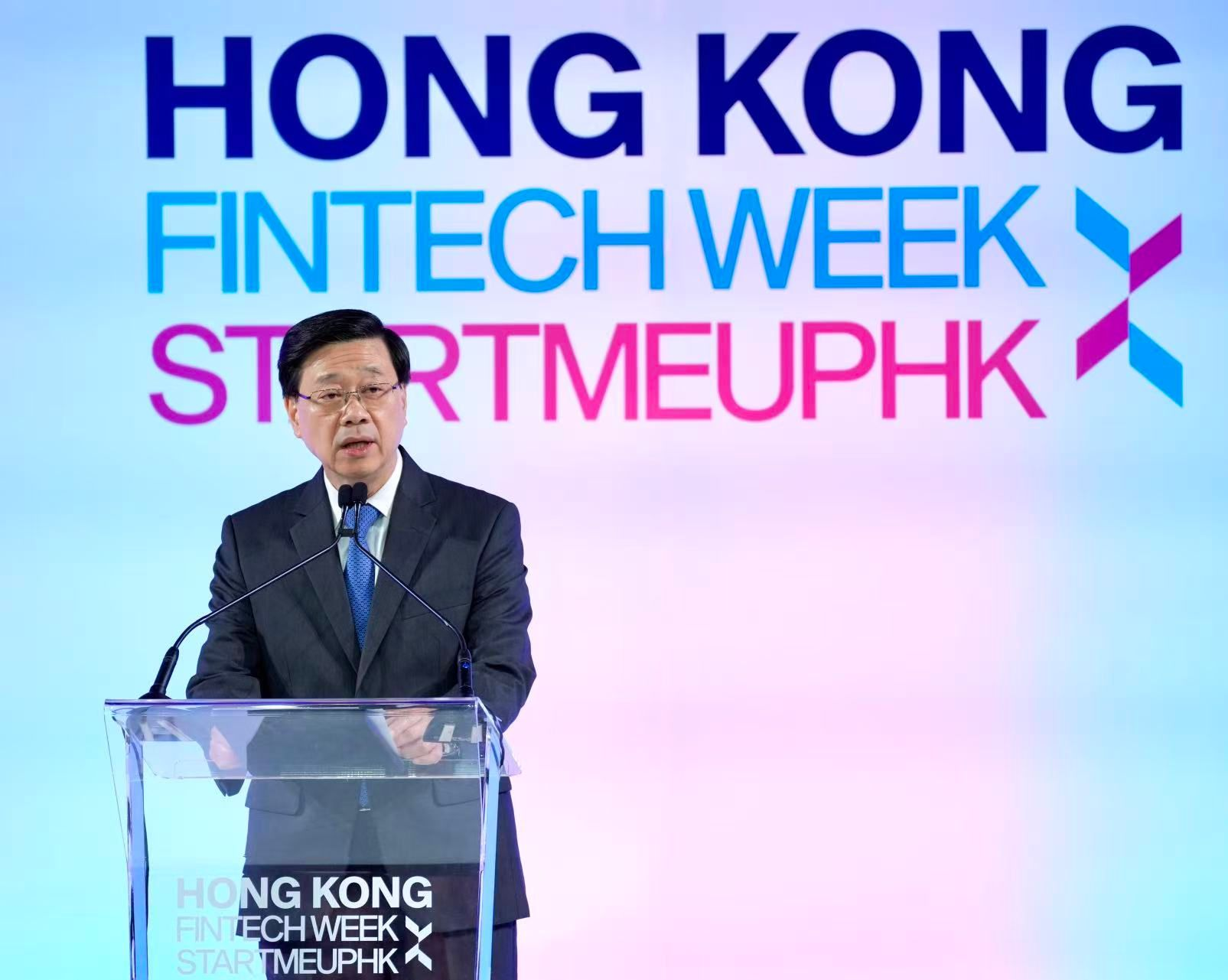
Wong Ka-Lai, Executive Director of the Investment Products Division of the Hong Kong Securities and Futures Commission, stated in a speech at the Hong Kong Fintech Week that Hong Kong has approved the first batch of tokenized money market funds to conduct secondary market trading on licensed virtual asset trading platforms, and tokenized gold ETFs could become a pilot product for the next phase.
This means that tokenized assets are undergoing a critical upgrade: from "moving assets onto the chain" to "ensuring assets can continue to flow on the chain."
As of now, Hong Kong has 17 tokenized products aimed at retail investors, covering money market funds, gold products, and ETFs, with a total asset management scale of approximately 1.3 billion dollars. The scale itself may not be large, but the types of products and regulatory pathways have already begun to take shape.
The value of this policy signal is not to announce that a certain gold ETF is about to be listed, but to indicate that Hong Kong regulators are testing a more complete market closed loop:
Tokenized issuance → Compliant distribution → 24/7 secondary trading → Digital currency settlement → Capital reallocation.
If this closed loop can operate smoothly, the competitive focus of RWA will shift from "who issued more assets" to "who can create more liquidity and real transactions."
1. Why the Secondary Market is a Watershed for Tokenized Assets
Tokenization of an asset does not imply it has gained new financial value.
If tokens can only be subscribed and redeemed on the issuance platform, investors still need to wait for the issuer to process transactions, and the efficiency of fund usage does not fundamentally change. The programmability brought by tokenization is also difficult to fully realize.
The significance of secondary trading lies in the fact that investors can buy and sell assets directly through the market after the product is issued. The asset's price, holders, liquidity, and capital efficiency begin to be determined by a broader range of market participants.
The Hong Kong Securities and Futures Commission refers to secondary trading as the key driver of liquidity and points out that tokenization will only significantly enhance value when assets can not only be issued but also flow efficiently and access liquidity.
This can be divided into three changes.
First, investors no longer have to fully bind "subscription" and "exit" to the issuer. As long as there are buyers in the secondary market, holders can potentially exit through transfer.
Second, trading time expands from traditional market hours to 24/7 trading. This is especially important for global investors and cross-border capital.
Third, funds obtained from trading can enter the on-chain ecosystem more quickly, for example, by purchasing other tokenized assets, engaging in capital management, or participating in collateral financing.
Therefore, the secondary market is not an added feature of tokenized products but the core link determining whether RWA can upgrade from "digital certificates" to "liquid financial assets."
2. Why Tokenized Money Market Funds Will Become the First Pilot for Secondary Trading
From a regulatory perspective, money market funds are more suitable than stocks and complex assets to become the first pilots for the secondary market.
Money market funds typically invest in short-term, highly liquid, and relatively standardized assets. Their net asset value fluctuations are relatively controllable, and the valuation and redemption mechanisms are more mature.
From an investor demand perspective, money market funds inherently fulfill cash management functions. Companies and individuals often do not aim for long-term holding but hope to gain returns in the short term while maintaining high liquidity.
From a technical standpoint, tokenized money market funds can connect with tokenized deposits, stablecoins, or other digital currencies, forming a rapid switch between "digital cash" and "yield assets."
The Hong Kong Securities and Futures Commission, in its speech, listed tokenized funds and capital management as key recent scenarios. The logic is that a company's temporarily idle funds can be allocated into money market funds, and tokenization further connects funds, digital currencies, and corporate treasury management, reducing settlement and reconciliation friction.
Therefore, secondary trading of tokenized money market funds is not merely about adding a trading channel but rather reconstructing the way companies manage funds.
In the future, companies may no longer need to keep funds long-term in bank deposits and then complete investments and redemptions through multiple traditional systems. Instead, they can use digital funds to make more frequent allocations among cash, money market funds, and other short-term assets.
3. Why Tokenized Gold ETFs Could Be the Next Step
The logic of gold ETFs differs from that of money market funds, but they share a common point: investors are already familiar with this product format.
Gold ETFs do not require investors to manage gold bars directly or understand complex on-chain agreements. They package the exposure to gold prices within a mature fund structure, and then use tokenization to improve trading, holding, and settlement methods.
This may be easier for traditional investors to accept than directly launching a gold token for the public.
Potential advantages of tokenized gold ETFs include:
- Trading hours can extend from traditional hours to 24/7;
- Share transfers can be completed through on-chain systems;
- Trading funds can connect with tokenized deposits or stablecoins;
- Product ownership and transfer records can be more easily automated;
- Gold assets can further enter scenarios involving collateral, financing, and portfolio management.
However, it should be made clear that the current statement from the Hong Kong Securities and Futures Commission describes this as "possibly becoming a pilot for the next stage," which does not mean that gold ETFs have been approved for secondary trading nor does it represent that any specific product has gone live.
From a research perspective, the real focus should be on how the future pilots will be designed:
First, whether the gold ETF token represents the fund share itself or only a restricted beneficiary certificate.
Second, whether tokens can be transferred between multiple licensed platforms or only circulate within a single trading platform.
Third, what kind of digital currency will be used for trading settlement: tokenized deposits, stablecoins, or other regulated settlement assets.
Fourth, how the custody, valuation, audits, and redemption mechanisms of the underlying gold link with on-chain records.
These designs will directly determine the liquidity quality of the gold ETF and will also affect whether it can serve as a standard template for the broader RWA market.
4. Hong Kong is Forming a Three-Tier Structure of “Product-Currency-Market”
From recent policy and product developments in Hong Kong, tokenized finance is no longer a singular project but is beginning to form a three-tier structure.
First Tier: Tokenized Products
Currently, Hong Kong has 17 retail tokenized products, covering money market funds, gold products, and ETFs, with a total scale of approximately 1.3 billion dollars.
This tier addresses the question of "what assets can be tokenized and who can purchase them."
Second Tier: Tokenized Currency
Hong Kong has allowed regulated stablecoins and tokenized deposits to enter financial applications. Tokenized currency serves payment, subscription, redemption, and settlement functions.
The EnsembleTX promoted by the Hong Kong Monetary Authority has already connected tokenized deposits with real value trading, interbank settlement, and digital assets.
This tier addresses the question of "what money is used to complete on-chain transactions."
Third Tier: Regulated Trading Market
Hong Kong's licensed virtual asset trading platforms provide compliant venues for digital asset trading. The secondary trading of tokenized money market funds is starting to experiment at this level.
This tier addresses the question of "where assets are traded and how liquidity is formed."
Once all three tiers are established, RWA may form a complete market cycle: assets are issued, funds can enter, products can circulate, investors can exit, and trading data can be continuously monitored.
5. Digital Renminbi May Offer Another Path for Cross-Border RWA Settlement
The speech from the Hong Kong Securities and Futures Commission also mentioned that in the future, the combination of digital renminbi with the tokenized fund ecosystem can be explored, including subscription and redemption of renminbi-denominated tokenized money market funds, as well as using digital renminbi to settle government bill investments.
The strategic significance of this information is that Hong Kong's tokenized market is not solely centered around the Hong Kong dollar and US dollar.
Hong Kong is the offshore renminbi business center. If renminbi-denominated funds, digital renminbi, tokenized deposits, and government bills can connect within a compliant framework, a new set of tools for cross-border treasury management may emerge in the future.
For instance, a company may allocate short-term renminbi funds into tokenized money market funds and use digital renminbi to complete relevant settlements; or, during cross-border trade, companies may integrate payment, short-term investment, and fund redemption into the same digital process.
Of course, these scenarios are still subject to cross-border regulations, capital flow, and product qualification restrictions, and should not be understood as already open free exchange or unrestricted capital channels. They currently resemble the infrastructure direction that regulators are exploring.
But in the long run, the connection between renminbi-denominated RWA and digital renminbi may be a significant competitive point for Hong Kong as compared to other tokenized financial centers.
6. True Value Capture Will Shift from “Issuance Fees” to “Liquidity Service Fees”
Early RWA projects' business models primarily focused on asset issuance and management fees.
Asset management institutions that issue tokenized funds can collect management fees; technology platforms providing tokenization services can earn system service fees; custodians responsible for safeguarding the underlying assets can generate custody income.
Once secondary trading commences, new income layers will emerge:
- Transaction matching and platform service fees;
- Market-making and liquidity management revenues;
- Settlement and custody service fees;
- Asset transfer and compliance verification service fees;
- Price, net asset value, and reserve data service fees;
- Institutional fund management and collateral financing revenues.
This is also why the secondary market deserves more attention than mere product issuance. Issuance is a one-time action, whereas liquidity may continue to generate trading and service demand throughout the product's lifecycle.
If the tokenized gold ETF can enter more licensed platforms in the future, the participants may not only include gold product issuers but also custodial banks, trading platforms, market makers, settlement networks, asset management institutions, and data service providers.
The value capture chain of RWA may thus extend from "who issues assets" to "who controls asset liquidity."
7. What Data to Observe in the Next Stage
For market participants, the most important thing is not to see "tokenized gold ETFs may become the next pilot" and immediately look for related concepts, but to track whether real market indicators emerge after the pilot.
First, observe whether the number of products and asset scale grow in sync. 17 products and 1.3 billion dollars AUM indicate that the market has started, but it is still necessary to determine whether the new scale is coming from new funds or from the repackaging of existing products.
Second, observe secondary trading volume and the number of holders. If a product is approved for trading but trading volume is consistently low, it indicates that the market still lacks market makers and real demand.
Next, observe the bid-ask spread and premium/discount. Whether the prices of tokenized assets are close to net asset value can reflect market liquidity, redemption mechanisms, and market-making efficiency.
Then, observe the settlement assets. Whether the trading is completed using tokenized deposits, stablecoins, or traditional fiat currency determines whether this market has truly entered the on-chain financial system.
Finally, observe cross-platform and cross-product combinations. Only when money market funds, gold ETFs, stocks, bonds, and stablecoins can form combinations will tokenized assets transform from individual products into a programmable asset network.
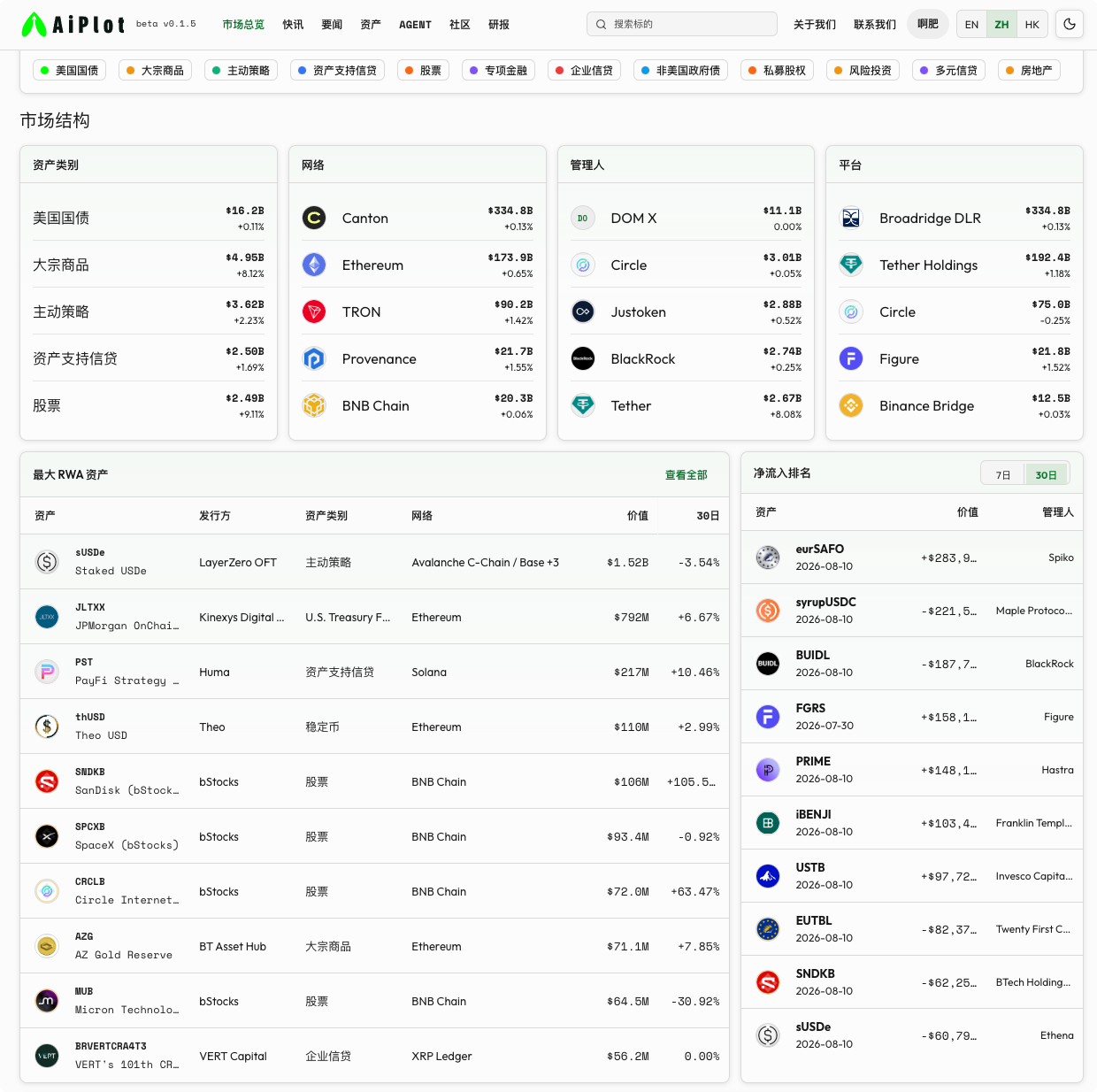
These indicators can all be tracked through AiPlot's data on assets, networks, platforms, products, and on-chain activities. Compared to just reading news, continuously observing scale, holders, trading activities, and network distribution is more helpful to judge whether RWA is at the conceptual stage, issuance stage, or has already entered the real circulation stage.
8. The Three-Tier Implications of This Policy Signal Worth Noting
First, the regulatory focus has shifted from "Can it be issued?" to "Can it be traded?"
Initially, regulators need to confirm whether products can be issued compliantly, whether the underlying assets are real, and whether investors are protected.
When the 17 products and approximately 1.3 billion dollars in scale form, the next step is naturally to test whether these products can flow in the market.
The emergence of secondary trading indicates that regulators have begun to pay attention to market efficiency post-asset issuance.
Second, gold ETFs may become connectors between traditional investment products and on-chain markets
The product structure of gold ETFs is easy for traditional investors to understand, and the underlying assets also have mature valuation and custody systems. If tokenized gold ETFs enter the secondary market, they could become intermediate products connecting the securities market, digital asset trading platforms, and gold clearing systems.
Third, true competition for RWA will shift to "liquidity infrastructure"
In the future, the most worthy companies and protocols to study may not necessarily be those with the largest asset scales, but rather those that can solve issues related to trading, market-making, settlement, custody, data, and cross-platform interoperability.
Conclusion: The Next Competition for RWA is to Truly Get Assets "Moving On-Chain"
Hong Kong has completed the first stage of the RWA market: establishing a regulatory framework, issuing tokenized products, and connecting to banking and fintech infrastructure.
Now, the market is entering the second stage: gaining secondary liquidity for these products and allowing funds to continue circulating within the digital asset ecosystem.
Tokenized money market funds represent an experiment with low volatility and strong cash management properties. If tokenized gold ETFs enter the next stage, it means that regulators are including more market-relevant assets in liquidity tests.
These two points jointly indicate a conclusion:
The greatest value of RWA is not just converting real assets into tokens, but enabling assets to continuously trade, settle, mortgage, and be reallocated within a compliant digital market.
For investors, the next focus should not just be on gold prices or a particular tokenized product but on whether secondary trading produces real transactions, whether liquidity improves, whether settlement becomes on-chain, and whether assets can form combinations with stablecoins, tokenized deposits, and other RWA.
The key issue in Hong Kong's next stage is no longer "Can we tokenize gold?" but rather:
Who can enable the tokenized gold ETF to achieve real secondary liquidity and become a usable asset in the digital financial market?
For more data and analyses, please follow Aiplot:
https://aiplot.com/?utm_source=aicoin
📖 Community Communication:
Telegram:
https://t.me/+IIYMcJigBAo4Mjg1
The content of this article represents only the author's personal views and does not represent the stance of this platform. The opinions, conclusions, and suggestions in this text are for investors' reference only and do not constitute any investment advice related to this platform. The market involves risks, and investments should be made with caution.
免责声明:本文章仅代表作者个人观点,不代表本平台的立场和观点。本文章仅供信息分享,不构成对任何人的任何投资建议。用户与作者之间的任何争议,与本平台无关。如网页中刊载的文章或图片涉及侵权,请提供相关的权利证明和身份证明发送邮件到[email protected],本平台相关工作人员将会进行核查。