Author: AiPlot Research Institute
Focus: RWA / Digital Assets / In-depth Analysis of Financial Infrastructure
Website:https://aiplot.com/?utm_source=aicoin
The most significant change in RWA may not be the emergence of another new gold token, but rather the fact that physical gold has been incorporated into the bank-to-bank tokenized deposit settlement system for the first time.
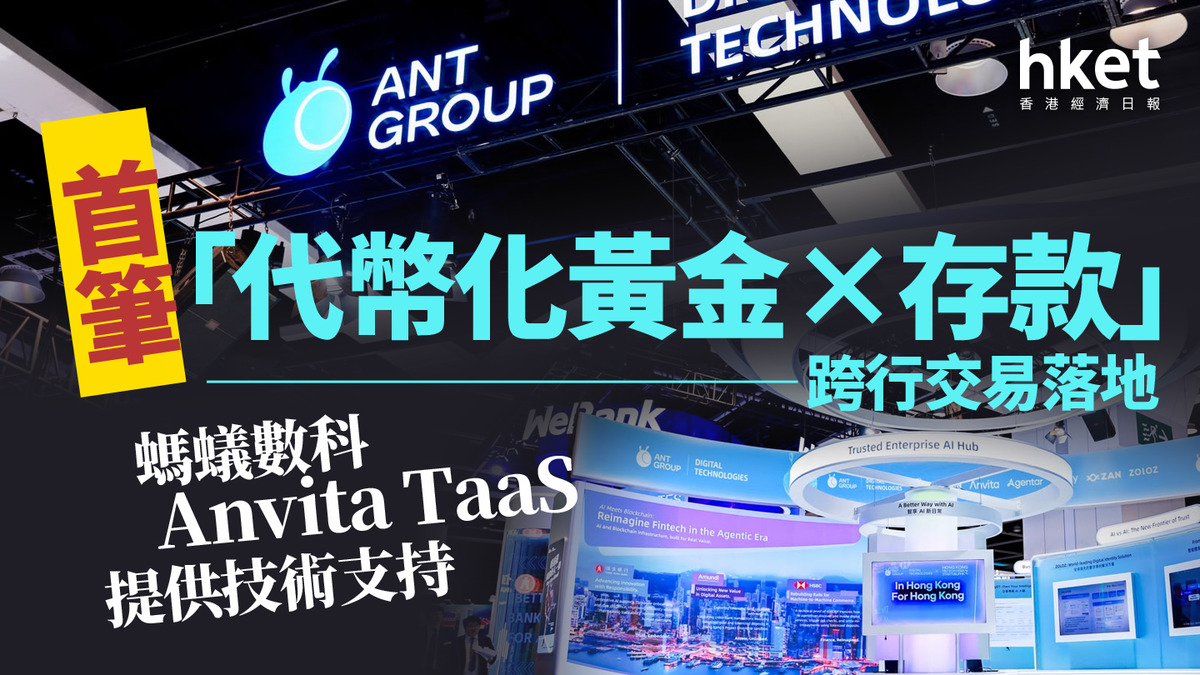
In November 2026, a key development occurred in Project Ensemble, promoted by the Hong Kong Monetary Authority: the first "tokenized gold × tokenized deposit" interbank transaction was realized. Zhaojin Mining served as the gold issuer, China Construction Bank (Asia) acted as the gold custodian and payment bank, Bank of East Asia and UnionPay Tongbao served as the receiving bank, and Ant Group's Anvita TaaS provided technical support.
Another report indicated that Hong Kong is advancing interbank tokenized gold trading, planning to correspond one gold token to one standard gold bar, using the Hong Kong gold reference price HAU as the pricing benchmark; the Hong Kong Stock Exchange is also planning to build a blockchain-supported multi-asset tokenization platform.
At the same time, HSBC's Hong Kong dollar stablecoin RedCoin has already entered retail payment scenarios through PayMe. According to official HSBC information, RedCoin is issued by a licensed institution, redeemable at a 1:1 ratio with Hong Kong dollars, and supports personal transfers and merchant payments via PayMe, with future plans to be used for subscribing to tokenized investment products. According to public reports, about 50,000 users were attracted within a week of RedCoin's launch.
Considering these developments together, Hong Kong is forming a complete RWA transmission chain:
Physical Gold → Tokenized Certificate → Bank Custody → Tokenized Deposit Settlement → Stablecoin Distribution → Investment and Payment Applications.
This is more important than simply issuing a gold token. It indicates that the next phase of competition in RWA may shift from "who issues how many assets" to "who controls the financial gateways of asset issuance, settlement, and distribution."
1. This is not an ordinary gold token, but a reconstruction of the interbank trading process
Traditional gold trading involves multiple steps: both parties confirm the price, banks confirm the funds, custodians confirm the gold inventory, the clearing system completes the ownership changes, and finally completes payment and delivery.
In large transactions, what really affects efficiency is not just the gold price, but whether all parties can confirm information, funds, and asset ownership at the same time.
The technical focus of this Hong Kong project is the introduction of on-chain digital certificates called gToken. According to reports from the Hong Kong Economic Journal, gToken adds an on-chain certificate to physical gold without altering the existing banking gold account system and title transfer pathways, while simultaneously recording ownership transfers.
The trading funds are routed through tokenized deposits via Ensemble's interoperability layer to the real-time Hong Kong dollar payment settlement system (RTGS), completing interbank fund settlement. In other words, the transfer of the gold certificate and the payment of bank funds are placed within the same traceable transaction process.
The essence of this mechanism is not that "blockchain makes the gold price rise," but to reduce several types of friction:
- Reconciliation and confirmation time between banks;
- Time differences between gold ownership and fund payments;
- Information inconsistencies among multiple institutions;
- Errors caused by paper certificates and manual operations;
- Audit costs for asset ownership and fund flow after transaction completion.
The Hong Kong Monetary Authority's official positioning on Ensemble is not to issue gold cryptocurrencies for the public but to explore the real-value trading of tokenized deposits and digital assets, gradually supporting interbank settlements.
This distinction is critical: the institutional-level opportunity of RWA is primarily a settlement efficiency opportunity, and secondarily an asset investment opportunity.
2. Why gold is one of the most suitable assets to enter institutional-level RWA
Gold possesses several characteristics that are suitable for tokenization.
First, gold has a global price benchmark. The Hong Kong gold reference price HAU, London gold, and other market prices provide a relatively clear pricing basis for tokenized gold.
Second, gold can be standardized. Reports mention that the project involves gold bars that meet London Good Delivery (LGD) specifications; another report mentions standard 400-ounce gold bars. Standardization means that custody, acceptance, clearing, and auditing can more easily form unified rules.
Third, gold already has a mature custody and clearing system. Tokenization does not create a new asset from scratch but links existing inventories, accounts, and ownership records to a new digital settlement layer.
Fourth, gold has both financial and trade properties. It can be used by financial institutions for investment and risk management, and can also enter trade financing, collateral financing, and cross-border settlement.
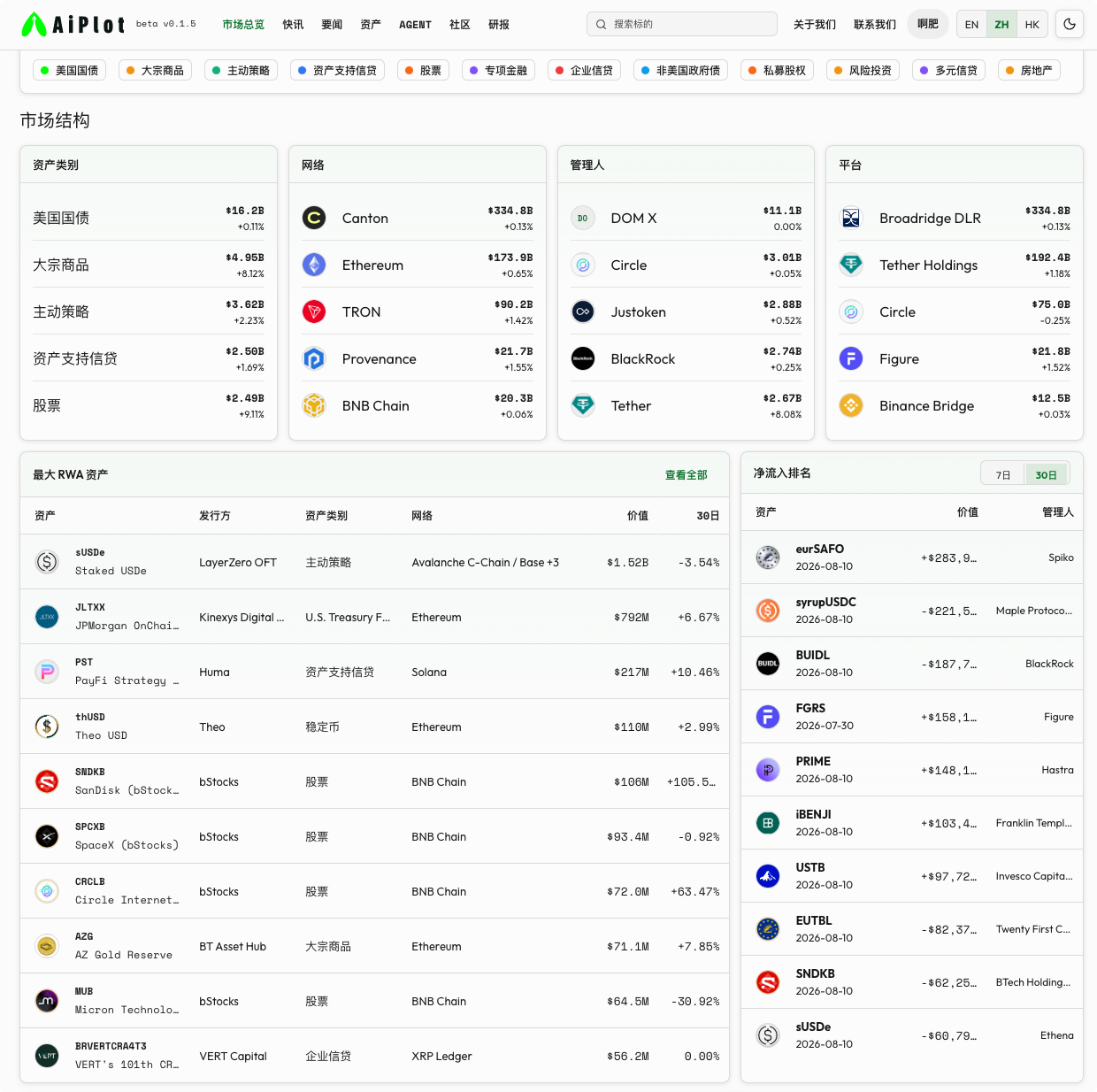
According to AiPlot's RWA data, commodities are currently the second-largest RWA asset class, with a scale of approximately $5.15 billion. Among specific assets, XAUT is about $3.38 billion, and PAXG is about $1.77 billion.
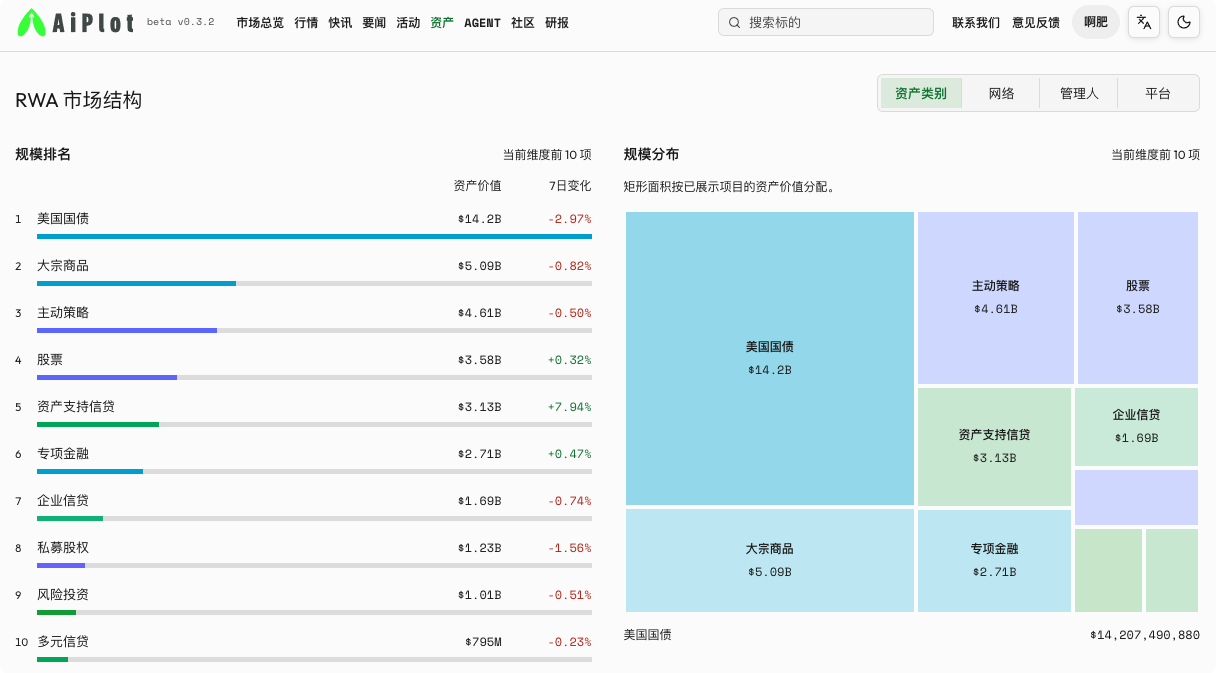
This indicates that gold tokenization already has certain market scale. However, the significance of this project in Hong Kong lies in the further advancement of gold RWA from being merely on-chain investment tools to being integrated into the banking, custody, clearing, and payment systems.
3. The biggest change: gold tokens moving from "holdable" to "settleable"
Early gold tokens primarily addressed one issue: allowing users to gain exposure to gold prices on-chain.
Institutional-level tokenized gold, however, must address another issue: can gold become a deliverable, payable, mortgagable, and auditable financial asset?
The value difference between the two is significant.
If gold tokens can only be bought and sold on a specific platform, they function more like a digitized investment product. Their growth depends on user numbers, trading volumes, and market promotion.
If the gold certificate can be recognized by banks, can link to custodian inventory, can complete payments through tokenized deposits, and can enter the centralized clearing system, then it has the opportunity to become a standardized settlement asset in the financial market.
The Hong Kong Economic Journal noted that the relevant gold bars meet the clearing standards of the Hong Kong Precious Metals Central Clearing System (HKPMCC), and custodians can also withdraw and deposit gold through HKPMCC based on inventory management needs.
This means that the project does not attempt to create a new system but instead adds a layer of digital interface on top of existing clearing infrastructure. The advantage of this route is that institutions find it easier to accept, and it is more likely to meet audit and regulatory requirements.
4. The significance of RedCoin: RWA needs not just assets but also payment gateways
If tokenized gold addresses the asset and settlement issues for institutions, then RedCoin addresses the payment and distribution issues for users.
According to official HSBC information, RedCoin is a stablecoin valued in Hong Kong dollars, issued by an institution licensed by the Hong Kong Monetary Authority, and fully backed by high-quality, highly liquid assets. Users can make personal transfers and merchant payments through PayMe, and in the future, they will also be able to subscribe to tokenized investment products through the HSBC HK App.
This pathway is very representative:
First, stablecoins are placed into user-friendly payment applications, and then user balances are connected to investment and asset management products.
Compared to directly asking users to download wallets, purchase cryptocurrencies, learn private keys, and perform cross-chain operations, banks embed stablecoins into existing apps, lowering the user threshold.
This is also what makes RedCoin particularly noteworthy. It may not become the most open or decentralized stablecoin, but it could become a compliant digital Hong Kong dollar payment gateway.
As of November 3, 2026, HSBC's official website indicates that RedCoin has a circulation value of approximately $89.01 million, and the market value of reserve assets is about $90.01 million, and it continues to publish circulation and reserve information.
This scale, compared to global stablecoins such as USDT and USDC, is still relatively small, but its significance cannot only be measured by market value. It is more like a bank-level distribution experiment: whether banks can transform stablecoins from conceptual products into payment balances usable by ordinary users.
5. Only by combining gold tokenization and RedCoin can a true RWA opportunity map be formed
Looking at gold tokenization individually, it is simply asset on-chain; looking at stablecoins alone, it is merely a payment tool. Only when the two connect can larger financial application spaces be generated.
Several scenarios may emerge in the future.
1. Currency payment against gold transactions
The buyer pays with tokenized deposits, and the seller transfers gold gToken. Both parties complete the transaction under the same set of rules, reducing the settlement risk of one party having paid while the other has yet to deliver.
2. Gold collateral financing
Financial institutions can use tokenized gold that has been custodied and certified as collateral, financing through tokenized deposits or stablecoins. The collateral status, ownership, and financing balance can be recorded more timely.
3. Gold trade financing
The circulation of gold from mining companies, refiners, custodians, to traders can be connected with trade documents, payments, and warehousing information. The value of tokenization is not only turning gold bars into tokens but also placing assets, documents, and payments into the same process.
4. Payment gateway for tokenized investment products
If RedCoin can be used to subscribe to tokenized funds, money market products, or other compliant assets in the future, it will form a conversion pathway of "payment balance—investment products."
5. Cross-border fund and asset settlement
Hong Kong's advantage lies in simultaneously connecting international financial institutions, the renminbi and Hong Kong dollar systems, gold markets, and cross-border trade in Asia. If different banks and markets can share the interoperability layer, tokenized assets will have the opportunity to become part of cross-border settlement.
6. The next round of wealth opportunities may not lie in gold prices, but in four types of infrastructure
The most noteworthy aspect for investors and researchers regarding this event is not whether to "buy gold" but which segments will generate income from actual transactions.
First category: Asset issuance and custody infrastructure
Zhaojin Mining, bank custodians, precious metals clearing institutions, and asset issuance platforms hold the entrance to RWA assets.
The real barrier is not issuing a token but being able to prove what asset a token corresponds to, where the asset is, who possesses legal control, and how to redeem or withdraw when necessary.
Second category: Interoperability and settlement networks
Anvita TaaS, Jovay, Ensemble interoperability layer, RTGS, and HKPMCC represent the connective layer of the financial market.
In the future, different assets may be issued by different platforms. If there are no common standards, the market will be fragmented into multiple closed systems. Whoever can make different banks, custodians, asset platforms, and payment systems work together could charge for infrastructure services.
Third category: Tokenized deposits and stablecoin distribution
RedCoin illustrates that stablecoin competition is not only about the scale of issuance but also about user entry points.
Banks possess clients, accounts, payment scenarios, and compliance capabilities; crypto-native platforms hold open networks, cross-chain liquidity, and composability. Future competition may occur at the intersection of these two capabilities: being able to issue compliantly while also connecting to broader on-chain applications.
Fourth category: Data, auditing, and risk control
For the RWA market to expand, participants must know:
- How much asset corresponds to each token;
- Whether assets are being double pledged or double issued;
- Whether custodians genuinely hold the assets;
- Whether asset ownership has changed;
- Whether reserves, circulation, and redemption requests match;
- Whether transactions result in genuine fund and asset exchanges.
Thus, asset proof, reserve audits, on-chain and off-chain data synchronization, valuation oracles, and risk monitoring may become necessary facilities for the scaling of RWA.
7. Three leading signals released by this event
Signal 1: RWA is transitioning from the crypto-native market to the interbank market
Past discussions about RWA often revolved around on-chain funds, stablecoins, and DeFi protocols. The current interbank gold transaction, involving banks, mining companies, custodians, receiving banks, and fintech platforms, indicates that the market is shifting towards real inter-institutional settlements.
Signal 2: Tokenized deposits may enter traditional financial settlements sooner than open stablecoins
The Hong Kong Monetary Authority's Ensemble design emphasizes tokenized deposits, interbank settlements, and central bank currency settlements. It may not possess all the characteristics of an open crypto network, but it is closer to the banks' existing account systems and regulatory frameworks.
This means that the future digital currency market may not be a single model but instead comprise stablecoins, tokenized deposits, and wholesale central bank digital currencies.
Signal 3: Assets and payments are converging
Gold tokenization addresses asset settlement, and RedCoin addresses payment distribution. The two lines will eventually converge in tokenized investment, collateral financing, and cross-border trade finance.
This is also the most noteworthy wealth transmission pathway: it is not that a particular token rises due to news, but that new asset and payment infrastructures start generating ongoing transaction fees, custody revenues, clearing revenues, and data service revenues.
Conclusion
The significance of this interbank tokenized gold transaction does not lie in gold being repackaged as a token, but in the ownership of gold, bank deposits, and payment settlements being placed into the same verifiable process for the first time.
RedCoin demonstrates from the other end that for stablecoins to truly expand their influence, they must enter familiar payment gateways and banking applications. Together, the two constitute the most important infrastructure logic for RWA:
Assets are responsible for providing value, deposits and stablecoins are responsible for providing liquidity, banks are responsible for providing trust, blockchain is responsible for providing programmable settlement, and data platforms are responsible for providing transparency.
The next stage of wealth explosion may occur after this closed loop is truly formed:
Physical asset custody → Tokenized issuance → Interbank settlement → Stablecoin or tokenized deposit payment → Transactions and collateral → Data and risk control → Multi-asset expansion.
For investors, what is most worth tracking is not whether "gold tokens will rise," but which institutions have begun to master the key gateways in this closed loop.
When a token truly corresponds to a gold bar and can complete settlement through interbank tokenized deposits, then RWA will begin to transition from concept to the daily operation of the financial market.
For more data and analysis, please follow Aiplot:
https://aiplot.com/?utm_source=aicoin
📖 Community Communication:
- Telegram:
https://t.me/+IIYMcJigBAo4Mjg1
The content of this article represents only the author's personal viewpoint and does not represent the stance of this platform. The opinions, conclusions, and suggestions in the article are for reference only and do not constitute any investment advice related to this platform. The market has risks; investment requires caution.
免责声明:本文章仅代表作者个人观点,不代表本平台的立场和观点。本文章仅供信息分享,不构成对任何人的任何投资建议。用户与作者之间的任何争议,与本平台无关。如网页中刊载的文章或图片涉及侵权,请提供相关的权利证明和身份证明发送邮件到[email protected],本平台相关工作人员将会进行核查。