Yesterday, when sharing a response to a question, I mentioned this practice:
“For projects purchased with attempt funds, just hold onto them, only changing positions or liquidating in two situations…”
Later, I came across a key leader and one of the second-generation leaders of Sequoia Capital, Doug Leone, sharing the biggest mistake he made in his investment experience (for details, see the reference link at the end of the article):
“It wasn't about investing in the wrong bad company, but about selling the true winners too early.”
He then mentioned in an interview,
“The four most painful and valuable downsizes in Sequoia's history:
Sequoia once held 20% of Nvidia, which they sold.
They were Apple's first institutional investor, which they sold.
They held a quarter of Cisco's shares, which they sold.
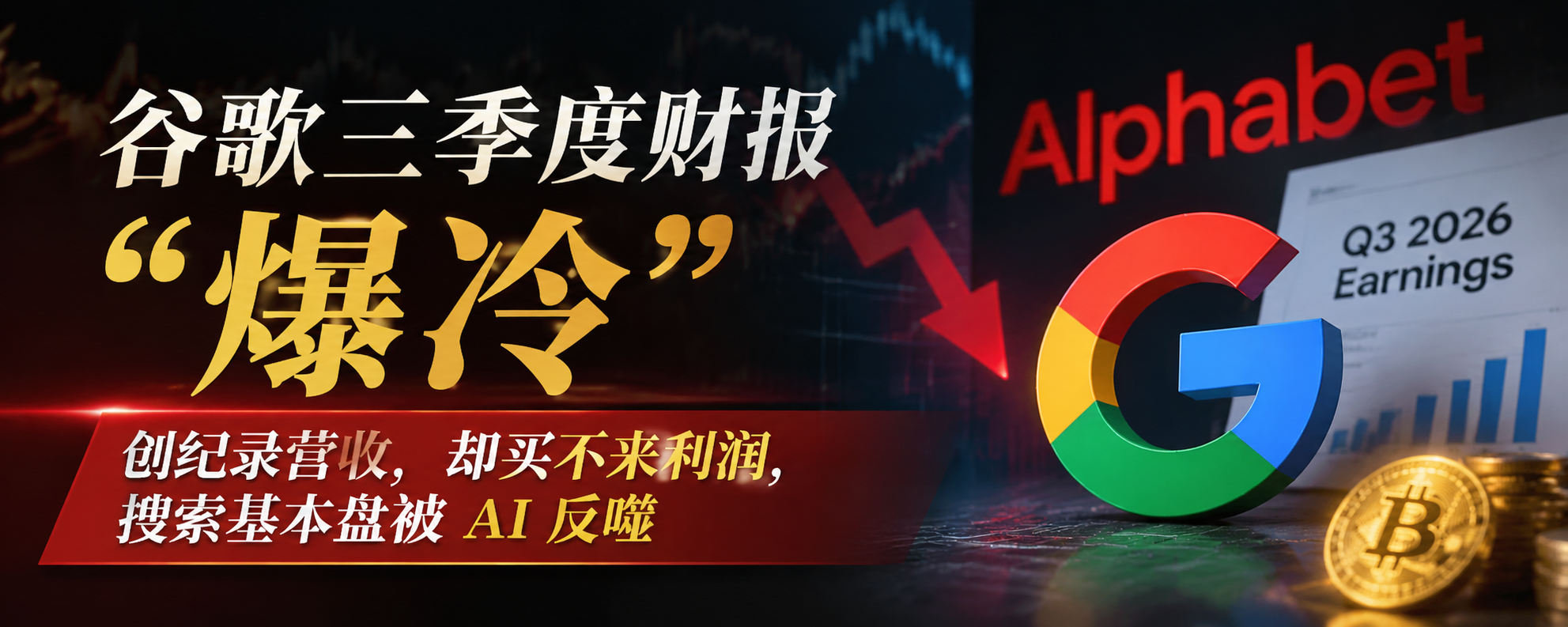
They held 10% of Google’s shares, and they sold that too.
If they hadn't sold a single share of Google, today, Sequoia's holdings would be worth $500 billion.”
Why is that?
Because “the traditional rules of venture capital always focus on calculating the IRR on paper, ensuring the return on paper, and distributing cash to LPs urgently at the exit phase. As long as they make 10 times or even 50 times on paper, the entire industry will advise you to cash out, locking in the performance in the fund's annual report.”
Doug Leone later summarized, believing: “Truly great companies compound growth for over 20 years after the IPO bell rings.”
The great companies Leone mentioned that compound growth for 20 years after the IPO — such sustainable growth cannot rely on storytelling; it must ultimately translate into continuous and substantial revenue/cash flow for the business.
To achieve this, it again comes back to the need for a good corporate culture/management team, a reliable business model, and a monopolistic moat — which returns us to the standards for evaluating a good enterprise.
The reason Doug later realized he sold these companies too early is simply that he discovered later that the discounted value of the cash flow this company could continue to generate after he sold was far greater than the value at which he sold it.
To avoid making this mistake again, one needs to assess whether it is a good company, to abandon the mindset of getting rich overnight, to discard the habit of trading in and out, and to buy when the enterprise's price is far below its intrinsic value.
His summary resonates highly with my experiences and feelings over these past few years.
When I shared yesterday, I mentioned that my current approach to promising projects is to hold firmly — this marks a significant change in my investment behavior since my mindset change over the past few years.
However, my experience in arriving at this realization is different from his; his comes from personal lessons learned, while mine is more inspired by three examples:
First, Buffett said that the vast majority of people are unwilling to become wealthy gradually; they always want shortcuts, wanting to become rich overnight, consequently jumping into one pit after another;
Second, Duan Yongping repeatedly emphasized in his book "Investment Q&A" the standards for evaluating good companies and the criteria for buying them;
Third, reviewing the past development history of Bitcoin and Ethereum, I found that the vast majority of winners were not those who traded in and out, but those who held on regardless of the reasons.
The current development stage of the crypto ecosystem still seems very early to me; most people in the ecosystem know what good targets are.
The AI ecosystem need not be mentioned; I see that its development hasn’t even completed the first round of peak, and there are quite a few targets within the ecosystem that I believe can continue to grow for 20 years.
Being in this era and witnessing the past lessons summed up by Doug Leone, I believe this is even a time worthy of holding onto good projects for the long term.
Reference link:
https://x.com/AYi_AInotes/status/2113445062369570965?s=46
免责声明:本文章仅代表作者个人观点,不代表本平台的立场和观点。本文章仅供信息分享,不构成对任何人的任何投资建议。用户与作者之间的任何争议,与本平台无关。如网页中刊载的文章或图片涉及侵权,请提供相关的权利证明和身份证明发送邮件到[email protected],本平台相关工作人员将会进行核查。