CoinW Research Institute
Abstract
On November 3, 2026, the U.S. midterm elections will become an important variable affecting the direction of Crypto regulation over the next two years. The GENIUS Act has already been implemented, but the CLARITY Act remains constrained by congressional division, and the huge political investments from the crypto industry have not eliminated legislative resistance. The core impact of this election is not to determine the crypto bull or bear market, but to change the pace of regulatory reform and market expectations. If the Republican Party maintains control of both houses, it is beneficial for policy continuity; if Congress is divided or the Democratic Party controls both houses, it may increase legislative resistance, but the impact on different assets will be significantly differentiated. BTC relies more on macro liquidity and ETF funds, while DeFi, stablecoins, and trading platforms are more sensitive to regulatory changes. In the short term, the U.S. midterms may trigger market expectations to be priced in early and cause reverse volatility after the election results are announced; long-term effects depend on the actual implementation of cryptocurrency regulatory policies after the election, as well as institutional fund inflows and real business growth in the industry.
1. Why Have the Midterm Elections Become an Important Variable for Crypto?
On November 3, 2026, the United States will hold midterm elections, with all 435 seats in the House of Representatives and 35 seats in the Senate up for reelection. Unlike presidential elections, midterm elections will not change Trump's presidency but may change the Republican and Democratic parties' control of Congress, thus affecting the advancement of U.S. cryptocurrency regulatory policy over the next two years. Why is control of Congress so important for crypto? Major U.S. cryptocurrency regulatory bills typically need to be passed by both the House and the Senate before being submitted for presidential signature. The House is responsible for reviewing, amending, and voting on bills, while the Senate requires further review and voting. For instance, the CLARITY Act was passed by the House in July 2025 but failed to pass the procedural voting threshold in the Senate in September 2026. Even with presidential support for crypto, if Congress cannot reach sufficient consensus, related regulatory reforms may still stall.
The impact of both houses also has different emphases. Changes in control of the House may affect the legislative agenda, budget arrangements, and the intensity of investigations by regulatory agencies; changes in control of the Senate may affect the advancement of legislation and the appointments of senior officials at regulatory agencies like the SEC and CFTC. Notably, ending debates on most Senate legislation typically requires 60 votes for support, not a simple majority. Therefore, even if a party holds a majority, it may not be able to push crypto legislation forward on its own. Currently, the Republican Party controls both houses, with 53 seats in the Senate. If the midterm elections change the control of one or both houses, the legislative agenda and policy negotiation landscape in Congress may also be adjusted accordingly. The true impact of this election is the speed and stability of U.S. crypto regulation over the next two years and the market's judgment on whether related policies can be implemented.

Figure 1. How the U.S. Midterm Elections Impact Crypto Regulation. Source: CoinW Research Institute
2. Where Does U.S. Crypto Regulation Stand Before the Elections?
To understand the impact of the midterm elections on crypto, it is essential to distinguish between the laws that have already been implemented in U.S. crypto regulation and reforms still under negotiation in Congress. The former primarily faces subsequent execution issues, while the latter may be directly influenced by changes in congressional control. The GENIUS Act and CLARITY Act exemplify this difference.
In July 2025, Trump signed the GENIUS Act, establishing a federal regulatory framework for U.S. payment stablecoins. The bill requires compliant issuers to hold at least 1:1 qualified reserve assets, including cash in U.S. dollars, and short-term U.S. Treasury bills, and clearly specifies redemption, disclosure, and regulatory requirements. This provides a clearer legal basis for stablecoin issuers, banks, and payment institutions to conduct related business. Since the GENIUS Act has already become law, the midterm elections will not cause it to automatically become invalid, but the new Congress may influence subsequent policy direction through oversight, hearings, or amendments. However, the passage of the law does not mean all controversies have been resolved. Whether stablecoins can provide yields to users through third-party platforms, whether they will divert traditional bank deposits, and how banks will participate in related businesses still have disagreements. The relevant implementation rules will be primarily set by authorized regulatory agencies, and changes in congressional control may affect the focus of subsequent supervision and policy adjustment space.
In comparison to stablecoins, the broader U.S. crypto asset market still lacks a unified regulatory framework. The CLARITY Act attempts to clarify which tokens are classified as securities, which are classified as digital commodities, and what the SEC and CFTC are each responsible for regulating, while providing clearer compliance rules for trading platforms, DeFi protocols, and developers. Unlike the already enacted GENIUS Act, the CLARITY Act has not yet completed the legislative process, making it more susceptible to the elections' outcomes. On September 15, 2026, the Senate held a procedural vote regarding ending debate on the relevant issues and moving forward with subsequent votes, resulting in 49 votes in favor and 50 votes against, failing to meet the required 60-vote threshold. This vote was regarding the motion to end debate, not the final vote on the CLARITY Act itself, yet it exposed the political resistance facing regulatory reform. Some Democratic members have called for strengthening consumer protection, anti-money laundering measures, and restrictions on conflicts of interest for government officials and their families' involvement in crypto; some Republican members also hold differing opinions. Meanwhile, the banking sector fears that stablecoin yield products may divert traditional deposits, affecting banks' funding sources. The complexities of the CLARITY Act have exceeded just the SEC and CFTC's authority divisions, also involving interest coordination between crypto companies, traditional banks, and different political groups. After the midterms, whether Congress can re-establish sufficient support will directly affect the advancement prospects of this reform.
Even if congressional legislation is obstructed, the Trump administration can still adjust rules interpretation, enforcement priorities, and regulatory methods within the existing legal authority through regulatory agencies like the SEC and CFTC, providing a relatively clear operating environment for crypto businesses. However, administrative policies may face judicial challenges and may be adjusted with future changes in government or regulatory leadership, making long-term stability typically weaker than a clear legal framework. Therefore, the key impact of this midterm election on U.S. crypto regulation lies in whether the passed laws can be implemented smoothly and whether the unfinished market structure reforms can continue to progress. Changes in both aspects will affect the regulatory environment and development expectations of the U.S. crypto industry over the next two years.
3. Crypto Political Funding and Regulatory Game in the U.S. Midterm Elections
The obstruction of the CLARITY Act has made crypto companies realize that merely having the support of the president or regulatory agencies is not enough; it is equally important whether there are enough members in Congress willing to promote related legislation. Therefore, in recent years, the crypto industry has begun investing more funds to participate in U.S. elections in hopes of securing a more favorable policy environment for industry development. According to an analysis by Public Citizen of data from the Federal Election Commission and others, as of the second quarter of 2026, crypto companies had provided approximately $206 million to related political committees during this election cycle, surpassing the approximately $170 million of corporate political donations in the 2024 election cycle. Companies and investment institutions like Coinbase, Ripple, and a16z are significant participants, while Fairshake is one of the main platforms for political fundraising in the industry. Fairshake is categorized as a Super Political Action Committee (Super PAC) which can raise large amounts of money and support or oppose candidates through independent advertising but cannot directly provide unlimited donations to candidates or coordinate these independent expenditures with candidates' campaign teams. For the general reader, this can be understood as the crypto industry expressing its preferred policy positions through legitimate campaign funding channels.
Why are crypto companies willing to invest so much money? Because the rules set by Congress may directly impact the businesses they can conduct in the future. Exchanges want clear rules for token listings and trading, stablecoin companies care about the development space for payment and yield businesses, and DeFi projects hope to clarify developers' legal responsibilities. The higher the regulatory uncertainty, the greater the resistance companies face in expansion, financing, and product innovation. Notably, the crypto industry has not entirely bet its political support on the Republican Party, but rather attempts to gain support from members of both parties for crypto policies. This is related to the legislative mechanism in the U.S.; regardless of which party controls Congress, significant reforms often still require bipartisan cooperation. However, political funding can increase the industry's opportunities to express its demands, but it cannot guarantee the election of candidates or directly determine whether bills can pass. This midterm election will test whether these political investments can translate into more stable support in Congress.
4. From Political Changes to BTC Prices, How Do Elections Influence the Crypto Market?
Previously, we discussed regulatory bills and industry political investments, but investors are more concerned about whether the midterm elections will impact the prices of crypto assets like BTC and ETH. The election results themselves do not directly alter the supply and demand of crypto assets, but they may indirectly influence asset valuations through policy expectations, institutional funds, and market risk appetites. The most direct transmission path is regulatory expectations. If, after the election, Congress can push for advancements in market structure legislation, the legal uncertainties faced by exchanges, DeFi projects, and institutional investors may decrease, and the market may reflect this change early. Conversely, if regulatory reform remains stagnant for a long time, companies relying on U.S. market access and compliance business expansion may face greater operational pressures, affecting investors' valuations of related assets. However, the influence of policy on prices is not uniform. BTC, having established mature institutional investment channels like spot ETFs, is typically more influenced by macro liquidity, interest rate expectations, and fund flows than by individual regulatory bills. Certain DeFi tokens, stocks related to trading platforms, and financial services assets may be more sensitive to changes in regulatory rules. This means that even if election outcomes are favorable for certain industries, it does not automatically imply that the entire Crypto market will rise.
From a historical perspective, BTC fell by approximately 56%, 73%, and 64% in the years of the 2014, 2018, and 2022 midterm elections, respectively. However, if we observe the performance starting from around the election date, the performance over approximately the next 12 months showed improvement, with some historical statistics indicating increases of around 24.5%, 44.9%, and 92.3%. Nevertheless, historical post-election increases do not demonstrate that midterm elections drove BTC bull markets. In 2014, BTC was still in its early developmental stage; in 2018 it was impacted by the bursting of the crypto market bubble; and in 2022, it experienced significant interest rate hikes by the Federal Reserve and the collapse of FTX. The subsequent market changes are also influenced by multiple factors including monetary policy, industry cycles, and market liquidity. Notably, in 2018, BTC still experienced a noticeable decline after the election, indicating that there isn't a stable pattern of short-term increases following elections.

Figure 2. BTC Performance Before and After Previous U.S. Midterm Elections. Source: CoinW Research Institute
Compared to the past, the crypto market in 2026 has already developed more mature spot ETFs and institutional participation channels, allowing policy changes to transmit to a broader capital market through public companies, fund products, and crypto financial services. Meanwhile, investors may make advance adjustments to their positions based on polls, policy statements, and market expectations before the elections. Thus, when assessing the impact of the elections, it is crucial not only to look at who ultimately controls Congress but also to determine whether the actual results exceed market expectations and whether the macro environment supports the rise of risk assets.
5. How Will Crypto Reprice Under Three Possible Election Outcomes?
Differing congressional configurations may change the advancement approach for U.S. crypto regulatory reforms and also affect market valuations of related companies and assets. Below, we analyze three possible scenarios, focusing on the policy changes and asset impacts they bring, rather than predicting election results. According to Polymarket prediction market data, as of October 20, 2026 Beijing Time, the implied probability of the Democratic Party controlling both houses of Congress is approximately 63%, the probability of the Democratic Party controlling the House while the Republican Party controls the Senate is about 28%, the probability of the Republican Party continuing to control both houses is about 9%, and the probability of the Republican Party controlling the House while the Democratic Party controls the Senate is about 1%. These data reflect market trading expectations for different configurations of Congress rather than the final election result. The difference between the actual results and market expectations may become an important factor influencing short-term price fluctuations in crypto.
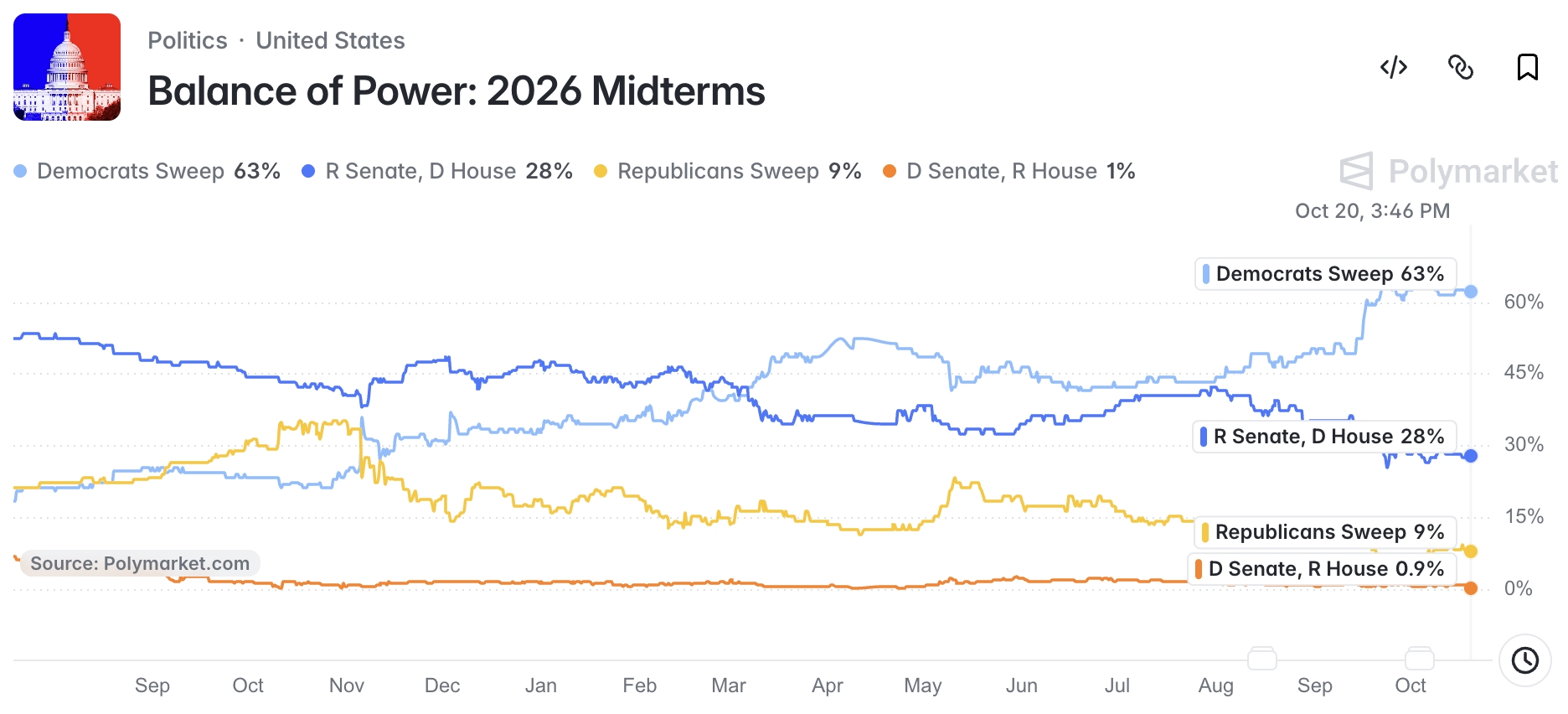
Figure 3. Balance of Power: 2026 Midterms. Source: https://polymarket.com/event/balance-of-power-2026-midterms
Republican Party Continues to Control Both Houses (Polymarket Implied Probability: Approximately 9%)
If the Republican Party retains control of both houses, the existing crypto policy direction under the Trump administration is likely to maintain strong continuity. The CLARITY Act may regain opportunities for advancement, and the implementation of stablecoin regulation and institutional crypto financial operations is also expected to develop along the current direction. For trading platforms, stablecoin issuers, and crypto financial service companies, policy continuity helps reduce long-term operational uncertainties. However, the Republican Party's continued control of both houses does not mean that all crypto bills will pass smoothly. The bipartisan divisions that previously hindered the CLARITY Act still exist, and related provisions may still need to be renegotiated. At the market level, policy continuity may favor companies relying on regulatory clarifications, but if investors have already fully anticipated this outcome, asset prices may not experience sustained increases.
Democratic Party Controls at Least One House (Polymarket Implied Probability: Approximately 91%)
If the Democratic Party regains control of the House or Senate, Congress will enter a state of divided governance. The difficulty for the Trump administration to promote new crypto legislation may increase, and related committees may also augment oversight of trading platforms, stablecoin operations, and the crypto interests of government officials. Bills like CLARITY will face more bipartisan coordination, and the legislative timetable may be further delayed. In this scenario, the market may downscale valuations for some companies that rely on regulatory easing and quick business expansion, particularly in businesses where product access, token classification, and compliance costs directly affect profits. However, divided governance in Congress does not mean that crypto will necessarily decline. BTC remains influenced by ETF funds, dollar liquidity, and global risk appetites; its trajectory may diverge from regulatory-sensitive assets.
Democratic Party Controls Both Houses (Polymarket Implied Probability: Approximately 63%)
If the Democratic Party secures control of both houses, the congressional crypto legislative agenda may undergo more significant adjustments. Topics such as consumer protection, anti-money laundering, financial stability, and conflicts of interest regarding government officials and crypto will likely receive more attention during bill negotiations and congressional oversight. Some exchanges and DeFi projects aiming for rapid product expansion may face longer policy waiting periods. However, this scenario does not mean that U.S. crypto regulation will immediately tighten. The already enacted GENIUS Act will not automatically become invalid, and Trump can still exercise presidential powers, with regulatory agencies like the SEC and CFTC continuing to operate under current laws. Furthermore, internal divisions within the Democratic Party regarding crypto innovation and regulatory approaches are not entirely uniform; specific policies will still depend on bill content and bipartisan negotiations. Therefore, the market needs to distinguish between legislative slowdowns and actual changes to existing regulations.

Figure 4. Crypto Market Impact Matrix Under Three Election Outcomes. Source: CoinW Research Institute
Which Assets Are Most Sensitive to the Midterm Elections?
From an asset perspective, areas that rely more on U.S. regulatory permissions, product access, and business expansion are more likely to be directly impacted by changes in congressional policies. However, it is essential to differentiate between industry business models benefiting and related token prices rising; the two cannot be simply equated. BTC's direct sensitivity to congressional regulatory changes is relatively moderate, with its primary pricing factors remaining spot ETF funds, dollar liquidity, and overall risk appetite. ETH and DeFi have relatively higher policy sensitivity, where staking services, token classifications, protocol responsibilities, and institutional participation rules may influence ecosystem development space. However, even if the regulatory environment improves, it is necessary to observe whether protocol usage and income can grow in tandem. Stablecoins and RWA (Real World Assets) also warrant attention. Stablecoins involve issuance regulations, reserve assets, banking access, and payment operations, while RWA pertains to the issuance, custody, and trading rules of tokenized securities. Regulatory clarity may attract more traditional financial institutions, but an increase in stablecoin supply does not necessarily mean that a particular public chain or RWA token will gain corresponding benefits; key factors include fee income and token value capture mechanisms. Trading platforms and related publicly listed companies may experience more direct business impacts. Regulatory rules will influence their available trading products, custody services, compliance costs, and income sources, meaning that related stock valuations may be more sensitive to policy changes. Prediction markets are also worth noting, especially rules governing political event contracts, market manipulation prevention, and the CFTC's regulatory authority, which may be affected by congressional oversight and regulatory policy adjustments. In comparison, Meme and other highly volatile tokens generally lack direct policy benefits, with their prices driven more by market sentiment, leveraged trading, and liquidity. The above sensitivities are qualitative judgments made by CoinW Research Institute based on business models and are not fixed patterns derived from historical backtesting.
Figure 5. Sensitivities of Different Crypto Assets to Election Policies. Source: CoinW Research Institute
Why Might the Market Still Trade in the Opposite Direction Even If Outcomes Meet Expectations?
There is a risk in election trading that is easily overlooked. Political outcomes that align with market expectations do not necessarily mean prices will move in the anticipated direction. For example, if the Republican Party continues to control both houses, it may be interpreted as strong policy continuity; but if investors have already accumulated significant purchases of related assets beforehand, the announcement of results may lead to profit-taking instead. Therefore, before the election, it is essential to watch whether implied volatility for options rises, whether open interest (OI) and funding rates display concentrated leverage, and whether ETF funds continue to flow in. After the results are announced, it is crucial to observe changes in market expectation discrepancies and liquidity to determine whether market movements have real funding support. Election outcomes influence policy expectations, but how asset prices ultimately change also depends on expectation discrepancies, fund flows, and the different sensitivities of assets to regulation.
6. What Really Deserves Attention After the Election?
After the conclusion of the 2026 U.S. midterm elections, market focus will gradually shift from election results to policy implementation. In the short term, it will be essential to observe the price performances of BTC and ETH, net inflows into spot ETFs, implied volatility for options, futures open interest, and funding rates to gauge whether market movements are driven by short-term leverage and sentiment. The key in the medium term is whether the new Congress can push for substantive progress in regulatory reforms. Key areas to focus on include whether the CLARITY Act re-enters the legislative agenda, personnel changes in congressional financial committees, SEC and CFTC regulatory rules, and the subsequent implementation details of the GENIUS Act. These developments will determine whether policy expectations can gradually be transformed into improvements in the actual business environment for companies. In the long term, it will be essential to see whether institutional funds and real businesses can continue to grow. ETF holdings and fund flows, stablecoin supply, RWA market sizes, trading platform business data, and actual revenue from DeFi can help assess whether the crypto industry is developing a more stable demand for funds and business foundation. The U.S. midterm elections may impact the pace of crypto policy advancement over the next two years, but they will not directly determine the bull or bear markets of crypto. The core factors in determining whether trends can continue are whether regulatory certainty can improve, whether institutional funds can maintain inflow, and whether macro liquidity provides support.
免责声明:本文章仅代表作者个人观点,不代表本平台的立场和观点。本文章仅供信息分享,不构成对任何人的任何投资建议。用户与作者之间的任何争议,与本平台无关。如网页中刊载的文章或图片涉及侵权,请提供相关的权利证明和身份证明发送邮件到[email protected],本平台相关工作人员将会进行核查。