Author: Gemini, Deep Tide TechFlow
The sentiment in the crypto community can reverse with just one sudden stop in liquidity.
A few weeks ago, with the launch of the Robinhood Chain and the fermentation of the wealth effect, the social trading app "FOMO" was still the most sought-after wealth-making tool on the overseas crypto Twitter timeline.
The “legendary traders” on the rankings boasting several times, or even dozens of times returns, attracted thousands of retail investors to start copying their trades with one click; their calls were often seen as key catalysts for triggering events in certain currencies or narratives.
However, in recent days, the tone of the timeline has changed dramatically.
The "anti-FOMO sentiment" is spreading in the overseas trading circle, with several well-known KOLs and traders like Xeer and waleswoosh openly posting their anger about the behind-the-scenes manipulation, even directly sharing screenshots of account cancellations and app uninstalls.
These posts, filled with anger and venting emotions, have attracted high viewership, and to some extent, echo the sentiments of more retail investors. When losses begin to pile up, the sentiment of reverse liquidations starts to spread.
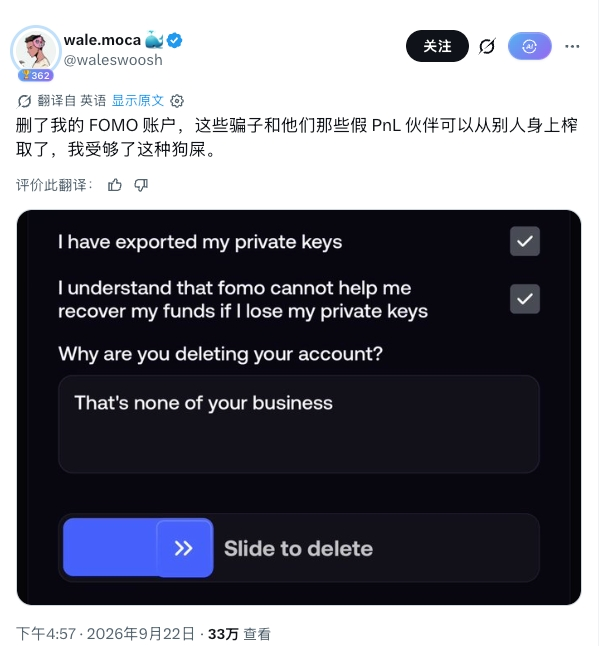
New Sentiment, Old Playbook
This sentiment can be amplified, actually stemming from the nearly obvious, hard-to-verify yet unverified on-chain harvesting tactics.
For example, Xeer posted that projects provide large amounts of funds or ultra-low-cost tokens to top KOLs through private agreements, and the KOLs buy publicly with their main wallets on social trading platforms like FOMO, showcasing their profits upfront, rapidly climbing the yield or position rankings.
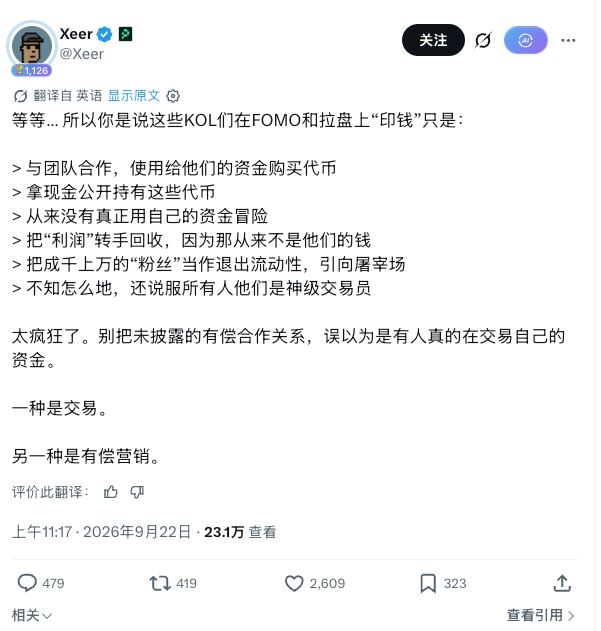
The rankings and copy trading systems instantly amplify these buying signals. Retail investors who trust the KOL systematically follow along, boosting the depth of the liquidity pool and the currency price, creating a festive illusion of "it's my turn for sudden wealth" in an extremely short time.
Meanwhile, the real large funds have long been quietly pouring into this influx of copy trade liquidity through coin washing tools or associated shadow wallets. The KOL’s public main wallet may still show unrealized losses, but they might have already made profits privately.
On-Chain Data Is More Genuine
The high views and likes these posts attract also represent public sentiment to some extent. And the resonance of emotions doesn't come out of nowhere; on-chain data provides some evidence:
1. The number of FOMO active wallets on the RH chain dropped from over 100,000 at the beginning of the month to only 47,000 at the lowest point on the 20th, nearly halving;
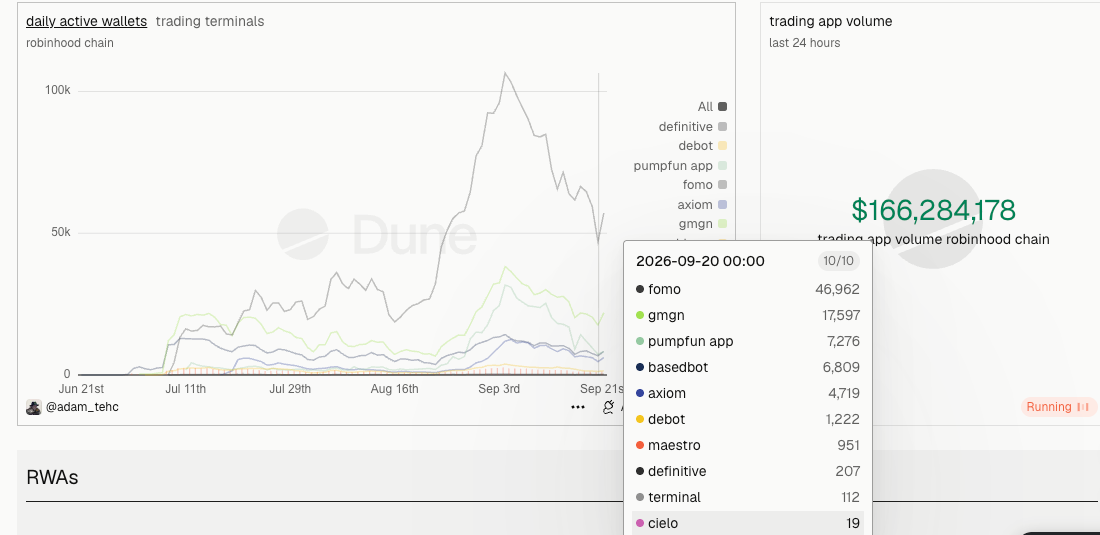
2. The trading volume sent out via FOMO on the RH chain plunged from nearly 400M at the beginning of the month to only 42M at the lowest point on the 20th, dropping nearly 90%
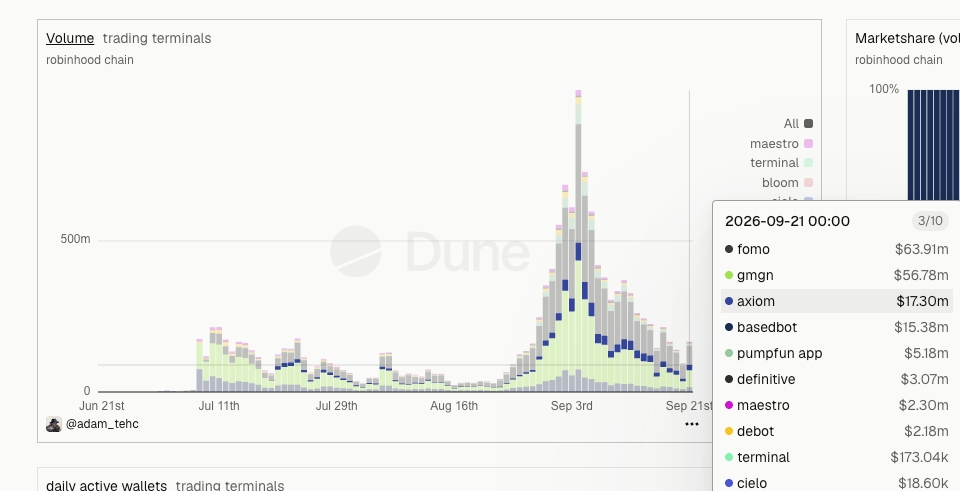
3. Dune's related data dashboard shows that on August 17, nearly 300,000 FOMO addresses could be counted, of which the profit ratio was 6.1%; today, more than 600,000 addresses can be counted, having doubled, but the proportion of profitable addresses has dropped to 5.3%. (Statistics provided by Grok)
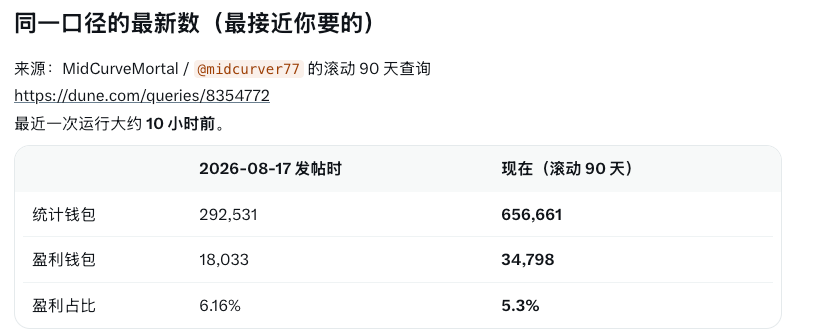
Accompanying the massive losses endured by retail investors is the sudden collapse of underlying ecosystem liquidity.
Data shows that since entering September, the daily trading volume of the Robinhood Chain’s DEX has nearly halved from a high of $3.7 billion to $1.9 billion, while the daily turnover in the Meme sector has plummeted by nearly 60%, and daily capture fees on the network have shrunk by more than 70%.
When new money stops coming in, the game that relies on new money to fill the gaps can hardly continue. Those KOLs who are put on display and the platforms that stir the pot naturally become the first outlet for emotional release.
Thinking in Reverse?
In the crypto market, extreme crowd sentiment is often an excellent contrarian indicator.
From the perspective of behavioral finance, this wave of "anti-FOMO sentiment" is not merely negative news; it represents a necessary stage of a speculative cycle nearing its end: the complete clearing of trust.
When major figures also start sharing screenshots of uninstalls and vow never to touch it again, resonating with others, it usually means that the surrender of emotions has been completed. Those willing to sell have almost all cut their losses and left, and the originally crowded trading structure begins to loosen.
When the tide goes out and speculative hot money retreats, the bloody chips flushed out of an ecosystem will actually give the quality assets within a golden pit.
The author believes that the so-called "copy trading function" has never been a tool to narrow the information gap; rather, it is a liquidity generator structured to facilitate exit. While the frenzy persists, the occasional lucky survivors who make money will mask all problems; but when the tide recedes on-chain, finding those relatively valuable assets and buying them to perform contrarian trades can allow one to profit.
免责声明:本文章仅代表作者个人观点,不代表本平台的立场和观点。本文章仅供信息分享,不构成对任何人的任何投资建议。用户与作者之间的任何争议,与本平台无关。如网页中刊载的文章或图片涉及侵权,请提供相关的权利证明和身份证明发送邮件到support@aicoin.com,本平台相关工作人员将会进行核查。


