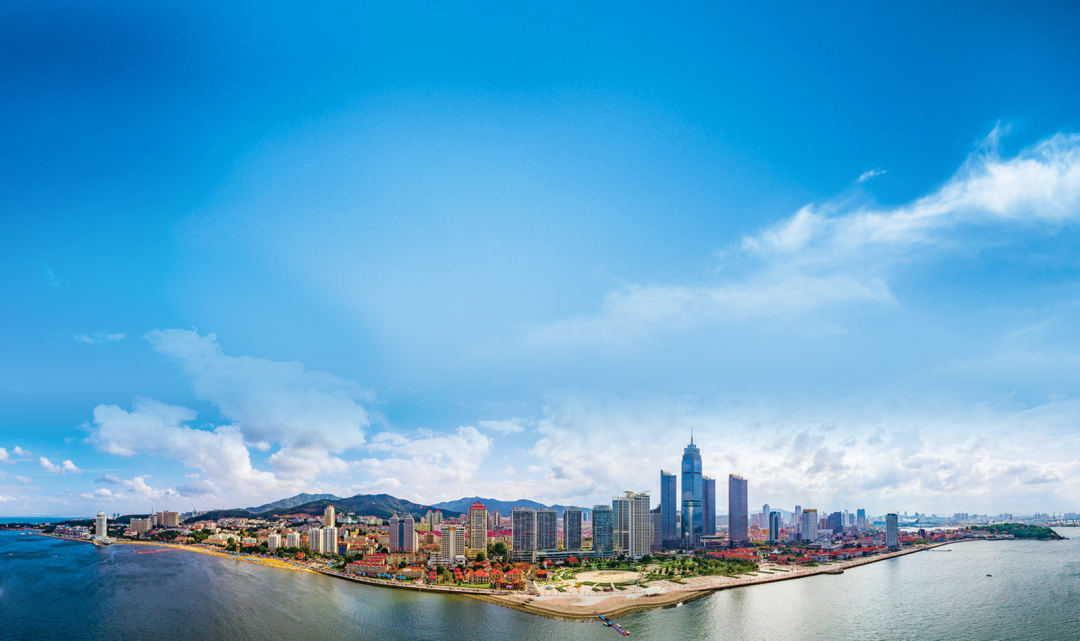
The window to the outside world in Yantai has been opened.

Author Wang Manhua
This article has 3574 words
Handmade Quantity | 100% AI Content | 0%
In the topic of "Urban Venture Capital," if one has to choose a city sample whose value is yet to be fully demonstrated, Yantai is an unavoidable choice.
As the first city in Northern China with a GDP exceeding one trillion, and one of Shandong Province's "three core leaders", Yantai boasts a solid industrial foundation, unique geographical advantages, and an emerging strategic new industry that is growing. In the past, this city resembled a player focused on industry, not particularly catching attention in the venture capital discussions.
Until last week, this situation was broken.
From September 16 to 17, the "2026 Huangbohai Innovation and Entrepreneurship Investment Conference," hosted by the Yantai Financial Group and co-organized by Zhihui Information and Kunyu Capital, took place in Yantai. This was Yantai's first regional venture capital conference, yet it attracted almost all significant forces in the domestic primary market — Songhe Capital, Tongchuang Weiye, Shengshi Investment, Qingkong Ginkgo, Yida Capital, Dinghui VGC, Delian Capital, China International Capital Corporation… Over 80 investment institutions gathered together, along with representatives from national and provincial industry associations, central and local state-owned LP representatives, and representatives from Yantai's listed companies and key industrial chain enterprises, filling the venue with over 450 guests.
Through this conference, at least two clear signals can be received:
Firstly, Yantai is beginning to actively seek change. This city is no longer content with silent cultivation; instead, it has taken the initiative to position itself in the spotlight of the capital market, establishing an outward-facing window for itself.
Secondly, capital is voting with its feet. The presence of over 80 institutions and more than 450 guests traveling from all over the country to the shores of Huangbohai shows that Yantai is not lacking in venture capital attraction but rather it previously lacked an entrance for the national capital to see and connect.
Now, this entrance has been opened.
Hosting the conference is just the starting point
Building a venture capital ecosystem is the goal
In past exchanges, some investors have mentioned to me: the simplest way to understand a city's venture capital genes is to participate in local venture capital conferences. Because conferences can bring together projects, capital, and policy signals that are usually dispersed, reducing information asymmetry, and allowing a direct feel for the city's industrial endowments and the government's genuine drive for venture capital within just a few days.
The venture capital conference organized by Yantai carries high hopes of being "seen."
Xu Yanyi, deputy secretary of the Party Committee and general manager of Yantai Financial Group, candidly stated: "We invite guests from industry associations, leading domestic GPs, and national long-term capital to gather here to build a bridge for deep dialogue among 'government, finance, enterprises, academia, and research,' connecting the supply and demand sides of investment and financing, facilitating efficient mutual communication of resource information. We want more institutions to see Yantai, come to Yantai, and lay out their plans in Yantai, and we want local science and technology enterprises to connect with the country's top market resources right at home."
At the same time, he emphasized that the conversion of the conference's traffic cannot be simply measured by the number of on-site contracts signed, "what's more critical is to continuously sediment and transform the industry consensus gathered during the conference, the linked institutional resources, and the project inspirations generated into a solid core competitiveness for Yantai's venture capital ecosystem."
However, the change that a single conference can bring is ultimately limited. What truly allows venture capital institutions to take root and form a venture capital ecosystem is whether this city can provide enough fertile soil, among which the industrial foundation plays a considerable role.
This, precisely, is something Yantai has in abundance.
As an established industrial powerhouse, Yantai covers 37 of the 41 industrial categories nationwide, showcasing a strong industrial completeness. To date, it has formed a 300 billion-level non-ferrous and precious metals industrial cluster, a 200 billion-level green petrochemical industrial cluster, four 100 billion-level clusters in automotive, high-end equipment, electronic information, and deep processing of food, as well as several emerging industrial clusters worth over 10 billion in biomedicine, clean energy, and aerospace. The total industrial output value of the city's above-scale industries has exceeded 1.32 trillion yuan, with more than 4,800 high-quality innovative enterprises at the provincial level and above, over 2,400 high-tech enterprises, 66 listed companies in total, leading the A-share total market value in the province.
A number of leading enterprises in specific fields have grown and expanded here, such as Wanhua Chemical, a global leader in MDI polyurethane, Jereh Group in oil and gas equipment, the historical leader in industrial refrigeration, Bingshu Environmental, as well as Rongchang Bio, Nanshan Aluminum, Linglong Tire, Taihe New Materials, Zhenghai Magnetic Materials, and Dongcheng Pharmaceutical, all located here.
For investment institutions, the thickness of the industrial chain and the advantages of clusters correspond directly to the depth of project reserves and the potential for attracting new projects to land, making it clear that Yantai already holds the leverage to make institutions "come in."
Creating a "Unique Capital Brand"
Kunyu Capital is unveiled
Of course, a solid industrial foundation is just a prerequisite; technological iteration and industrial leap also require capital to add fuel to the fire at critical junctures. However, a reality is that for a long time, Yantai's activity level in the capital market, the fame of capital brands, and the maturity of the capital ecosystem have lagged behind those "popular venture capital cities."
To enhance the cohesion of regional financial resources and optimize the capital ecosystem, Yantai has begun to address this proactively from the aspect of top-level design by issuing the "Six Ones Fund Management Work Promotion Plan," which aims to construct a systematic framework for the management and operation of funds throughout the city through a set of methods, a structure, a park, a brand, a matrix, and a mechanism. At the beginning of this year, during the two sessions, Yantai further proposed in the "Government Work Report," "to create a unique capital brand for Yantai, building a diversified industrial fund matrix of 'Angel + Venture Capital + Growth + Mergers and Acquisitions + Continuation'" and "to promote the quality and efficiency of the modern financial industry, encouraging financial institutions to innovate products and optimize services."
At this conference, the wholly-owned subsidiary "Kunyu Capital," unveiled by Yantai Financial Group, is an important practice to implement this "Promotion Plan" and build a core carrier for regional venture capital.
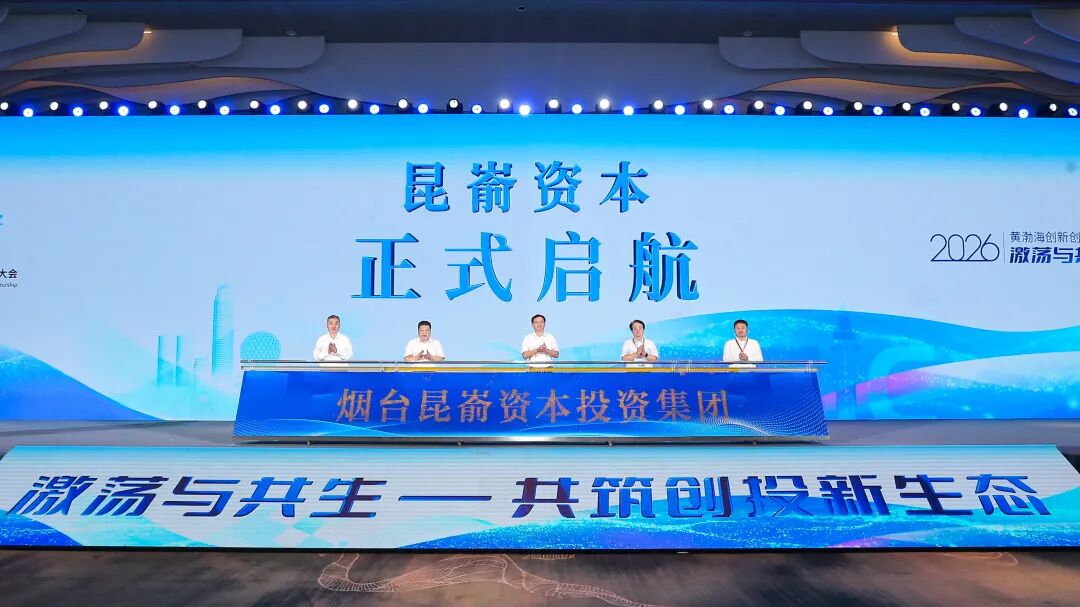
It is reported that Kunyu Capital has been upgraded and integrated from the previous municipal government investment fund operating entity, with total investments reaching 126 billion yuan, participating in 57 investment funds. Among them, 55 are actively managed investment funds, with a total scale of 50 billion yuan, investing in 660 projects with an investment of 26 billion yuan, facilitating 46 companies' entry into the capital market.
The establishment of Kunyu Capital represents not only a consolidation of assets but also opens a new path for the market-oriented, professional, and standardized development of Yantai's core local capital platform.
It is worth mentioning that at this conference, this fund system has been further solidified: multiple rounds of significant contracts were signed on-site, covering diverse types such as fund cooperation, investment attraction, and direct equity investment.
Building a Capital Matrix for the Full Lifecycle
Three types of funds solving the "need both, and need more" dilemma
It should be noted that Kunyu Capital is not simply integrating existing funds but has undergone reorganization and scale expansion on the original basis.
The most significant change lies in expanding investment coverage.
According to Chai Lin, chairman of Kunyu Capital Investment Group Co., Ltd., with the implementation of Yantai's "Six Ones Fund Management Work Promotion Plan," by 2026, Kunyu Capital will add a 3 billion yuan merger mother fund and a 2 billion yuan succession mother fund, completing merger, restructuring, and exit stages. Thus, it has established a full lifecycle capital matrix of "Angel + Venture Capital + Growth + Mergers and Acquisitions + Continuation."
In addition to providing capital support for the entire cycle, Kunyu Capital's more effective design is restructured to create a collaborative management framework. It clearly segments the fund investment strategies into three categories: government investment funds, key industry funds, and financial investment funds.
This classification may seem simple, but it points to a widely recognized issue in the current primary market: amid deep changes in the equity investment market landscape, the relationship between LPs and GPs is facing unprecedented challenges and restructuring. As the main force of funding, local government funds have many demands of "need both, and need more," which have become the number one problem troubling fund managers.
"Government-type funds need policy targets, financial investment funds seek financial returns, and industry investment funds need to cultivate locally. Different investors have different demands. Achieving agreement among various demands within a single fund is very difficult, and its feasibility and practicality are also relatively poor. Instead of reconciling various demands within one fund, it is better to decompose the demands, assign them to their respective places for collaborative interaction," said Chai Lin.
He also mentioned that based on the above three types of funds, Kunyu Capital has classified and formulated corresponding fund management systems with the aim of clarifying functional boundaries, avoiding overlap and crowding-out effects, adapting to differentiated management, and forming a collaborative force of "policy guidance + industry tackling + financial value enhancement."
Abandoning Path Replication
Exploring the "Yantai Model" of Equity Investment
Whenever we discuss urban venture capital topics, Hefei will always become a repeatedly mentioned example. From BOE to NIO and then to Changxin Technology, Hefei's state-owned assets have continuously solidified its label as "the best venture capital city" through a series of precise investments, leading several cities to compete to imitate in recent years.
However, when asked whether Yantai would learn from the "Hefei Model," Chai Lin gave his own answer. In his view, the industrial foundations and market environments between each city are different. Recklessly copying the strategies of other cities can easily lead to "incompatibility," or even be counterproductive. And Yantai has chosen a path that aligns more closely with its own endowment, which Chai Lin calls "affectionate investment promotion."
He further explained that "affectionate investment promotion" does not take "landing" as a premise; rather, it establishes financial links through equity investment first, and then deepens mutual understanding through continuous interaction, "if both parties' demands match, cooperative opportunities will naturally emerge."
Ligao New Energy is the most typical example of this "affectionate investment promotion" model. In 2019, Yantai Financial Group, under the introduction of China International Capital Corporation, connected with this core component manufacturer of new energy vehicles. As Chai Lin recalls, Ligao New Energy was then at the starting stage of its capacity and faced funding difficulties and development obstacles, but after thorough due diligence, the team judged the project to have investment value, and thus participated in the company through a financial investment fund.
During subsequent connections and on-site visits, Ligao New Energy discovered that Yantai's chemical industry has strong synergistic potential with its new energy battery management system (BMS) business. Moreover, Kunyu Capital, in addition to providing support for equity investment, also leveraged the financial tools of the Financial Group, alleviating the company's funding difficulties at the time. Ultimately, Ligao New Energy actively expressed its intention to relocate its headquarters to Yantai and completed the name change and registered address change in 2020.
The result of this mutual endeavor is: today, Ligao New Energy has transformed from a loss-making enterprise into a leading company in the industry, with products covering major manufacturers such as CATL and LG Energy, becoming the largest third-party BMS provider in the country.
In the current heated competition for investment attraction in various places, Yantai's "affectionate investment promotion" strategy not only guarantees early support during the enterprise's initial growth stages but is also willing to provide long-term deep "accompaniment" when encountering truly valuable projects.
Hengyuan Technology is another typical example. This is a local company in Yantai that focuses on AI-driven industrial data intelligent services. During the early development stages of the company, when technical breakthroughs faced roadblocks, Yantai supported it through various financing rounds including angel round, A round, B round, and C round, and innovatively launched the "Investment-Loan Linkage" service, providing multi-dimensional financial support. With the long-term support of Yantai's capital, by 2026, the company has entered the top 50 in industrial AI innovation. Through the aforementioned cases, it is evident that the "affectionate investment promotion" behind Yantai represents a more patient and long-term capital logic: not seeking immediate landings, but aiming for deep connections; not chasing short-term returns, but willing to accompany enterprises through cycles. This logic perfectly aligns with the inherent laws of innovation's sprouting and nurturing.
Of course, building an innovative ecosystem in a city is not an overnight success; it requires long-term patience and professional operation, as well as the continuous cooperation of multiple factors such as industry, policy, and talent. Today, Yantai has taken substantial steps.
Original content from Investment Circle
免责声明:本文章仅代表作者个人观点,不代表本平台的立场和观点。本文章仅供信息分享,不构成对任何人的任何投资建议。用户与作者之间的任何争议,与本平台无关。如网页中刊载的文章或图片涉及侵权,请提供相关的权利证明和身份证明发送邮件到support@aicoin.com,本平台相关工作人员将会进行核查。


