Author: Alea Research
Translation: Deep Tide TechFlow
Deep Tide Introduction:Alea dissects MetaDAO: 23 public sales accumulated subscriptions of 624.7 million USD, only accepting 45.4 million USD, with the raised funds going into a treasury governed by buyers, where IP and token issuance rights are also in the decision market. For META holders, the real question is not whether anyone is willing to pay, but whether the platform can continuously filter enough good companies to utilize the funds that are already waiting.
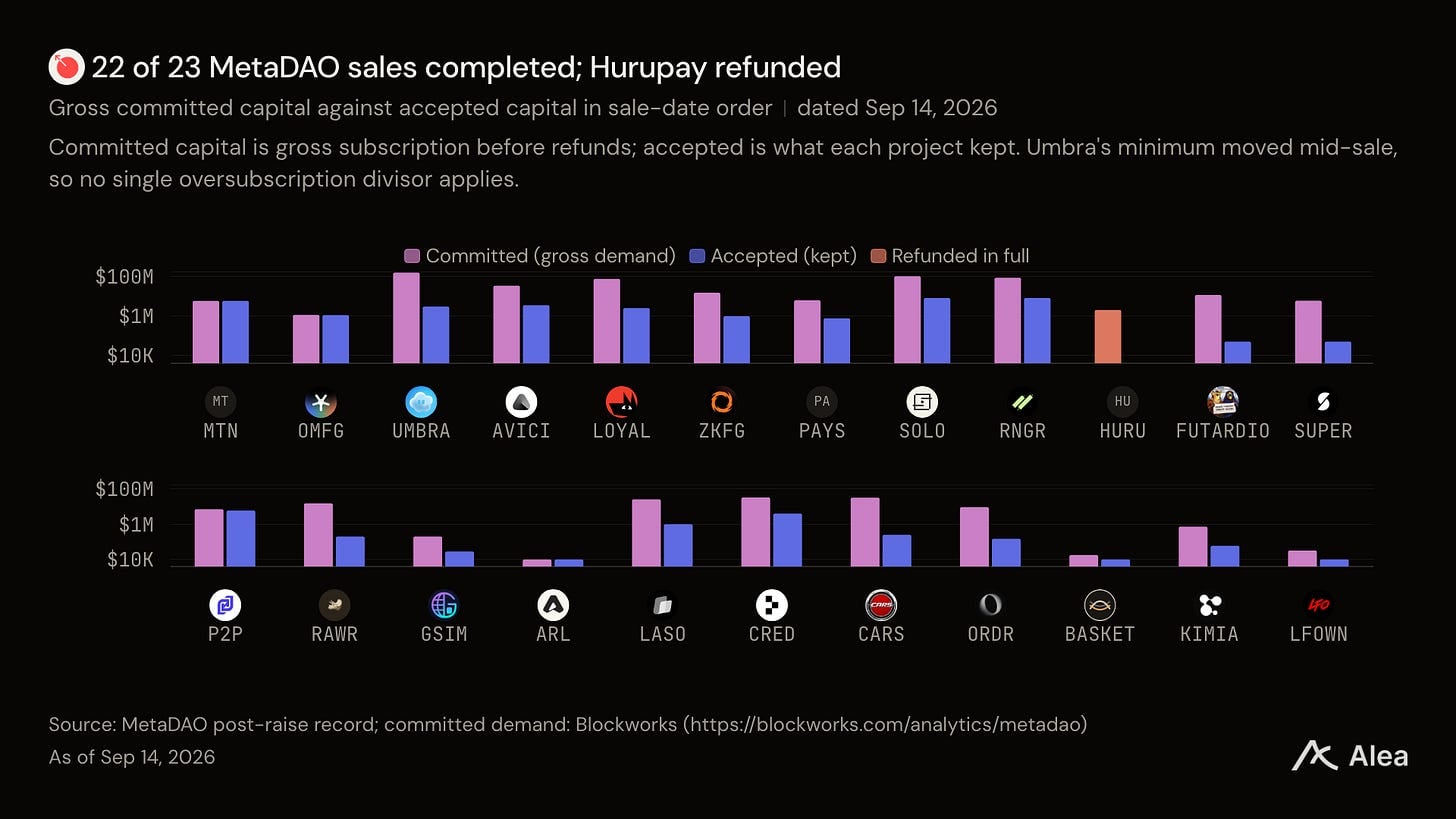
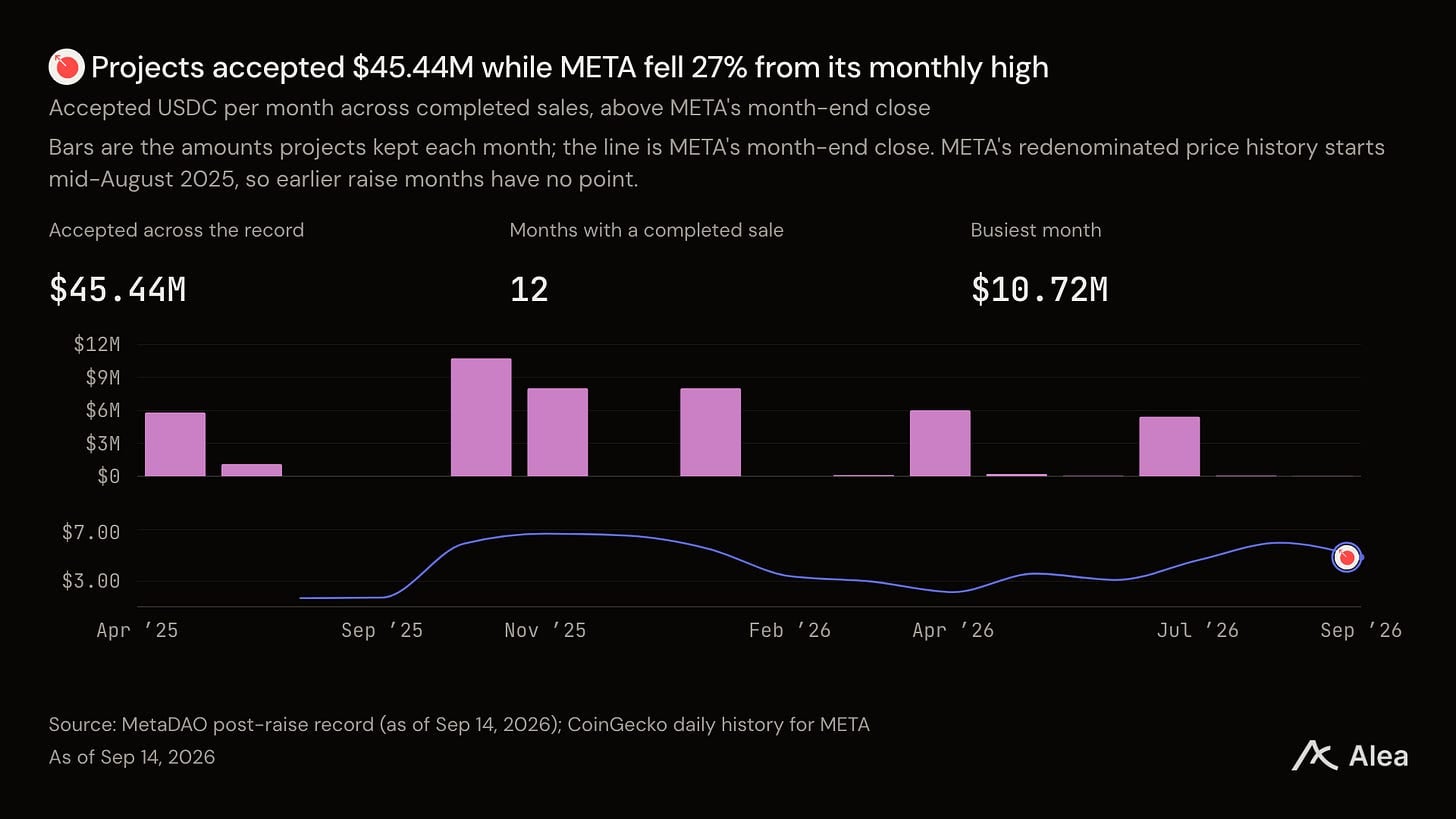
Rip Cars only aimed to raise 250,000 USD in July, but ended up receiving 32 million USD. MetaDAO accepted 250,000 USD, returning the rest. This is not uncommon. From the 5.8 million USD subscription of the first sale in April 2025 to Rip Cars' 32 million USD, demand has risen throughout. 23 sales accumulated subscriptions of 624.7 million USD, with actual funds received amounting to 45.4 million USD. Buyers keep returning because of what happens after money is exchanged. Most launchpads end with the funds handed over to founders; MetaDAO keeps the money in a treasury governed by buyers, along with the company’s intellectual property and the rights to issue new tokens. Without market approval, nothing can move.
Key Points
- September 1st restart announcement: to rebuild internet-focused venture capital and add For Funds positions for institutions.
- 23 sales recorded subscriptions of 624.7 million USD, MetaDAO received 45.4 million USD and returned the rest; 22 out of 23 still completed fundraising.
- META holders control the treasury, intellectual property, and issuance rights. New token issuance requires staking 200,000 META and allowing traders to set pricing on proposals for three days.
- Transaction fees accrue only after the newly raised tokens begin trading, with revenue lagging by approximately one quarter: 1.8 million USD in Q4 2025, 556,000 USD in Q1 2026, and 376,500 USD in Q2. Q3 figures are as of September 30.
Companies are increasingly going public later, with value remaining in the private domain
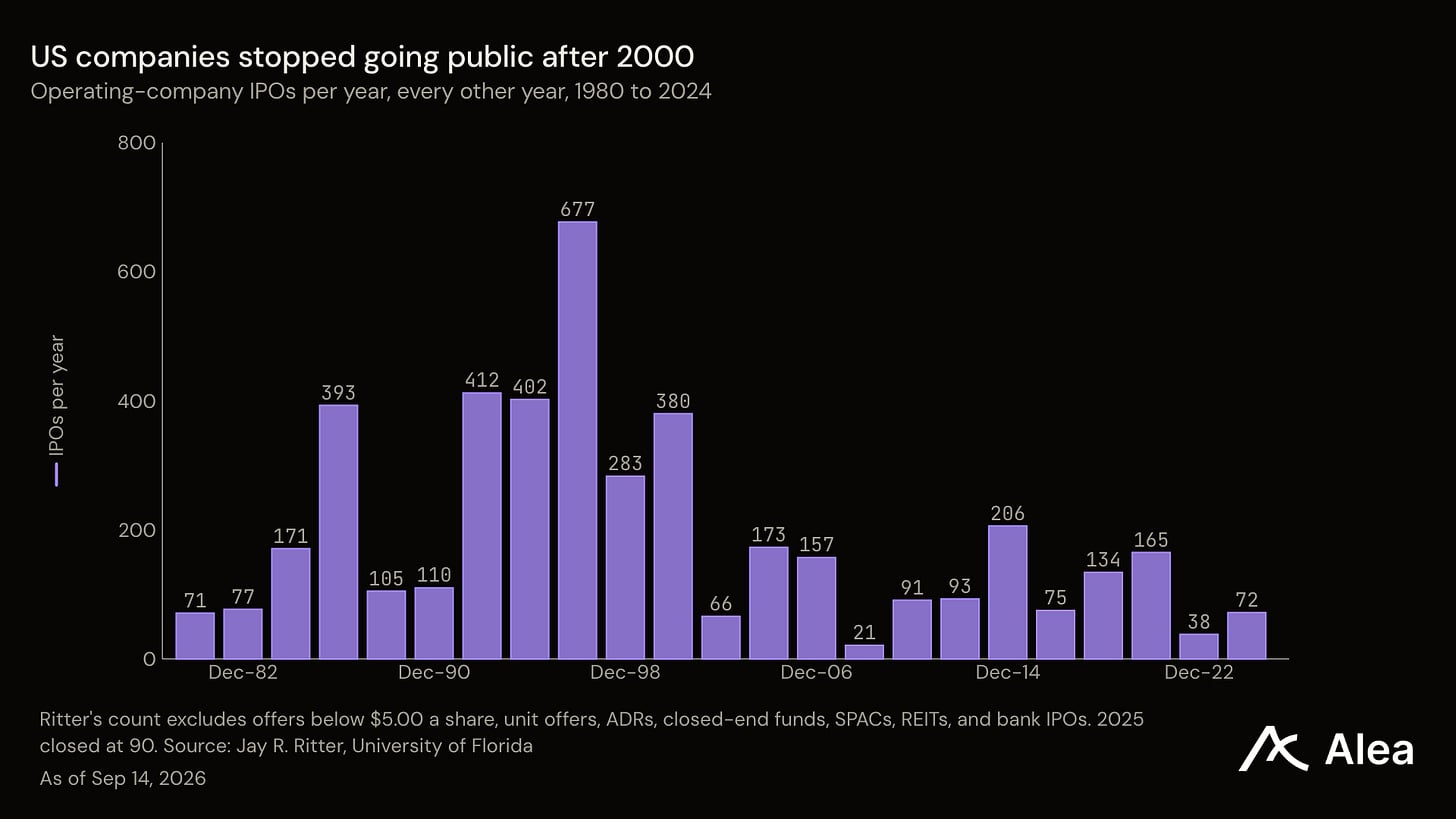
Public companies in the U.S. that went public in 1999-2000 had a median age of 5 years; after 2001 it rose to 11 years; and by 2024 it will reach 14 years.
U.S. exchanges saw the number of domestically operating publicly listed companies drop from 7,451 in 1997 to 3,657 by the end of 2025. Even when going public, the median percentage of ownership sold has decreased from 33.3% in 1993 to 14.5% today.
Take SpaceX as an example. It stayed private for 24 years and went public in June 2026: issue price of 135 USD, first day close at 161 USD. The approximately 19% first-day increase handed about 14.4 billion USD to institutions with quotas; retail investors received the remaining share, reported to account for about 20% of the issuance.
Meanwhile, 24.3 million American households—accounting for 18.5% of the total—are eligible to buy into those value-forming private rounds. The thresholds are an annual income of 200,000 USD or a net worth excluding home equity of 1 million USD. Congress set these figures in 1982 and has not adjusted them since; ordinary wage growth has pushed more households over the line year by year. The SEC has been recording this change annually, with the share rising from 1.8% in 1983 to today’s 18.5%, driven almost entirely by inflation.
Cryptocurrency has provided a better mechanism for capital formation. Shares in private companies are just a line on a lawyer's form: to sell, there must be a buyer, board approval, and a transfer agent. Tokens are anonymous assets on a public ledger, with sustainable pricing and instant settlement, governed by code that every holder can read. This allows a company of fifteen people to hand over real, transferable rights to strangers on a Tuesday afternoon. Crypto has been able to do this since 2017; what it has consistently gotten wrong is everything that happens after the money changes hands.
Each previous fix has stopped at the moment of transaction
The past fifteen years have provided a long list of answers. Each one expanded the pool of buyers, but every one of them stopped the moment the money exchanged hands.
Regulation Crowdfunding has recorded a total of 1.5 billion USD since 2016, with an average deal size of 359,000 USD. Investors cannot price their positions, and records indicate that 47% of issuers stopped submitting annual reports. Regulation A+ sought 31.7 billion USD but raised only 10.5 billion USD.
SPACs once allowed retail investors to enter before mergers. From 2020 to 2021, 861 raised 219.9 billion USD; returns on mergers completed in 2021 were -64.2% a year later and -73.0% three years later.
Crypto ran the same model faster. ICOs in 2017-2018 drained about 20 billion USD, with an estimated failure rate of 46%–59% for that 2017 cohort.
The answer for 2024 is low liquidity. Only 6%–20% of the supply is trading at the time of listing, but prices imply the entire market cap. Those issuers are estimated to need about 80 billion USD in new buying to support the price against future unlocks.
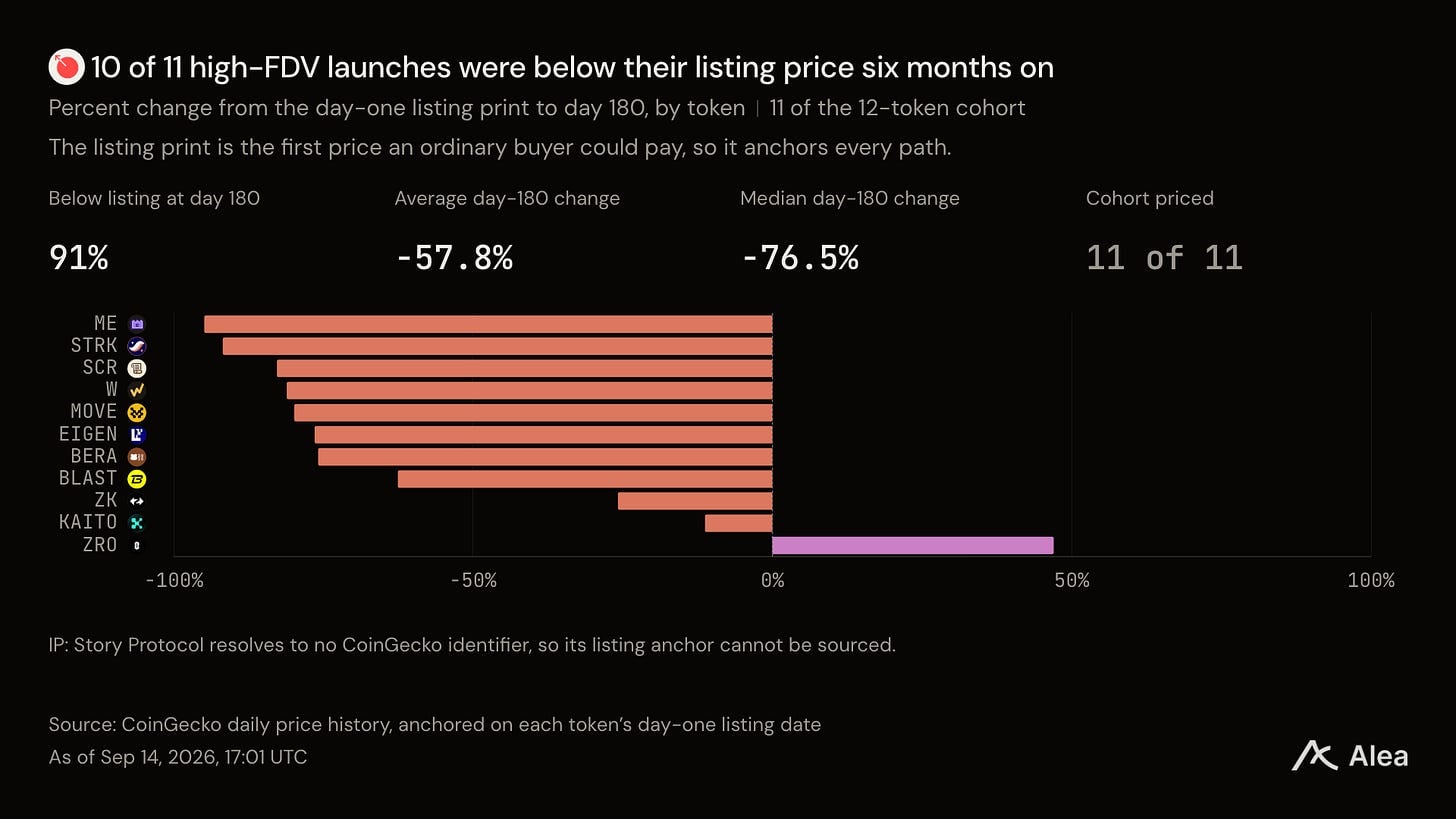
Then, in 2025, it rebuilt the very thresholds it intended to tear down. Plasma capped out at 500 million USD in about five minutes; Falcon Finance set a target of 4 million USD and raised 112.8 million USD. Among the 118 issuances recorded in 2025, 84.7% fell below the issue price, with a median drop of -71.1%.
Echo made a more forceful re-entry into public sales than anyone, then sold for 375 million USD to Coinbase—while it had only raised just over 200 million USD for projects on the platform. The platform itself cost more than everything it has financed combined.
What they are selling is the same thing: a spot in line. Reg CF sells shares with no readable price or exit; ICOs and 2025 sales sell tokens, with issuers deciding how to use the raised funds unilaterally, with buyers’ rights stopping at the wire transfer.
What MetaDAO changes is that segment after fundraising.
What MetaDAO chooses and what anyone can open
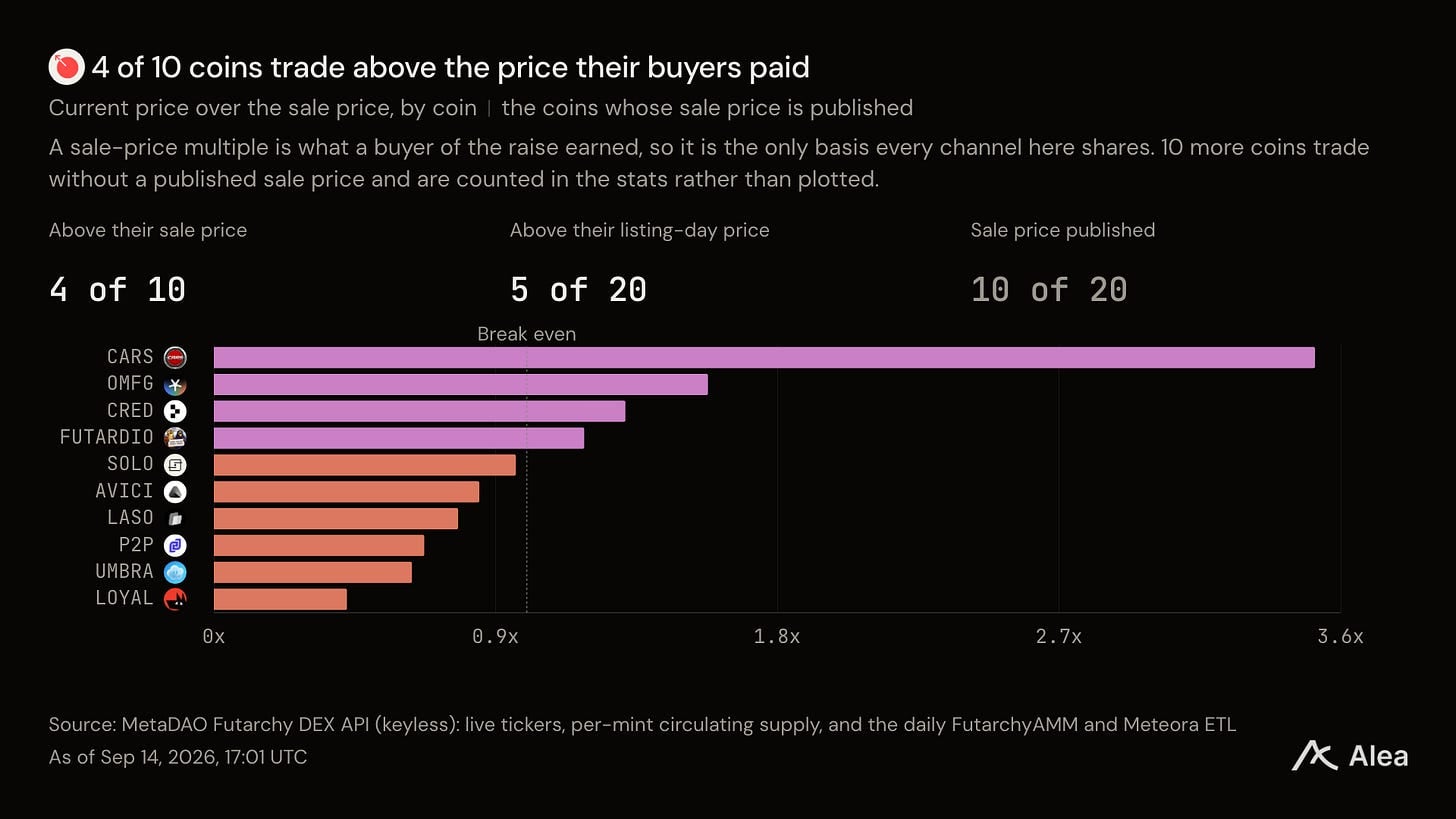
MetaDAO runs two types of sales on the same set of contracts and the same fee structure. One type is selected and promoted by it; the other type anyone can initiate. The results differ greatly.
The sales have discretionary caps, written in the rules: allowing believers to subscribe while preventing projects from raising too much. Rip Cars wanted 250,000 USD in July, but 32 million USD poured in; MetaDAO kept only 250,000 USD and returned the rest, allowing the company to start with a valuation that would still permit product growth. In total: subscriptions of 624.7 million USD, receiving 45.4 million USD, with 22 out of 23 completing the fundraising.
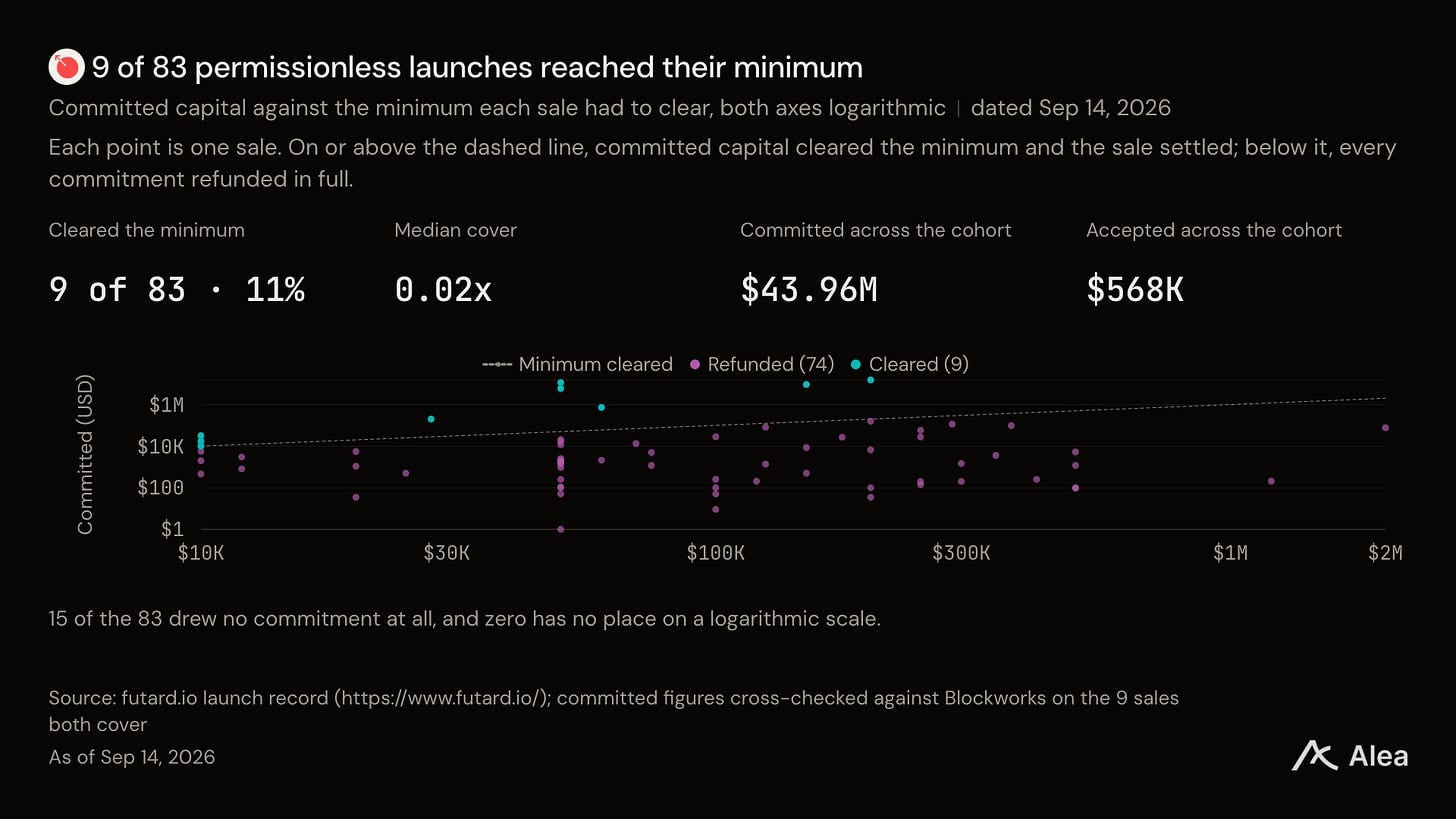
The open category is futard.io—anyone can initiate a sale, with everything public from MetaDAO. It has run 90 sales, but only 9 met the minimum threshold, raising only 568,000 USD from 44 million USD in subscriptions. The same group of people, the same contracts, the same fees. The difference is: whether anyone selects the company.
Choosing well is a job, so MetaDAO has written more judgment into the rules. The Ownership Score launched in July allocates half of Rip Cars' quota based on how early contributors subscribed and how long they stayed invested. Alea wrote this formula comprehensively in July.
The ledger is still filled from the top down. The on-chain lending project Credible raised funds through MetaDAO in June, reportedly with 77% of the subscribed capital coming from wallets with 100,000 USD and above, and about 2.3 million USD already committed before the sale. Open access did not shrink the buying pool.
Real-time pricing, binding votes, and exits
What MetaDAO sells to token buyers is one thing: you do not have to trust the founders. This is the verbatim from its investor documents.
Solana’s 2021 cohort showed why this is important. Parrot raised 85 million USD, reportedly leaving 72 million USD with the team; Aurory raised 108 million USD, with tokens dropping 99.5% from their peak. Both were legal. There were no terms in the transaction preventing the teams from making unilateral decisions on how to use their money. At MetaDAO, unilateral decisions cannot be made: using the treasury requires a public proposal, and anyone can place a counter bet on it.
Ownership tokens grant buyers three things that private shareholders will never obtain.
The first is real-time pricing. MetaDAO publishes runway and valuations for each company on a monthly basis, and discloses its treasury to the dollar every quarter. Private companies disclose nothing; public companies disclose quarterly, but 40 days late.
The second is binding voice on every dollar. In July, someone proposed to transfer 1.6 million USD from the Umbra treasury to an external wallet; traders bet against it, and the price showed that the company would be worth less with the money gone, leading to the proposal being recorded as defeated. In August, holders rejected liquidating Kimia and continued funding the team. In September, they renegotiated the unlock schedule of one founder in a public forum. None of these required the founders’ permission.
The third is the exit without needing the company to buy out. Ranger liquidated and returned 5.05 million USD to holders, approximately 0.78 USD each. Paystream was voted for liquidation on September 2. ZKFG succeeded in privatization on the second attempt—50 participants failed the first, and 67 passed the second.
The same set of rules written in the token documents also constrain META itself. The treasury, intellectual property, and issuance rights are all placed under the decision market, settled by traders rather than voters for each proposal. New tokens need public proposals, a stake of 200,000 META, and then the market must exist for three days before they can be issued. There are no scheduled unlocks and no ownership outside of governance; MetaDAO has also published its MiCA white paper under the digital token identifier BQ53DH590.
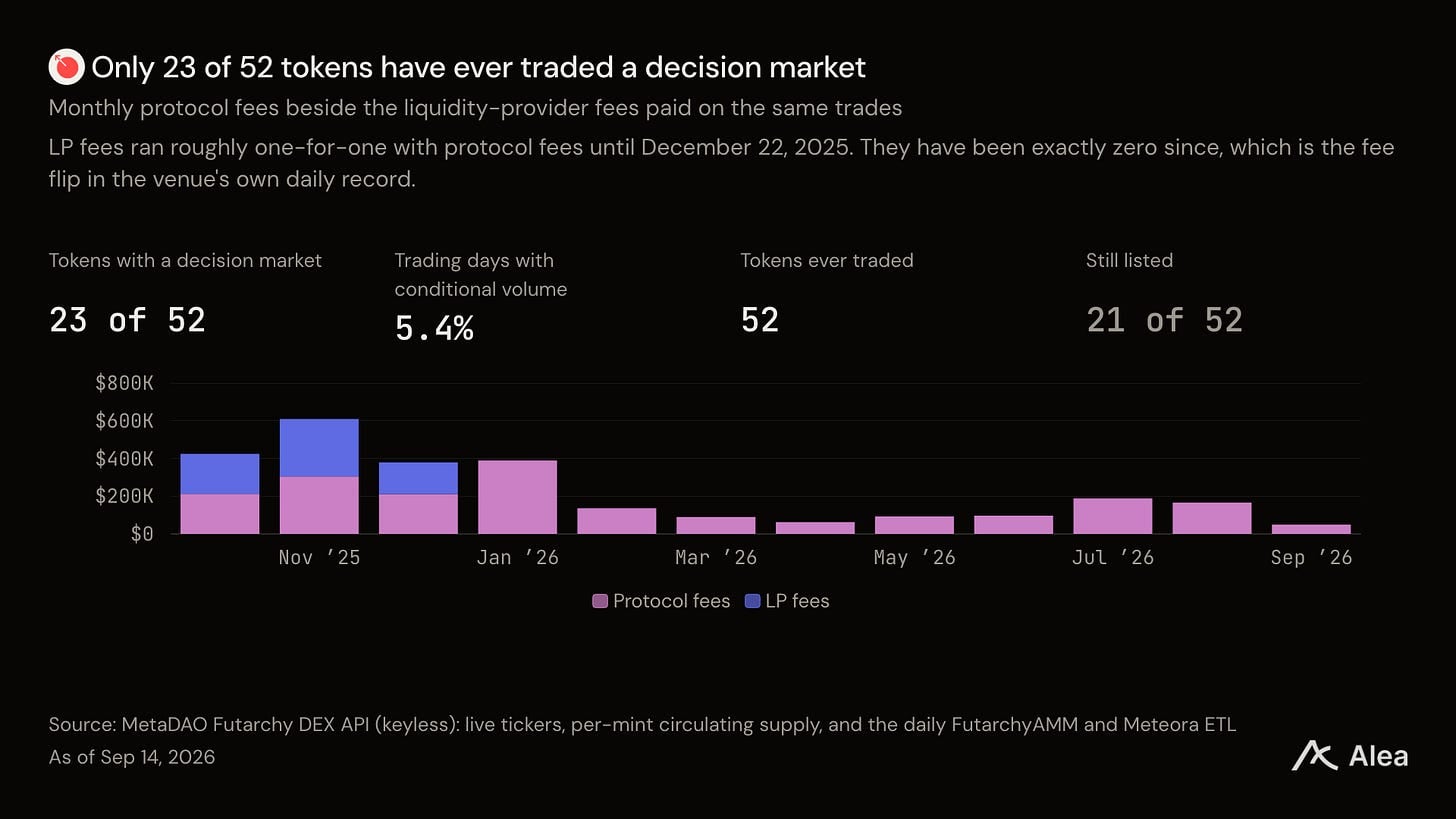
How MetaDAO makes money: it charges 0.50% on each transaction on its Futarchy AMM, all of which will be allocated to the protocol starting December 22, 2025. The fees accumulate in a treasury of approximately 9.95 million USD (of which 1.4 million USD is META itself), compared to a market capitalization of 109.6 million USD. Thus, META is about 11.0 times relative to its governance assets, and about 12.7 times after excluding the token itself. Today, these fees remain in the treasury, with holders deciding how to use them—just like their rights over the rest of MetaDAO’s assets. The platform has already established fee switches, revenue sharing, and token burn mechanisms for companies it has incubated, so once its own holders vote, it knows how to route the funds to them.
The crowd making these decisions is small. The median recorded by MetaDAO is about 12 traders making each decision; in September, one proposal passed with only two participants. Out of 51 tokens, only 23 have seen transactions in the decision market, and these markets are only open on 5.4% of days. Real money brings a crowd: 102 traders showed up for one capital increase, 92 for one allocation, and 67 for one privatization. Day-to-day expenses see almost no participation—thin markets typically behave like this before they’re worth spending time on.
What opponents must rebuild
MetaDAO relies on trading to earn transaction fees. Fundraising generates tokens that are later traded, so fee revenue roughly lags one quarter behind the sales calendar. A recorded 1.8 million USD in Q4 2025 (after that batch went public), 556,000 USD in Q1 2026, dipping to 67,000 USD in March. In July, with Credible and Rip Cars opening, it rebounded to 199,000 USD. The first 13 days of September generated 47,000 USD, while the previous selection of fundraising had closed on July 25. This curve represents the shape of the business.
Therefore, this year's work focuses on finding more worthy companies to fund—which is precisely the part competitors cannot quickly replicate.
Colosseum and Orrick released the STAMP protocol in December: a set of standard terms where the only asset investors hold is the token. Winners of hackathons enter accelerators to then go into fundraising; MetaDAO can see how many months the team has built before underwriting.
METADAO-039 allocated 2 million USD for seed Ownership Capital, a fund that buys these companies and votes. META-040 transferred another 2 million USD from the treasury USDC into a yield-generating stablecoin constructed by companies incubated by MetaDAO. The September restart combined with the For Funds positions is selling guaranteed quotas to institutions.
Together, this is a pipeline, legal templates, in-house funds, and institutions willing to pay. Competitors must have all four in place before their first sale.
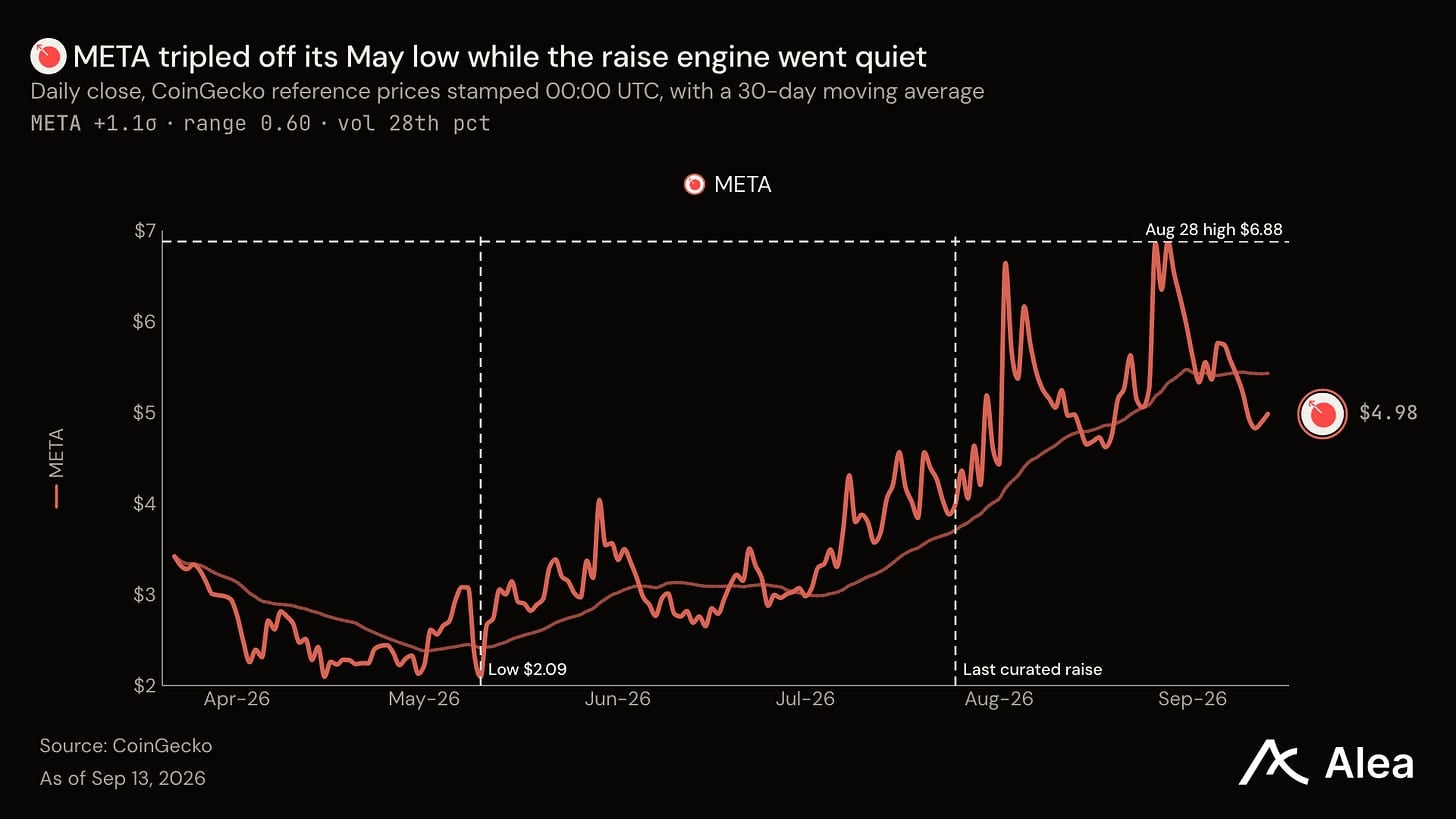
Buyers are already paying for it before the pipeline has produced new funding. META bottomed out at 2.09 USD during revenue lows in May, hitting a peak of 6.88 USD on August 28—three days before the restart, five weeks after the last sale closed. It closed at 4.98 USD on September 13: up +225% for the year, -54% from its October 2025 high.
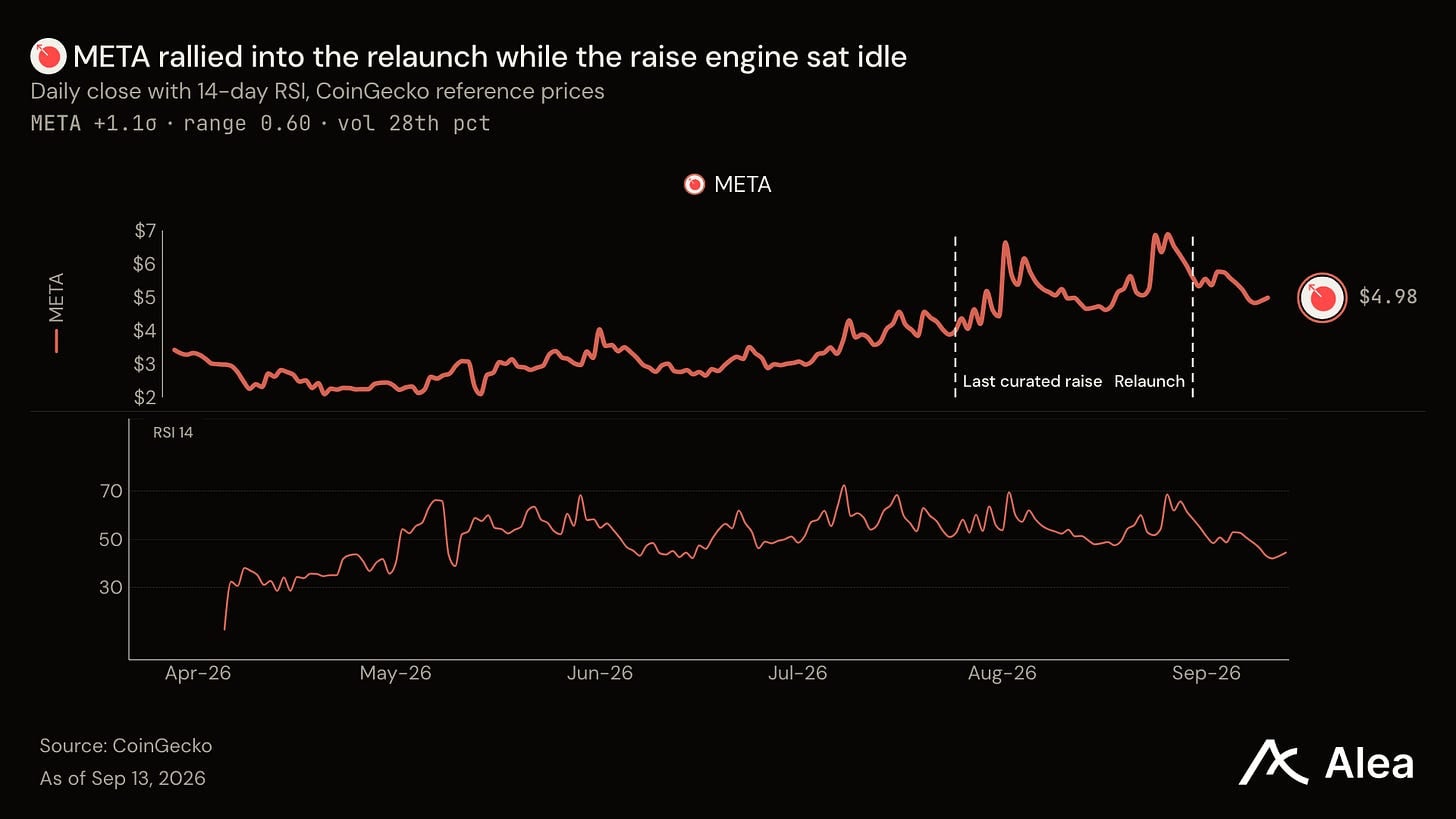
Paying holders is a routine job for MetaDAO. It has run Jito's fee switch and Flash's revenue sharing. Umbra holders approved a buyback of 250,000 USD on September 8; the proposal to burn 259 million tokens for Sanctum was also reported this month. Each of these follows the same decision market rules used by META itself.
The machine for META buybacks is already in place, and the treasury powering it has not yet been tapped; any holder can bring it to the market.
Buyers will come, the machine can move, and disclosures surpass what private or public markets can offer. What remains undecided is supply: can MetaDAO find and verify enough good companies to put the waiting money to use? UMIA is chasing the same batch of founders on Base, having raised 6.2 million USD from 2,700 wallets. But MetaDAO has already started with 15 funded companies, and with each dollar received, 13 dollars have been subscribed, alongside a treasury controlled by holders.
免责声明:本文章仅代表作者个人观点,不代表本平台的立场和观点。本文章仅供信息分享,不构成对任何人的任何投资建议。用户与作者之间的任何争议,与本平台无关。如网页中刊载的文章或图片涉及侵权,请提供相关的权利证明和身份证明发送邮件到support@aicoin.com,本平台相关工作人员将会进行核查。


