Organized & Compiled: Deep Tide TechFlow
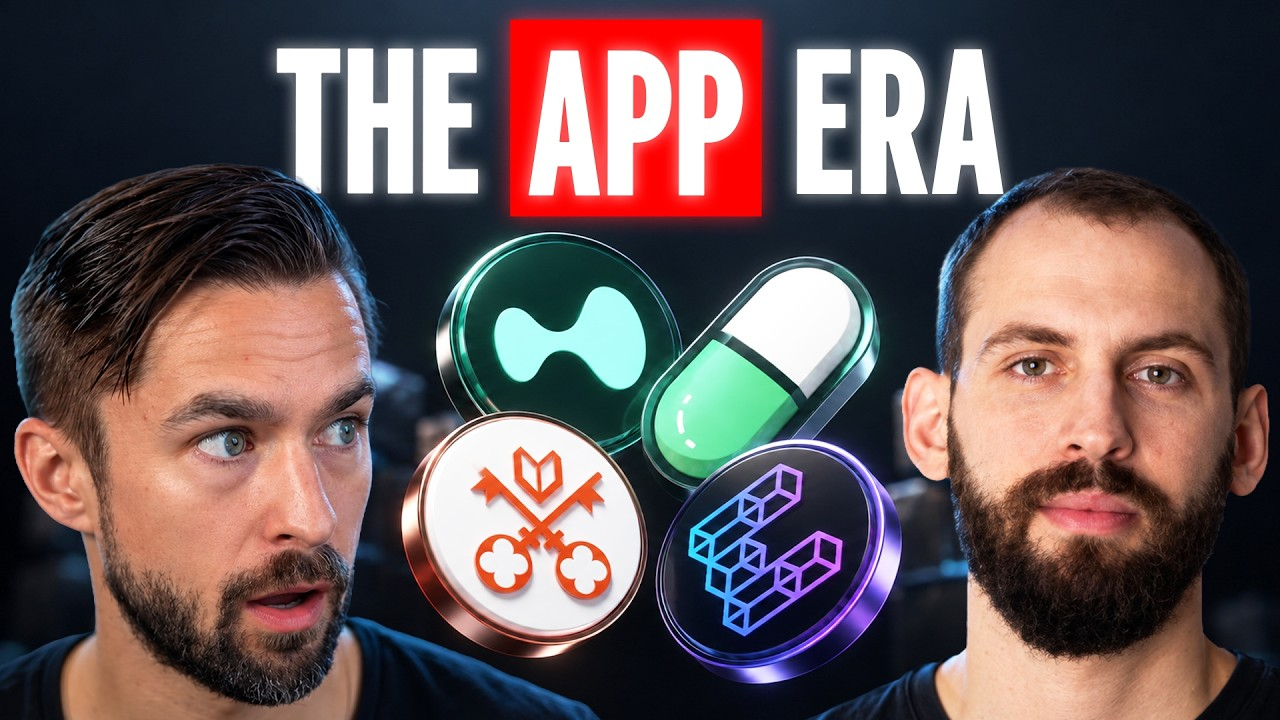
Guest: Austin Barack (Founder and Managing Partner of Relayer Capital, former Partner at Coin Fund)
Host: David (Co-host of Bankless)
Podcast Source: Bankless
Broadcast Date: September 7, 2026
Duration: About 67 minutes
Disclosure: Austin Barack is the founder and managing partner of Relayer Capital, mentioning multiple projects such as VVV, Pump, Hype, ETHFI, ETH in this issue of Relayer liquidity token fund; he is a Series A investor in ETHFI (leading the round in February 2024). The target price, valuation multiple, and revenue forecasts he publicly provides in this issue are purely his personal opinions and judgments based on his own models, and do not constitute investment advice. Please verify any specific target prices, multiples, and figures back to the original models and disclosure documents.
Key Points Summary
- Framework: Relayer now has 95% of its position in liquidity tokens, seeking the intersection of "growth" and "value"; this year focuses on two lines: crypto plus AI, and tokenization of 24/7 trading.
- VVV (Venice) target price $43.9: Based on $336 million revenue in 2027, $70 million in burns, and a 50x valuation. Three burn mechanisms are in place or forthcoming: subscriptions, credit points, and future renewals; the assumption is that 40% of the burns in 2027 will come from Minds (the AI app store that has not yet launched). Currently around $16, he claims it is still significantly undervalued under a $1 billion fully diluted valuation.
- ETHFI (Etherfi) at least doubles: The business model is redefined from liquid staking to "on-chain new-type brokerage," benchmarking Nubank ($80 billion market cap, 139 million users). Today, 65% of revenue comes from credit card and loan business, generating $3-4 million/day (10x year-on-year growth), annual buybacks and burns could exceed $30 million, which could push the unit price above $1 under a 30x valuation.
- Pump valuation reassessment: It currently has only a 5x buyback multiple, while Hyperliquid and Lighter are at 30-40x. Pump is not a meme coin; it is "the largest gambling business in the crypto circle," likening it to Las Vegas Sands, MGM, DraftKings, FanDuel, predictive markets, with revenue durability validated for over two years. Even at a 10x valuation without considering growth, there’s still a 1x upside.
- Hype: One of the best representatives of the crypto paradigm (24/7 settlement, all assets on-chain), the pricing discovery of new stocks like SpaceX, Cerebras, Unitary has already happened in Hype. HIP-3's real-world asset market brings trading volume but is still in the investment phase, not monetized yet; mainstream crypto funds are returning, driving daily fees from millions to $5 million in a single day.
- Cycle positioning: The era of infrastructure is over. The next round of winners are the true 0 to 1 applications that connect crypto with the real world, combined with assets that can genuinely serve as money (BTC, ETH, Zcash). ETH is facing quantum risk from Bitcoin and concentrated holding risks from Strategy, and the optionality of "becoming money" has resurfaced.
Highlighted Opinions Summary
- On rotation: "In the past, 95% of crypto revenue came from infrastructure, now applications take two-thirds. This is the real rotation of this round."
- On VVV valuation model: "I didn't make this estimate off the top of my head. I come from corporate development and FP&A, tracing back from revenue, gross margin, to reinvestment."
- On ETHFI: "They are just packaging Ethereum to sell it. Ethereum has evolved from a new-type bank to a new-type brokerage, and they are upgrading along with it."
- On Pump: "This is the biggest gambling business in the crypto circle. You wouldn’t ask who the customers of Las Vegas Sands are, yet the business has persisted for thirty years."
- On the cycle: "The ultra-infrastructure era is over. The winners of this round are the true 0 to 1 applications that genuinely connect crypto with the real world, along with assets that can serve as money."
Text Content
1. How Relayer Views Crypto Investment
David: Welcome Austin Barack, founder of Relayer Capital. Let’s first talk about the investment framework, then we will discuss the projects one by one.
Austin: The crypto market has always been changing. The strategies that worked in 2017 will not work in 2021 or 2024. One theme that has repeatedly proven effective is the intersection of "growth" and "value". No one comes to crypto looking for a company growing 10% a year with a 4x valuation; there are plenty of those companies. Investors are looking for assets that grow the fastest while still having room for valuation. Crypto capital itself has cyclicality, leading to extreme overvaluation and undervaluation, and in between those extremes, there are often points that satisfy both "growth + value".
David: Are you positioned on two lines now?
Austin: Crypto plus AI, and tokenization of 24/7 trading. Venice, Pump, Hyperliquid, Ether all belong to the intersection of these two lines. I co-founded Relayer two years ago, and I was previously a partner at Coin Fund. Currently, Relayer is involved in both liquidity and venture capital, but this year, 95% of our efforts are focused on liquidity tokens, with the remaining 5% reserved for seed-round early projects.
David: Are you not looking at the narrative around layer one public chains and layer two networks?
Austin: The era of infrastructure is basically over. The new stories surrounding layer one public chains and layer two networks are still remnants of the previous cycle, and this year, funding is clearly moving towards the application layer.
2. How was the VVV target price of $43.9 calculated?
David: You recently tweeted that VVV is severely undervalued at a $1 billion fully diluted valuation, with a reasonable price of $43.9 from the model. Let’s talk about this model.
Austin: I come from corporate development and FP&A, deriving it backward from revenue and gross margin. Venice's business is "a private, uncensored AI portal," charging in two ways: subscriptions (three tiers at $18, $68, $200) and credit points purchases. Users exceeding their quota on the three tiers must buy additional points. They just raised a round at the end of June or early July at a $1 billion valuation, equity + token combined. Many in the market get nervous when they hear "equity + token," but Venice has designed a fairly elegant structure: the main business is consumers using AI products and paying with credit cards, while off-chain business runs ahead; the token bears the functions of on-chain burns and tokenized computing power.
David: How about the burns?
Austin: In the short term, Venice will pass through almost all free cash flow (after reinvestment) to the token. There are currently two established burn mechanisms: each new subscription burns a corresponding number of VVV according to tier; credit point purchases incur a 5% burn. Long-term, they plan to gradually add new mechanisms, such as subscription renewals.
David: Let me clarify, is credit point purchase the same thing as subscription or a new product?
Austin: Consider it a 2 out of 5 new product, mainly for increased user engagement. But Minds is a 5 out of 5 new product, an AI app store that lets heavy users bundle and sell their prompts and model combinations to other users, Venice takes a cut and then does burns. This will be the largest variable for their burns in 2027.
David: Break down the numbers.
Austin: In August, Venice's annualized revenue is $107 million, with an annualized burn of $8.3 million. I assume revenue will reach $336 million by 2027 and the burn will reach $70 million. Minds contributes $29 million, accounting for 40% of the burns. $70 million times a 50x valuation gives a $3.5 billion token market cap, dividing by the total token supply by the end of 2027 gives $43.89. I rate the model's optimism at 6 out of 10.
David: Will the percentage for credit points purchase increase from 5%?
Austin: By 2027, I assume it will rise to 10%. They have already gone through the "discretionary burn → new subscription burn → credit points burn" path, and the pace is to validate and escalate.
David: What about the current price?
Austin: About $16; when I updated the model a few days ago, it was still $12. A 10x revenue growth in 8 months was unexpected; the $29 million assumption for Minds was impossible to pin down 8 months ago, so this model is now merely "reasonably optimistic," not "fully accounted."
David: Are you familiar with the team?
Austin: Quite familiar. I've followed since VVV went public in early 2025; I first got into the space through Virtuals and AIXBT when I caught the airdrop. I later lost track for a bit, but in early 2026, when Eric wrote that long tweet thread explaining the token economic model and DEM (tokenized computing power), I read the entire thread in a cab in 40 minutes and immediately built a position for the fund.
3. The Logic Behind ETHFI’s At Least Doubling
David: You also highlighted Etherfi; why?
Austin: This was the first venture investment since the fund’s inception, leading the Series A in February 2024. At that time, they were still doing liquid staking re-staking. After discussions with Mike and Rock, it wasn't just their execution capability that impressed me, but their judgment about where the product should go; they know which products are for customer acquisition and which will be commoditized. Liquid staking re-staking falls into the latter category.
David: What’s the current business structure?
Austin: 65% of revenue comes from the "new-type banking" business (credit card usage and loan interest), while only 35% remains on earnings and staking. The direction has completely reversed, and the market hasn't caught up to this cognitive difference yet. On the day Ethereum's inflation reduction plan came out, Etherfi dropped over 10%, and Lido dropped too; the market was still pricing based on the "liquid staking" label, but today, Etherfi is no longer in the same category as Lido.
David: Who are you benchmarking against?
Austin: Nubank. With an $80 billion market cap and 139 million users, it thrives on "creating more user-friendly products." Etherfi is essentially the on-chain version of Nubank, driven by global stablecoins. Ethereum itself has upgraded from a new-type bank to a new-type brokerage (tokenizing stocks and integrating real-world assets), and Etherfi’s product line is easy to sell without needing additional costs.
David: What’s the revenue trend?
Austin: They’re currently generating $3 to $4 million per day, with a 10x year-on-year growth rate. The new business is still ramping up. The main revenue source for new-generation banks/brokerages comes from loan interest; Nubank derives 60% to 70% of revenue from loan interest, while Etherfi is only at 4% now, leaving significant room for growth. They've also partnered with Aave v4 for an 80/20 split, with lending directly tied to Aave instances, allowing the team to remain lean.
David: How is the valuation calculated?
Austin: Blockworks conducted a conservative model estimating a future buyback and burn of $21 million over the next 12 months. I lean towards a more optimistic estimate of at least $30 million. A 30x valuation in the new broker segment is reasonable, pushing the unit price on the token above $1; it’s currently around $0.5, thus at least doubling. Blockworks cut the growth assumptions in half; I think they should increase them.
4. Reassessing Pump and Hype
David: Pump currently has a 5x buyback multiple, while Hyperliquid and Lighter are at 30-40x. What do you think of this gap?
Austin: Pump is indeed cheap. I position it as "the largest gambling business in the crypto world," akin to Las Vegas Sands, MGM, DraftKings, FanDuel, predictive markets, zero-date options, and bets on Robinhood, all of which belong to the same business class. People play negative expectation products not to win but for variance, a business model that has lasted for decades. Pump's revenue has increased by 80% on a monthly basis over the last 90 days, and its durability has been validated for over two years; the market's understanding of "durability" is still transitioning.
David: How to raise the valuation?
Austin: A 10x buyback multiple over 5x is reasonable. Even without growth, a multiple reassessment can bring it up to double. Adding in ongoing growth, there’s still upward potential. Pump has already tripled over the last month and a half, but I believe it’s not finished yet.
David: And what about Hype?
Austin: Hype may be the most thoroughly implemented case of the crypto paradigm apart from stablecoins, BTC, and Zcash. It features 24/7 settlements, all assets on-chain, moving the whole financial system on-chain. A new highlight is the price discovery of new stock issues; assets like SpaceX, Cerebras, and Unitary, which have not yet formally IPO-ed, have already seen their pricing discovered in Hype. Investment banks may base their IPO pricing on Hype's screens in the future.
David: What’s the financial outlook?
Austin: The main increases are coming from market volume on HIP-3 (goods, stocks, indexes), but those are still in the investment phase and haven’t been monetized much. The real "cash cows" are the perpetual contracts of crypto tokens. A week ago, daily fees were around a million, and recently on one day it reached $5 million. Funds are flowing back to the main battlefield of crypto, and Hype is the most direct beneficiary because it thrives on the return of crypto funding and token volatility.
David: You also mentioned the "token vs. equity" risks of Pump and VVV.
Austin: Yes. Pump was initially 100% buyback, but that is not guaranteed forever. This year it changed to 50% income buyback, with a 12-month commitment, while the remaining 50% is reinvested. For a multi-billion asset holding a lot of tokens and aiming to build a long-term business, whether or not it renews next year could pose a risk. The market’s risk pricing on this aspect is reasonable, but for top teams, the likelihood of proactively relinquishing tokens is low. This risk can be discounted through buyback multiples, conservatively attributed 6-10x, optimistically 10-14x.
5. Cycle Positioning: Applications + Money
David: How do you define this cycle?
Austin: In a period of crypto history, infrastructure took more than 95% of total revenue; now applications take two-thirds, with infrastructure only capturing one-third. This trend will continue, and applications may take over 90% or more. The most time-tested tokens are in the "applications" and "money" categories. Bitcoin will not disappear, and "money" like Zcash has regained its narrative: Zcash serves a different user base, embodying the original intent of crypto from a decade ago, and I’ve recently seen OG Bitcoin folks contributing structural inflows to it.
David: What about ETH?
Austin: ETH is currently in a very interesting position with the potential to become "money," which is a perspective I haven’t seriously considered in a long time. Bitcoin has several variables: quantum computing risks, the concentrated holding risks of Strategy, and other structural factors. When combined, ETH's optionality as "money" is stronger than ever before. Ethereum has consistently demonstrated its value through business support, and recently the return of the "money" narrative has made valuation interesting.
David: What are your thoughts on Solana?
Austin: Solana is currently the public chain with the most on-chain spot activity, supporting the entire business of Pump. However, it's in an awkward phase: fully utilized but earning little because the MEV has dwindled. Solana is one of the most noteworthy bets in crypto adoption, but it’s critical to watch how it converts usage into revenue.
David: How about the Base and Robinhood chains?
Austin: Both are public chains that are heavily utilized, and the focus is to watch what can be extracted from the application layer.
David: To conclude, how will this round of the cycle be remembered in 2026?
Austin: 2026 will be remembered as a year when the narratives of "applications" and "money" materialized, marking the entry year of 0 to 1 applications that find the intersection of "crypto and the real world." In hindsight, this batch including Venice, Hyperliquid, Pump, Etherfi, BTC, and Zcash will be remembered as the entry points of this round.
免责声明:本文章仅代表作者个人观点,不代表本平台的立场和观点。本文章仅供信息分享,不构成对任何人的任何投资建议。用户与作者之间的任何争议,与本平台无关。如网页中刊载的文章或图片涉及侵权,请提供相关的权利证明和身份证明发送邮件到support@aicoin.com,本平台相关工作人员将会进行核查。


