From buying stocks through crypto top-ups and securities pledge trading to physical subscription and redemption of crypto ETFs, Futu is shortening the conversion path between on-chain assets and securities accounts.
Written by: ChandlerZ, Foresight News
In June 2026, Futu Securities again obtained approval from the Hong Kong Securities and Futures Commission (SFC) for service upgrades under license No. 1 (securities trading), becoming the first broker in Hong Kong to offer crypto trading financing services to eligible clients.
In simple terms, holders of cryptocurrency do not need to sell any securities holdings to use stocks as collateral directly, unlocking purchasing power to buy crypto assets.
Eligible securities holdings can be used as collateral, with Futu Securities assessing customer credit, collateral discounts, and concentration before releasing financing limits, which can then be used for crypto trading. The financing relationship remains on the broker's side, and order execution and asset custody are handled by a licensed virtual asset trading platform.
A year ago, Foresight News referred to Futu's entry into the crypto market as the first shot in the "decryption transformation" of Hong Kong brokers. At that time, the intuitive indicator for observing business progress was whether the broker’s app could directly provide crypto trading. A year later, having stocks and crypto on the same page is no longer novel, the new question has become whether the two types of assets can share the purchasing power in the same account.
At the Futu session during Bitcoin Asia 2026, Sherry Zhu, head of global digital assets at Futu Group, summarized this change as the difference between "account management" and "asset management."
Sherry Zhu stated that currently, users' stocks, ETFs, crypto, and fiat currencies are still scattered across brokers, exchanges, wallets, and banks. Transferring funds, exchanging currencies, and making deposits and withdrawals consume a lot of time, which seems like managing wealth "but is actually an act of account management, rather than real asset management."
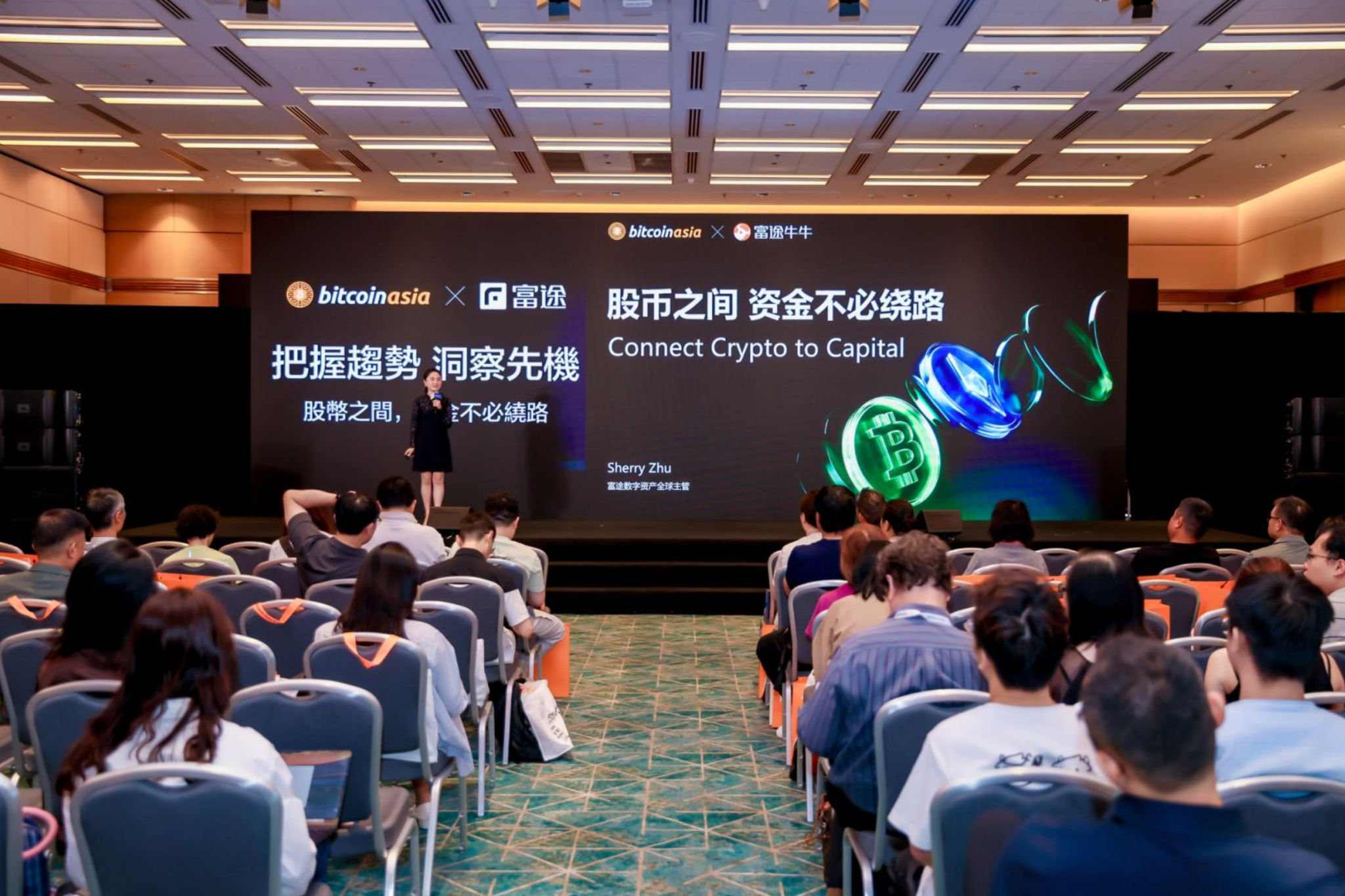
The image shows Sherry Zhu sharing at Bitcoin Asia 2026 "Between stocks and crypto, funds don't have to go around."
As of June 30, 2026, Futu had 31.25 million users, 3.84 million asset accounts, and 1.4 trillion HKD in customer assets. The large inventory of securities assets gives real meaning to connecting purchasing power.
Futu demonstrated three product directions on-site:
- Crypto top-up for stock purchases: How can money on-chain enter the securities market faster?
- Securities pledge trading for crypto: Can the stocks in hand release purchasing power for crypto?
- Crypto ETF physical subscription and redemption: Can native crypto be converted into securities assets that are easier for the traditional financial system to recognize?
In Futu's view, true cross-asset integration means account fusion, achieving shorter conversion paths, unified purchasing power, more efficient clearing and settlement, and account-level risk management.
The same app does not mean the same account
Stocks, ETFs, and crypto appearing in the same app only indicate that users can view and place orders in the same interface. Who holds the assets, where is the cash deposited, and whether one type of asset can support the purchasing power of another must still be handled separately.
From the product structure perspective, the integration of stocks and crypto can generally be divided into three levels:
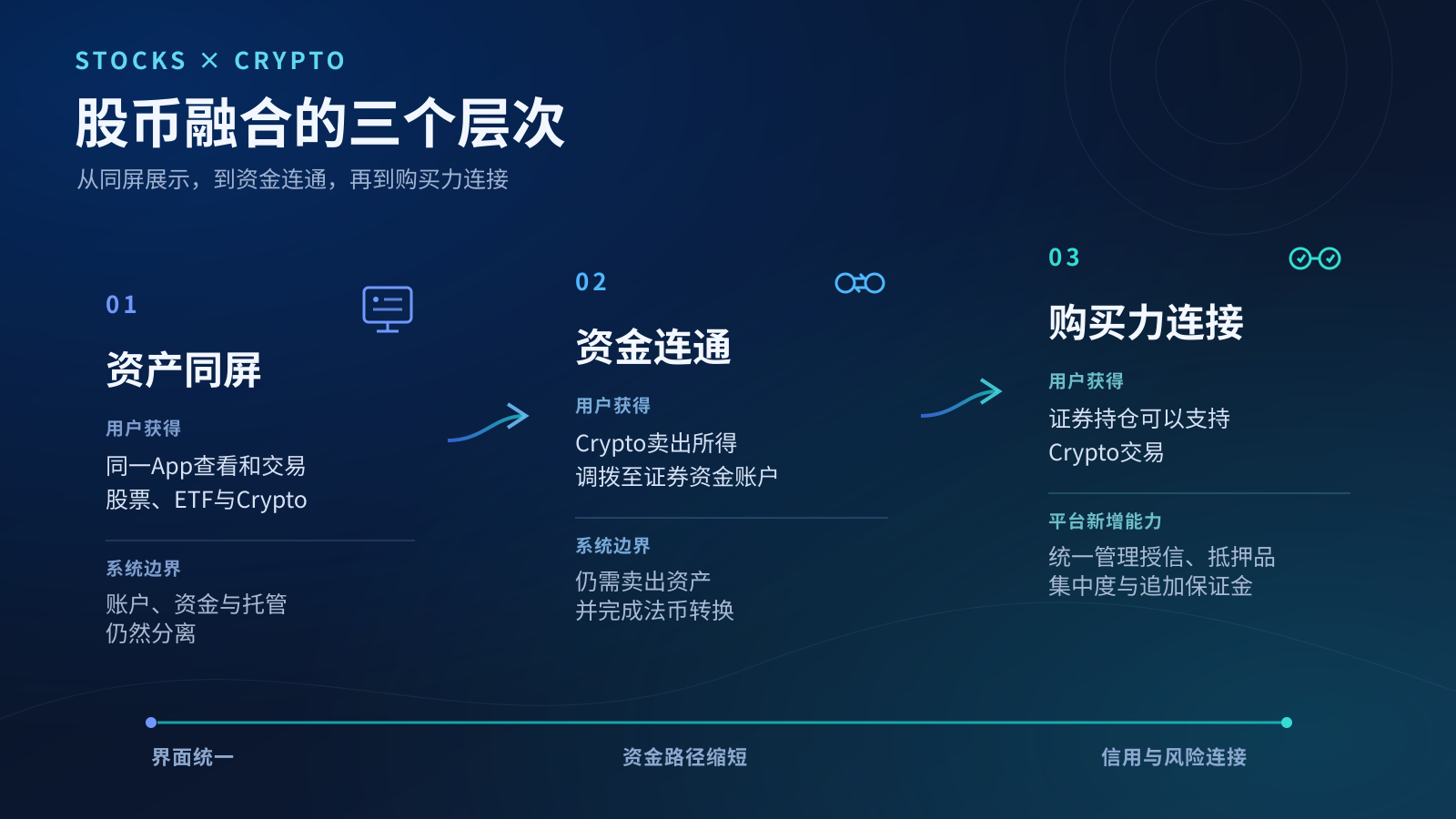
The integration of stocks and crypto is transitioning from asset display on the same screen and fund connectivity to purchasing power connection.
The real challenge lies in the third level, as securities and crypto are subject to different customer asset rules; stocks and native crypto will not therefore enter the same custody pool. Futu Securities is responsible for traditional assets, securities margin financing, and customer credit, while the licensed VATP is responsible for executing crypto orders and custody. Customer identification, collateral valuation, purchasing power allocation, and risk monitoring need to be coordinated between the two account systems, and asset isolation, anti-money laundering checks, and their respective settlement rules remain in place.
In the past, Web2 securities and Web3 assets were like two non-intersecting parallel chains: users wanting to seize trading opportunities amidst volatility often acted as manual bridges, shuttling back and forth between the channels of fiat currency deposits and withdrawals and regulatory compliance.
The real barrier lies in purchasing power connectivity. Futu undertook the cross-system coordination costs originally borne by users: traditional assets and credit risk control remain on the broker's foundation, while on-chain asset custody and matchmaking are handed over to licensed platforms, with a unified liquidity output to users in the frontend.
Regulatory changes in Hong Kong provide an entry for this connection. Before February 11, 2026, licensed corporations in Hong Kong providing crypto trading services under a comprehensive account arrangement were not allowed to provide financing for clients to purchase virtual assets. The SFC subsequently issued a relevant circular, allowing virtual asset brokers engaged in securities margin financing, under the condition that clients have sufficient collateral and meet credit controls, to use financing limits for crypto trading.
The SFC built a compliance framework based on a "dual-track approach" of "traditional financial standards" plus "Ce-Fi innovations," symbolizing a key step in Hong Kong's virtual asset regulation from "licensed trading" to "asset circulation and liquidity ecosystem."
As the meme tide recedes, capital in the crypto space begins to seek fundamental anchors
The first half of 2026 saw a continued weakening of the crypto market. During the same period, the U.S. stock market continued to strengthen, driven by growth in the AI sector. Venture capital pulled out of pure narrative assets to seek those with cash flow, profitability, and valuation anchors.
The demand for on-chain capital to flow back into fundamental assets is being picked up by two completely different types of institutions.
One is offshore exchanges bringing U.S. stocks onto the chain. Kraken and OKX's xStocks are backed by underlying stocks or ETFs, allowing users to purchase them using fiat currency, crypto, or stablecoins, and withdraw tokens to compatible wallets. Some products support around-the-clock trading and on-chain lending. This route has indeed seen rapid growth: xStocks has expanded to 714 stocks and ETFs, with AUM increasing by 1108% over the year to $684.5 million and cumulative trading volume exceeding $35 billion, with wallet holders nearing 200,000.
However, its product boundaries are also clear. Users receive on-chain tokens linked to the price and economic benefits of underlying stocks, without direct ownership of shares in publicly listed companies, typically lacking voting rights, and cannot transfer tokens to traditional brokerage accounts; dividends and other corporate actions are reflected by reinvesting or adjusting the token multiplier. Bybit's U.S. stock product also includes CFDs, where users trade price changes without transferring shareholder rights.
Futu is taking a different route, connecting on-chain capital to real U.S. stock trading systems in a compliant manner.
This platform has accumulated years of trading depth, margin systems, and portfolio risk management capabilities in the U.S. stock market. In 2025, Futu's total trading volume reached nearly $20 trillion. In the second quarter of 2026, the total trading volume exceeded $800 billion in a single quarter, representing a year-on-year growth of 78.8%. In this system, users' originally held Hong Kong and U.S. stocks and ETFs remain in brokerage accounts. Clients can compliantly transfer on-chain capital into the licensed system through crypto top-ups, where a licensed VATP in Hong Kong holds it in custody, and funds from sales can be used to purchase traditional financial products like stocks, funds, and bonds in a one-stop manner. Ultimately, users receive real shares in publicly listed companies and compliant holdings in their securities accounts, rather than price-linked tokens.
The distinction between the two routes ultimately lies in regulatory levels. Tokenized stocks opt for on-chain composability and 24/7 trading hours at the cost of foregoing shareholder rights, abandoning mutual recognition with traditional financial systems, and facing compliance uncertainties of the issuing entity's jurisdiction and the risks of bank deposits and withdrawals. Futu opts for a fully compliant, licensed path, securing legal certainty of assets and the ability to be directly accepted by the traditional financial system.
Three paths to solve three types of asset conversion
If the changes mentioned earlier resolve the issue of "Can we buy?", then it is even more important to focus on whether the assets obtained can truly be mobilized.
Crypto → Stocks: This addresses the movement of assets.
On-chain capital and securities assets originally belong to two separate systems. For investors holding both crypto and securities, real friction often occurs outside of trading — assets need to be transferred back and forth between exchanges, banks, and brokers. Futu strives to shorten this distance, allowing the two types of assets to coexist and communicate within the same app.
Stocks → Crypto: This addresses the conflict between holdings and purchasing power.
When investors hold a large amount of stocks, seizing the crypto opportunity when the market rises often means selling existing assets or preparing additional cash. Securities pledge financing provides a third possibility: without moving existing positions, it is also possible to release new purchasing power.
Crypto → ETF: This addresses the identity of native crypto within mainstream compliance systems.
For many investors, native crypto has already become an asset, but when entering banking loans, asset verification, or traditional wealth management systems, it may still face discrepancies in asset recognition and verification methods. The physical subscription and redemption of crypto ETFs provide another path: eligible clients can use native crypto to subscribe for spot ETFs or redeem ETF shares for corresponding crypto, facilitating conversion between on-chain assets and securities shares.
This means that crypto no longer only exists in the form of "tokens in wallets." Once converted into ETFs, assets can enter securities accounts, held, displayed, and included in portfolio management as securities shares. For high-net-worth and institutional investors, this also adds a form of native crypto that is more easily recognized, verified, and allocated within the traditional financial system.
Ultimately, these three paths correspond not to three isolated product functions but to three different levels of capital efficiency: fewer asset transfers, released purchasing power, and true entry of crypto into the compliant asset system.
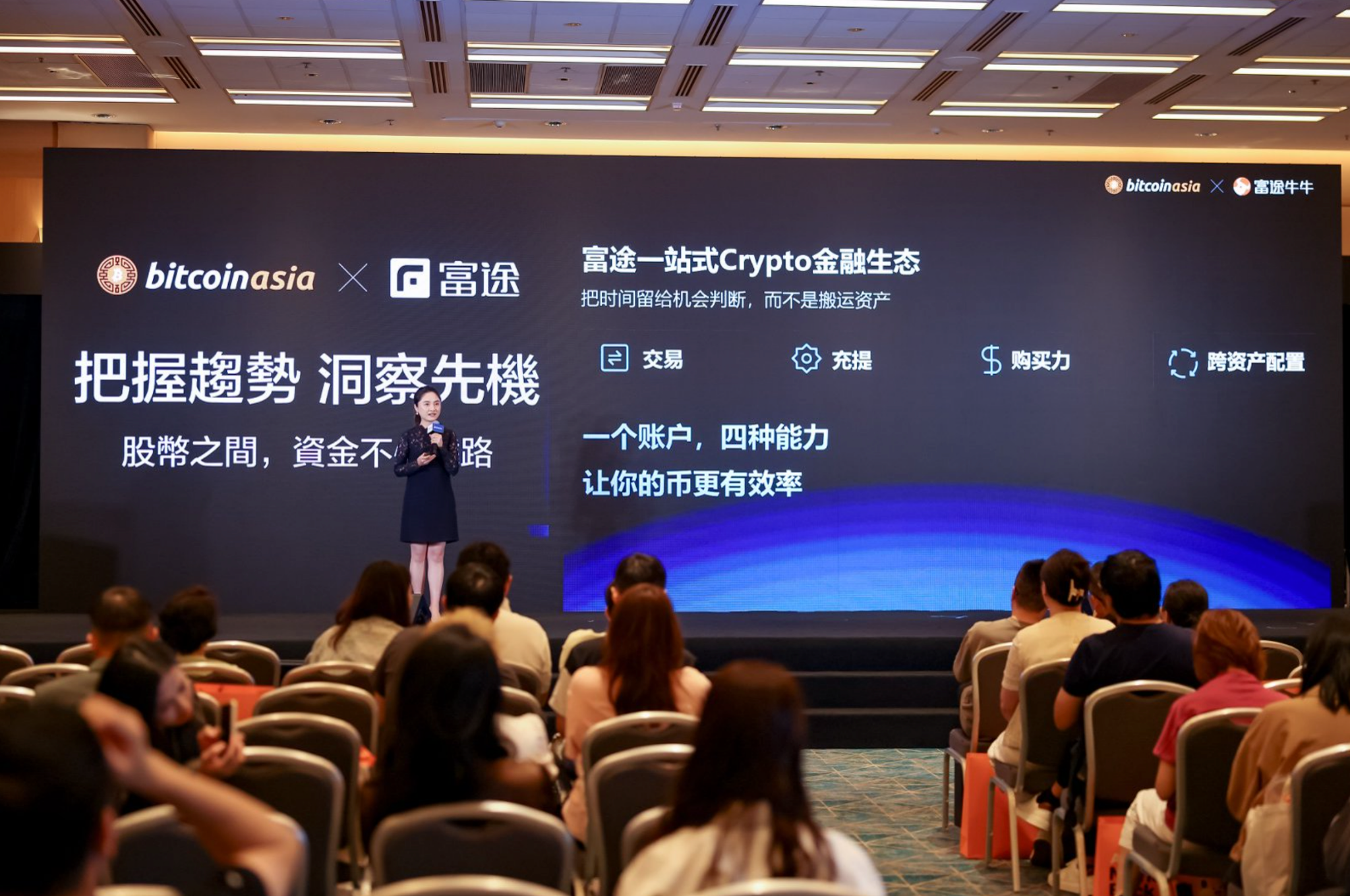
Futu summarizes its one-stop crypto financial ecosystem as four capabilities: trading, deposits and withdrawals, purchasing power, and cross-asset allocation.
Panther Trade: The compliance foundation behind crypto-stock integration and RWA
If we dissect the current market paths for stock-crypto integration, we can roughly identify three models.
The first is the native crypto route: Exchanges directly bring traditional assets like U.S. stocks onto the chain. Its advantages include currency variety, liquidity, and on-chain composability, but securities accounts, bank funds, and traditional financing systems are often still off-chain, creating a boundary between assets.
The second is brokers connecting to licensed VATPs: Brokers can quickly fill in the gap for crypto trading access, but trading, custody, credit, and subsequent product innovation require coordination between different institutions.
The third is broker groups building their own VATPs. This involves higher investment and compliance costs, but if securities and crypto businesses belong to the same group, there's an opportunity to redesign interfaces from customer identification, trading execution, custody, financing, to fund allocation.
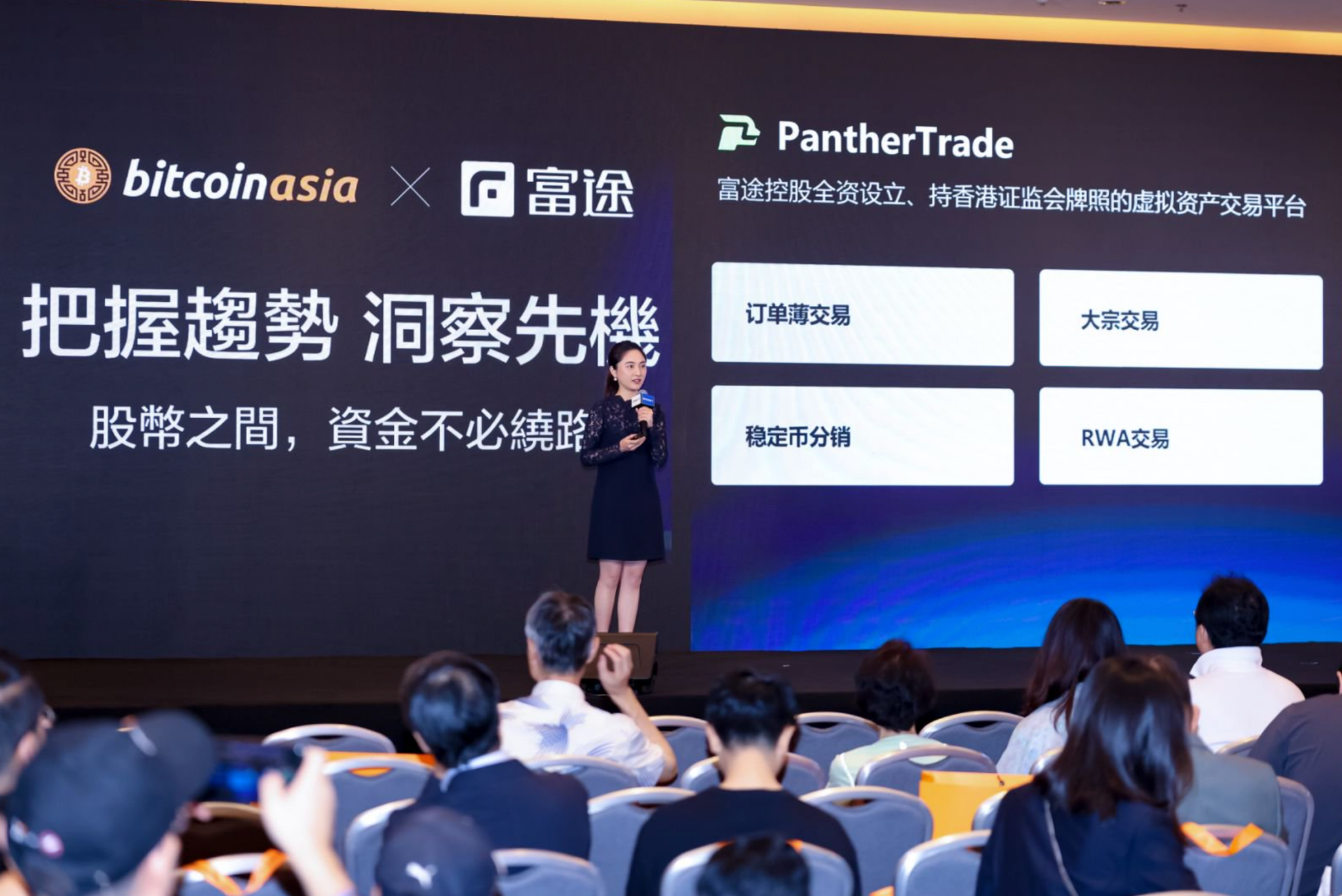
Panther Trade's business directions include order book trading, block trading, stablecoin distribution, and RWA trading.
Futu is currently pursuing the third route.
Panther Trade is a licensed virtual asset trading platform wholly owned and self-built by Futu Group, having obtained its Hong Kong VATP license in January 2025 and fully launched operations in March 2026. As Panther Trade connects with Futu Securities, it undertakes virtual asset trading matchmaking, custody, and related technical capabilities, while the latter retains traditional brokerage capabilities such as securities, customer relationships, and margin financing, creating Asia's first true Web2+Web3 ecosystem loop.
For retail users, this first manifests in stocks and crypto being configurable within the same familiar app environment; for high-net-worth and institutional clients, the significance may further extend to OTC block trading, customized virtual asset services, and more complex allocation needs between traditional and digital assets.
The value of this infrastructure can also rapidly extend to RWA in the future.
This "self-built + dual-licensed" model's value goes beyond just crypto trading. Futu has launched tokenized money market funds and is exploring compliance for secondary market trading; Panther Trade is also advancing tokenized products and related services for institutions. For Futu, this means that existing capabilities for trading, custody, and compliant asset transfers can also be further extended to tokenized products.
The deeper the asset connection, the greater the value for users, not just "fewer steps in operations." In the past, an investor holding stocks, ETFs, and crypto might need to manage assets, transfer funds, and exchange currencies across multiple brokers, exchanges, banks, and wallets. As these assets gradually establish connections on the same platform, the platform itself begins to take on the role of a "bridge" — users no longer need to frequently transfer assets between different financial institutions, but can more directly configure and convert assets on a single platform.
This is also key to whether account connectivity can form a sustainable business: whether clients are willing to deposit more assets, whether they are willing to use financing tools, and whether conversions between assets are smooth enough. For users, the real value is not just having another trading entry, but managing fewer accounts, making fewer fund transfers, and delegating the asset movement and conversion that they originally needed to handle themselves to the platform.
For Futu, the ultimate return on this investment is what Sherry Zhu mentioned on-site, "leaving time for clients to make opportunity judgments, spending less time moving assets."
免责声明:本文章仅代表作者个人观点,不代表本平台的立场和观点。本文章仅供信息分享,不构成对任何人的任何投资建议。用户与作者之间的任何争议,与本平台无关。如网页中刊载的文章或图片涉及侵权,请提供相关的权利证明和身份证明发送邮件到[email protected],本平台相关工作人员将会进行核查。
