Most people are losing money; only the platform and big players are making steady profits.
Written by: Bootly
How popular is Fomo right now? In one sentence: In on-chain social trading, it is the most prominent one this summer.
With over a million users, daily revenue surpassing one million dollars, it temporarily reached the top three in the Finance category in the US, and surged forward propelled by the meme wave of Robinhood Chain. It is not the next Cash App, but it has become the first true "one-click trading" entrance to cryptocurrency for many people.
Last month, many people still said it was "heading towards mainstream." In the following three weeks, Fomo's growth momentum not only did not slow down, but actually accelerated further.
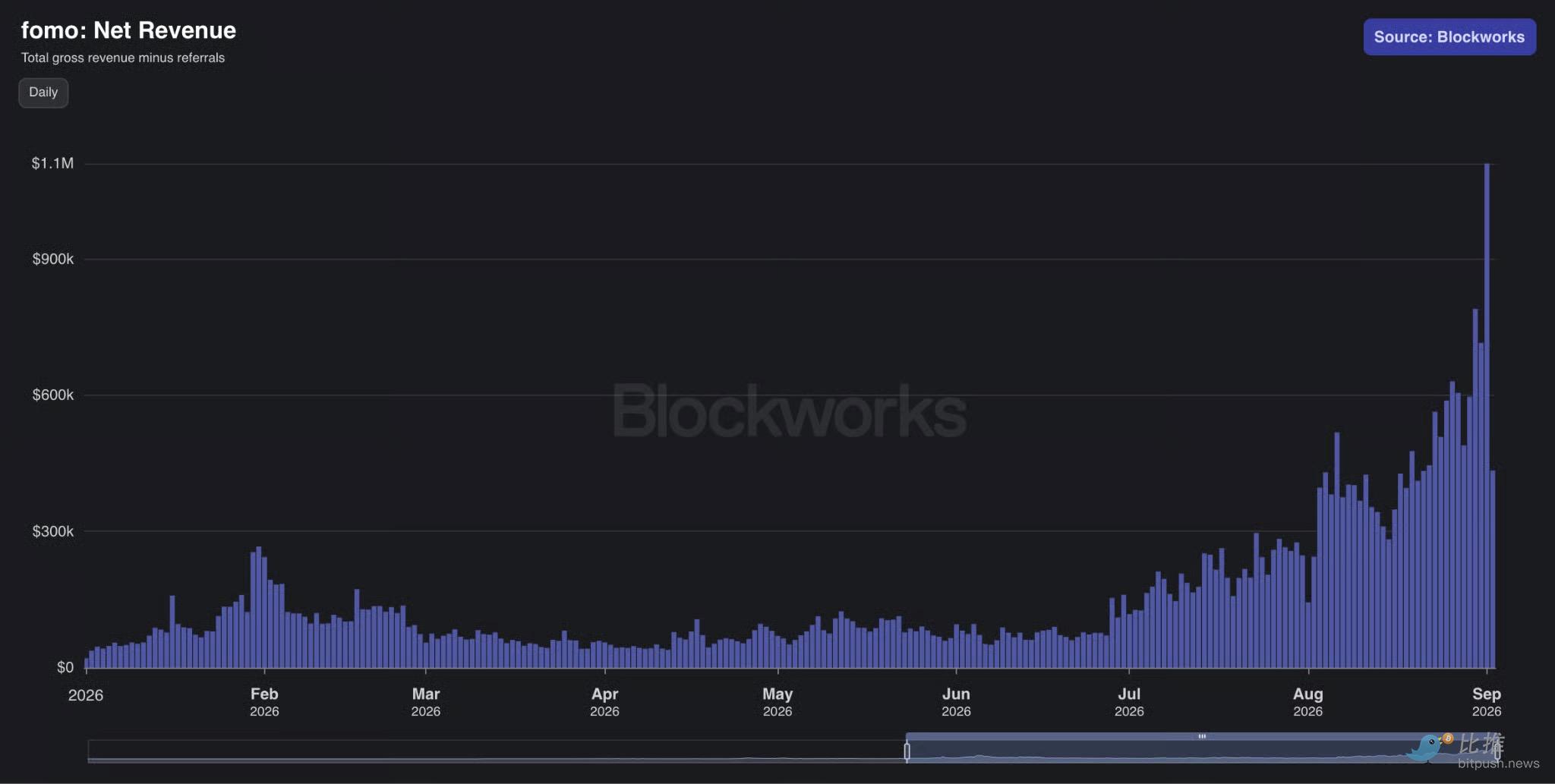
In August, Fomo recorded a revenue of 13.8 million dollars (annualized at 165.6 million dollars), easily surpassing the previous record of 6.4 million dollars set in July. And it continued to soar in September—on September 1, the daily revenue reached 1.1 million dollars, breaking the historical peak. Compared to last August's 450 thousand dollars, the monthly revenue surged nearly 30 times, representing parabolic growth.
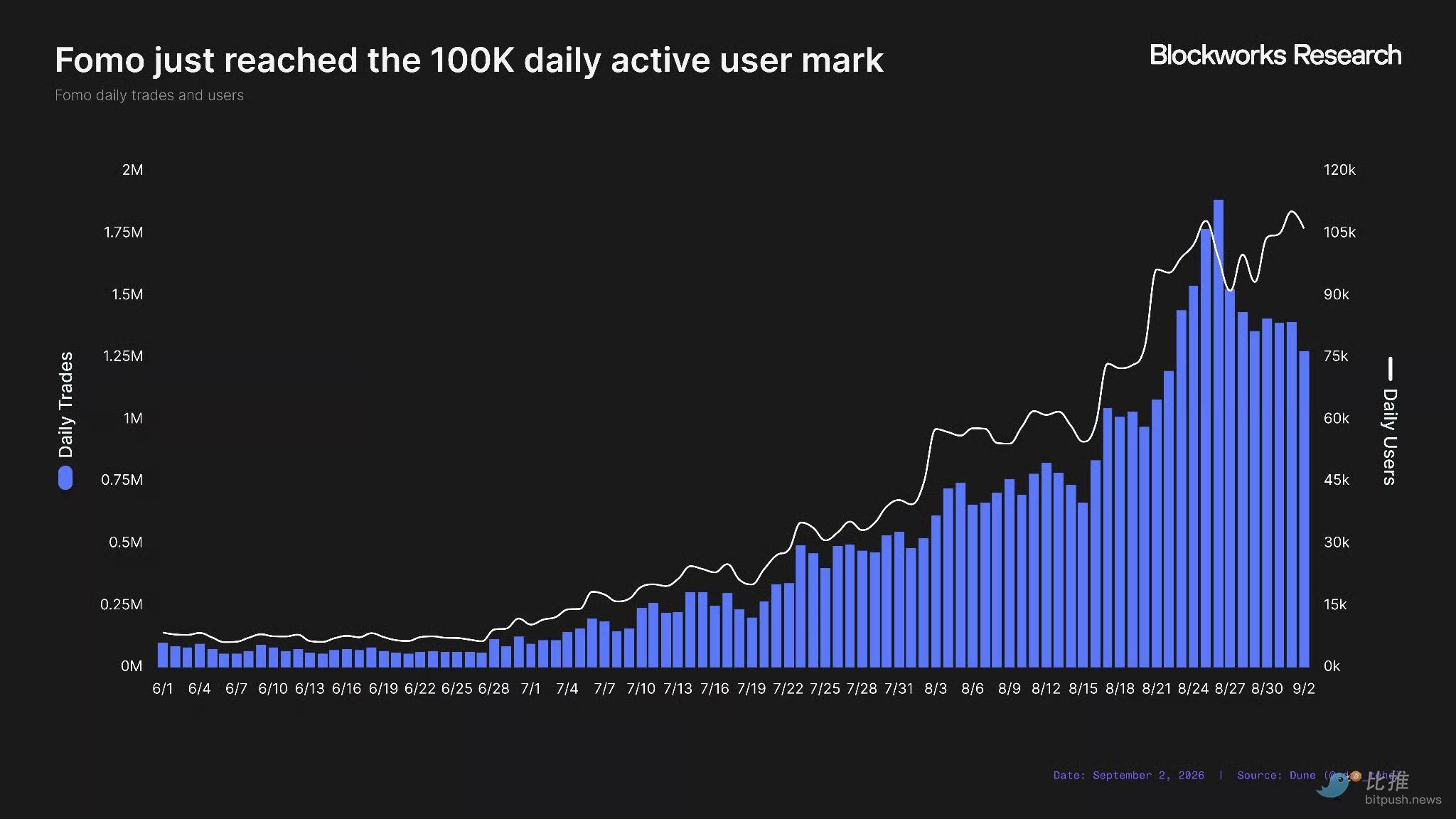
What’s more noteworthy is that this round of explosion is not supported by a few "whales," but rather a swarm of new users. In June, Fomo had only 7,500 daily active users; in the past week, that number skyrocketed to 101,000. Along with the surge in users, it climbed to 15th place in the finance apps ranking in the US App Store, indicating that Fomo is genuinely bringing "new blood from outside the circle" to the crypto world.
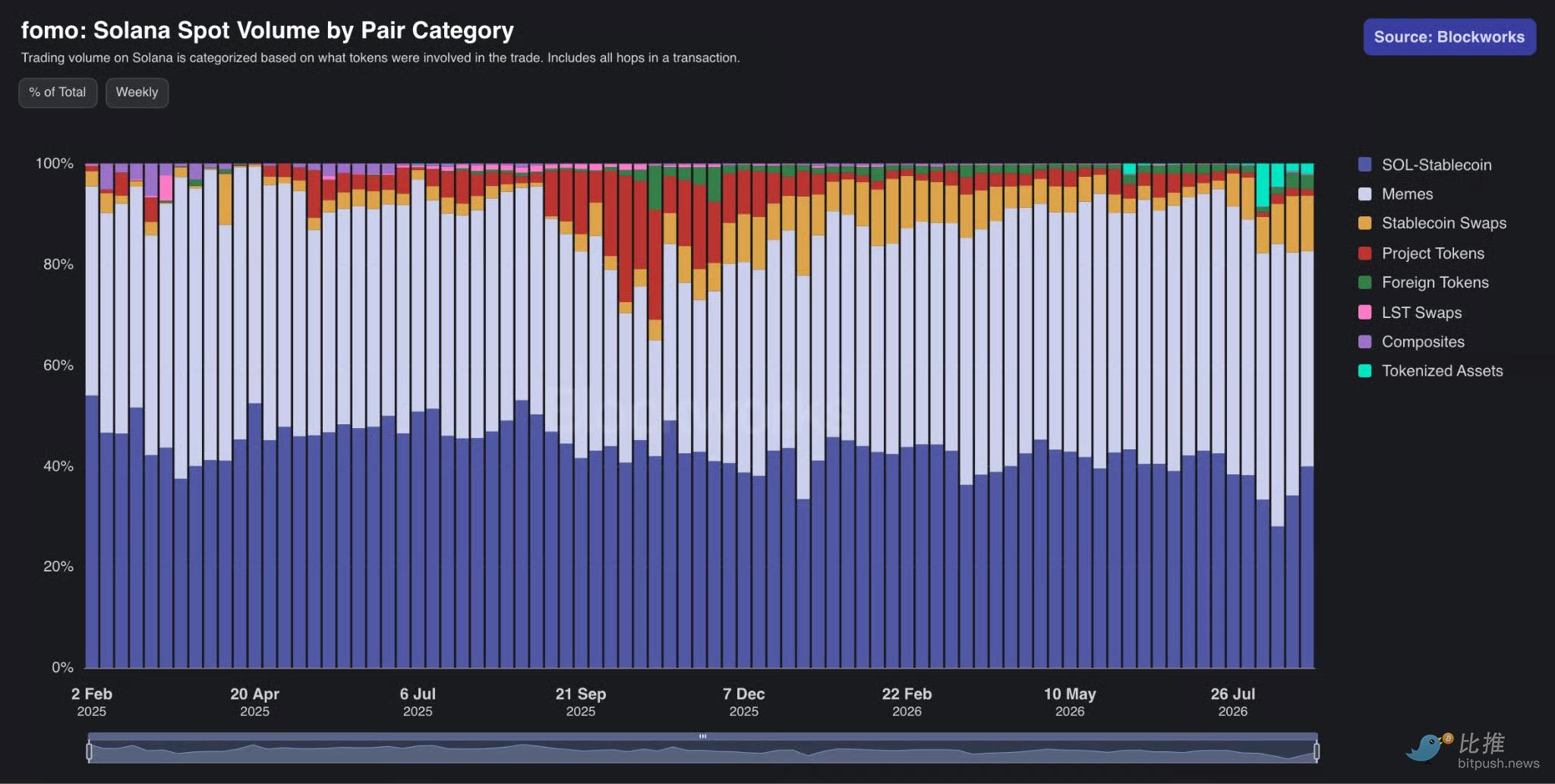
As before, it is still the meme coins that attract newcomers. From the data on Solana spot trading pairs on Fomo, meme coin trading pairs account for a stable 40% to 60%, while SOL-stablecoin pairs also account for a similar proportion. Since Fomo is priced in stablecoins, most of the trading behind SOL-stablecoin pairs is also meme trading—every time meme coins are bought, the funding path is USDC→SOL→meme coins.
Because of this, many people scoff, feeling that Fomo is just another meme gambling house.
However, signs indicate that users are not content with just trading meme coins. Earlier this year, Fomo integrated Hyperliquid's builder code, allowing non-US users to trade on Hyperliquid through it. The initial response was lukewarm, but it suddenly exploded in August, with nominal trading volume reaching 1.3 billion dollars that month, compared to only 448.5 million dollars in July.
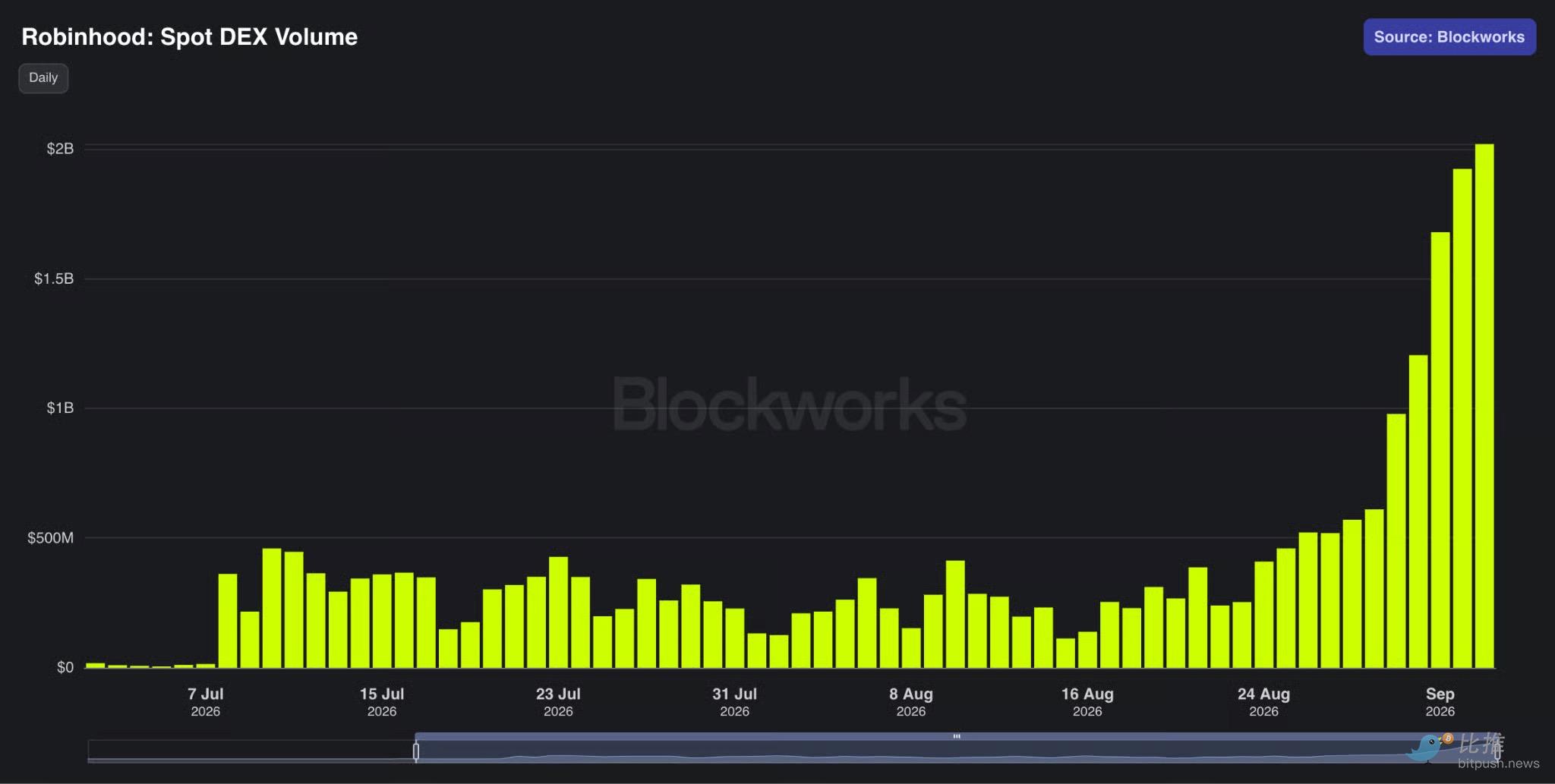
The biggest driver of recent growth is Robinhood Chain—its daily spot DEX trading volume first broke 2 billion dollars, with meme coins contributing significantly. Fomo conveniently acts as the "front-end entry" for Robinhood Chain, naturally reaping the rewards.
For Fomo, this is undoubtedly a shining moment, and there are currently no signs of cooling down.
But one heart-wrenching question is, have retail investors made money with this application?
An app's popularity does not mean the majority of people are making profits.
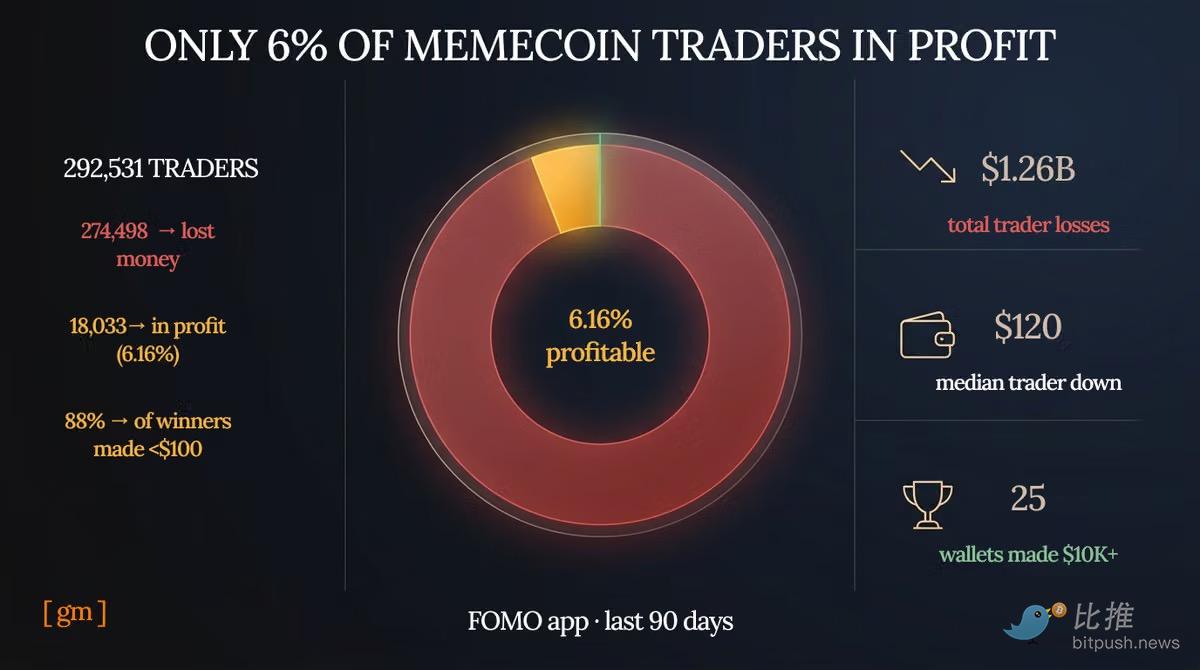
In mid-August, analyst MidCurveMortal conducted a public Dune query using Fomo's fee routing: over the past 90 days, of the approximately 293,000 wallets that traded through the application, only 18,000 recorded positive returns, with a profit ratio of about 6.16%. The group incurred losses of approximately 1.26 billion dollars, and the median trader lost about 120 dollars. Among that 6% of profiters, about 88% had profits of less than 100 dollars; at that time, there were only about 25 wallets that had profits exceeding 10,000 dollars.
During the same period, some compared it with a gambling platform that takes about a 1% cut, where the user profit ratio is around 37%. Subsequent broader sample analyses also reached similar conclusions—losses heavily outweighed profits, and profits were highly concentrated in small positive returns.
However, the official rankings tell a different story: at the end of August, the platform stated that on the profit list of nearly 30 days, there were 25 traders with over one million dollars in profits; about 26 people accumulated over a million. Early September monitoring showed that the top trader added about 9.8 million dollars in a single month.
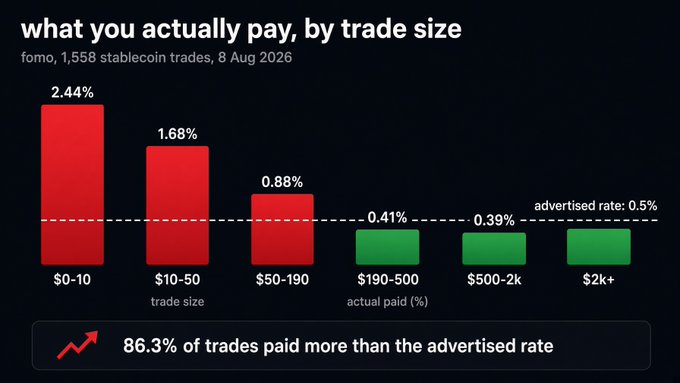
The narrative of copy trading is also questioned—those being copied can completely sell at high prices when the copy orders surge, leaving retail investors as the liquidity exit. Meanwhile, Fomo itself earns transaction fees, with August revenue already reaching tens of millions, and users' expected returns have not doubled alongside DAU.
The conclusion is straightforward and harsh: most people are losing money; only the platform and big players are making steady profits.
Article data reference: Blockwork Research, Ninja_Dev
免责声明:本文章仅代表作者个人观点,不代表本平台的立场和观点。本文章仅供信息分享,不构成对任何人的任何投资建议。用户与作者之间的任何争议,与本平台无关。如网页中刊载的文章或图片涉及侵权,请提供相关的权利证明和身份证明发送邮件到support@aicoin.com,本平台相关工作人员将会进行核查。


