Written by: Eric, Foresight News
On the morning of September 5, the young members of Robinhood Chain P, who had stayed up all night, fell victim to a carefully designed scam.
A meme coin called SLINK (Shivolink) on the Robinhood Chain saw its market value surge from $500,000 to $82 million in just half an hour, only to crash back down 45 minutes later.
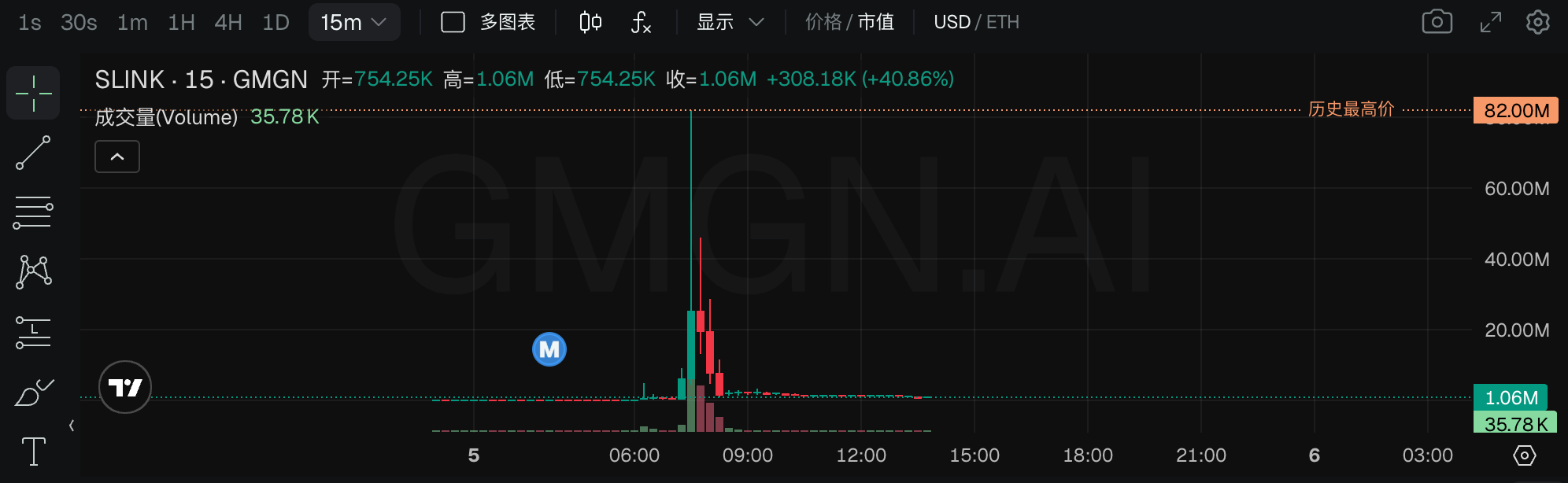
This dramatic rise and fall, commonly seen with meme coins, was actually the result of a highly sophisticated scam.
The main character in the story is Shivon Zilis. She is the Operations and Special Projects Director at Neuralink and the mother of several of Musk's children. Her X account @shivon has hundreds of thousands of followers and primarily shares updates related to brain-machine interfaces, rarely discussing cryptocurrency directly.
After the operator behind SLINK hacked this authentic account, they did not immediately release a contract address or airdrop link; instead, they created a more nuanced setup: they linked the official Neuralink account in Zilis's profile and added a newly registered "experimental account" @shivolink (which has since been disabled). This fake account spun a perfectly crafted story that aligned with Neuralink's background:
The account claimed this was a non-profit experiment led by MIT students, allowing several paralyzed patients with implanted chips to collectively post to the same account through their thoughts. To sustain operations, the experiment relied on token trading taxes for "blood supply," conveniently posting SLINK's contract address. Subsequently, the hacker used the stolen Shivon Zilis account to cite that tweet, adding a highly misleading comment implying, "I rarely tweet about crypto except for DOGE, but what these young people are doing impresses me."
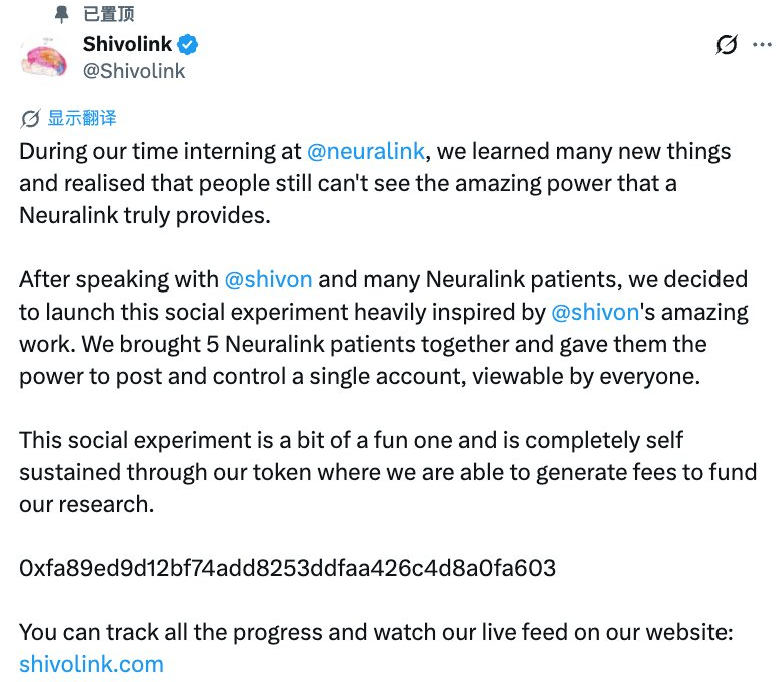
The account description was updated with project information, and the project tweet was retweeted and commented on personally, solidifying the entire narrative. What the hacker might not have anticipated was that Musk himself subsequently replied to a related tweet with a "💯." Of course, it is most likely he just liked the "brain-machine interface application" without closely examining the tweet's content.
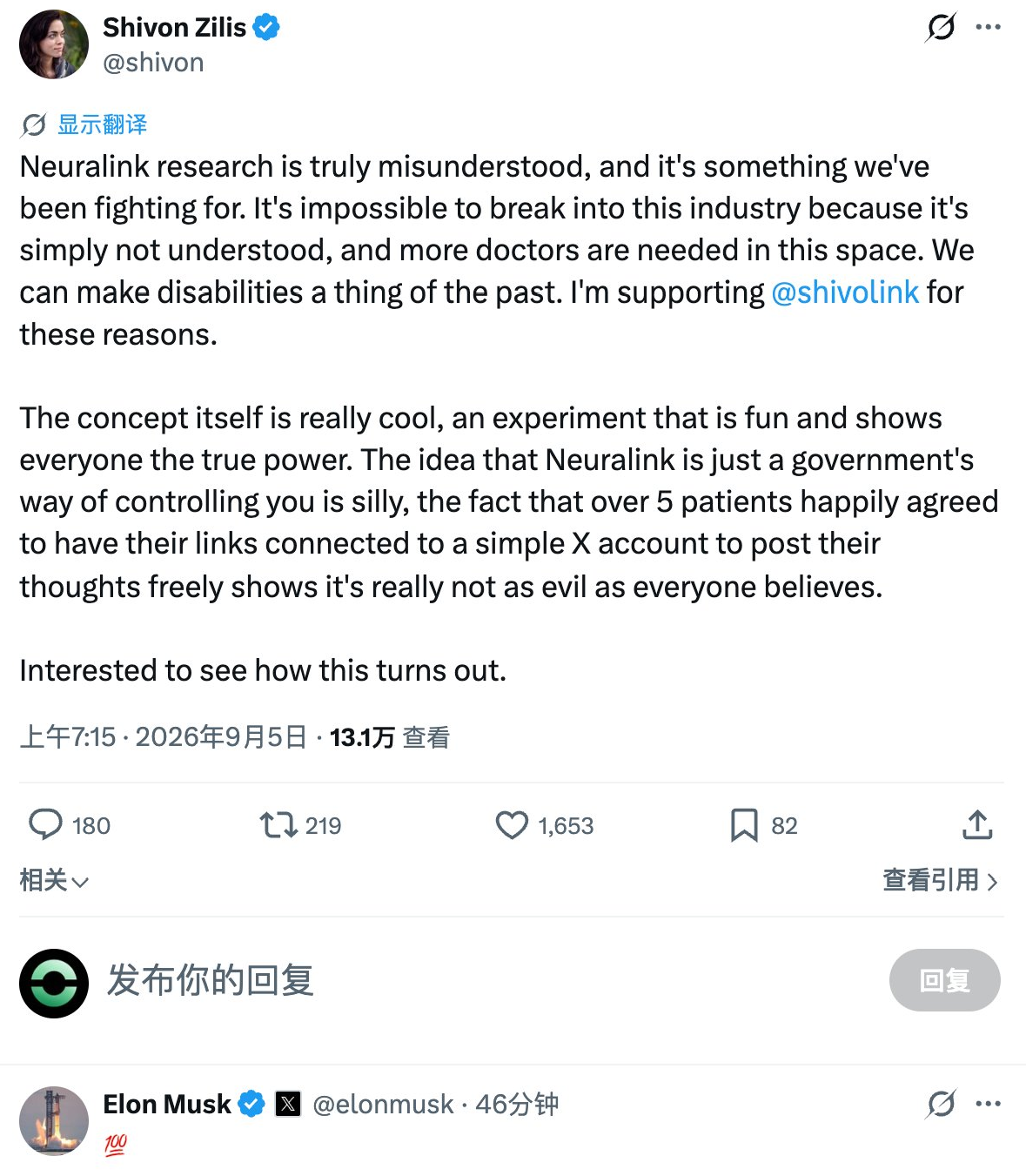
Many might have hesitated when seeing the tweet from the mother of Musk's children, but with Musk himself liking it, there was no reason not to rush in. Shivon Zilis's retweet caused SLINK's market value to rise from over $500,000 to over $6 million, while Musk's "100 points" made SLINK's value skyrocket from over $6 million to $82 million.
But the climax lasted only a short time.
The scam was quickly exposed; after related tweets were deleted, prices plummeted rapidly. On-chain data showed that dozens of insider wallets that had positioned themselves ahead of time sold off at high prices, collectively profiting over $4.7 million, with the highest returns reaching over a thousand times. Meanwhile, some traders who heavily invested after seeing the "Musk interaction + Zilis endorsement" suffered significant losses.
This was a meticulously crafted scam by the operators behind SLINK. The hacker constructed a verifiable "chain of evidence": authentic executive accounts, official associations, brain-machine interface narratives, and even unexpectedly attracted Musk's interaction. Ordinary monitoring tools or AI screening could easily deem these clues as "highly credible," thus accelerating FOMO.
This incident serves as a reminder to the market: in a meme cycle driven by celebrity effect, social graphs themselves have become an attackable asset. The more seemingly perfect and verifiable the story, the more caution is needed. Controlling positions and seeking independent verification is always more important than "everyone else is buying."
免责声明:本文章仅代表作者个人观点,不代表本平台的立场和观点。本文章仅供信息分享,不构成对任何人的任何投资建议。用户与作者之间的任何争议,与本平台无关。如网页中刊载的文章或图片涉及侵权,请提供相关的权利证明和身份证明发送邮件到support@aicoin.com,本平台相关工作人员将会进行核查。


