Original|Odaily Planet Daily
Author|Wenser
The trading volume of meme coins and stock tokens on the Robinhood platform continues to soar, following fierce criticism from the traditional financial sector.
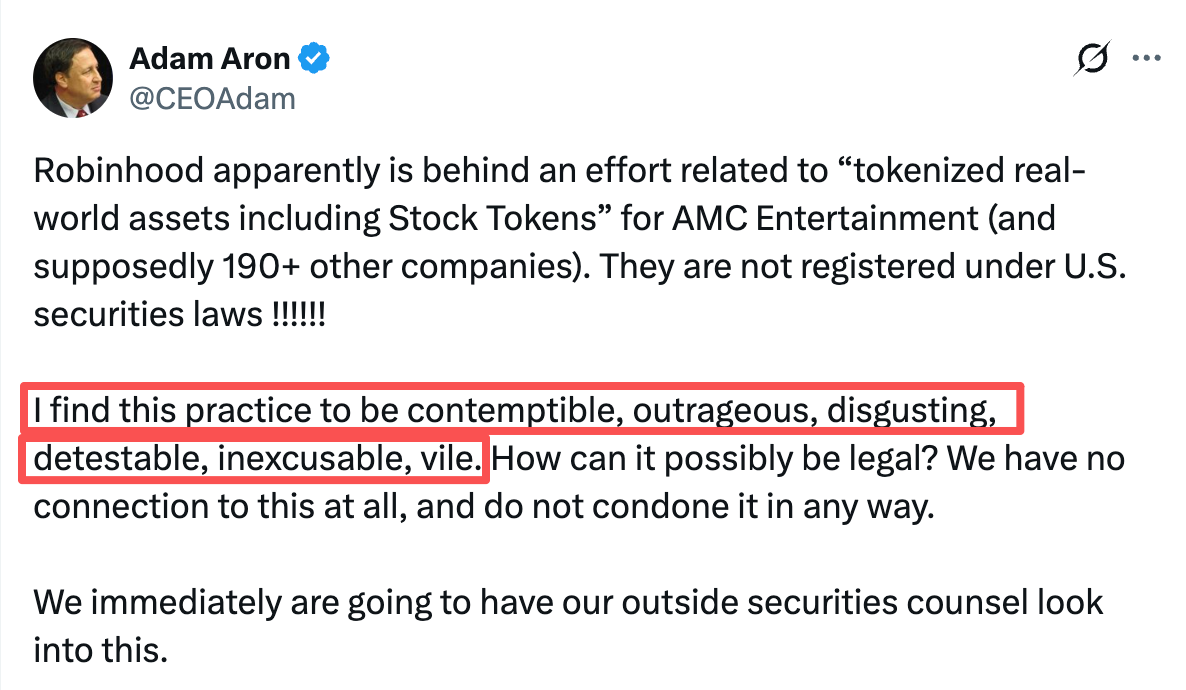
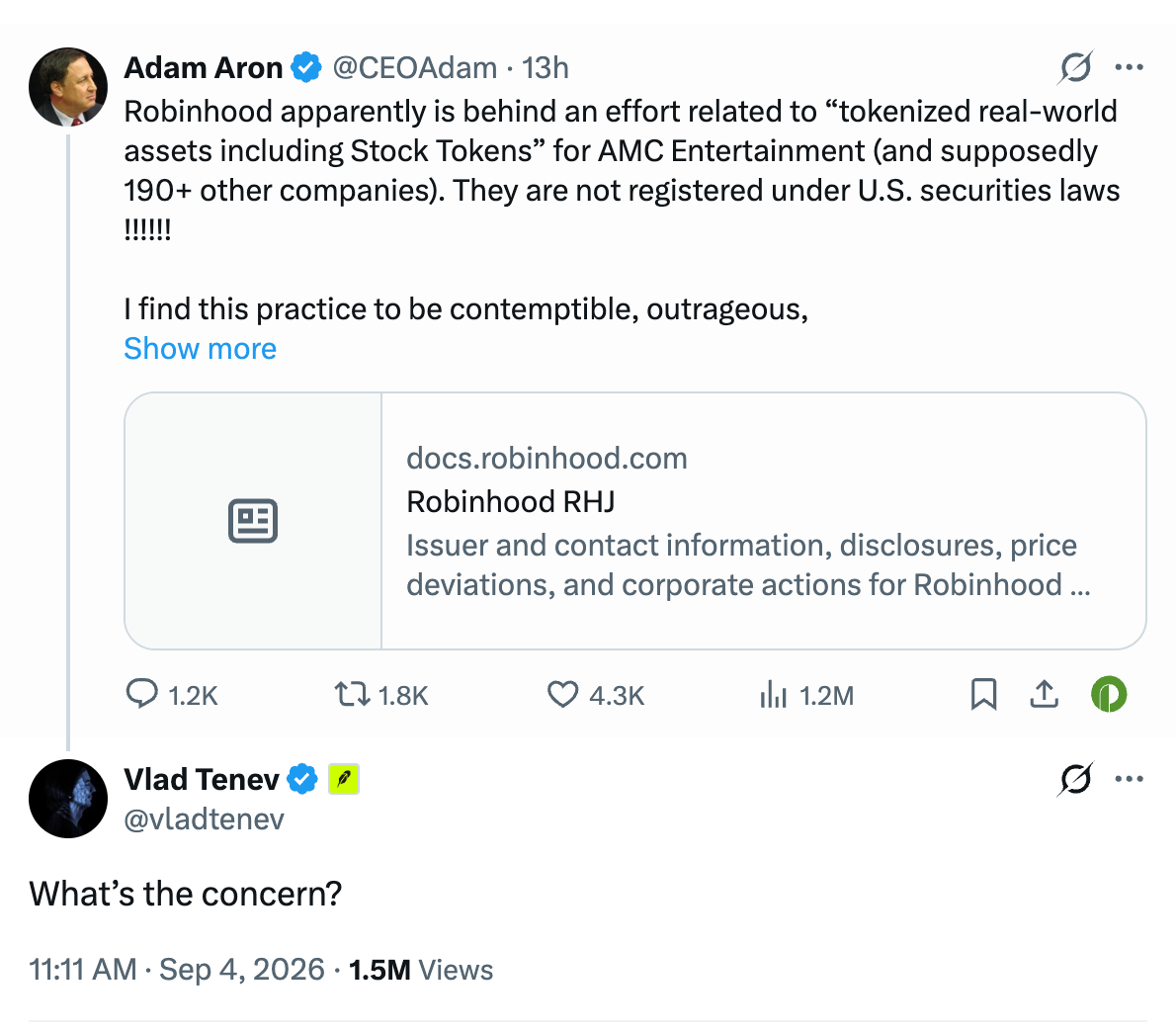
On the early morning of September 4, Robinhood officially announced, "The DEX trading volume of on-chain stock tokens has exceeded $3 billion in 63 days, covering more than 190 listed companies including AMC"; AMC CEO Adam Aron then suddenly lashed out, pointing out that "AMC has nothing to do with the related stock tokens," berating Robinhood's actions as "despicable, disgraceful, nauseating, shameful, unforgivable, and extremely evil," and emphasizing that "it is unrelated to this matter and never condones such behavior in any form."
Ironically, after the statement was issued, a meme coin on the Robinhood chain named MEME (A Meme Coin) quickly surged, with its market capitalization peaking over $150 million as the back-and-forth between the Robinhood CEO and AMC CEO escalated. Not only that, but as a result of this uproar, AMC's actual stock also skyrocketed, with a pre-market increase of over 20%. The concept imagined by countless people of "on-chain meme coins boosting the price of the actual stock" was realized in such a dramatic and controversial manner.
On one hand, the meme coins associated with Robinhood's on-chain stock tokens once again validate the fact that "attention economy is the primary driver of growth"; on the other hand, the soaring price of AMC's actual stock along with meme coins raises visible regulatory risks and innovation barriers related to stock tokenization.
In this race for cryptographic innovation, regulatory rules and conservative forces always lag behind, which is also a critical driving force for Robinhood's on-chain ecological transformation of RWA assets and meme coin gameplay.
The Beginning and End of the AMC Stock Meme Controversy: When Robinhood Flexes Muscles Meets AMC CEO Rejecting "Representation"
The story begins with the official launch of Robinhood Chain in July of this year.
As Robinhood's proprietary L2 network, Robinhood Chain was originally positioned to be a dedicated blockchain network for RWA and tokenized stocks, including a series of stock tokens that are tokenized debt securities issued by Robinhood Assets (Jersey) Limited, providing exposure to the underlying U.S. stocks (including AMC) in a price-tracking format but not granting holders actual equity, voting rights, or other shareholder rights. It is particularly worth noting that the on-chain stock tokens of Robinhood Chain have their specific application scope:
- Targeting users outside the United States, Canada, the United Kingdom, and Switzerland, currently covering over 120 countries.
- Not registered under U.S. securities laws, explicitly prohibiting sales to American citizens.
- Official documents emphasize that this asset is of a derivative nature, with risks including possible total loss.
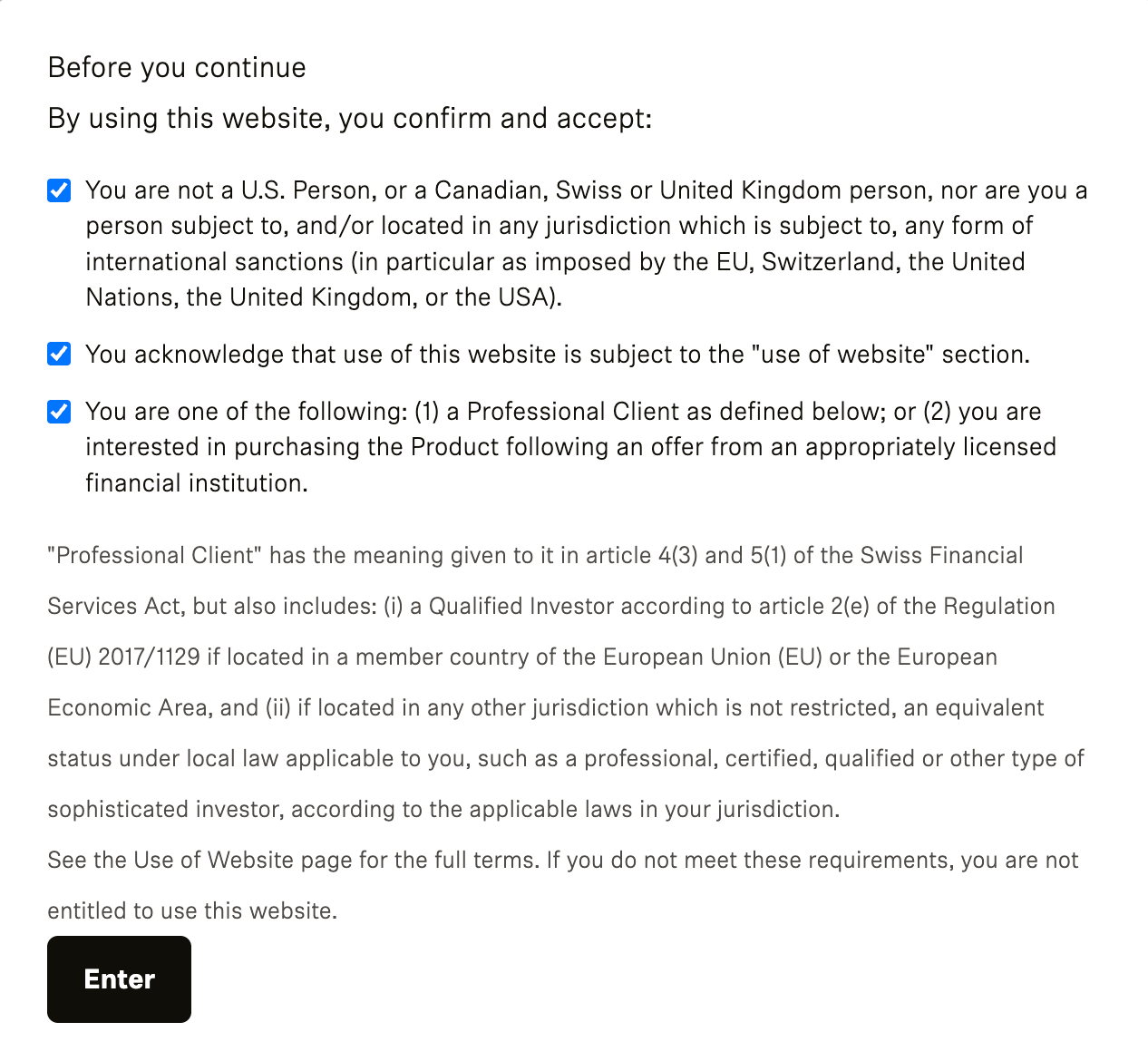
Document login interface tip information
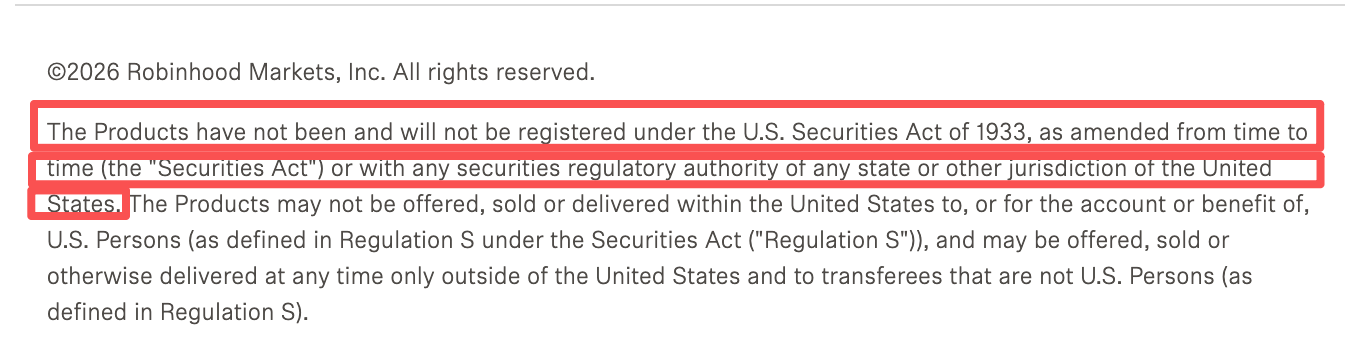
Risk statement for products not registered in the U.S. and others
If the launch of Robinhood Chain and the quiet introduction of many listed company stock tokens opened the curtain on the "Robinhood system's stock tokenization transformation," then the recent surge in trading volume, accompanied by meme coins, stock token trading, and stock meme coin stock pairing, has made Robinhood see greater possibilities—to use on-chain stock tokens to transform the global capital financial market, allowing everyone to access all capital, assets, and liquidity on the Robinhood platform and Robinhood chain. At that time, Robinhood will become the "first stop" and "only stop" for countless people around the world.
It is no wonder that Robinhood CEO Vlad Tenev recently declared that he hopes to accompany a new generation of investors throughout their entire financial life cycle. His exact words were: "Robinhood originally started to serve a new generation of first-time investors. Now, these clients are continually accumulating wealth, and their financial needs are growing accordingly. Just a few weeks after launching Trust Accounts, the assets deposited by clients have exceeded $150 million, with an average account size of about $500,000. We hope to accompany and serve them throughout their entire financial life cycle."
But it is clear that while Robinhood may have opened the "convenient door" for users to invest and trade the stocks of listed companies, it does not represent the interests of all listed companies, especially one that has long been characterized by the "meme stock" image and has had longstanding grievances with Robinhood.
The "War" Behind AMC and Robinhood: "Meme Stock Pulls the Plug" in 2021, "False Bankruptcy Notice Scandal" in 2023
As one of the largest chain cinema operators in the world, this publicly listed company based in Kansas, USA, has had a tough time in recent years.
Founded in 1920, AMC went through nearly a century of development, and successfully listed on the New York Stock Exchange in 2013, becoming a legitimate U.S. listed company. In 2016, the current CEO Adam Aron took office, rapidly expanding through a series of acquisitions and becoming one of the largest cinema chains in the U.S. and the world.
However, the seemingly fast-developing entertainment industry cannot hide its weak business structure. It is understood that AMC's main business model heavily relies on box office sharing from cinema ticket sales and high-profit sales of snacks and beverages, and its membership loyalty program has raised skepticism. Consequently, the company was on the verge of bankruptcy during the pandemic, with debts exceeding $4 billion post-pandemic. Nevertheless, CEO Adam Aron managed to help AMC weather the storm through financing and other operations, leading the company to where it is today, with critical strategies that included not just the Taylor Swift concert film and popcorn bucket marketing but also the strong support of meme stock retail investors.
This, indeed, marks the origin of the grudge between AMC and Robinhood.
In 2021, stocks like GameStop and AMC were driven up by retail investors on the Reddit WallStreetBets forum, causing a short squeeze; facing a liquidity crisis, Robinhood, as an online brokerage platform, had to act decisively and literally "pull the plug" by setting AMC and GME stocks as "position closing only" (PCO), leaving countless retail investors watching the stocks in their accounts as only sellable not buyable. The impact was such that AMC's stock price plummeted over 50%-60% on that day, and Adam Aron, who was active on social media platforms, expressed strong dissatisfaction but felt helpless, thus giving rise to the sordid relationship between AMC and Robinhood.
In 2023, the Robinhood App briefly displayed an erroneous banner stating that AMC "has filed for bankruptcy" along with an explanation that "the company's funds are about to run out or unable to pay debts." Although Robinhood later explained this incident as a "technical issue" that lasted only a few minutes, AMC's CEO Aron could not overlook it, directly blasting Robinhood's actions on X as "absurd, erroneous, and irresponsible." While the “false bankruptcy notice scandal” did not negatively impact AMC's stock price, it once again reinforced Aron and AMC stock retail investors' negative perception of Robinhood.
And so we have today's headlines: "AMC CEO Furious at Robinhood's Stock Tokenization Actions as Despicable and Nauseating," making it clear that "AMC is entirely unrelated to Robinhood's on-chain stock tokens."
Robinhood CEO Responds, Unveiling the Dramatic Heat of On-Chain Meme Coins
If the "AMC CEO's fury at Robinhood" act is merely a critique from traditional finance sectors toward stock tokenization platforms, then Robinhood CEO Vlad's response truly pushed this narrative of "cryptographic innovation colliding with traditional finance" into a climax.
After Adam Aron questioned and expressed dissatisfaction with Robinhood's "unauthorized tokenization of AMC stocks," Robinhood CEO Vlad waited for most of the day before delayed his counter-question: "What’s there to worry about?" His tone conveyed clear disregard for Aron's threats and statements.
Thus, the on-chain meme coin began its performance, fueled by the heightening tension between the AMC CEO and Robinhood CEO.
The market capitalization of the AMC-related meme coin MEME (A Meme Coin) quickly surpassed, breaking the $60 million mark around two o'clock in the afternoon, surging over 3100 times within the day;
At 2:30 PM, Aron again responded to Robinhood CEO, stating that his concerns regarding Robinhood's stock tokens "are almost about the company's survival." He expressed that Robinhood, through its Jersey-related structure, provided AMC stock tokens, but did not operate according to traditional U.S. securities legal framework, which he deemed "shocking and shameful." He believes that the related synthetic stock market decouples token holders from AMC’s own financing capability and that stock tokens do not grant investors the voting rights and other shareholder rights equivalent to traditional stocks, which may further weaken public trust in financial markets. Finally, Aron urged Vlad Tenev and Robinhood to proactively cease trading of AMC stock tokens and indicated that AMC had requested external securities legal advisors to study the feasibility of legally compelling Robinhood to cease related operations, and would seek a response from the SEC.
Influenced by this news, MEME's market capitalization rapidly exceeded $120 million before three o'clock, and briefly crossed $150 million around 3:12 PM, with an incredible intraday increase of 6500 times.
In addition, the meme coins mentioned by Vlad such as CONCERN, related to AMC, and CINEMA, along with GameStop's related GME (Greatest Meme Ever) coins also emerged on the Robinhood chain, with market capitalization reaching millions of dollars at one point.
Five years ago, in the "meme stock trading war" represented by GameStop and AMC, Robinhood capitalized on its position as an online broker and U.S. stock trading platform to "pull the plug" and win a battle; five years later, armed with Robinhood's on-chain meme coin ecosystem and the ambiguous time window where regulatory agencies have yet to delineate clear boundaries, Robinhood has secured yet another victory. Timing and fate play their part; AMC may be the king in the entertainment and film industry, but in the capital and trading domain, it is merely one among hundreds of tokenized stocks.
Of course, the concentration of attention still has a significant uplifting effect on AMC stocks. In the afternoon, AMC Entertainment (AMC) stock saw its pre-market gains expand to 20.87%, reported at $3.07. As of the time of writing, AMC's pre-market price stood at $2.76, with a 24-hour increase still at 4.55%.
A New Round of Alliances: The Fierce Arrival of Stock Tokenization Behind the AMC vs. Robinhood Dispute
In this dispute between "AMC CEO VS Robinhood CEO" over the forms, legitimacy, and legality of stock tokenization, a new round of factions, camps, and positions has already begun.
In the afternoon, Circle CEO Jeremy Allaire posted on X, stating: "CRCL holds more than 1% of its shares in the form of tokenized stocks, corresponding to a size exceeding $280 million, the largest for all publicly listed companies worldwide. When will the 'flip' (Odaily Planet Daily note: referring to the ratio of stock tokenization surpassing that of stock securities) come?"
Although regulatory agencies such as the SEC in the U.S. have not yet provided a detailed definition of the regulatory boundaries for stock tokenization, looking at the rising trading volume of stock tokenization on Robinhood chain against the backdrop of pre-market pricing for U.S. stocks taking place first on on-chain trading platforms like Hyperliquid, stock tokenization is undoubtedly a trend on the rise.
As for whether it will become the direction of popular sentiment, it may depend on whether this wave of "stock tokenization" can genuinely benefit retail and general investors, allowing more people to participate in investments of quality assets like U.S. stocks in the form of on-chain tokens.
免责声明:本文章仅代表作者个人观点,不代表本平台的立场和观点。本文章仅供信息分享,不构成对任何人的任何投资建议。用户与作者之间的任何争议,与本平台无关。如网页中刊载的文章或图片涉及侵权,请提供相关的权利证明和身份证明发送邮件到support@aicoin.com,本平台相关工作人员将会进行核查。


