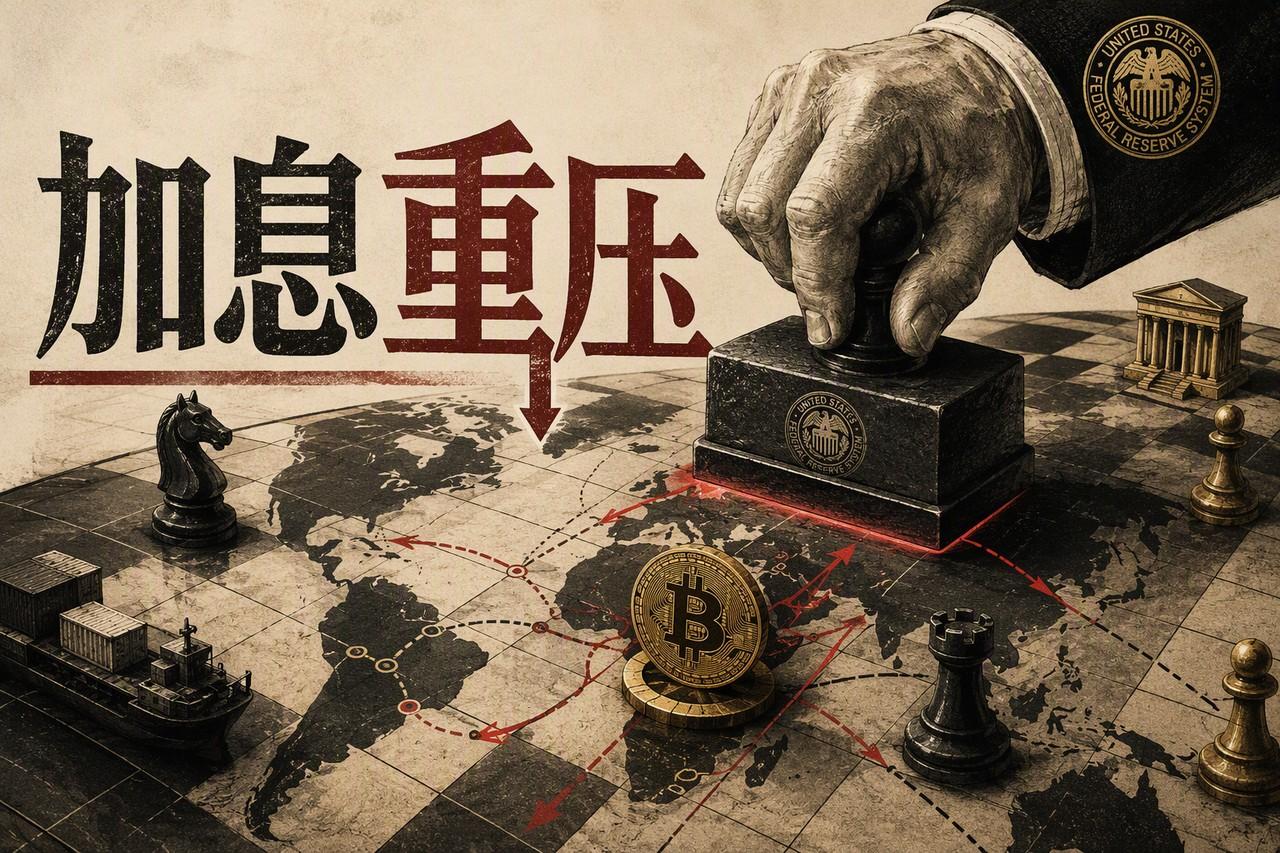
Around September 3, when Federal Reserve Governor Waller took the stage, he was not repeating the summer script of "persistent inflation requiring continued tightening," but instead throwing a conditional suspense regarding interest rates to the market. Waller first acknowledged that recent data showed clearer signs of disinflation, believing that core inflation adjusted for revisions could significantly decline, and described the current interest rates as "slightly restrictive." Under the premise of continued improvement in inflation, such a level may be sufficient to pull inflation back to 2%. Based on this assumption, he inclined to support keeping rates unchanged. However, a turning point quickly appeared: if the upcoming August CPI exceeded expectations and inflation rose again, he would consider supporting a rate hike in the September meeting. Nick Timiraos's subsequent interpretation succinctly summarized this shift as a change from a stance of "concern and inclination to tighten" to "cautiously optimistic and inclined to maintain rates unchanged." The overall framework remained tight, but the tone had clearly shifted from hawkish to neutral. Meanwhile, U.S. bond yields continued to rise under the pressure of fiscal factors and AI-related investments driving capital competition, forming a complex combination of "yield increase + inflation decline not fully confirmed," forcing traders to reevaluate interest rate paths and risk asset pricing. CME FedWatch data showed that after Waller's speech, the market repriced the probability of a rate hike in September to approximately 60.4%, no longer a unilateral consensus of "continued hikes," but a dice-rolling game surrounding the August CPI. In this uncertain interest rate path environment, global funds repeatedly tested between government bonds and high-beta assets, with BTC/ETH, as a risk asset highly sensitive to rates and liquidity, also entering a waiting period for the "CPI decision" as Waller's tone warmed.
Waller's Shift from Hawkish to Cautiously Optimistic: The Interest Rate Path is Rewritten
From the "concern and inclination to tighten" around July to calling the current rates "slightly restrictive" around September 3, Waller completed a subtle yet critical shift in stance. On one hand, he acknowledged the disinflation signs in recent data and even believed that core inflation after adjustments could significantly decline; under this premise, the current rate level "may be sufficient" to press inflation back to 2%. On the other hand, he did not offer a clear commitment to "pause," but instead threw out a conditional forward-looking statement: if inflation continues to improve towards the target, he would support maintaining the rates unchanged; but once the August CPI exceeds expectations or rises again, he would consider a rate hike in the September meeting. Nick Timiraos's interpretation captured this evolutionary trajectory—while the overall stance remained unchanged, still vigilant towards inflation, the policy inclination had shifted from "leaning towards tightening" to "cautiously optimistic, leaning towards standing pat," which led the market to view Waller's tone change as a signal that "additional hikes are no longer urgent," with the probability of a September rate hike on CME FedWatch being repriced to about 60.4%, transforming the interest rate path from a unilateral hawkish stance into a suspense surrounding a set of data.
This rewritten expectation of interest rates directly affects discount rates and financing costs, indirectly grasping the throats of all high-beta assets. From a valuation perspective, when traders no longer believe that "rates will continuously rise," but instead face a choice between "a hike being the peak or a complete pause," the curve used to discount future cash flows and risk premiums begins to loosen: part of the funds oscillate between rising U.S. Treasury yields and the likelihood of peak policy rates, while another part reassesses the cost-performance ratio of holding high-volatility assets within this interest rate range. For BTC/ETH, this means the positioning structure shifts from simply hedging against "higher rates" to hedging against "path uncertainty": leveraged funds are hesitant to go all-in on the peak of interest rates ahead of time, having to wait for the August CPI to provide direction by shortening duration and reducing total exposure. Long-term funds slowly reevaluate the risk-return ratio of crypto assets in the future interest rate plateau using the "slightly restrictive but potentially sufficient" wording. This back-and-forth between discount rates and position adjustments is the new framework that the crypto market must face following Waller's warming tone.
Yield Rise: The Fiscal and AI Squeeze on Liquidity
In Waller's narrative, the rise in U.S. Treasury yields is not an abstract "market fluctuation," but a visible capital contest: on one side, the ongoing fiscal financing demands behind high deficits continue to push debt supply, and on the other side, massive investments surrounding artificial intelligence are seizing from the same pool of dollar funds. The result is that risk-free rates are forcibly driven higher, and global liquidity is double-occupied by fiscal and AI projects, with funds originally flowing to stocks, growth assets, and even the crypto market being siphoned off by higher coupons and more certain cash flows. For risk assets accustomed to telling valuation stories in a low interest rate world, this means a rise in discount rates, adjustments to future cash flows, and rewrites of forward narratives.
More subtly, this round of rising yields coexists with disinflation signals in the inflation data, forming a misaligned combination of "inflation cooling but the interest rate environment still tight": inflation is moving closer to the 2% target, theoretically allowing asset valuations to loosen, yet offset by high bond yields and a slightly restrictive policy stance. In the previous tightening cycle, BTC/ETH's mid-to-long-term performance was already constrained by high dollar rates and real yields. Now, with yields rising again, the opportunity costs of global capital are changed through dollar asset yields, financing costs, and carry trading opportunities: some funds choose to reduce leverage, turning to more certain U.S. Treasury spreads, while others seek new balance between "high rates + inflation decline," viewing BTC/ETH as high-beta chips when rates eventually decline or hedging tools during policy misjudgments. Therefore, the rise in yields not only suppresses risk appetite but also rewrites the allocation game between traditional assets and BTC/ETH, forcing on-chain funds to reconstruct trading structures around the core choice of "holding coupons or holding volatility."
Probability of Rate Hikes Falling Back: How BTC/ETH Redefines Risk Premiums
With Waller giving conditional guidance of "maintaining rates if inflation continues to improve, or considering a hike if inflation rises again," the main line of interest rates has been pulled back from a unilateral hawkish stance to a neutral-tight range. CME FedWatch immediately priced the probability of a rate hike in September at about 60.4%, which is neither seen as "definitely to hike" as before nor has it fallen into the comfort zone of "definitely not to hike," essentially placing the market in a bet on a slightly upward-tilting coin. Nick Timiraos's interpretation further reinforced this sentiment: Waller's overall stance has not changed, but has shifted from "concern and inclination to tighten" to "cautiously optimistic and inclined to maintain unchanged." The result is that bets on the interest rate path are forced to reduce leverage, with the pricing focus of risk assets, including BTC/ETH, shifting from "policy will inevitably be tighter" to "swaying on a high-rate platform," where risk premiums are no longer just insurance for rate hikes but payments for this sway.
Within this less extreme range of interest rate hike probability, capital tends to use futures and options to fine-tune risk premiums rather than betting all-in on a single outcome. The futures leverage structure of BTC/ETH will shift from unilateral defense (high short ratios, negative basis) to a more balanced two-way trading, with perpetual contract funding rates repeatedly tugging around interest rate expectations; on the options side, pricing for scenarios where "whether or not to hike may trigger drastic price reactions" will be done through increasing implied volatility, buying straddles, or adjusting skew. Historical experience has already provided a template: during the phase of "rate hikes nearing an end but still at high levels," BTC/ETH often exhibit high volatility with unclear direction, where prices reflect more of the insurance premium against future policy misjudgments rather than following trends of a single macro narrative. On-chain funds and off-chain funds continuously adjust their positions around dollar liquidity and interest rate expectations between BTC/ETH and other high-risk assets, with some macro funds starting to use BTC/ETH as a high-beta expression for the judgment of "Waller's inclination to hold steady, inflation continuing to decline," and as long as the likelihood of a rate hike remains in that murky area around 60.4%, the market will continue to price this uncertainty with higher volatility and more cautious levels of leverage.
Data Suspense Unresolved: On-Chain Funds Bet on the Inflation Path
As Waller almost completely handed the question of "whether to hike" over to the timing of the August CPI, what truly dominates BTC/ETH pricing is not his slightly warming tone but a string of inflation figures yet to be published. Briefing has confirmed that the August CPI had not yet been released, and its reading and final impact on the September decision still remain blank, which makes the approximately 60.4% rate hike probability on CME FedWatch seem more like a draft awaiting correction. Traditional macro funds have a set of mature tactics during this "data suspense period": they build event-driven structures using short-dated options, interest rates, and stock index derivatives, quickly adjusting once data is released. Conversely, on-chain, this manifests as rising implied volatility in options, repeated restructuring of leverage positions in perpetual contracts, and a back-and-forth switching of dollar-denominated asset positions between "holding interest" and "betting on direction."
The two scenarios for the inflation path almost correspond to two clear migration routes for on-chain funds. If the August CPI continues the disinflation trend emphasized by Waller, reinforcing the narrative of "current rates being slightly restrictive but sufficient," macro traders are more likely to view BTC/ETH as a high-beta bet on "maintaining rates unchanged + slow inflation decline": within dollar-denominated on-chain assets, part of the funds may flow from low-volatility collateral viewed as "cash-like" into futures and call options, trying to amplify the returns from repairing risk premiums. Conversely, if the CPI unexpectedly heats up and the rate hike option becomes real again in the September meeting, the on-chain structure will quickly reverse: perpetual contracts will deleverage, volatility premiums will shift from buyers to sellers, and hedged positions will increase in dollar-denominated assets and high-quality collaterals, with BTC/ETH temporarily viewed as a risk asset needing reduced exposure. These oscillating expectations between the two inflation scenarios are themselves the core variable of the current price and the most concentrated focus of on-chain funds' betting before and after data releases.
From Waller's Signal to the Observation Checklist of Crypto Traders
Waller's shift from "concern and inclination to tighten" to "cautiously optimistic and inclined to maintain rates unchanged" effectively redraws the coordinates on three macro variables: first, inflation expectations have shifted from the risk of being out of control back to the range of "suppressible by current rates," as he publicly acknowledges clearer disinflation signs and core inflation being better than surface data, thereby weakening market concerns about extreme tightening; second, the interest rate path has changed from unilateral hawkish to neutral-tight—CME FedWatch's pricing of about 60.4% for a September rate hike means traders must dynamically adjust duration and leverage between "hiking again" and "holding steady"; third, bond yields have risen under the pressures of fiscal and AI investment, creating a combination of "high yields + inflation decline," which presents new pricing demands for discount rates and risk premiums for all risk assets. For BTC/ETH and dollar assets on-chain, this combination directly impacts three dimensions: on the risk appetite front, the tail risk of inflation declines but interest rate uncertainty remains, prompting funds to shift from pure directional bets to more emphasis on term and volatility trading; on position structure, leverage ratios in futures and perpetual contracts change with rate hike probabilities, within the "60% rate hike suspense" range leaning more towards short cycles and quick in-and-out trades rather than long-term heavy positions; on trading cycles, every key data point and speech is magnified into a repricing node, with on-chain funds engaging in bets surrounding the inflation path and interest rate endpoints before and after events. In future similar moments, crypto traders need to include several types of signals in their fixed observation checklist: whether the language of Federal Reserve officials shifts from "concern" to "cautiously optimistic," especially for directional representatives like Waller; whether the CME interest rate hike probability curve shows rapid repricing, signaling a mutation in the understanding of the interest rate path; whether the yield curve continues to rise or begins to decline under the context of fiscal and AI capital competition, determining the strength of discount rate pressures; and whether key inflation data, including CPI, validate or overturn the disinflation narrative—these four categories of signals constitute a necessary observation checklist for crypto traders before every macro fluctuation.
Join our community to discuss and become stronger together!
AiCoin exclusive Hyperliquid benefits: https://app.hyperliquid.xyz/join/AICOIN88
AiCoin exclusive Aster benefits: https://www.asterdex.com/zh-CN/referral/9C50e2
On-chain Telegram community: https://t.me/AiCoinWhaleData
On-chain community: https://www.aicoin.com/link/chat?cid=N6OVMor5g
AiCoin on-chain Twitter: https://x.com/aicoinwhaledata
免责声明:本文章仅代表作者个人观点,不代表本平台的立场和观点。本文章仅供信息分享,不构成对任何人的任何投资建议。用户与作者之间的任何争议,与本平台无关。如网页中刊载的文章或图片涉及侵权,请提供相关的权利证明和身份证明发送邮件到support@aicoin.com,本平台相关工作人员将会进行核查。