On September 2, several originally independent narratives suddenly converged: Musk emphasized in a public setting that large AI data centers are no longer just "cloud software," but heavy asset projects - requiring large-scale power generation facilities, transformers, liquid cooling cycles, and cooling systems, supported by highly complex computing clusters; in his earlier discussions, amid increasingly tight power supply, Google and Anthropic had already begun renting computational power from SpaceX, with the power itself packaged as a scarce infrastructure. On the same day, Anthropic released two new models, Claude Fable 5.1 and Claude Mythos 5.1, while CrowdStrike announced the expansion of Falcon platform capabilities within Google Cloud's enterprise AI ecosystem, as AI models continued to be accelerated in their binding with security and cloud services. Meanwhile, the three major U.S. stock indices collectively fell, with the Dow down about 0.85%, the Nasdaq down about 1.31%, and the S&P 500 down about 0.73%. Cryptocurrency-related stocks Coinbase and Robinhood dropped approximately 5.96% and 1.25% respectively (according to a single source), indicating a significant cooling in risk appetite. Looking back one night, on September 1 local time, an explosion was reported at Iran's Assaluyeh Port, a critical energy hub. This sudden event cast further shadows on market expectations regarding energy supply security. Power is becoming the core bottleneck in the arms race for AI computational power, while electricity prices and energy geopolitics directly affect the cost curve and supply behavior of BTC mining. Combined with the simultaneous correction in U.S. stocks and cryptocurrency concept stocks, the question sharpens: When computational power and electricity are repriced and the uncertainty of energy geopolitics is amplified, will the risk premium of assets like BTC and ETH be raised or compressed by the market, and how will risk-averse and speculative funds be redistributed between on-chain and traditional markets?
Electricity Becomes a Scarce Asset: AI Arms Race Combined with Energy Constraints
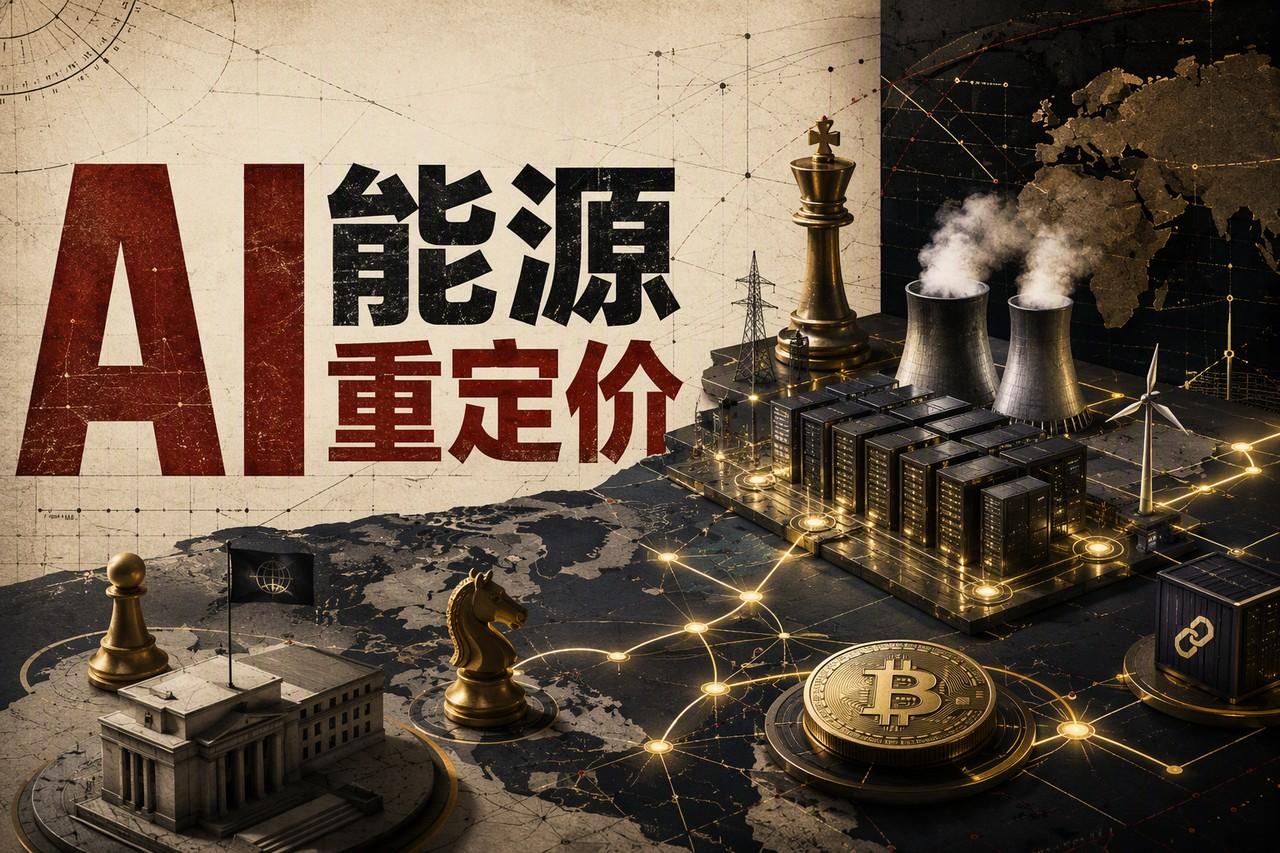
As the cause of the explosion at Assaluyeh Port remains to be disclosed, Musk brought the topic back on September 2 to a more long-term constraint—electricity itself. He specifically pointed out that large AI data centers rely on large-scale power generation facilities, transformers, liquid cooling cycles, and cooling systems, which is not just a technical checklist for engineers but a message to the market: the true competition in the AI arms race is no longer just about algorithms and chips, but about who can secure more ample, stable, and lower-cost electricity and infrastructure. Once uncertainties arise in energy hubs like Iran, investors immediately perceive the "oil and gas in the pipeline" and "electricity in the data center" as the same risk curve, naturally writing the expected upward trend in electricity prices into AI capital expenditure models and corporate profit expectations.
When the macro variable of electricity and energy prices is pushed higher, the transmission path is clear: corporate costs rise, inflation expectations reignite, and central banks become more reluctant to adopt dovish stances on interest rate pathways. The rise in the risk-free return rate directly compresses the valuations of all risk assets based on discounted future cash flows, including those tech stocks telling AI growth stories. The same link also works in the cryptocurrency market: the increase in electricity costs and the squeezing of supply by AI's electricity demand raise the cost curve for BTC mining, shifting miners’ break-even points upwards, which may force marginal miners to shut down while top miners tend to reduce selling during price corrections, delaying monetization and treating spot holdings as "energy assets" to hedge against electricity price fluctuations. From a pricing framework perspective, as BTC is increasingly viewed as a "power derivative" of high energy consumption manufacturing, its risk premium will amplify with the dual volatility of energy and interest rates. Investors need to monitor several variables including international energy prices, mining difficulty, and overall network computing power to determine whether this round of electricity repricing is elevating BTC's safety margin or compressing its valuation space as a risk asset.
SpaceX Renting Computational Power: Tech Giants Competing for AI Infrastructure
Following the logic of "electricity repricing," another clue Musk provided was who is packaging power and data centers as commodities. He mentioned that Google and Anthropic, amid tightening electricity supply, are renting AI computational power from SpaceX—turning the rocket company into a wholesale supplier of computational power, which itself is a signal: what is truly being contended is not just model algorithms but a complete set of infrastructure that has "power, cooling, and data centers." On September 2, 2026, the same day Anthropic released Claude Fable 5.1 and Claude Mythos 5.1, CrowdStrike announced the expansion of Falcon platform capabilities in Google Cloud's enterprise AI ecosystem, appearing as an iteration of models and an upgrade of security capabilities, but pointing to the same main line—those who can secure cloud platforms, data centers, and supporting energy resources can gain ecological control in this round of AI competition.
As the market begins to view AI computational power and infrastructure as independent scarce resources, the pricing chain of risk assets is rewritten: on one end are AI-related stocks and cloud vendors assigned an "infrastructure premium," and on the other end are on-chain AI narrative tokens regarded as high beta shadow positions in this track, while BTC, viewed as a power derivative, and mainstream public chains serving on-chain execution environments are caught in between. Funds compare these three categories of assets horizontally: AI-related stocks offer tangible data centers and contracted cash flows, on-chain AI tokens provide leveraged exposure to the computational power narrative, whereas BTC/ETH are often reassessed within a "macro hedge + tech growth" hybrid framework. With every round of news about cross-industry computational supply like SpaceX, or developments in the Anthropic and Google Cloud ecosystems, risk appetite in U.S. AI stocks, on-chain AI narratives, and BTC/ETH will rotate in response. Investors must observe not only individual price fluctuations but also whether the premium of AI infrastructure assets relative to BTC/ETH is expanding, thereby judging whether funds are more willing to bet on specific computational resources or revert to more abstract cryptocurrency “macro chips.”
Cooling Risk Appetite: U.S. Stock Market Correction and Cryptocurrency Concept Stocks Hit
On the same day that AI, electricity, and computational power scarcity were spotlighted, the price screen of U.S. stocks gave another signal: on September 2, the Dow Jones Industrial Average fell about 0.85%, the Nasdaq dropped around 1.31%, and the S&P 500 decreased roughly 0.73%. Meanwhile, Coinbase, seen as the "face stock" of cryptocurrency, declined about 5.96%, and Robinhood fell about 1.25%. In the absence of clear macro data or sudden policy drivers, this combination appears to be a phase correction to the overall expansion of valuations of risk assets: high beta assets fall the hardest, which suggests that the previously augmented risk appetite stemming from AI narratives, electricity expectations, and liquidity easing is starting to confront realities of returns and volatility costs.
For BTC and ETH, the transmission path of such corrections often does not proceed through single macro data, but rather through this "bridge" of cryptocurrency concept stocks: when assets like Coinbase that connect Wall Street and the on-chain world are collectively discounted, traditional institutional portfolio managers will first reduce their exposure to cryptocurrency-related stocks, while on-chain participants read into price signals as signs of "lower risk tolerance," thereby synchronously decreasing leverage in both spot and contract markets. This is typically manifested as: futures funding rates decline, open interest in perpetual contracts reduces, forward-and-futures price spreads narrow, and liquidity in highly volatile altcoins prematurely dials back, with some funds briefly flowing back to dollar-pegged tokens and other "on-chain cash positions," awaiting volatility to settle. In such an environment, BTC/ETH pricing resembles a rebalancing of weights between "macro risk premium" and "on-chain fundamentals.” Future observations should focus on whether U.S. cryptocurrency stocks continue to underperform the broader market, whether leverage in perpetual contracts continues to clear, and whether the proportion of dollar-pegged tokens rises, thereby determining whether this round of cooling risk appetite will evolve into short-term fluctuations or a longer cycle of risk premium reassessment.
The Energy Shadow of the Middle Eastern Port Explosion: Geopolitical Premiums on Cryptocurrency
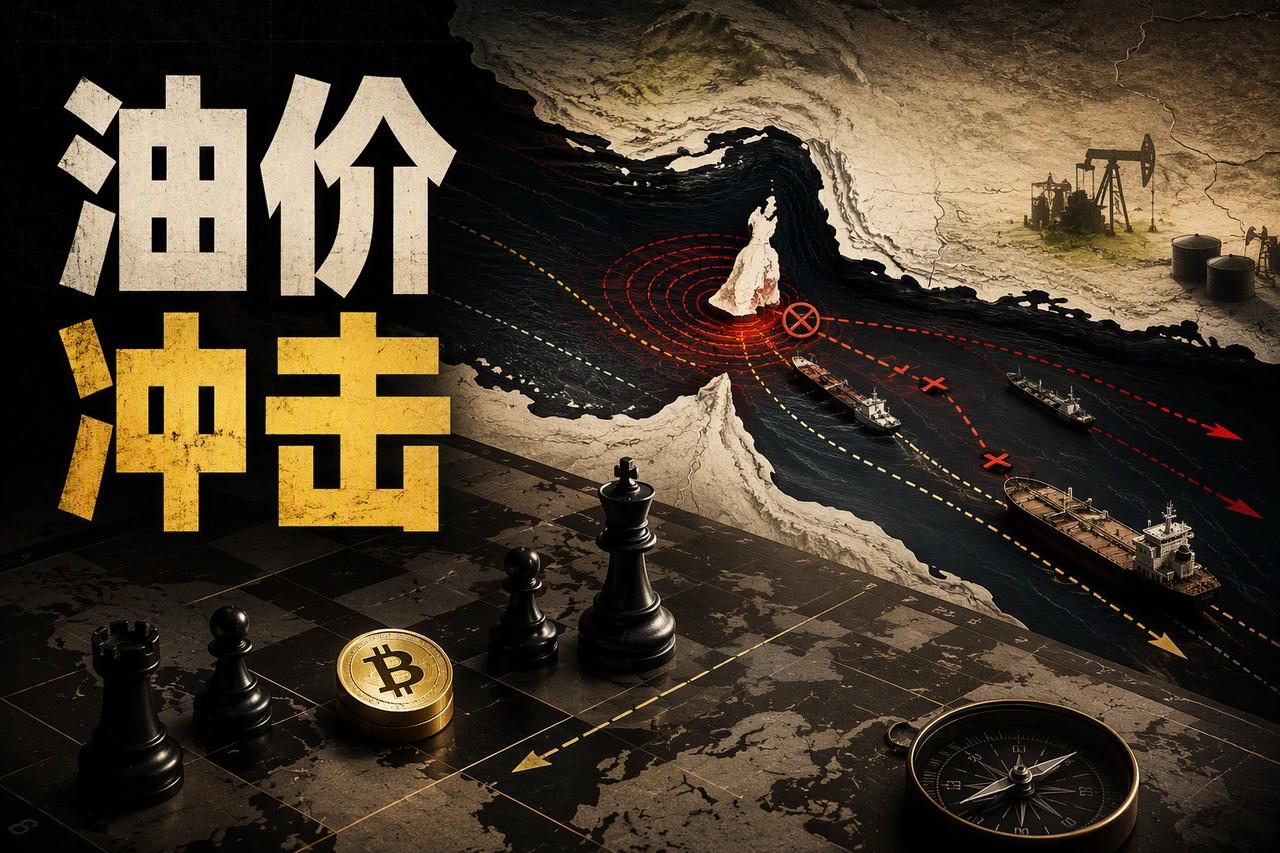
On the evening of September 1 local time, Iran's Fars News Agency reported an explosion at Assaluyeh Port. This port, viewed as an important energy hub in Iran, stands at a critical position in the natural gas and petrochemical export chain. However, the cause of the explosion, casualties, and specific damages have not yet been disclosed, leaving the market with only the fact that "another energy heart has emitted unexplained noise." In historical context, any uncertainty regarding Middle Eastern energy infrastructure is easily interpreted as a signal for rising risk premium in crude oil and natural gas: even if spot supply does not immediately contract, the forward curve can embed this uncertainty into global electricity and fuel cost expectations through higher "geopolitical discounts." At a time when Musk has just reminded that "large AI data centers require large-scale power generation facilities and complex infrastructure," and pushed the scarcity of electricity to the forefront, such Middle Eastern events will be algorithmically and macro-traditionally embedded into assumptions of "higher and more volatile electricity prices," thereby increasing the expected operational costs and computational leasing prices of AI data centers.
This chain of energy and geopolitical risk premiums will ultimately influence BTC pricing on both ends. On the supply side: mining heavily relies on electricity costs, and if the market begins to layer higher risk premiums on oil and gas along with electricity prices, the break-even point for miners will be raised overall, potentially forcing marginal computing power to exit under cost pressure. This will make the production curve steeper and more fragile at high levels, thus providing new narrative fuel for the "cost support theory." On the demand side: the ambiguous explosion at the Middle Eastern port may trigger portions of capital's "geopolitical hedge" instinct, allowing BTC to be viewed as a digital tool for conflict hedging, adding some risk-averse weight to it when traditional assets are under pressure. The result is that BTC, in such a context, simultaneously attains two premium factors: "rising production costs" and "strengthened hedging narrative." Although the directions may not immediately align, they are sufficient to present it with higher volatility and thicker geopolitical risk discounts in an environment of global risk asset cooling. Whether this translates into sustained premiums will depend on how the energy market prices this event, as well as whether capital is willing to pay long-term for its "geopolitical hedge attribute."
Cryptocurrency Trading Roadmap Under the AI Boom and Macroeconomic Shadows
In the current narrative, the core macro variables influencing BTC and ETH pricing can be condensed into three main lines: firstly, the electricity costs and supply constraints named again by Musk on September 2, which is both the bottleneck for AI data center expansion and the cost anchor for BTC mining; secondly, the global shifts in risk appetite reflected in the simultaneous falls of the three major U.S. indexes as well as Coinbase and Robinhood; thirdly, the geopolitical premiums and expectations of energy security spurred by the explosion at Assaluyeh Port. Based on these three main lines, a more suitable structural observation framework for the current environment can be constructed: viewing BTC as an asset simultaneously exposed to the dual factors of "rising energy costs + geopolitical uncertainty," it resembles a hedging tool against energy and geopolitical risks when the volatility of electricity and Middle Eastern variables sharply fluctuates; while ETH and high beta tokens centered around AI and computational narratives are closer to technology growth assets resembling the Nasdaq style, their performance is more sensitive to AI investment cycles, data center expansion rhythms, and technology stock valuation elasticity. In trading, electricity costs and AI infrastructure signals serve as the first input for assessing the strength of BTC's production cost curve and computational narratives; public information on cross-industry computational transactions like SpaceX serves as the second input for observing "how electricity/computational scarcity is financialized;" the performance of U.S. risk assets, especially cryptocurrency concept stocks, is the third input for calibrating global risk appetite; and the subsequent disclosures following the Assaluyeh Port event and its effect on energy market sentiment constitute the fourth input of geopolitical premiums. How these four signals interact will determine the respective risk premium structures of BTC and ETH in this round of intertwined AI prosperity and macroeconomic shadows.
Join our community, let's discuss together and grow stronger!
AiCoin exclusive Hyperliquid benefits: https://app.hyperliquid.xyz/join/AICOIN88
AiCoin exclusive Aster benefits: https://www.asterdex.com/zh-CN/referral/9C50e2
On-chain Telegram community: https://t.me/AiCoinWhaleData
On-chain community: https://www.aicoin.com/link/chat?cid=N6OVMor5g
AiCoin on-chain Twitter: https://x.com/aicoinwhaledata
免责声明:本文章仅代表作者个人观点,不代表本平台的立场和观点。本文章仅供信息分享,不构成对任何人的任何投资建议。用户与作者之间的任何争议,与本平台无关。如网页中刊载的文章或图片涉及侵权,请提供相关的权利证明和身份证明发送邮件到support@aicoin.com,本平台相关工作人员将会进行核查。