Strategy purchased 4,603 bitcoins last week, ending a previous 10-week pause in purchasing.
Written by: Lockridge Okoth
Translated by: Chopper, Foresight News
Strive, BitMine, and Strategy all announced their latest cryptocurrency purchase records on Monday. The combined investment from Strive and Strategy, two companies holding bitcoin, exceeded 500 million dollars within a week.
Buying at high prices is not a mistake in their business model, but its essence. These companies acquire crypto assets by issuing more stock to raise funds; when cryptocurrency prices rise, company stock sales often perform best.
What the three companies purchased
Strive, led by CEO Matt Cole, added 1,800 bitcoins at an average cost of 79,431 dollars. Following this increase, its total bitcoin holdings reached 23,156, with a market value of approximately 1.83 billion dollars on Monday.
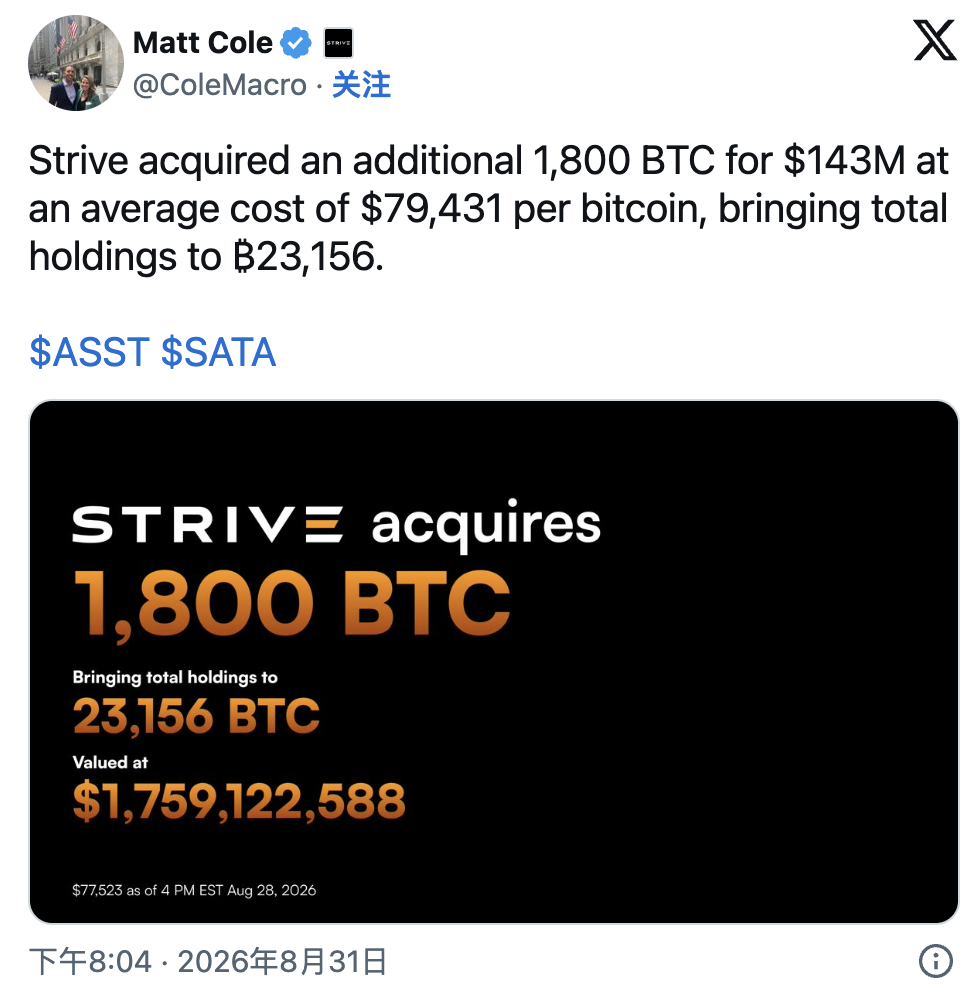
Filing documents clearly disclose this funding operational logic: Strive issued 3,579,147 new Class A shares during the week, and even with large bitcoin purchases, the company’s cash reserves still increased by 11.6 million dollars, bringing the total cash to 183.5 million dollars.
BitMine has taken a different route. This time, it purchased 53,501 ethers, achieving 65 consecutive weeks of uninterrupted buying, which began in June 2025.
The company's core differentiator is revenue. BitMine has staked 86% of its Ethereum holdings (a total of 5,067,309 ETH) through its U.S. validation node network, MAVAN, for yield farming.
Chairman Tom Lee expects this staking business to generate between 335 million and 390 million dollars annually. Currently, BitMine holds 4.9% of the total Ethereum supply, needing 133,888 more ethers to reach its 5% holding target.
The third company to make a purchase is Strategy. This time, it added 4,603 bitcoins, ending a previous 10-week pause in purchasing. Strategy disclosed the average holding cost of each bitcoin, which is currently 75,412 dollars.
ETF capital flow turned earlier
The catalyst for this surge in purchases came from a change in fund flow. According to SoSoValue data, U.S. bitcoin spot ETFs absorbed over 3.3 billion dollars in August; in contrast, there was a massive outflow of 4.5 billion dollars in June.
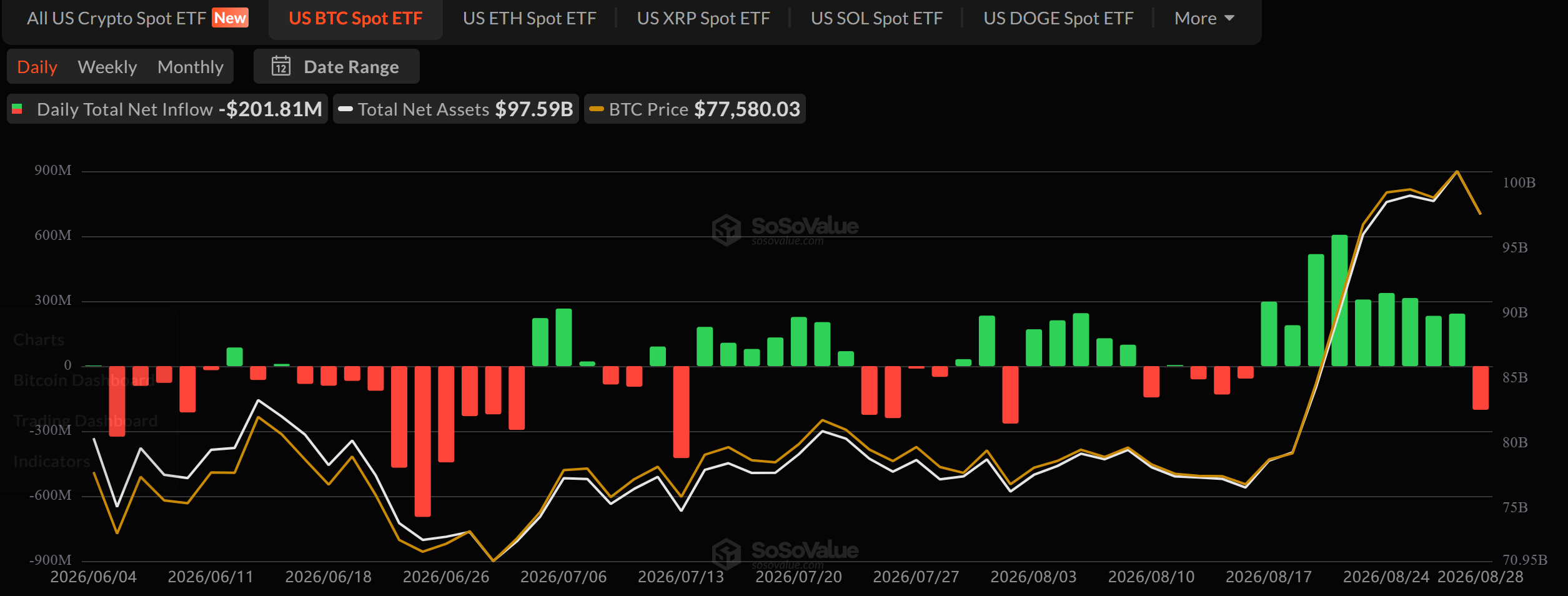
Ethereum ETFs also experienced a reversing trend, with this latest net inflow of approximately 1.75 billion dollars marking the strongest inflow performance since October of last year. Driven by funds, the prices of bitcoin and Ethereum rose by 33.3% during this period.
The complete transmission logic constitutes the driving force of the current market: fund buying pushes up cryptocurrency prices, rising coin prices drive the stock prices of these treasury-holding companies higher; companies raise funds through issuing more shares, and then use the proceeds to buy more cryptocurrencies.
What changes occurred in the market environment in August
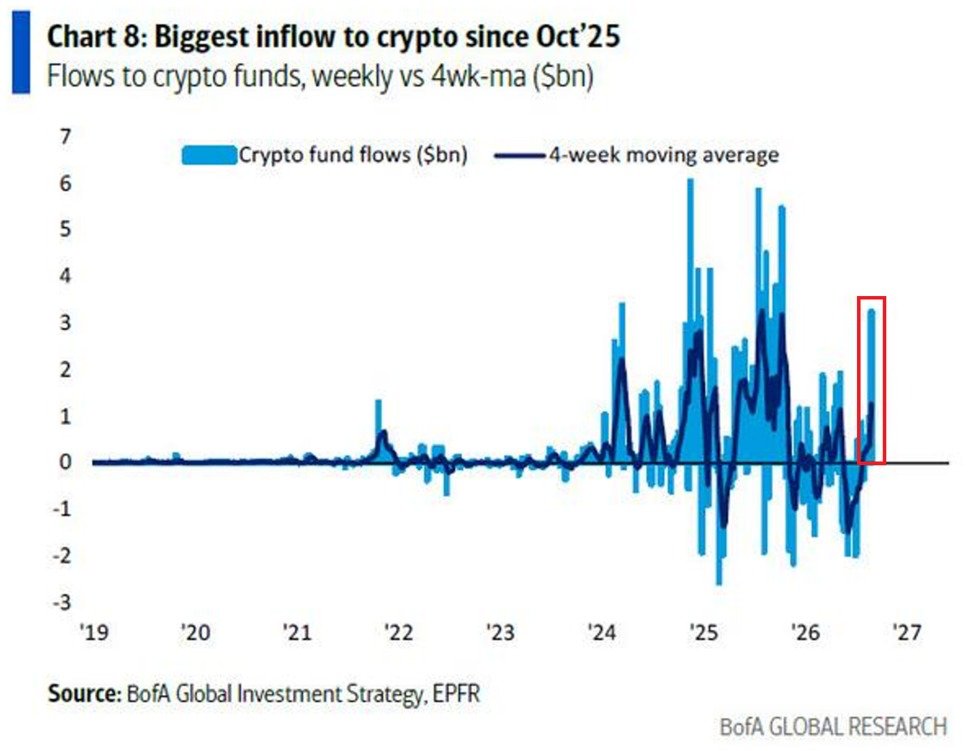
Bank of America data shows that last week, cryptocurrency funds recorded a total net inflow of 3.2 billion dollars, setting a weekly record high since October 2025, reflecting increasingly optimistic market sentiment.
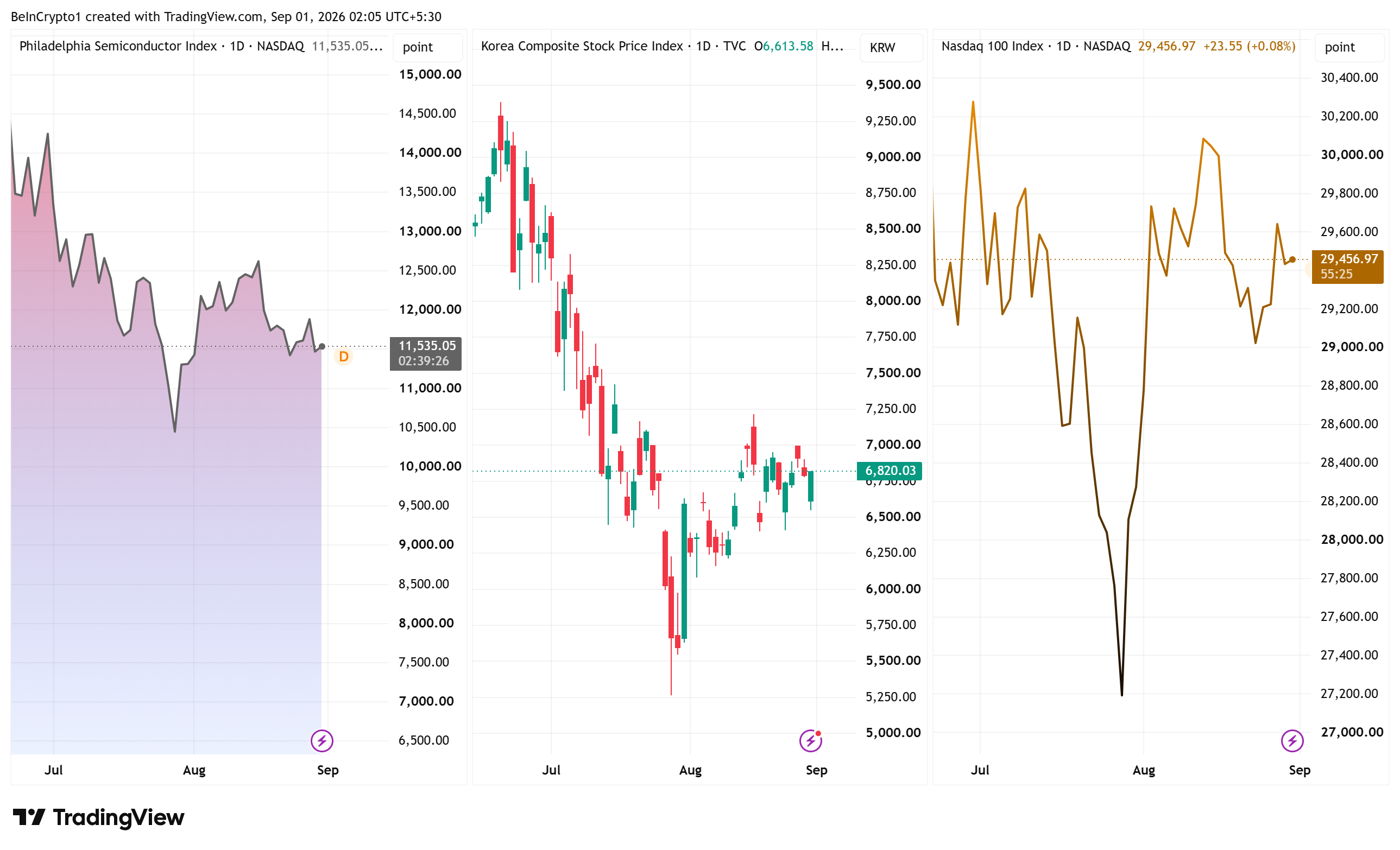
A prevailing discourse in the market suggests that capital is fleeing from the loosening AI sector into the cryptocurrency market, yet the timeline does not support this conclusion. The sell-off impact in the AI sector concentrated in July: the Philadelphia Semiconductor Index fell by 20.6% that month, and the Korean Composite Index (KOSPI) retreated by 22%. However, the market environment in August clearly improved, with the Nasdaq 100 index rising by 4.2%.
This capital rotation is also reflected in other aspects: in August, foreign investors withdrew 10.17 trillion Korean won from the Korean stock market, while trading volume on Upbit, a leading cryptocurrency exchange in Korea, surged nearly eightfold.
Policy levels in the United States also released positive signals. On August 19, President Trump urged Congress to advance the "CLARITY Act," which is expected to undergo voting on September 15.
On the same day, the U.S. Treasury expanded the scale of long-term bond repurchases, raising the maximum repurchase limit per operation from 2 billion dollars to at least 4 billion dollars. The easing effect of this policy was relatively limited, with the yield on 30-year U.S. Treasury bonds briefly falling to 5.19% before ultimately rising to 5.25%.
On Monday, the trading price of bitcoin was approximately 78,800 dollars. The true factor that halts these companies' continuous purchasing of cryptocurrencies has never been a falling coin price, but rather the closure of financing channels.
免责声明:本文章仅代表作者个人观点,不代表本平台的立场和观点。本文章仅供信息分享,不构成对任何人的任何投资建议。用户与作者之间的任何争议,与本平台无关。如网页中刊载的文章或图片涉及侵权,请提供相关的权利证明和身份证明发送邮件到support@aicoin.com,本平台相关工作人员将会进行核查。


