Starkware, the blockchain infrastructure company behind Ethereum layer-2 network Starknet, says the first quantum-safe Bitcoin transaction has been mined on the Bitcoin mainnet, testing a way to protect funds from future quantum attacks without changing the network’s consensus rules.
In a blog post on Wednesday, Starkware said the transaction used Quantum-Safe Bitcoin, or QSB, a method developed by Starkware researcher Avihu Levy. Levy published the research in April, and Starkware engineer Tomer Giladi later helped turn the proposal into a working mainnet transaction.
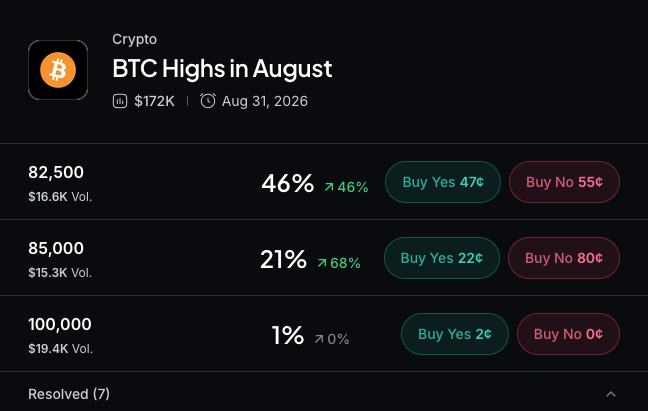
Myriad: How high will Bitcoin go? Click to make your prediction.
“A quantum-safe transaction was mined on the Bitcoin mainnet today that holds up against an adversary running a working quantum computer,” Starkware wrote. “Bitcoin holders now have a way to move coins into storage a quantum computer cannot open.”
Bitcoin uses elliptic-curve cryptography to secure transactions, which a sufficiently powerful quantum computer running Shor’s algorithm could theoretically break to derive private keys and steal funds. Protecting the network could eventually require either a hard fork, which introduces rules incompatible with older software and can split the network, or a soft fork, which can introduce new rules while remaining compatible with older nodes.
Starkware said a soft fork remains the preferred long-term solution, while QSB provides a way to protect individual holdings without waiting for a network upgrade.
“I still want Bitcoin to choose to do a soft fork and I expect we will get one,” Starkware CEO Eli Ben-Sasson said. “What today’s successful transaction offers Bitcoin is a reassurance that holdings can be protected before that happens.”
The issue has drawn growing attention as researchers assess which Bitcoin holdings could be most exposed to future quantum attacks.
In June, Coinbase’s quantum advisory council estimated that roughly 7 million Bitcoin could be vulnerable because of exposed public keys and address reuse.
Quantum-Safe Bitcoin, Starkware said, adds a second, quantum-resistant lock based on hash functions rather than elliptic curves. It uses “signature grinding,” which performs computational work off-chain to find a transaction hash that Bitcoin will accept as a validly formatted signature.
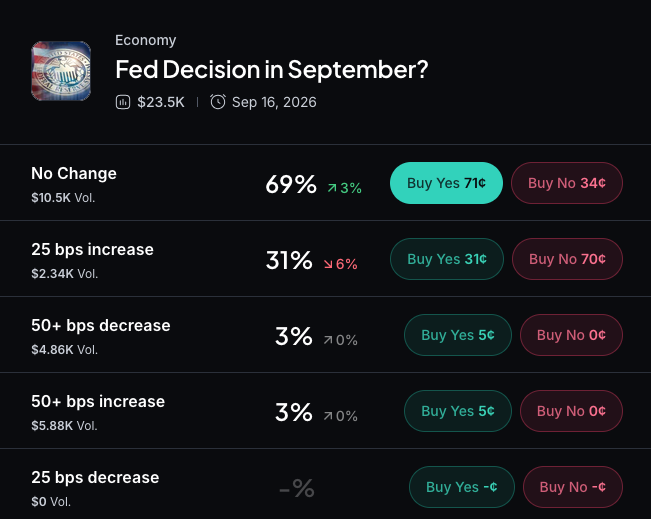
Myriad: What will the Fed do in September? Click to make your prediction.
Starkware acknowledged that QSB does not make Bitcoin quantum-safe, but protects specific transactions using hash-based security. It cannot protect addresses with already-exposed public keys and currently requires transactions to be sent directly to miners.
“This amazing feat should not be viewed as a message saying ‘Bitcoin is prepared for the quantum threat.’ Far from it,” Ben-Sasson wrote on X.
“I hope whatever attention this brilliant work gets will also help folks hear loud and clear our message: Huston, we've got a problem, and the way to fix it should be to get serious about serious soft forks for [Bitcoin],” he said. “That's how catastrophe can be avoided, and we still have time.”
免责声明:本文章仅代表作者个人观点,不代表本平台的立场和观点。本文章仅供信息分享,不构成对任何人的任何投资建议。用户与作者之间的任何争议,与本平台无关。如网页中刊载的文章或图片涉及侵权,请提供相关的权利证明和身份证明发送邮件到support@aicoin.com,本平台相关工作人员将会进行核查。


