Author: Zhou, ChainCatcher
In late August, HYPE rose significantly, reaching a peak of about $83.5, setting a new historical high, and is currently quoted around $82, having increased by 37.5% over the past 7 days, with a cumulative rise exceeding 220% this year.
According to data from hl.eco, as of now, the protocol has accumulated net revenue of approximately $1.27 billion, corresponding to around 48.17 million HYPE tokens being burned on-chain.
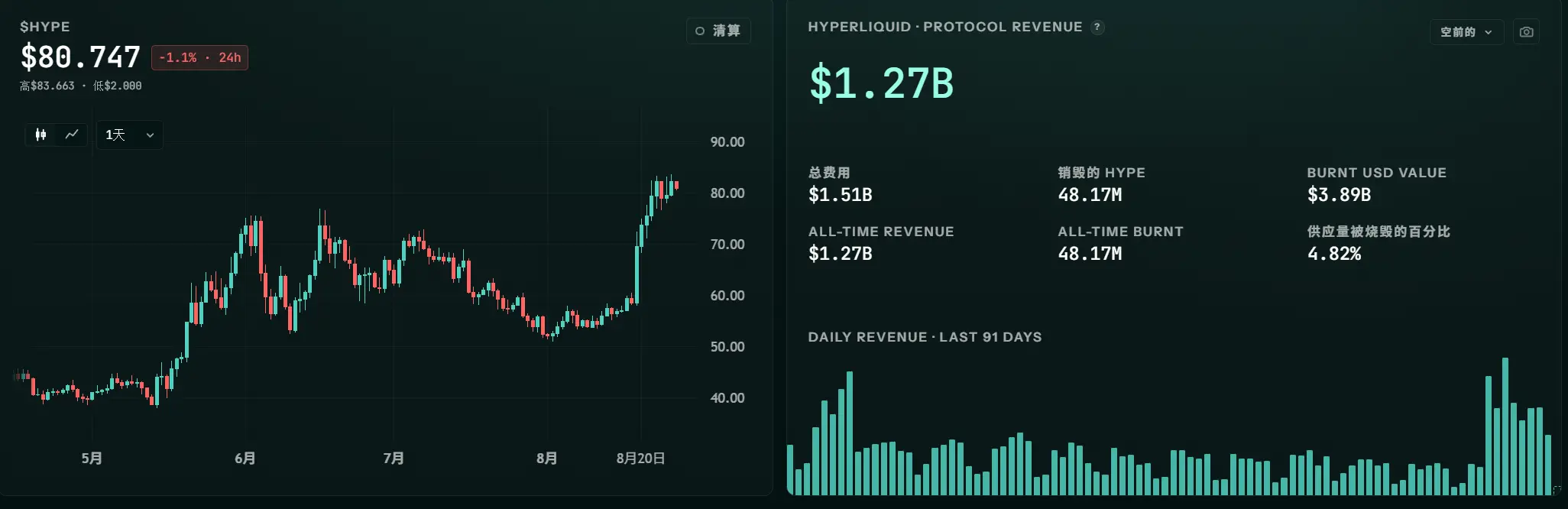
Approximately 99% of the platform's transaction fees continue to be used for buybacks and the burning of HYPE, providing a natural buy pressure for the price. The AQAv2 launched on August 26 will also add a new funding source for buybacks from USDC reserve earnings.
On the policy front, on August 19, Trump stated that CFTC Chairman Selig is promoting Hyperliquid to enter the U.S. in a fully compliant manner. Meanwhile, the Hyperliquid policy center has frequently submitted opinions to the SEC and CFTC in August regarding pre-IPO perpetuals, stock perpetuals, and energy perpetuals.
On the funding side, since its launch, the HYPE spot ETF has accumulated approximately $301 million in net inflows. Following Trump's statements on August 20, the single-day net inflow was about $5.8 million, and on August 26, it recorded approximately $14.7 million again. The HYPE treasury company PURR is also continuing to increase its position in the open market.
With this round of new highs, this article attempts to examine the quality of Hyperliquid's price increase from three dimensions: supply side, demand side, and fundamentals.
Supply Side: A Tug of War Between Buybacks and Unlocking
The supply side determines whether the HYPE chips are becoming looser or tighter. Hyperliquid will convert approximately 99% of transaction fees automatically into HYPE and deposit them into an Assistance Fund address that has no private keys and cannot be accessed by anyone, effectively locking them permanently. In December 2025, validators will confirm these tokens as burned with 85% of the votes.
According to hl.eco data, the protocol has accumulated revenue of about $1.27 billion, corresponding to approximately 48.17 million HYPE tokens burned on-chain, accounting for 4.82% of the 1 billion token cap, with these tokens valued at approximately $3.9 billion at current prices.
This buyback system is continuously being ramped up due to increasing revenues. According to statistics from Blockworks, Hyperliquid generated about $16.93 million in revenue last week, a 196% increase from the previous week. The higher the revenue, the more funds are invested in buybacks.
In addition to transaction fees, buybacks recently gained an additional funding source. Traders opening perpetual contracts on Hyperliquid are using almost all USDC as margin, and currently, over $5 billion in USDC deposits are sitting on the platform, backed by interest-bearing assets such as U.S. Treasury bonds, generating substantial interest income.
On August 26, Hyperliquid launched AQAv2 (Aligned Quote Asset v2) mechanism, utilizing part of the earnings from the platform's USDC reserves to accumulate funds, which will ultimately be transferred to the assistance fund for buybacks and burning of HYPE in the secondary market to reduce its circulating supply.
Under this mechanism, Circle is responsible for USDC technical deployment, while Coinbase is in charge of reserve management; the stablecoin issuer is expected to share approximately 90% of the related reserve earnings after deducting operating costs with the protocol. The first payment of about $20 million is expected to arrive on October 3, with an anticipated additional buyback scale of $135 million to $160 million per year.
This means that buybacks are no longer reliant solely on transaction fees; every dollar of USDC accumulated on the platform is also starting to contribute to buying pressure for HYPE.
On the other end of buying pressure is unlocking. HYPE is released monthly, and since March 2026, the proportion of single unlocks relative to market value has decreased from around 3.3% to about 2.7%. On August 29, approximately 14.18 million tokens valued at about $1.1 billion will be unlocked, accounting for about 1.4% of total supply, equivalent to about 6% of the current circulating supply; of this, approximately 46.6% belongs to early insiders, 46.3% to the community, and 7% to the foundation.
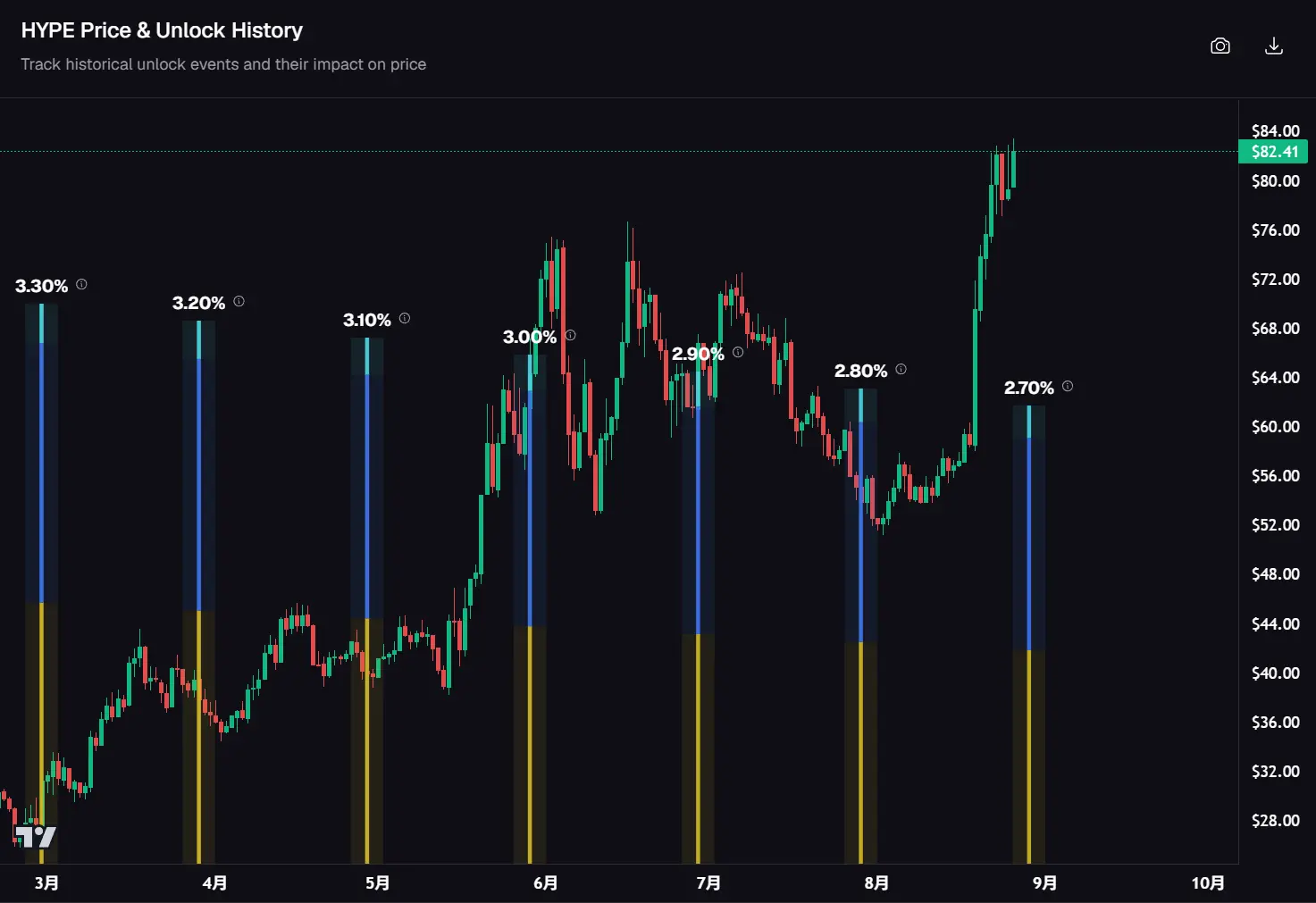
Historically, prices usually come under pressure before and after each unlocking. According to Tokenomics statistics, HYPE has averaged a drop of about 8.6% in the 7 days following the last few unlocks, with individual months seeing maximum retractions of 20-30% within two weeks post-unlock; however, these steep declines often overlapped with downward trends in the overall market at that time and were not solely caused by unlocking.
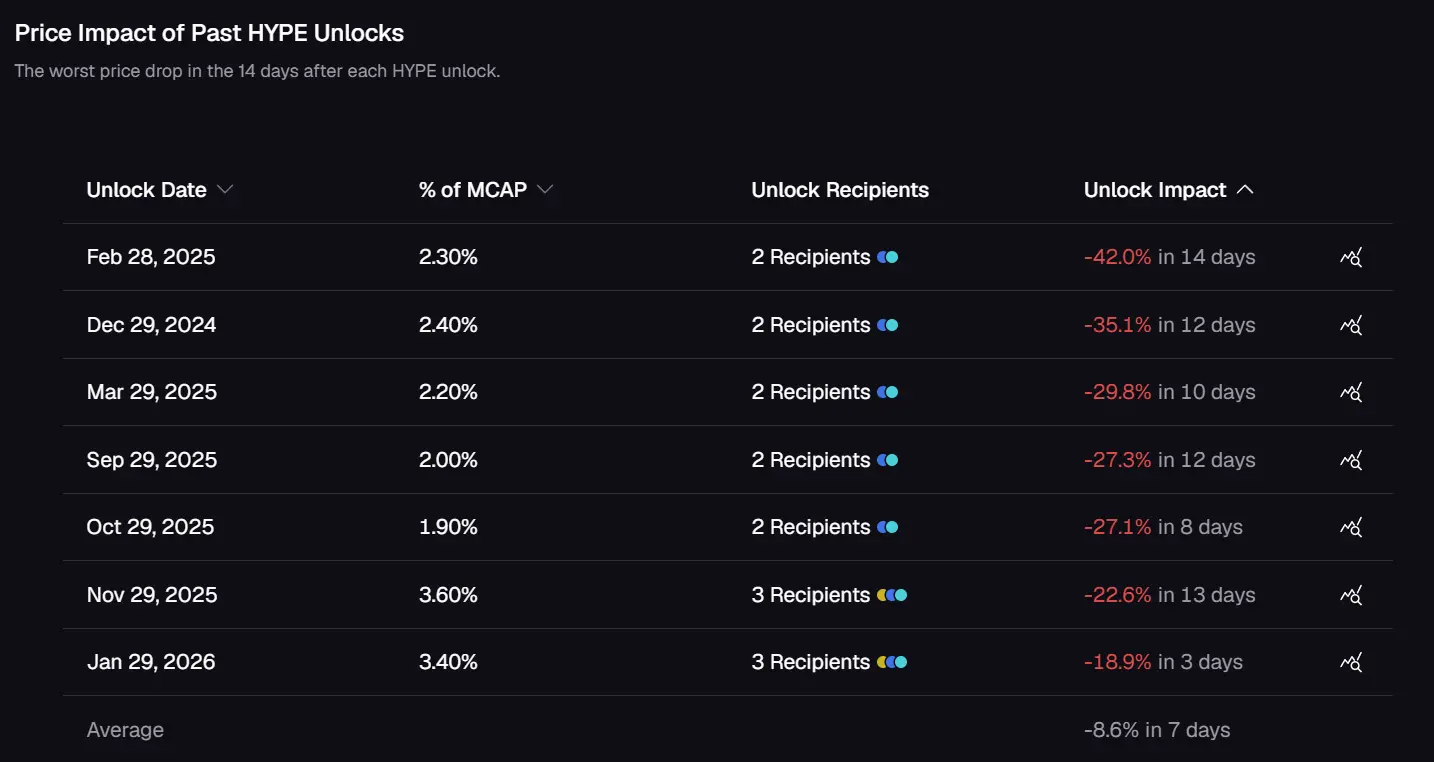
A rough estimate can be made of whether buybacks can withstand the unlocking pressure. Based on current monthly buyback scales of approximately $60 million to $80 million, even if all unlocked tokens are sold in the short term, they can only hedge about 6% to 7% of that amount.
Therefore, the short-term pressure on the supply side comes from the unlocking at the end of the month, with the variable being whether the market can absorb the additional supply; the medium-term support comes from the buybacks funded by transaction fees and the AQAv2 arriving on October 3.
Demand Side: Who is Creating New Buying Reasons for HYPE?
Currently, the price of HYPE has reached a historical high, and the next question is whether there is new capital and users willing to join in.
The biggest potential still lies in compliant entry into the U.S. On August 19, Trump stated at the White House that CFTC Chairman Selig is promoting Hyperliquid to "enter the U.S. in a fully compliant and legal manner." Hyperliquid is currently not open to U.S. users; once this statement transforms into an executable path, it opens up the incremental market for U.S. retail and institutions.
The Hyperliquid policy center has repeatedly submitted opinions to the SEC and CFTC covering pre-IPO perpetuals, stock perpetuals, and energy perpetuals, with a core request to subject these contracts, which have futures characteristics and are cash-settled, to regulation as securities futures.
Binance founder Zhao Changpeng recently expressed optimism at a blockchain forum in Wyoming, believing that if Hyperliquid can enter the U.S. in compliance, it will open up space for more decentralized products, which would be a positive development for the entire industry.
However, these advances are still at the level of opinion letters and verbal statements. Trump's mention does not equal CFTC approval, and a more likely landing approach is to allow licensed institutions to call on HyperCore through a permitted version of HIP-3. This segment of the premium is rising fastest but may also be the first to retrace.
On the distribution side, Coinbase is the official deployer of the platform's USDC reserves and has increased its HYPE staking; Base App has integrated Hyperliquid, offering eligible users up to 50x leverage across more than 200 perpetual markets. Coinbase does not directly purchase HYPE, but larger trades lead to increased transaction fees, which are then utilized for buybacks.
Further up is HIP-3. This mechanism opens up the listing rights; as long as about 500,000 HYPE is staked, the team can independently list a new contract market, with the cumulative nominal trading volume exceeding $480 billion, of which over 90% is concentrated on trade.xyz.
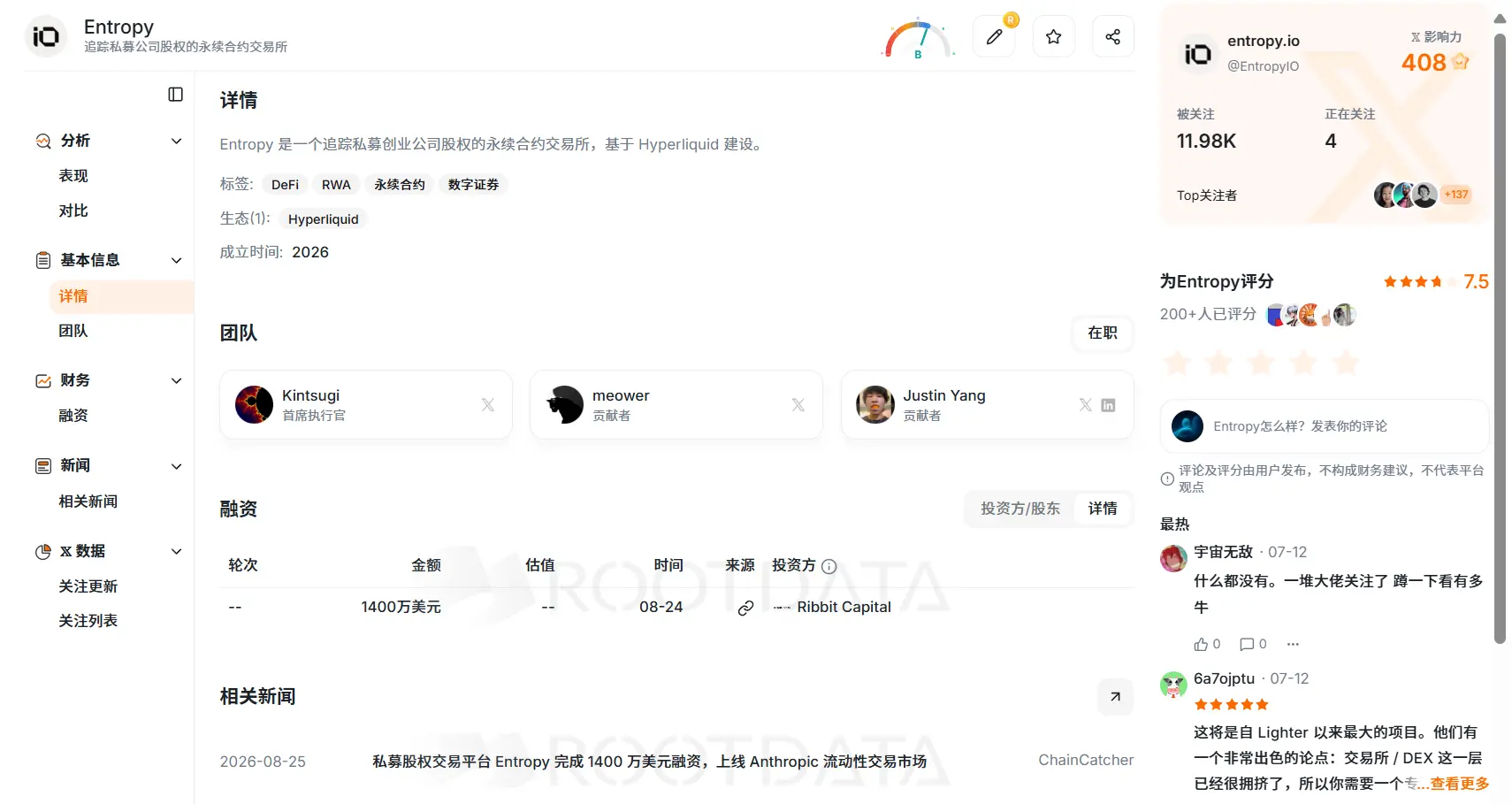
Recently, HIP-3 welcomed a new player, EntropyIO, which secured a $14 million financing led by Ribbit Capital and staked $40 million in HYPE. Team members come from institutions like Citadel Securities, Optiver, Millennium, and Polymarket. On its first day, it launched a pre-IPO market for Anthropic, with trading volume exceeding $40 million in half a day.
Blockworks analysts believe that EntropyIO could become the first real threat to TradeXYZ's dominance. However, some analysts point out that HIP-3 might incite fierce liquidity competition among deployers, which would not be friendly to new entrants. Nevertheless, the entry of new players leads to better products for users and truly represents a 1+1>2 situation for the Hyperliquid ecosystem.
Meanwhile, there are signs that Kraken is also testing a compliant version of HIP-3 on the testnet, and traditional futures exchange CME has begun to publicly discuss the impact of trade.xyz and Hyperliquid.
In contrast, HIP-4 is still in its early stages. It targets the on-chain prediction market Polymarket, which has historical trading volume of about $310 million and around 1,000 daily active traders. On August 25, founder Jeff updated three features, including sub-deployer authorizations, yet the overall trading volume remains small.
Institutional funds are steadily entering through compliant channels. Since its launch, the HYPE spot ETF has accumulated approximately $301 million in net inflows, with total net assets around $409 million. The treasury company PURR, listed on Nasdaq, currently holds about 29.35 million HYPE, accounting for about 2.94% of the total supply, with unrealized gains exceeding $1 billion based on net asset value and continues to increase its position in the open market.
Fundamentals: Is There Cash Flow Support Beneath the Price?
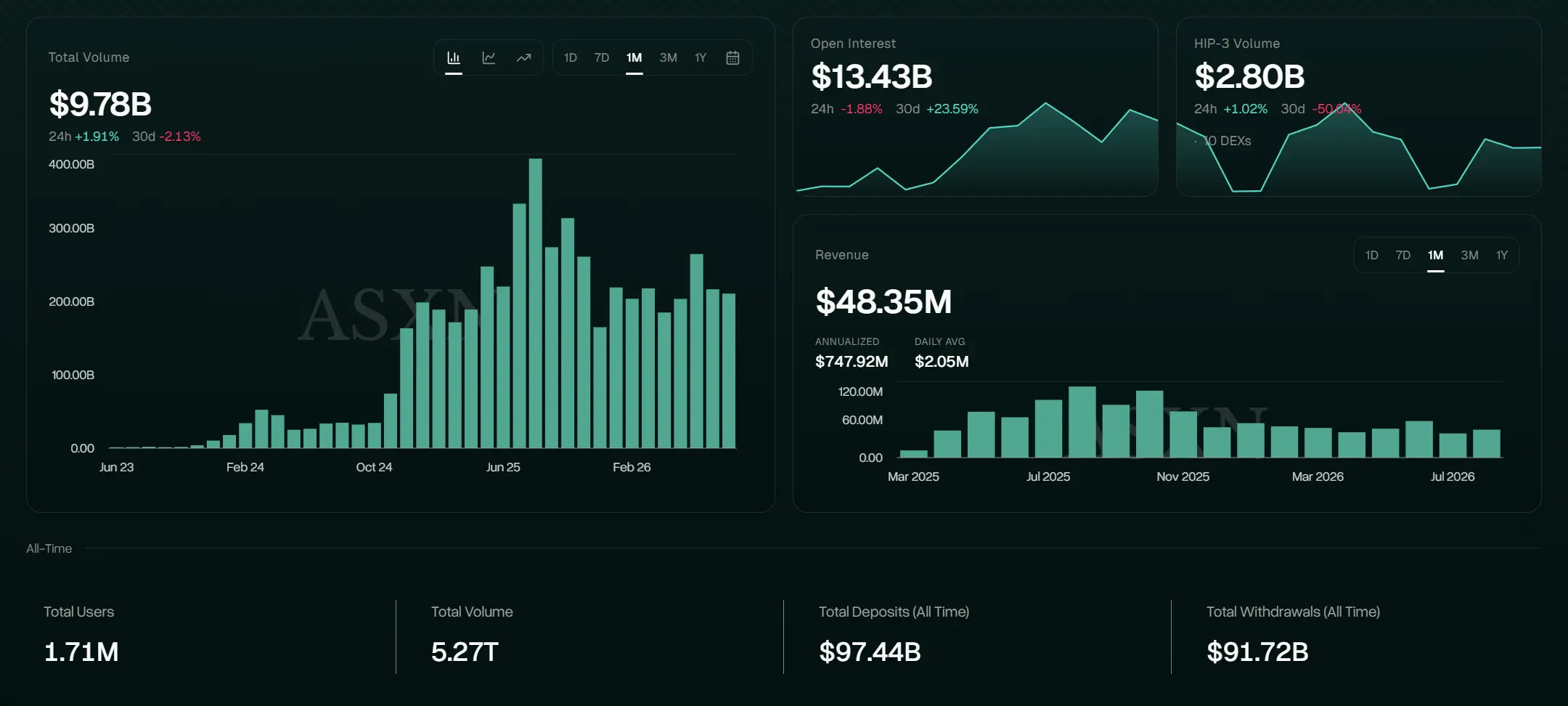
According to ASXN data, Hyperliquid's cumulative trading volume to date is approximately $52.7 trillion, with around 1.71 million registered users and current open contracts of about $13.4 billion, increasing by approximately 24% over the past month.
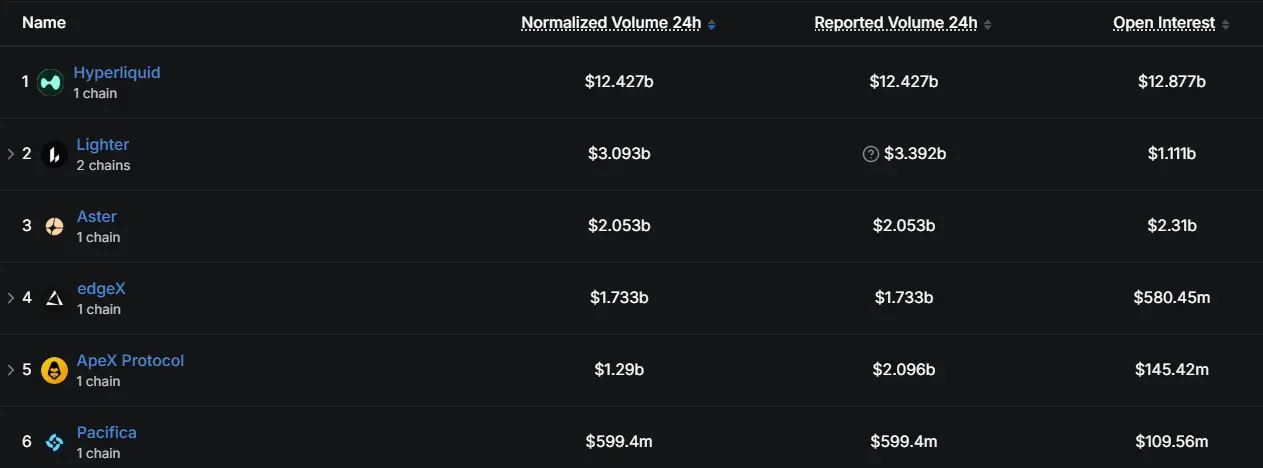
In the perpetual DEX space, Hyperliquid currently holds about 40% market share, firmly in first place, while its closest competitors, Lighter and Aster, achieve less than a quarter of its daily trading volume.
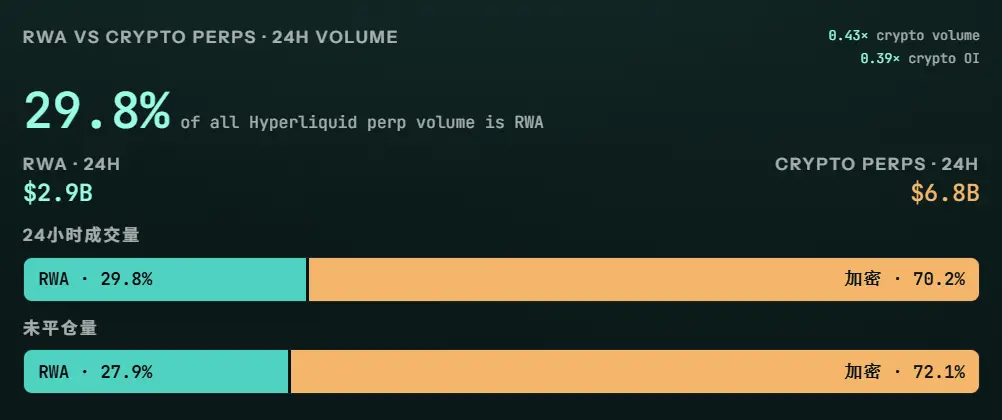
At the same time, the asset structure on Hyperliquid is shifting towards RWA. According to ARK Invest, in July of this year, RWA transactions temporarily surged to 54%, surpassing crypto assets for the first time. Currently, approximately 29.8% of perpetual trading on Hyperliquid comes from RWA, with a 24-hour trading volume of about $2.9 billion.
On the revenue side, Hyperliquid has an annualized revenue of approximately $748 million, making it a rare cash cow in the crypto industry. Ecosystem usage is also expanding, with HyperEVM generating daily transaction fee revenue of $538,100, which has all been burned.
However, there are concerns regarding the fundamentals. Currently, HIP-3 is highly concentrated, with the vast majority of transactions still coming from the trade.xyz deployer, which can take approximately 50% of the fees in its market. This means that even though trading volume sets new highs, the protocol's retained revenue may not grow proportionally. Whether new players like EntropyIO and Kraken can break trade.xyz's monopoly is key to the future of this line.
There are also controversies within the ecosystem. The ecological party Kinetiq recently proposed creating a Layer 2 called Elysium, which was once highly sought after by the market. Analysts like y_cryptoanalyst pointed out that Elysium, proposed by Kinetiq, is not an official project but rather a narrative leveraging HyperEVM's popularity. In fact, the application layer of HyperEVM has been weak, with trading highly concentrated in the official HyperCore, leaving limited survival space for third-party applications; the likelihood of the official team personally entering Layer 2 is relatively low.
Conclusion
Bringing these three lines together, the logic behind HYPE's recent high appears quite clear. Policies provide it with valuation elasticity, buybacks give it a supply-demand foundation, and fundamentals lend it reasonableness. The ecological research institution GLC Research bluntly states that the buying pressure for HYPE is currently rare, and the price might soon reach triple digits.
Overall, HYPE has already become a focal point in the crypto market. Publications like Fortune and Bloomberg frequently report on Hyperliquid, indicating that it is becoming a competitor that Wall Street must reckon with.
However, there are also analyses suggesting that the more U.S. regulators accept Hyperliquid, the more favorable it is in the short term, but once regulation deepens, its advantages of not requiring account setup, KYC, and direct wallet connections may gradually diminish.
免责声明:本文章仅代表作者个人观点,不代表本平台的立场和观点。本文章仅供信息分享,不构成对任何人的任何投资建议。用户与作者之间的任何争议,与本平台无关。如网页中刊载的文章或图片涉及侵权,请提供相关的权利证明和身份证明发送邮件到support@aicoin.com,本平台相关工作人员将会进行核查。


