Original title: "The 'Self-Evolution' Blueprint of DeepSeek Has Been Exposed"
Jay from Aofeisi Quantum Bit | Public Account QbitAI
DeepSeek's latest paper in collaboration with Peking University has unveiled the veil of the Harness version of the whale.
Entitled "A Programming Paradigm for Spatiotemporal Composability", it can be translated into Chinese as "A Set of Programming Paradigms for Handling Spatiotemporal Composability".
It sounds a bit convoluted; you just need to remember one sentence -
The entire text revolves around Cordis, which is the core of the black whale, a "Lego baseplate" that can be freely plugged and unplugged.
Here, everything is a plugin, and everything can be reorganized.
This also explains why the "black whale" has such a high degree of openness, and the official encourages everyone to create plugins and modify Harness.
This is an information-dense paper and probably a culmination of the efforts of the DeepSeek Harness team over a long period of time, which ultimately won a beautiful battle in the form of the big black whale.
It is worth noting that this is DeepSeek's seventh paper this year and also the Nth collaboration with Peking University.
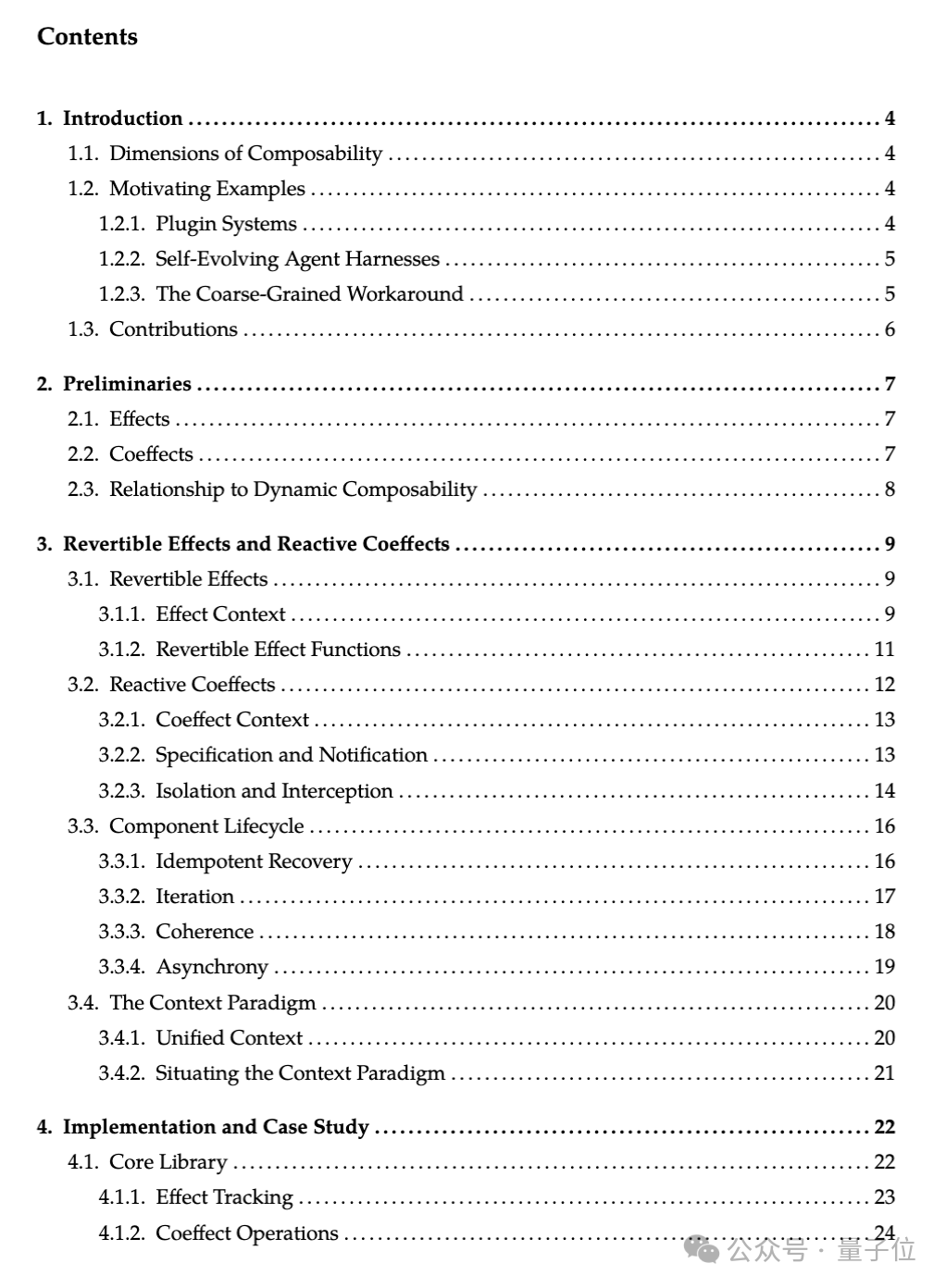
With over eighty pages in total, I went through the paper from start to finish and summarized a few takeaways -
1. Cordis provides a set of general dynamic combinatorial semantics. Components managed through context can be dynamically loaded, unloaded, and automatically reclaim their managed side effects.
2. The mathematical foundation comes from two classical concepts in type theory: effects and co-effects.
3. This is not a laboratory toy. This design has been running on the Koishi chatbot framework for four years, with over 4000 community plugins verified in production environments.
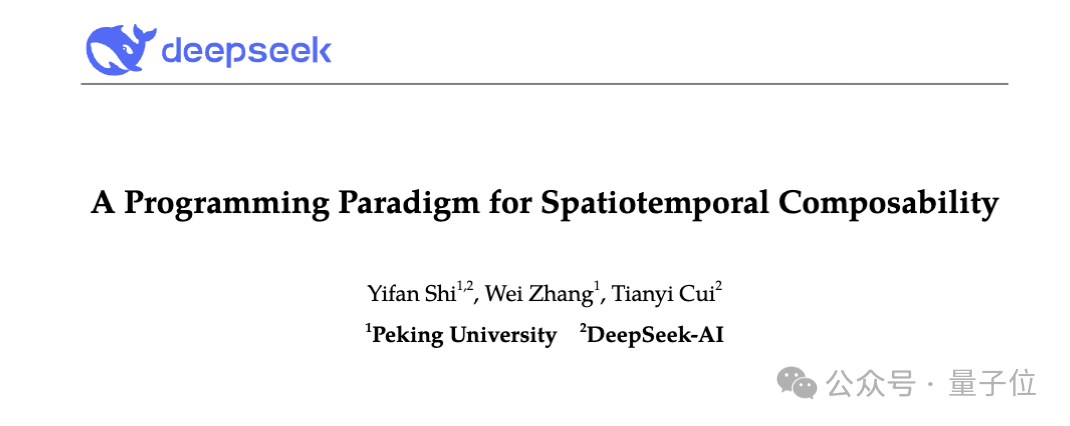
All of this serves one ambition -
self-evolution.
01 Time and Space, Two Hurdles for Harness Self-Evolution
There is an counterintuitive reality in the software world: most plugin systems require a restart of the entire host process after unloading a plugin.
This means that what has been deleted may only be a single plugin, but all already loaded plugins are also restarted with it.
Indeed, "plug" ins are such that once plugged in, they cannot be unplugged.
VSCode is a classic example.
The paper states that as of June 9, 2026, among the top 100 extensions in the VSCode Marketplace, 87 contain executable code that, once activated, cannot be individually unloaded at runtime; disabling or deleting them requires restarting the entire extension host.
This is not a problem limited to VSCode. The paper points out that almost all plugin architectures have this defect, though the degree may differ.
This issue may be troublesome in common plugin systems, but if the cost is just restarting, it could still be acceptable.
However, in the context of Agents, it's a completely different problem.
A conventional saddle usually accommodates a multitude of things: toolkits, execution environments, permission control, sandboxes, session states, memory systems... itself a highly complex engineered system.
Now, encountering "self-evolving AI" is like meeting Sun Wukong, where one might unintentionally cause chaos.

This is also the angle DeepSeek's paper approaches self-evolution from:
Future Agents may generate their own tools based on tasks, input those tools into runtime, and replace them if issues are found later on.
If modifying a single line of code requires restarting the entire process, all of the accumulated context and cache could collapse.
This is called temporal composability.
If the dependencies between modules rely on each module to patch itself up, checking for A today, guessing B tomorrow... one may inadvertently introduce circular dependencies, leading to issues when reloading.
This is called spatial composability.
These two challenges are precisely the two problems that Cordis aims to solve.
DeepSeek's Solution
First, two mathematical concepts must be added, which are also the two theoretical pillars of this paper -
Effects and Co-effects.
In simple terms, effects characterize "the impact of the program on the world"; co-effects characterize "the constraints of the world on the program". The two are dual relationships: effect systems enrich types, while co-effect systems enrich contexts.
However, there is a problem: in the context of self-evolving AI, the framework is dynamically loaded.
Classical effects/co-effects are static type system tools.
To overcome both the temporal and spatial hurdles simultaneously, the team adapted and upgraded these two concepts for the Agent runtime - "Reversible Effects" and "Reactive Co-effects".
Reversible Effects target the time dimension.
The core definition is just one sentence: every modification to the context must come with an explicit inverse function, thus the side effects are reversible.
When loading plugins, every state modification records the corresponding inverse function, which is layered into a "undo chain".
When unloading plugins, this chain is executed in reverse, allowing the system state to be accurately restored to its appearance before the plugin was loaded.
It can be understood as a stack of plates; the last one added is the first to be taken away.
This way, the order of time will not be disrupted.
Reactive Co-effects take care of the spatial dimension.
In Cordis, components can declare what dependencies they need, thereby making dependencies resolvable.
For example, a chat plugin might say, "I need a message adapter and a database." Only when both dependencies are satisfied does it become ACTIVE. If either one is missing, it remains INACTIVE, not hurried to start, nor does it run only to crash due to null reference errors.
If providers appear, dependents activate automatically. If providers withdraw, dependents will pause first, waiting for them to retract their effects before providers complete the uninstallation.
If the dependency provider is uninstalled, the dependent will automatically deactivate; if the dependency comes back online, the dependent will automatically resume. This topological orchestration is derived automatically from declarations, without relying on developers to write it out manually.
The combination of both forms the core of Cordis.
The intuitive meaning of "spatiotemporal composability" in the paper's title lies here.
02 Koishi
So, has all of this been validated in practice?
Yes.
And it is not a small scale.
The project used for experimental validation is a chatbot framework called Koishi.

Koishi is built on Cordis and has accumulated over 4000 community plugins over four years, covering instant messaging adapters, database drivers, management consoles, and various user functions.
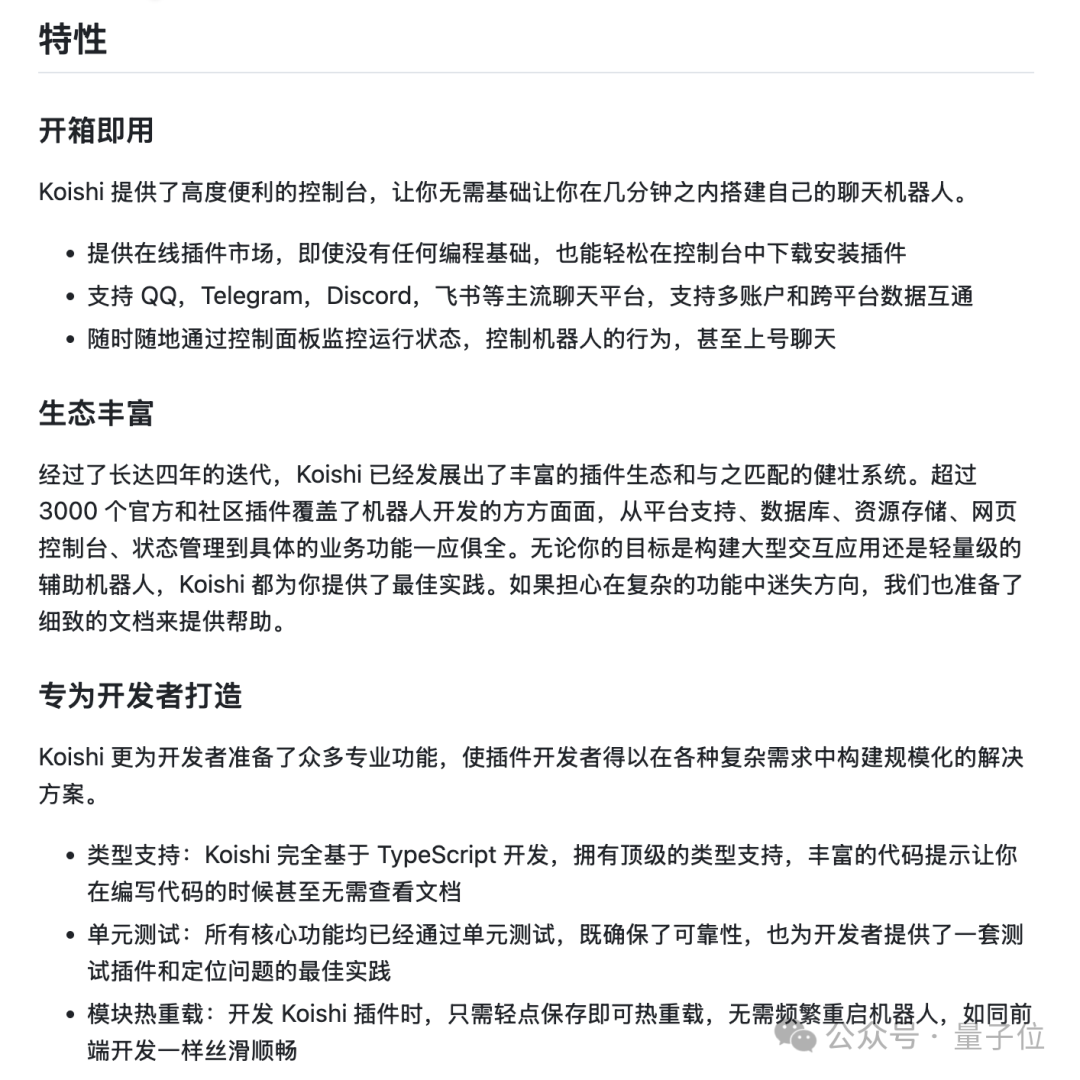
GitHub shows that Koishi is a cross-platform, extensible, high-performance chatbot framework.
Its name and icon design are inspired by the character Koishi Komeiji from the Touhou Project.
Koishi Komeiji is a character who performs unconscious actions, and this name represents both the theme of the chatbot and embodies the developers' love for it.
It's quite an interesting README as well.
So what is Cordis?
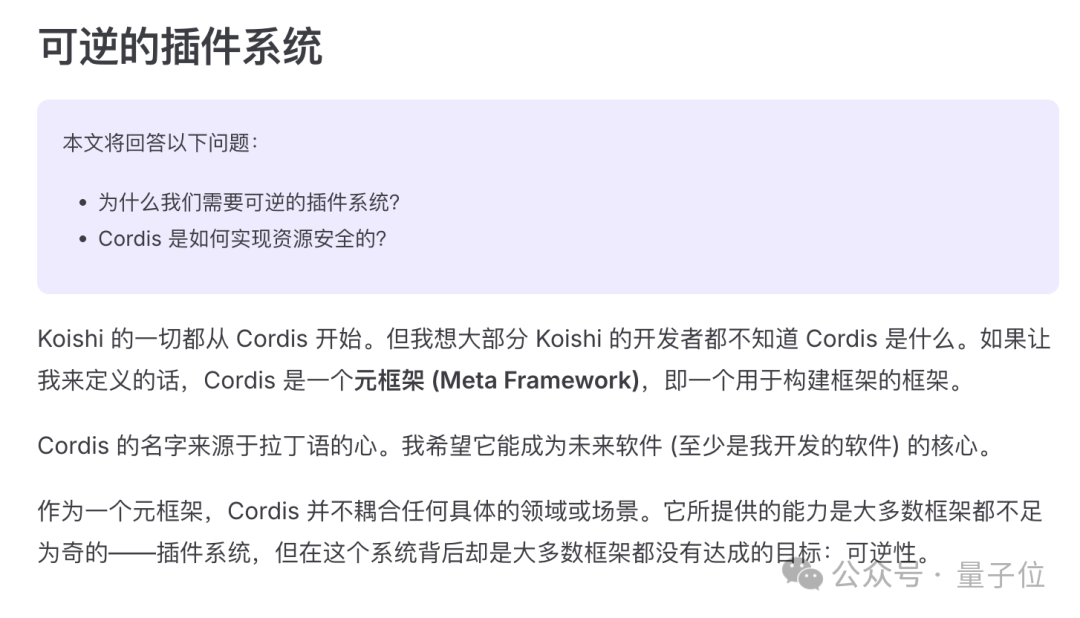
The author of Koishi states that the name Cordis comes from the Latin word for heart; everything about Koishi starts from Cordis.
As a meta-framework, Cordis is not coupled with any specific domain or scenario.
The capabilities it provides aren't surprising for most frameworks—plugin systems—but behind this system lies a goal that most frameworks have not achieved: reversibility.
It also left behind this statement:
I hope it can become the core of future software (at least the software I develop).

Four years have passed, and DeepSeek's paper has provided validation.
First is the validation of the time dimension.
In Koishi, administrators can disable a plugin from the console, and the plugin's impact on the system will be retracted on the spot, while other plugins continue to function.
During development, when a plugin is modified and saved, the modified plugin will be reapplied without changing the cache and connections.
Next is the validation of the spatial dimension.
In the Koishi ecosystem, IM adapters provide access to message platforms, and database drivers offer persistent storage; functional plugins declare these as dependencies for direct access.
During actual operations, when switching storage backends or reconnecting adapters, only those plugins whose dependencies have actually changed will be reactivated, while those whose dependencies have not changed remain unaffected.
It is essential to note that these plugins are typically independently developed by different authors, and the only coordination between them is the reactive co-effects emphasized by Cordis.
This indicates that a set of dynamic combinatorial rules can indeed work in an open plugin ecosystem contributed by different authors.
However, the paper does not package this case as a perfect demo.
The team acknowledges that currently, there is only validation data from the Koishi single ecosystem and the TypeScript single language, lacking controlled comparisons with alternative architectures...
But the most critical point is that it identifies a new direction: a foundation for an Agent Harness that serves self-evolution.
The recently released DeepSeek Harness is exactly the upgraded version of Koishi Cordis.
03 Introduction of the Paper Authors
Finally, let's talk about the authors of the paper.
There are three in total, spanning Peking University and DeepSeek.
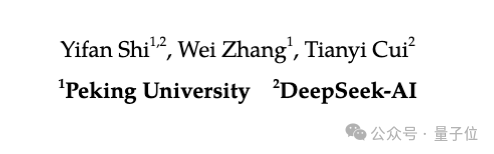
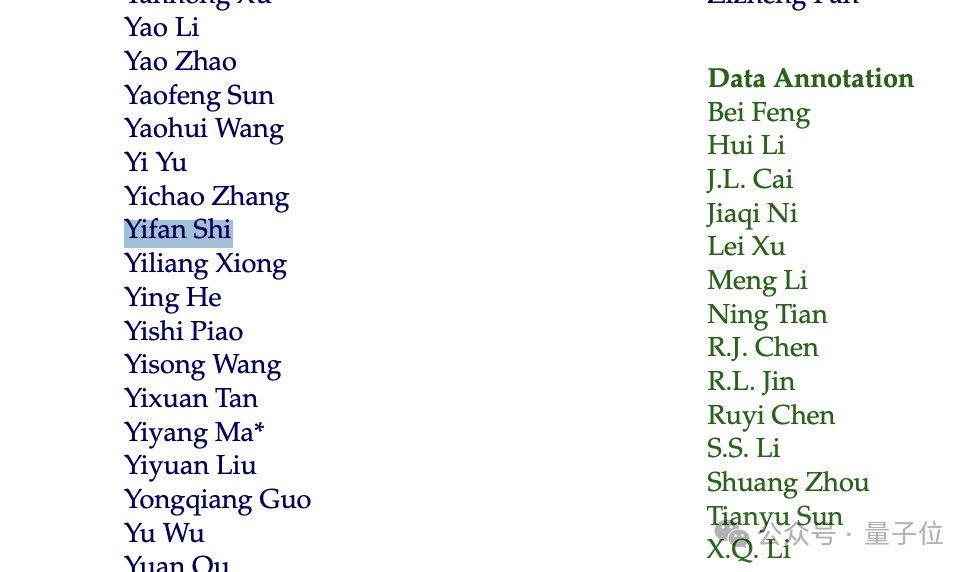
The first author is Yifan Shi, from Peking University and also a member of DeepSeek.
Upon deep digging, it was discovered that his name had appeared early in DeepSeek V3 Technical Report.
The project used for validation in this new paper—Koishi—was also created by him.
It is evident he has a strong obsession with "shi"; his name is Yifan Shi, the project is called Koishi, and his GitHub name is Shigma.
(doge)
Back to the main topic.
Koishi is a repository from four years ago, now boasting 5.7K stars. It can be said that this is the source of everything.
Because the concept of Cordis was also proposed within Koishi.
In 2023, Shigma wrote a design article for Koishi's official documentation, titled "Reversible Plugin System," which is almost the ancestor of this new paper.
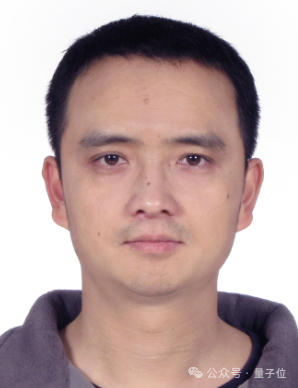
Wei Zhang, also from Peking University, is an associate professor at the software research institute of the computer science school at Peking University.
The institute's official website shows that Wei Zhang's research fields mainly encompass software engineering and programming languages.
In 1999, he graduated with a bachelor's degree in engineering thermophysics from Nanjing University of Aeronautics and Astronautics. He then shifted towards computer science and obtained a master's degree in computer science from the same university in 2002.
After completing his master's, Wei Zhang continued at Peking University for his Ph.D., graduating in 2006 with a doctorate in computer software and theory.
Following his Ph.D., he stayed at Peking University, engaging in research and teaching related to software engineering and programming languages.
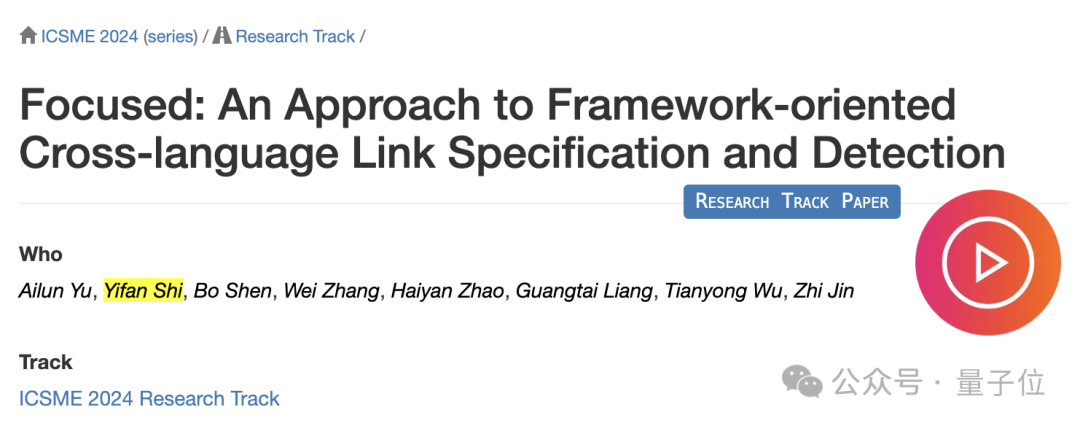
It is worth noting that as early as the 2021 ASE, Wei Zhang had collaborated with Yifan Shi.
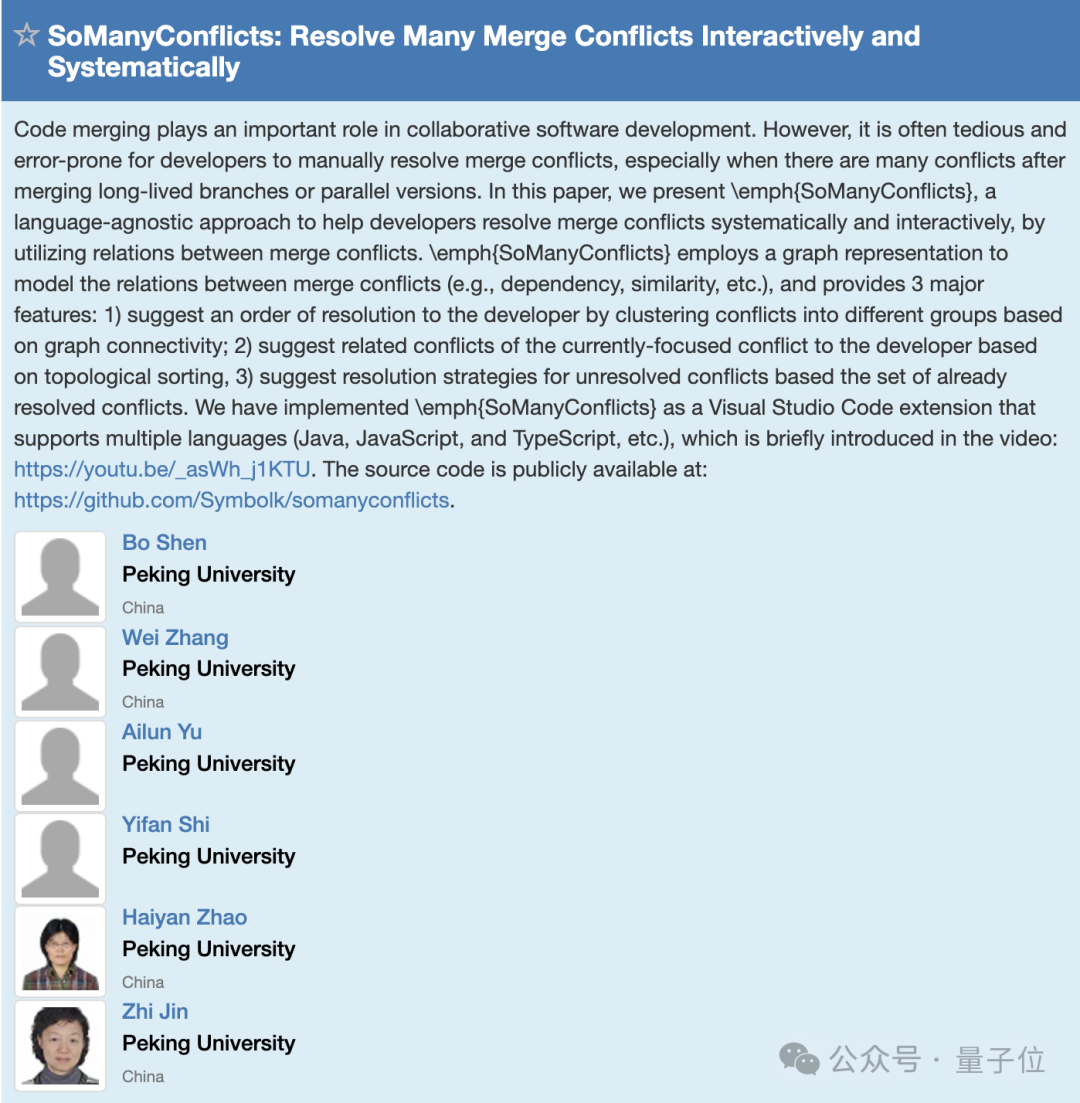
In 2024, the two co-authored the ICSME paper "Focused: An Approach to Framework-Oriented Cross-language Link Specification and Detection."
Finally, there is an old acquaintance.
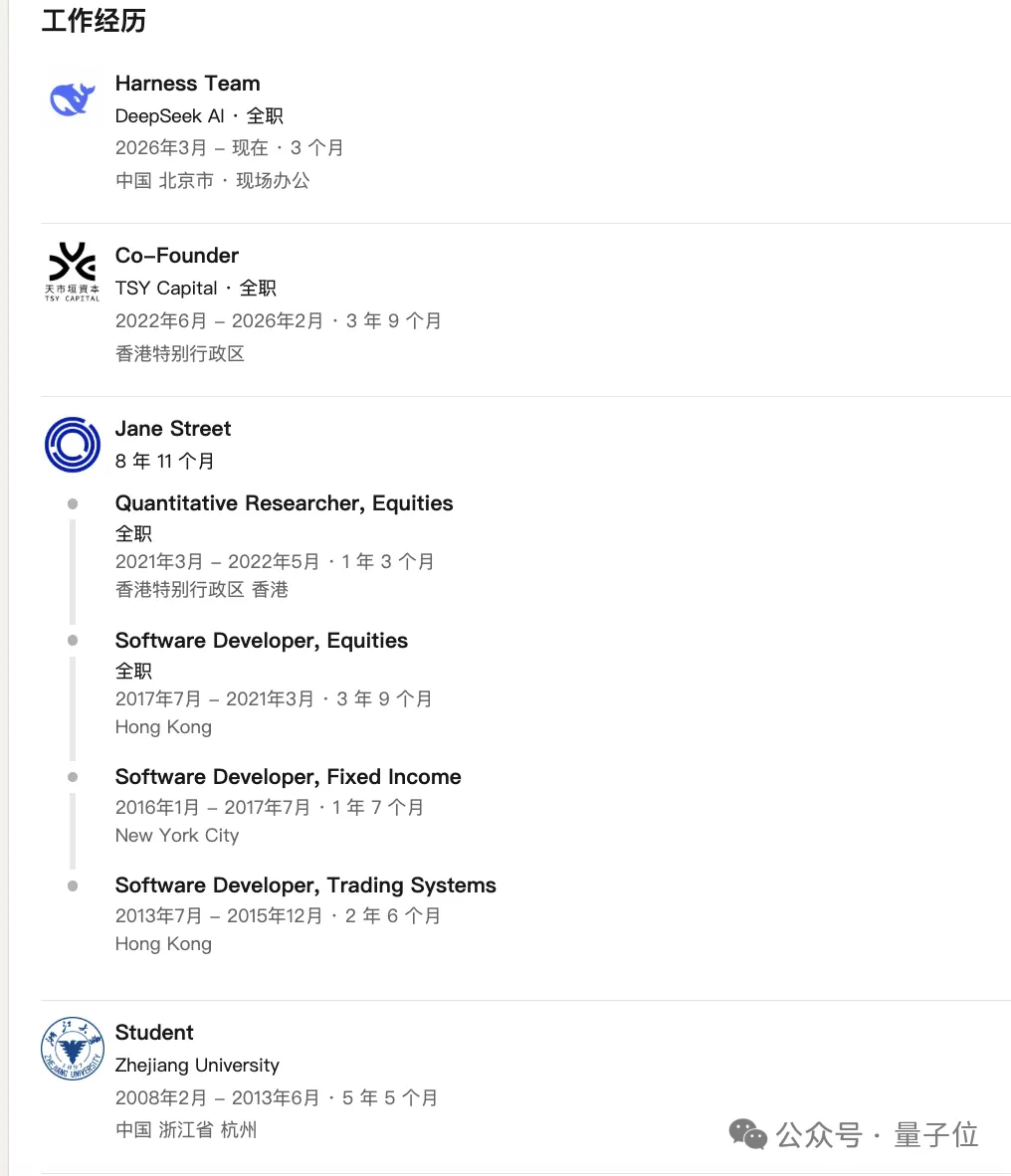
Tianyi Cui, head of the DeepSeek Harness team. He graduated with a bachelor's degree from Zhejiang University's Computer Science Department, a junior to Liang Wenfeng.

During his studies, Tianyi Cui was directly admitted to Zhejiang University due to outstanding performance in NOIP/information science competitions and won six ACM International Collegiate Programming Contest Asia Regional Gold Medals.
After graduation, he worked for nine years at Jane Street's offices in Hong Kong and New York.
Paper link: https://github.com/cordiverse/paper
Koishi: https://github.com/koishijs/koishi
免责声明:本文章仅代表作者个人观点,不代表本平台的立场和观点。本文章仅供信息分享,不构成对任何人的任何投资建议。用户与作者之间的任何争议,与本平台无关。如网页中刊载的文章或图片涉及侵权,请提供相关的权利证明和身份证明发送邮件到[email protected],本平台相关工作人员将会进行核查。
