Compiled & Edited by: Deep Tide TechFlow
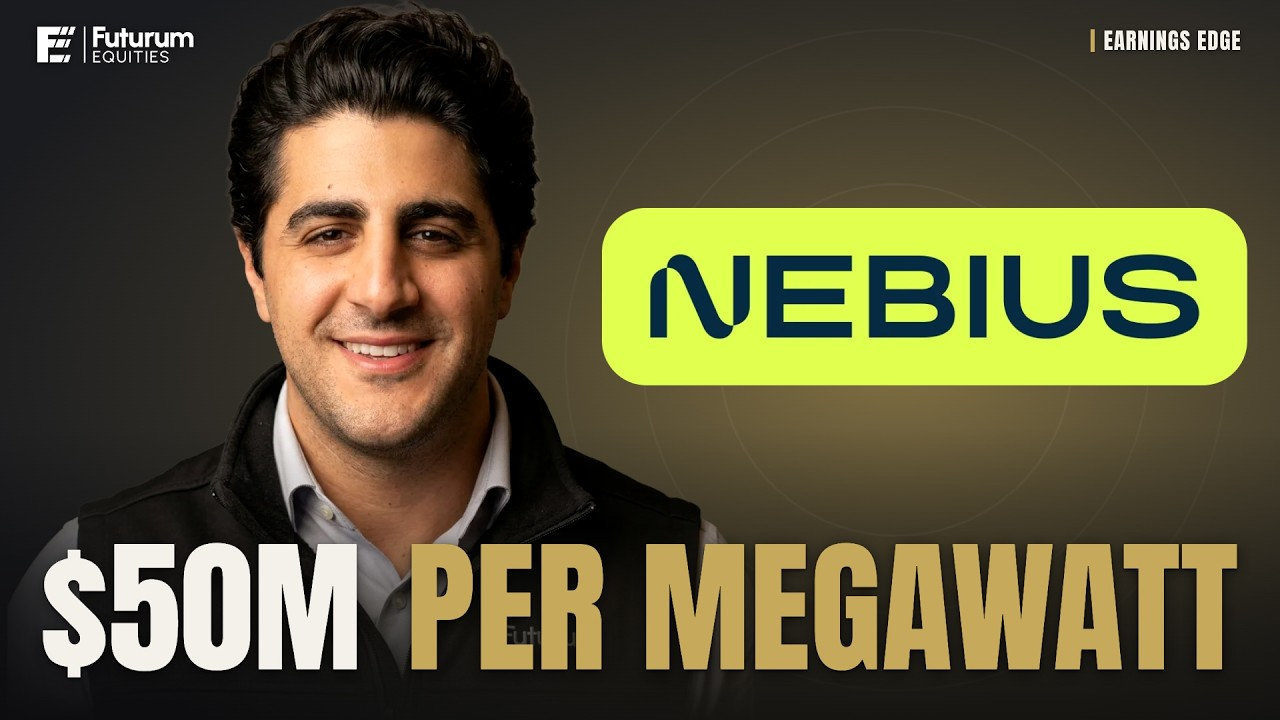
Presenter: Shay Boloor (Chief Market Strategist at Futurum Equities)
Podcast Source: FE Earnings Edge (Futurum Equities)
Original Title: The Nebius (NBIS) Earnings Rally, Explained
Broadcast Date: August 12, 2026
Disclosure Statement: The presenter clearly states that Nebius is one of the top ten holdings in his family portfolio, and he significantly increased his position during the market correction months ago; his portfolio also holds Bloom Energy mentioned in the video. This article is an earnings report interpretation from a holder's perspective, not independent analysis, and does not constitute investment advice.
Key Points Summary
Nebius (NBIS) released its Q2 earnings report before the market opened on August 12: revenue of $582 million, a year-on-year increase of 454%, and AI revenue growth of over 500% to approximately $575 million; adjusted EBITDA margin of 41%, significantly up from 32% in the previous quarter, with the core AI cloud business margin reaching as high as 50%. On the day of the earnings report, the stock price surged from a close of $193.23 on August 11 to an intraday high of $243.89, an increase of about 26%, forcing short sellers with a short interest close to 25% to cover their positions, amplifying the gains.
Presenter Shay believes that a more important signal than revenue lies in the profit margins: the scarcity of computing power is transitioning into higher prices, faster payback, and better financing conditions. Urgent computing power (delivered in 3 to 6 months) can be sold for $40 million to $50 million per megawatt, double the standard contract price (for 1 to 3 years, at $20 million to $25 million per megawatt); the average payback period for contracts signed in Q2 is about 1 year and 10 months; 70% of contracts include upfront payments, with over $9 billion in customer prepayments expected in 2026 to cover 50% to 60% of related capital expenditure. The week before the earnings report, Michael Burry, the prototype of the movie "The Big Short," revealed his short position on Nebius, and the stock's explosive growth on the earnings report day highlighted this bullish-bearish showdown.
Highlights of Insights
Regarding This Earnings Report
- “This earnings report proves one thing: The shortage of AI computing power is converting into better prices, faster paybacks, higher margins, and better financing terms.” (Shay)
- “A company investing hundreds of billions to build infrastructure can prove that these assets can generate such profit margins; this is crucial for shareholders.” (Shay)
Regarding Pricing Power
- “If you are an AI company about to train the next generation of large models, getting GPUs in six months is essentially useless because the evolution of AI is exponential. You need it today, and you have to pay a high price.” (Shay)
- “The price of the first computing power auction was 15% higher than Nebius's historical high. This is true price discovery.” (Shay)
Regarding Financing Structure
- “Customers pay to build half of the data centers, banks lend based on contract revenue, and Nebius's equity becomes the last dollar instead of the first.” (Shay)
- “If the asset-light model works, Nebius can earn money from infrastructure it doesn't fully fund, significantly improving capital efficiency.” (Shay)
Regarding Next Steps
- “Management said that based on the current contract economics, they could sell all of the 2027 capacity today but are intentionally not selling.” (Shay)
- “Demand is no longer an issue; the next question is execution: turning the 5GW pipeline into connected, revenue-generating computing power.” (Shay)
1. Beyond a 5x Revenue Increase, the Real Signal is the Profit Inflection Point
Core Judgment: The most important aspect of this earnings report is not the double outperforming expectations but that the computing power shortage is turning into economic viability.
Shay starts by setting the tone: Nebius's earnings report surpassed market expectations in revenue and loss per share, but the truly important thing is that the company provided concrete evidence that the AI computing power shortage is transitioning into higher prices, faster payback, higher margins, and better financing terms, all while it was significantly expanding production for 2027.
In numerical terms: revenue of $582 million, a year-on-year increase of 454% (approximately 5.5 times), slightly above the market expectation of about $570 million; AI revenue grew over 500%, approximately $575 million. But what Shay is really focused on is the profit margins: the group's adjusted EBITDA margin is 41%, a significant increase from the previous quarter's 32%; the adjusted EBITDA margin for the core AI cloud business reached 50%.
“A company spending hundreds of billions to build AI infrastructure proving these assets can generate such profit margins is decisive for shareholders.” He said this is also the reason why the stock surged over 20% after the earnings report, “the extent of fundamental improvement far exceeds that of the revenue or earnings numbers themselves.”
2. Emergency Computing Power at $50 Million per Megawatt: Getting GPUs in Six Months is Outdated
Core Judgment: Computing power is being divided into two prices: "need it now" and "can wait."
The earnings report first laid bare the real selling price of the capacity. Standard contracts (1 to 3 years) bring in $20 million to $25 million in revenue per megawatt per year; however, if customers require delivery within 3 to 6 months, the price jumps directly to $40 million to $50 million per megawatt, sometimes higher.
Why are some willing to pay double? Shay's explanation is straightforward: If you are an AI company preparing to train the next generation of large models, getting a GPU in six months is meaningless because the evolution of AI is exponential. You are buying a scarce resource, precisely available on the day you need it. And the current reality is that this supply is extremely scarce.
This quarter, Nebius also held its first-ever computing power auction. Shay believes this is the best barometer of supply-demand imbalance: the highlight of this auction is not the management's verbal statements but the genuine bidding from customers, with the final transaction price exceeding Nebius's historical high by 15%. “This gave me real price discovery, indicating that the market value for instant computing power is still rising.”
3. Customers Fund Half the Building: The Financing Structure is Changing
Core Judgment: The biggest Achilles' heel for AI cloud companies is financing, and Nebius is turning it into a moat.
The point most attacked by shorts about Nebius is that "NeoCloud companies need continuous financing, equity gets diluted, and growth is costly for shareholders." Shay admits this is the Achilles' heel for the entire sector, and selecting the right player is crucial. But this earnings report provides a different funding structure:
About 70% of the contracts signed in Q2 include upfront payments; in 2026, they expect to receive over $9 billion in customer prepayments, covering 50% to 60% of related capital expenditures. On this basis, the company has also secured $775 million in asset-backed financing, using already contracted infrastructure and customer cash flow as collateral to borrow money at relatively low interest rates.
“Customers pay to build half, and banks lend based on contract revenue; Nebius's equity becomes the last dollar instead of the first.” Shay said this change in order means that the capital structure is beginning to revert to the pre-AI financial world's norm. Furthermore, if the "asset-light model" works, other investors can fund the construction and ownership of data centers, while Nebius only provides cloud platforms, software, customer relationships, and demand, allowing it to profit from infrastructure it doesn't have to fully fund.
4. 5GW Power Target and a Statement: "We Could Sell All of 2027 Capacity Today"
Core Judgment: The signals from management on the supply side are more aggressive than the earnings report numbers.
Management has increased the contracted power target for the end of 2026 to 5GW, which has been raised by about 1GW nearly every quarter for almost a year. Shay said that power is the bottleneck in this round of the arms race, and the ability to continuously raise targets speaks volumes.
Even more aggressive is another statement: Based on the current contract economics, Nebius could sell all of its planned 2027 capacity today, but it is intentionally not selling. Management believes that keeping some capacity for "instant demand" can command better prices and yield higher returns.
However, Shay also reminds that by the end of 2026, only about 800MW to 1GW will truly be online, starting to generate revenue only after the installation of GPUs, networks, cooling, and software. “This earnings report is good, but my core argument for the next phase is to turn the huge pipeline into functional infrastructure quickly enough. Concerns about demand can be put to rest; now it's all about execution risk.”
5. GPU Scarcity Won't Last Forever: The Software Layer is the Moat
Core Judgment: In the long run, Nebius cannot just act as a "landlord for scarce GPUs."
Shay repeatedly reminds that those selecting NeoCloud players must focus on one thing: can these companies evolve from merely "renting scarce GPUs" to selling platform value because GPU scarcity will not last forever. Nebius's answer lies in the software layer, Token Factory, and a broader software system, using platforms, software, and services to retain customers, not just "GPUs that cannot be found elsewhere."
In his view, the 50% AI cloud EBITDA profit margin may be early evidence of operational leverage: Nebius is not merely buying expensive hardware and then renting it out at a thin profit but is already producing scale effects. Additionally, the New Jersey project has switched to Bloom Energy's fuel cells because they provide reliable onsite power without affecting construction timelines. These details are samples of his focus on execution capabilities. “Licensing, power, and construction delays can push revenue to the right; even strong demand is useless.”
6. Summary from the Holder's Perspective: The Music is Still Playing, the Risk is Intentionally Betting on Scarcity
Core Judgment: All evidence currently points to demand growth outpacing supply, but this investment hinges on one premise.
In conclusion, Shay clarifies: he is a holder, significantly increased his position during the market correction months ago, and is currently very pleased. The scarcity of computing power not only creates demand but also creates pricing power, financing rights, and the "right to choose when to monetize capacity." Customers are willing to pay $40 million to $50 million for instant computing power, with payback in less than two years, customers prepaying half of capital expenditures, the first auction yielding a 15% premium, and management stating that capacity for 2027 could be sold today.
“The music is playing. Of course, risks still exist: Nebius is intentionally betting that scarcity will continue, which I believe will last much longer than the market fears. Current evidence points to demand growth outpacing supply, customers paying higher prices for instant capacity, and Nebius seeking cheaper financing for every megawatt. This truly encompasses all the elements for the next major new AI economy.”
免责声明:本文章仅代表作者个人观点,不代表本平台的立场和观点。本文章仅供信息分享,不构成对任何人的任何投资建议。用户与作者之间的任何争议,与本平台无关。如网页中刊载的文章或图片涉及侵权,请提供相关的权利证明和身份证明发送邮件到support@aicoin.com,本平台相关工作人员将会进行核查。


