Author: Jessica Feng (@Jf4172), Investment Manager of Hash Global BNB Fund;
Henry Yang (@ARSHenry1), Investment Partner, Head of Hash Global Secondary Market Funds.
In the past six months, the booming market for AI has almost siphoned off all market attention, even the last belief in Crypto—Bitcoin—has shown a significant shake. Since dropping below $70,000 in February, BTC has tested the $58,000—$60,000 range three times. Old players in the industry—Strategy have started selling coins, mining companies are shifting to AI, and the bleak outlook for the industry has made fear increasingly real.
While the US stock market continues to rise and gold rebounds from its lows, Crypto seems to have been forgotten by the entire world: BTC has been fluctuating between $62,000 and $65,000 for almost two months, and its 30-day implied volatility fell to 36%, a multi-year low. The lack of vitality in the market makes it difficult for the public to be optimistic.
But what we have been focusing on lately is the "changes" and "perspectives," specifically the changes happening in the market behind the price.
The forces that previously dragged the market down are gradually weakening: macro tightening expectations are cooling, the Strategy explosion crisis is easing, and institutional funds are stopping their outflow.
Meanwhile, the on-chain chips for Bitcoin are regrouping。
Everything seems to suggest that a turning point is approaching, but these changes have not yet reflected in the price because the market is waiting for clearer signals.
Off the market, AI trading is cooling, and funds are about to start a new round of switching layout; on the market, the old OGs are still waiting for the last drop and have yet to take action—at this moment, the calm surface of the water just opens up the best angle and timing for us to enter.
When the market will start is hard to predict, but what can be grasped is, we are entering a time window to layout the next cycle.
1. Behind the unchanged price facade, the chip structure is reshuffling, and a new bottom is forming.
BTC has tested the $60,000 mark three times, each time it has received clear support.
Subsequently, the price rebounded to around $65,000, where selling pressure re-emerged, causing the market to return to oscillate between $63,000 and $65,000. On the surface, the price has hardly changed, but the on-chain chips have quietly completed a round of redistribution.
Currently, more than 2.4 million BTC have settled in the $61,000—$65,000 range, accounting for about 12% of the circulating supply; among them, over 1 million BTC have clustered around $63,000, which accounts for about 5.2% of the circulating supply. The concentration of chips has risen to historically rare levels.
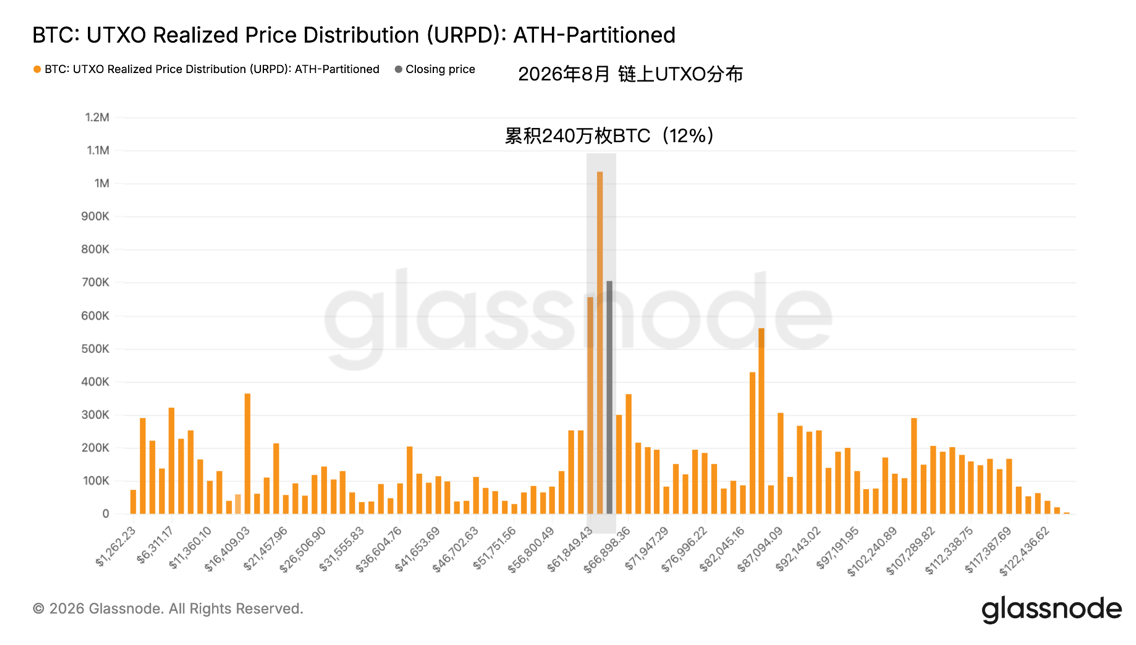
This change is more noteworthy than short-term fluctuations. A bottom does not appear suddenly; it is 'bought out' by the market through repeated tug-of-wars: some people exit while others support; old chips are continuously exchanged, and new funds are re-establishing a cost basis at lower positions. As more and more BTC concentrates in a similar price range, a new price consensus is also established.
Therefore, the change in momentum often precedes the price. Looking back at history, from May to November 2024, BTC experienced a six-month adjustment after the ETF boom, and before rising from $60,000 to $100,000, a highly concentrated structure had also appeared around $50,000—$60,000. In hindsight, the bottom built during that time became the springboard for the subsequent market rise.
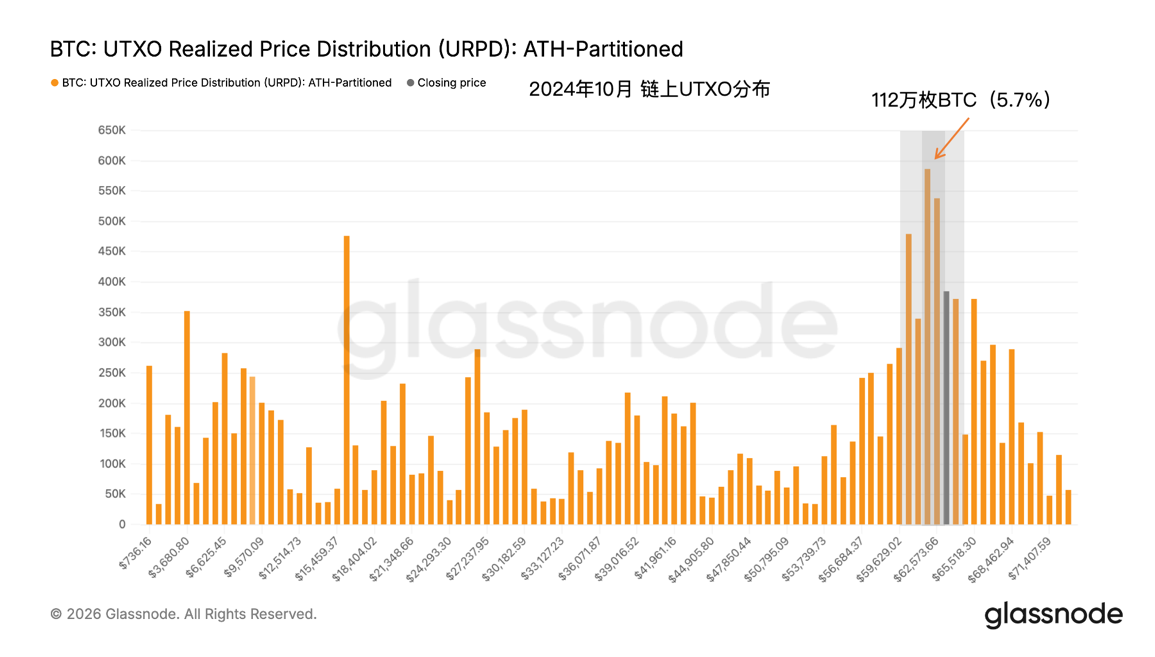
History will not simply repeat itself, but similar chip structures indicate that the market is undergoing a similar bottom turnover.
2. The directional choice is coming, the forces suppressing the market are disintegrating.
Chip concentration represents intensified contention, and the market is about to make a choice, but it is not enough to indicate direction.
What truly tips the balance upward is that several forces that previously drove the market down are weakening.
1. Macroeconomic pressure is decreasing, and interest rate hike risks are lower.
The most important driving factor behind this round of adjustment is the market's worries about higher interest rates.
Geopolitical conflicts have raised inflation expectations, the Federal Reserve has released hawkish signals, US Treasury yields have strengthened, and risk assets have naturally come under pressure.
But recently, the logic behind high interest rate pricing has begun to loosen.
The US June CPI fell by 0.4% month-on-month, marking the largest monthly decrease since April 2020; the core CPI remained unchanged, lower than market expectations. Meanwhile, July's non-farm payrolls decreased by 23,000, also significantly weaker than expected.
Inflation is cooling, and employment is weakening. This marginal change has reversed the previous conditions for market pricing tightening.
When this expectation loosens, the pressure faced by risk assets naturally decreases.
2. The explosion crisis is easing, Strategy is moving towards the third transformation.
In recent months, market fears have amplified the fud regarding Strategy. Many voices believe that there are problems with Strategy's capital structure, and the biggest buyer supporting this cycle will become a structural seller overwhelming the market during the downturn.
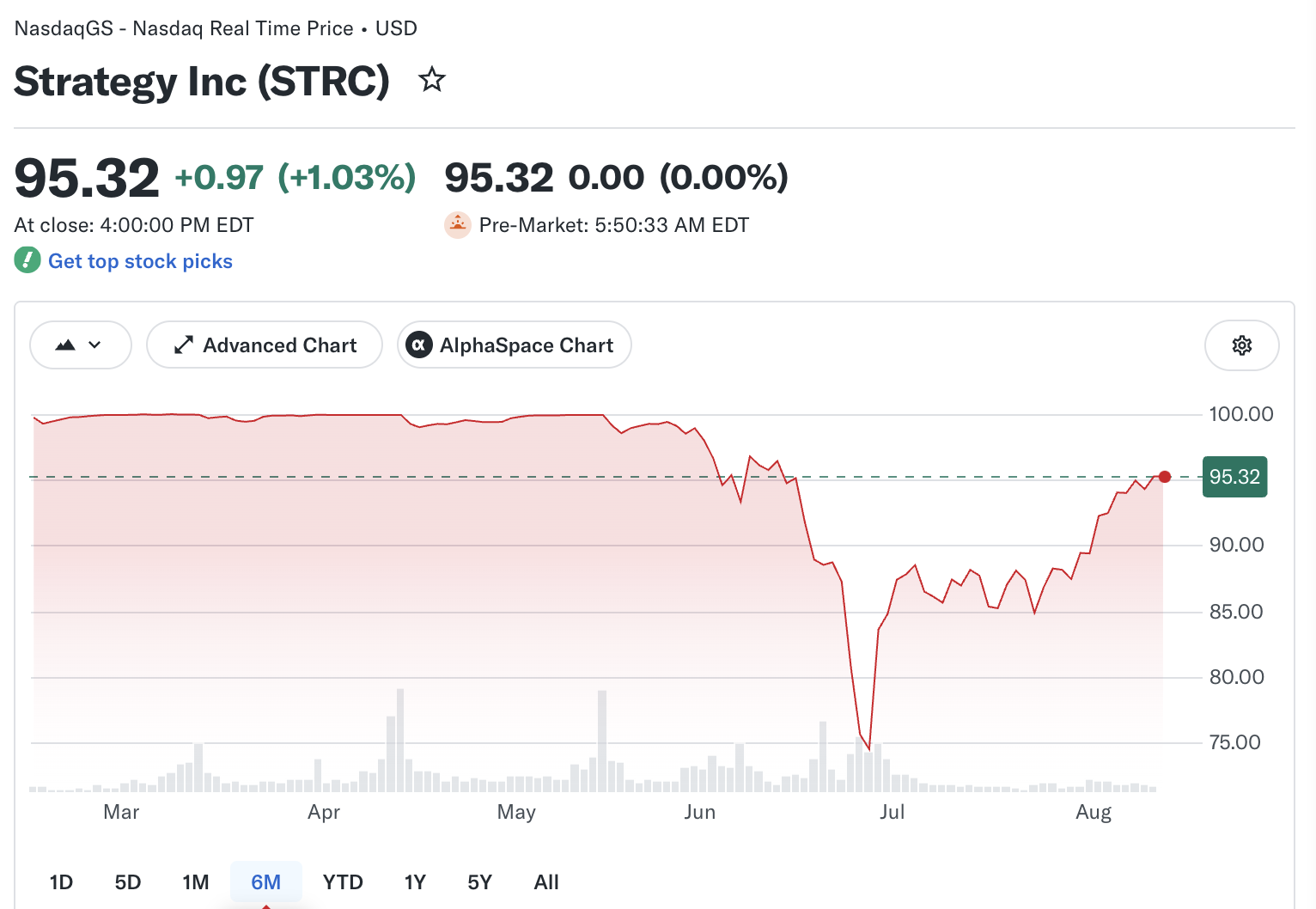
Out of such concerns, STRC once dropped to $74, and MSTR's mNAV also briefly fell below 1x.
However, after Strategy actually began selling coins, the market response has been gradually diminishing. The 'desensitization' behind it is the market is re-understanding Strategy's strategy.
So far, Strategy has sold a total of 0.26% of BTC holdings, supplementing cash reserves to about $4.5 billion, enough to cover nearly three years of interest expenses, while also significantly repurchasing discounted STRC to continue lowering its debt scale at a low cost. The market is gradually realizing that Strategy's series of operations are precisely through transformation—from passive holding to active capital management, breaking the negative spiral that the market is concerned about.
In a bear market phase, retracting lines through small-scale selling to supplement liquidity and stabilize the capital structure is essential for survival to preserve enough financing capacity for the next cycle's restart.
Recently, STRC has rebounded to about $95, and Strategy has also resumed financing for MSTR. Short-term funding pressures have eased, and the risk of being forced to sell massively has decreased.
This means that one of the most concerning structural selling pressures is clearly weakening.
3. AI trading is cooling, and the attractiveness of Crypto allocation is rising, which may attract funds back.
In the past six months, the AI sector has significantly diverted global funds.
Compared to Crypto, which lacks narrative, AI provides investment opportunities for more certain growth; however, recently, AI trading has started to cool.
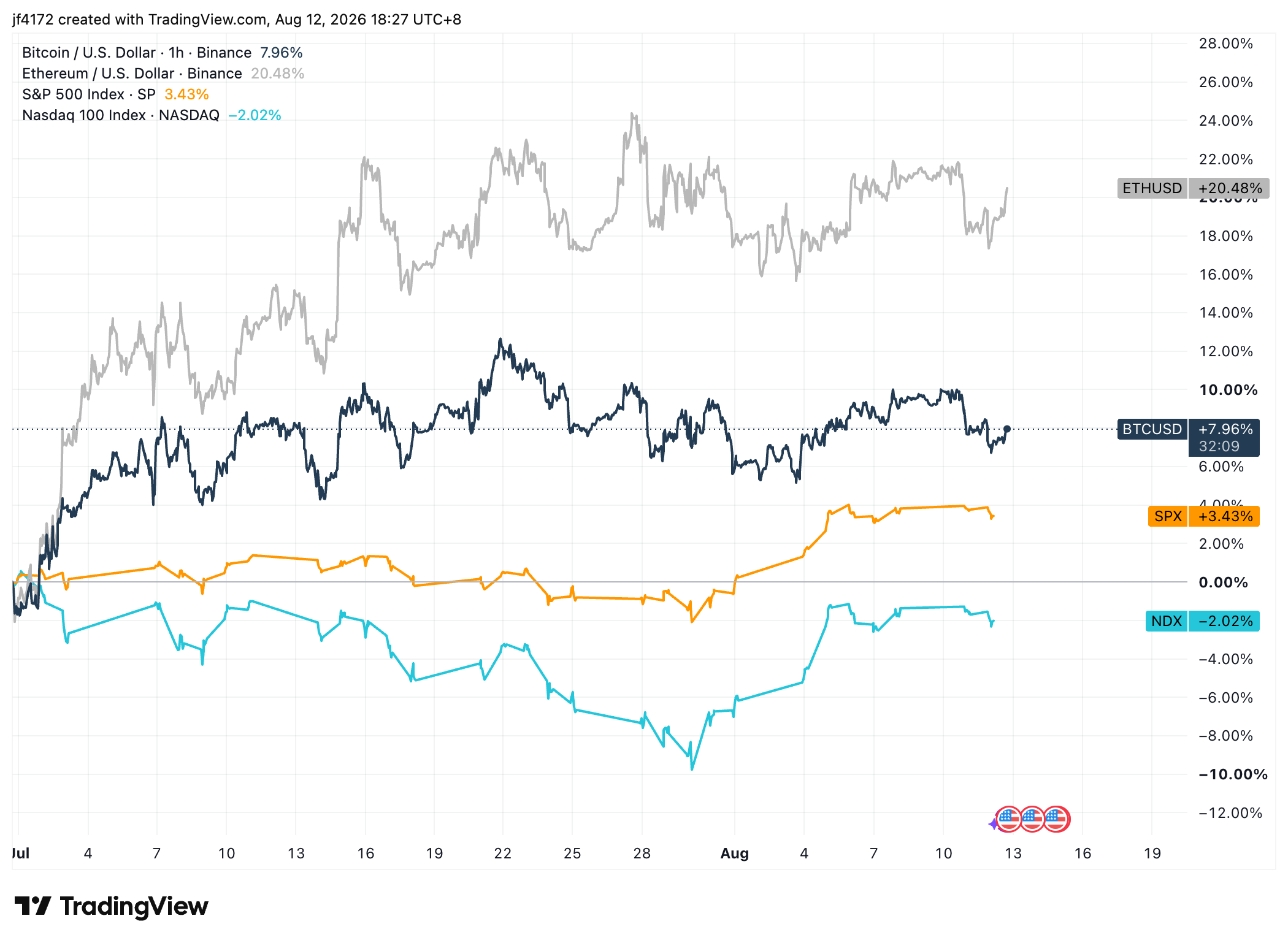
As valuations continue to rise and growth expectations have been fully priced in, crowded AI trading has seen concentrated deleveraging in July: the Nasdaq 100 Index fell about 7%, the S&P 500 remained unchanged, while the previously oversold Crypto rebounded against the trend: BTC rose about 6% in a month, and ETH rose about 18%. Blue-chip DeFi assets with significantly enhanced fundamentals performed even better, with UNI rising over 100% in a month.
As funds reassess their allocation direction, Crypto assets, which are undervalued and have seen improvements in policy fundamentals, may re-enter the funds' sight.
3. Before the tide arrives, lay out in the 'unclaimed' time.
The marginal improvement of pressure factors does not equal a complete reversal, so it is still too early to judge that the market is already here.
When the market is waiting for clearer signals, it precisely provides a valuable time window.
The legendary investor Stanley Druckenmiller discussed the concept of "unclaimed areas" when reflecting on his investment in Teva Pharmaceuticals: value investors sell due to strategic transforms, while growth investors are on the sidelines because the transformation is not yet complete. When neither type of funds has truly entered, it offers an investment opportunity characterized by structural gaps.
Now, BTC is facing a similar gap opportunity: Crypto has not yet started, funds from AI FOMO are still playing the last feast; the moment of industry explosions has yet to arrive, and the old money in the circle is still waiting for the final drop.
Standing at the current point, what is truly worth contemplating is that when the market enters the unclaimed area, do we dare to step ahead of the consensus and take our place early?
免责声明:本文章仅代表作者个人观点,不代表本平台的立场和观点。本文章仅供信息分享,不构成对任何人的任何投资建议。用户与作者之间的任何争议,与本平台无关。如网页中刊载的文章或图片涉及侵权,请提供相关的权利证明和身份证明发送邮件到support@aicoin.com,本平台相关工作人员将会进行核查。


