Author: Tiger Research Reports
Translation: Deep Tide TechFlow
Deep Tide Introduction: The West has opened the door for prediction markets through derivative laws or gaming licenses, but Asian regulators lack both a universal licensing framework and an open definition of financial products, resulting in tens of millions of dollars flowing to offshore platforms, with governments unable to collect taxes and investors unprotected. The regulatory gap is not a cultural issue but a lack of institutional design.
Key Points
The Asian market lacks a regulatory framework to classify prediction markets, leaving regulators only able to keep them in a gray area.
Western jurisdictions utilize existing frameworks—such as the U.S. derivative regulations or the U.K. gambling laws—to create clear pathways for operators to achieve market access and establish regulatory mechanisms.
The lack of a framework in Asia has not stifled market activity, as significant liquidity flows into offshore platforms, but this prevents tax collection and consumer protection.
Establishing a regulatory foundation requires open discussion: Should prediction markets be regarded as derivatives, gambling, or a new third category?
The Importance of Definitions and Classifications
As previously reported, prediction markets serve as valuable information platforms, but the law has never drawn a clear boundary between them and gambling.
This leads to a question: How does the law define gambling, particularly betting behavior?
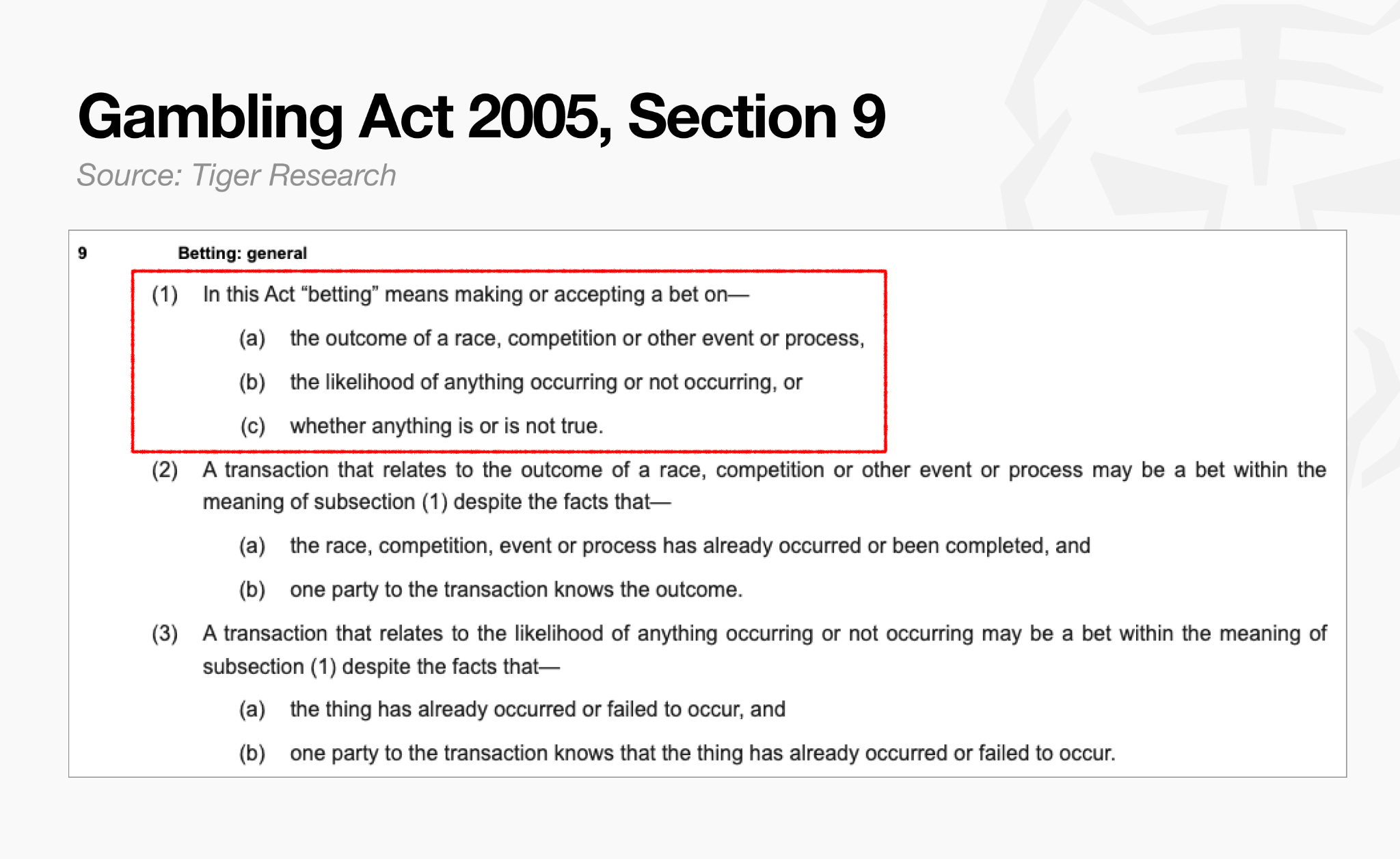
The U.K. Gambling Act of 2005 defines the object of betting broadly, stating that if monetary value is added, it will fall under gambling regulation:
The outcome of a match, competition, or other event or process
The likelihood of something happening or not happening
Whether something is true
According to this legal definition, prediction markets attach economic value to the outcomes or determinations of specific events, which means they are structurally highly similar to betting (the core element of gambling).
The core of the regulatory debate ultimately boils down to a definitional issue: Should prediction markets be included in the traditional gambling regulatory framework, reclassified under derivatives or other financial structures, or established as a separate category through standalone legislation?
West: How Institutional Pathways Lead to Different Results
Compared to Asia, Western jurisdictions have a more tolerant attitude towards prediction markets, but this tolerance does not stem from cultural acceptance of gambling; it reflects existing institutional frameworks that allow them to bypass direct confrontations with gambling laws. The main pathways are as follows:
United States: Prediction markets are classified as derivatives under the Commodity Exchange Act, aligning with existing registration frameworks.
United Kingdom: Markets are accommodated under the general "gambling intermediary" licensure system.
European Union: If contracts are classified as financial instruments, the binary options ban applies; if they avoid this classification, they face strict national gambling laws as a secondary barrier.
The consistent pattern is that only in jurisdictions with alternative regulatory frameworks independent of gambling regulations, such as derivatives laws or flexible licensing systems, can institutional acceptance be achieved.
United States: Expanding the Definition of Derivatives
The United States does not accommodate prediction markets by recognizing gambling frameworks; instead, it does so by purposefully applying existing contract structures of the Commodity Exchange Act (CEA).
The Commodity Futures Modernization Act (CFMA) of 2000: Established a foundation through an open definition of "excluded commodities" allowing non-financial variables, such as election results and weather events, to be classified alongside traditional commodities like crude oil.
The Dodd-Frank Act of 2010: Granted the CFTC two key powers: exclusive federal jurisdiction over event contracts and the authority to prohibit contracts related to terrorism, assassination, war, and gambling according to Rule 40.11.
Neither law was designed for prediction markets, but together they created a legal foundation for viewing such contracts as financial agreements rather than gambling, establishing centralized regulation at the CFTC instead of the fragmented process that would require lobbying state by state.
The long-accumulated legal framework has fostered a market around licensed entities.
In November 2020, Kalshi gained Designated Contract Market (DCM) status, allowing them to sell a wide range of event contracts to retail investors. Polymarket moved towards compliance by acquiring the licensed exchange QCEX in 2025 after facing enforcement in 2022.
United Kingdom: Inclusion through a General Licensing Framework
The United Kingdom does not view prediction markets as an extension of derivatives but rather as a form of betting, utilizing the existing 2005 Gambling Act to bring them under regulatory oversight. Three specific provisions are particularly important:
Section 9: The definition of betting is sufficiently broad to provide a flexible legal basis for prediction markets.
Section 13 "Gambling Intermediary": Accurately captures the structural characteristics of prediction markets, as they mediate contracts between users rather than holding positions directly.
Section 65(4): Allows amendments to the licensing categories through ministerial orders, enabling the framework to absorb new market models without the need for standalone legislation.
In February 2026, the Gambling Commission clarified that prediction market platforms fall under the "gambling intermediary" category and must obtain corresponding licenses. This is not an outright ban but constitutes a clearly defined pathway for entry: on one hand, strict penalties for unlicensed operations, and on the other hand, an open registration window.
Despite an established framework, major global platforms remain cautious about entering the U.K. market, stemming from their U.S. litigation strategies.
Kalshi and Polymarket have both emphasized in their legal arguments that prediction contracts are financial derivatives, not gambling. Obtaining a U.K. "gambling intermediary" license would formally classify them as gambling operators, weakening their legal stance in U.S. litigation.
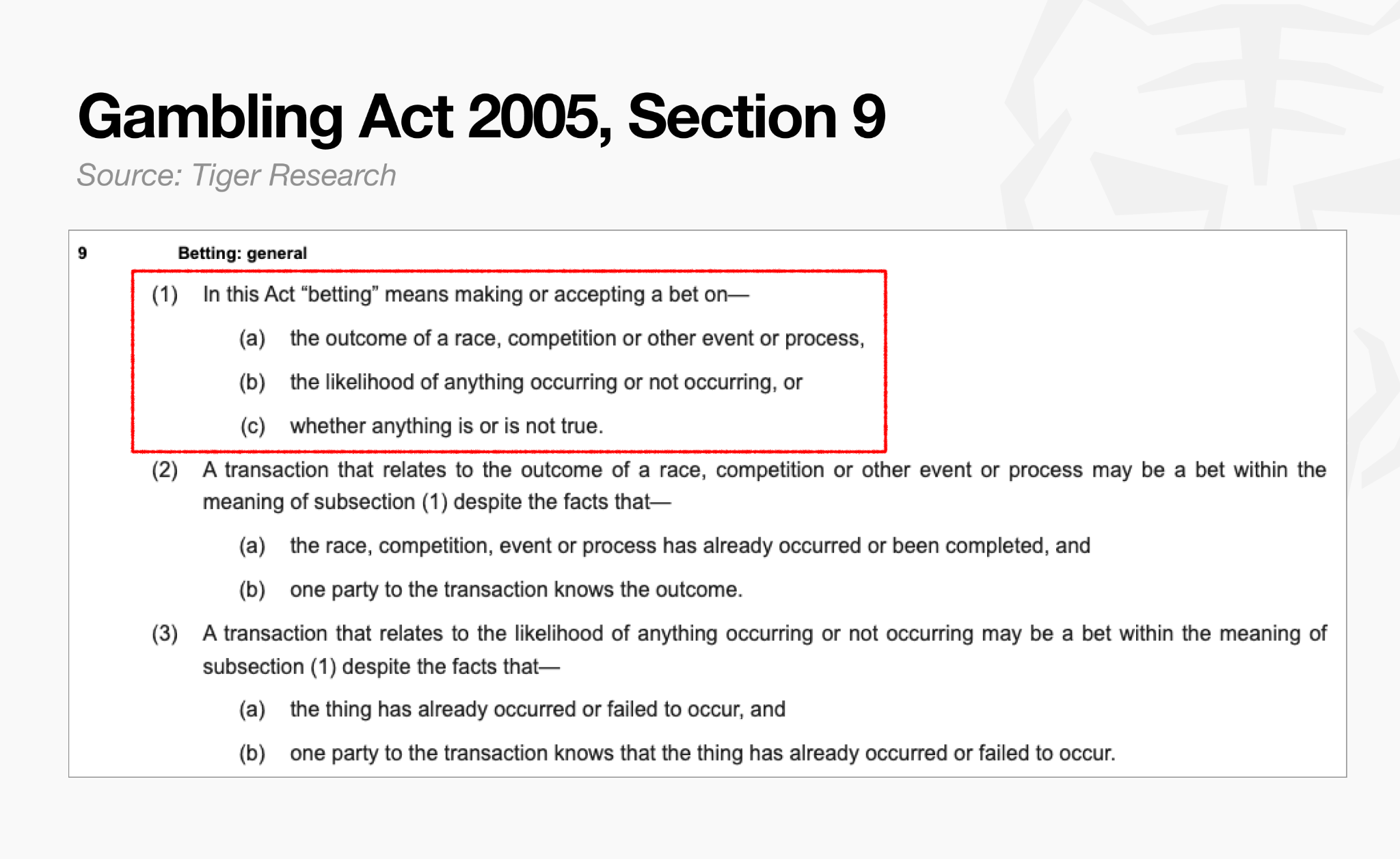
This has created a market environment in the U.K. that differs from global standards, effectively fostering ideal conditions for domestic operators to build businesses. The existing betting exchange Matchbook leveraged its gambling intermediary license to launch "Matchbook Predictions" in January 2026, while new entrant Versus received a UKGC general gambling license and launched its own prediction market.
Europe: Dual Closure of Financial and Gambling Regulation
The regulatory landscape on the European continent combines financial regulation under MiFID II with national gambling laws, forming a dual barrier:
Any contract classified as a financial instrument immediately encounters the binary options ban.
Any contracts escaping that classification subsequently face strict definitions under national gambling law.
In July 2026, the European Securities and Markets Authority (ESMA) clarified the financial regulatory dimension in an official statement, indicating that the binary payment structure of event contracts falls entirely within the scope of the binary options ban. This effectively shuts off the pathway to enter the European market as financial products.
Prediction markets encounter similarly challenging conditions under gambling laws. France is the clearest example: the National Gaming Authority (ANJ) has implemented a phased enforcement upgrade, ultimately classifying prediction market operations as illegal gambling.
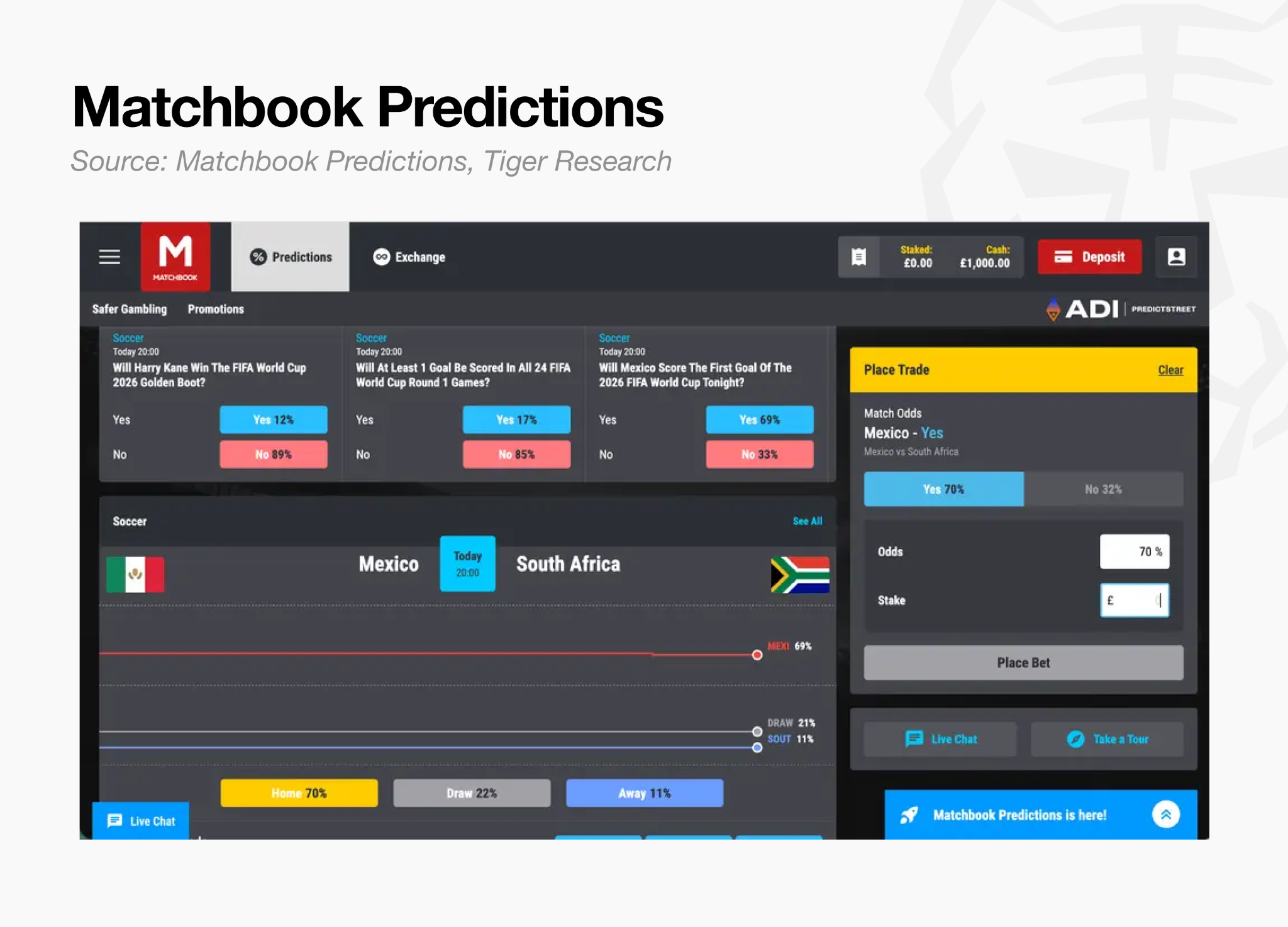
The only exception is Gibraltar. In July 2026, Gibraltar designed a dedicated legislative framework—the Prediction Markets Regulations—that defines prediction markets as a unique "third category." This approach represents a strategy to create new pathways rather than operate within existing frameworks, but due to Gibraltar not being an EU member, the limitation of this method is that it is not bound by the internal recognition constraints of Europe.
However, Europe's closed structure may not be permanent. The European Commission has officially included the legal treatment of prediction markets in the review process for crypto asset market regulation (MiCA). Depending on the conclusions of the report due in June 2027, the doors for a transition to a new institutional framework accommodating prediction markets remain open.
Asia: The Current State of Institutional Absence
Asian jurisdictions face two structural obstacles that do not exist in the same form in Western markets:
National control over gambling licenses: There is no universal licensing framework that can accommodate private sector innovation in the way of the U.K. "gambling intermediary" category. Licensing rights are allocated through a state-controlled monopoly structure.
Constraints of financial product classification: Financial laws in South Korea and Japan use a closed positive list definition of underlying assets, making the broad reclassification achieved in the U.S. through the concept of "non-financial or event-related" unfeasible from a legal standpoint.
As shown by Western cases, the ability of prediction markets to take root depends on which pathway defines them: existing financial product structures or gambling regulations. However, the fundamental constraint facing Asian markets is that both classification systems offer no institutional basis to accommodate this new business model.
There are already legal gambling markets across Asia—Japan, South Korea, Singapore, and Hong Kong—so any arguments denying the market based on emotional conflict or cultural particularity are far removed from reality.
Thus, the core issue is not whether the market is socially accepted, but rather how to design a regulatory foundation to accommodate this new market model.
South Korea: Missing Structure and Criminal Enforcement as the Default Option
Domestic discussions on prediction markets have yet to reach the stage of debating their legal status or social value. The current regulatory framework defaults to viewing them as speculative products, cutting off substantive discussion before it even begins.
Relevant legal provisions already conflict with how prediction markets operate. The Special Act on Regulating and Punishing Speculative Behavior covers "bonus businesses," defining them as businesses that distribute money or property based on correctly predicting the outcome of specific events. This structurally resembles the operations of prediction markets.
However, the legal issues have not been fully resolved. The bonus business law presupposes a casino-style structure, where operators directly control the funds pool. Modern platforms like Polymarket use a matching structure, facilitating contracts among users rather than holding funds directly. Currently, there is no judicial interpretation explaining how this structural difference would be treated under existing regulations.
The financial regulatory pathway is also closed off. The Capital Markets Act adopts a positive list approach to define underlying assets. While financial indicators are covered, there is no explicit basis for classifying non-financial variables, such as election results, as derivatives.
As the rights to conduct gambling businesses are reserved for state monopoly entities, private platforms also cannot enter the market through this channel.
Japan: Complex Workarounds and Limitations of Informal Practices
Japan's prediction markets have followed a regulatory workaround rather than a systematic integration model.
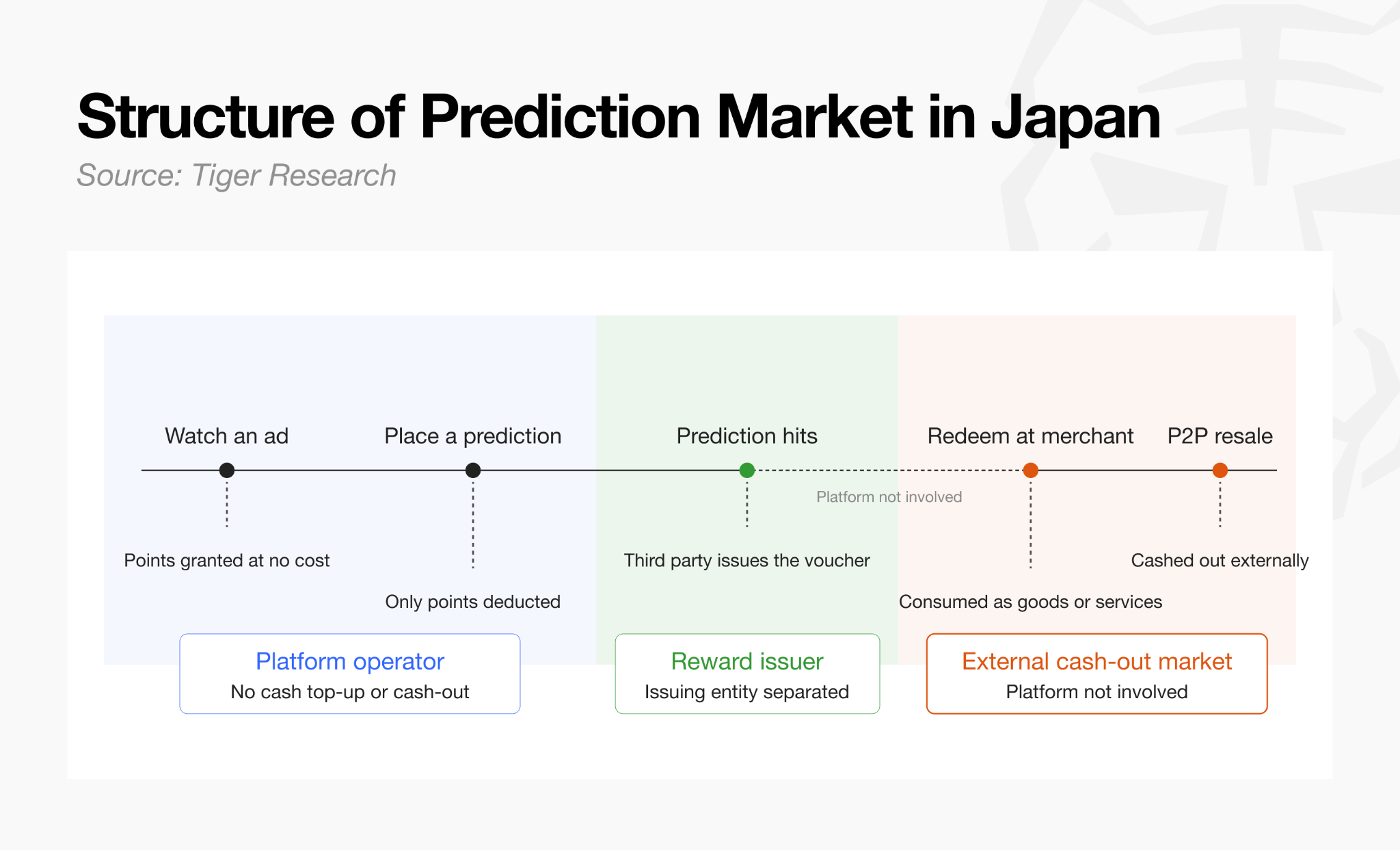
Local platforms employ a method similar to the three-store system, originating from the pachinko industry, which physically disconnects direct cash flow during operations.
Platform operators: Platforms prevent direct cash deposits and instead run a free reward model based on activities such as watching advertisements. It also eliminates any cash redemption capabilities within the platform, thus removing the "property gain or loss" element that defines gambling.
Reward issuers: Independent third parties provide rewards, such as gift vouchers, for successful predictions. By separating platform operators from issuing entities, this structure eliminates the legal risks of operators directly participating in cash redemption of rewards.
External redemption markets: Ecosystems formed by peer-to-peer transfer markets and affiliated merchants outside of the platform, where rewards are actually consumed or converted into cash. As the operating platform does not participate in this distribution process, the structure remains independent and avoids meeting the legal elements of gambling offenses.
This ultimately represents an informal commercial practice appearing in a regulatory gray area, rather than a structure based on a solid legal foundation. Global platforms are either blocked from entering the Japanese market or operate under strict limitations through cryptocurrency exchanges. The substantive level of policy discussions in Japan is not fundamentally different from South Korea.
What the Asian Market Is Giving Up
The lack of institutional framework in Asia does not mean that the market does not exist. Over 52 million dollars (approximately 72.8 billion Korean won) in liquidity is flowing into prediction markets related to the local elections in South Korea in June 2026, indicating that even without a domestic regulatory framework, user participation in overseas platforms has crossed a meaningful threshold. These transactions lie outside the tax system, lack consumer protection mechanisms, and market integrity supervision is not feasible.
Regulators face three available responses:
Extend existing criminal laws to impose sanctions (current practice in South Korea).
Use technical means to completely block platform access (Singapore model).
Incorporate prediction markets into regulatory oversight, thereby gaining tax revenue and regulatory authority in the process.
Only the third option can precisely achieve practical regulatory objectives such as tax collection, consumer protection, and market transparency.
The global annual trading volume of prediction markets is expected to exceed 200 billion dollars in 2026. Assuming a conservative estimate of 1% of that volume coming from domestic South Korean users, any given Asian market could be attributed with a trading volume of 2 billion dollars. Depending on the adopted tax model, this could generate estimated new tax revenues of 4 million to 43.2 million dollars annually.
More importantly, the scale of these figures is not the main point. If regulatory adaptation does not occur, these transactions will not disappear; they will continue in an unregulated environment. Regulators will forego tax revenue and regulatory authority while still incurring administrative and criminal enforcement costs.
Reconstructing the Regulatory Approach to Prediction Markets
As mentioned above, the institutional adaptation of prediction markets depends on which existing regulatory framework (gambling or financial products) is used to define them.
Gambling regulatory framework: This path adapts existing Asian models for state-approved speculative activities, such as sports betting pools or integrated resort casinos. It aligns with national monopoly structures and can be justified on grounds of public funding, but has inherent limitations in adapting to private platforms' business models.
Derivatives regulatory framework: This represents the path of least friction and the most operationally viable option. It involves fine-tuning the definition of financial products, drawing on precedents like Japan's Financial Instruments and Exchange Act that accommodate non-financial variables or the language of "economic risk" in South Korea's Capital Markets Act. This approach avoids direct confrontations with existing national gambling monopolies while preventing concerns about speculation and market manipulation by limiting qualifying underlying assets to publicly verifiable statistical variables.
Creating an independent third category: This involves designing a dedicated legislative framework, as Gibraltar has done. It allows for the most precise regulatory calibration, but it comes with the highest legislative and political costs due to the lack of precedents.
It is noteworthy that this is a long-term institutional endeavor, not an immediate result. In many Asian jurisdictions, there has yet to be a basic public discussion regarding the legal identity of prediction markets. The legislative momentum required to ensure any of these paths begins with establishing public deliberation processes and building broad societal consensus around the value of prediction markets.
It is also notable that prediction markets remain a foreign concept across Asia, with no entities leading the discourse around them. Therefore, even the most fundamental agenda items have yet to be discussed.
Precisely analyzing how prediction markets as a whole operate requires a formal public forum, such as a public-private roundtable established around the core issues mentioned above, and establishing such a forum is now urgent.
Even with such a level of discussion set, there needs to be an entity capable of bringing it to the actual policy table. Professional research institutions like Limitless Research demonstrate data-driven forecasting models in practice and play a central role in establishing market value systems and shaping public discourse in the process.
Beginning with Limitless Research, the process by which organizations with analytical expertise showcase their data reliability and public value will become a decisive catalyst for elevating the fragmented discourse around prediction markets to a core agenda item within the institutional framework.
Prediction markets carry clear benefits and risks, but reaching institutional conclusions before the debate occurs would be a hasty move that overlooks core issues. What is needed now is a constructive discourse that has yet to happen.
免责声明:本文章仅代表作者个人观点,不代表本平台的立场和观点。本文章仅供信息分享,不构成对任何人的任何投资建议。用户与作者之间的任何争议,与本平台无关。如网页中刊载的文章或图片涉及侵权,请提供相关的权利证明和身份证明发送邮件到support@aicoin.com,本平台相关工作人员将会进行核查。


