The last stretch before the August recess, the probability of the "CLARITY Act" is rebounding, but it still hasn't surpassed half.
Written by: Sanqing, Foresight News
On July 21, according to cryptocurrency journalist Eleanor Terrett citing sources, U.S. President Trump agreed to include ethical clauses in the "CLARITY Act" (the Digital Asset Market Structure Act). The White House reached a consensus on the ethical proposal for the "CLARITY Act," clearing the last major hurdle for this months-long tug-of-war in the cryptocurrency regulatory legislation. The bill text is expected to be released as early as the same day, but could be slightly delayed; as of the time of the report, Democrats have not yet seen the specific text.

After the news was released, the probability of "Will the 'CLARITY Act' be signed into law in 2026?" on Polymarket rebounded to 43%. Research institution Galaxy Research had previously assessed the probability of its passage within 2026 to be roughly 50-50.
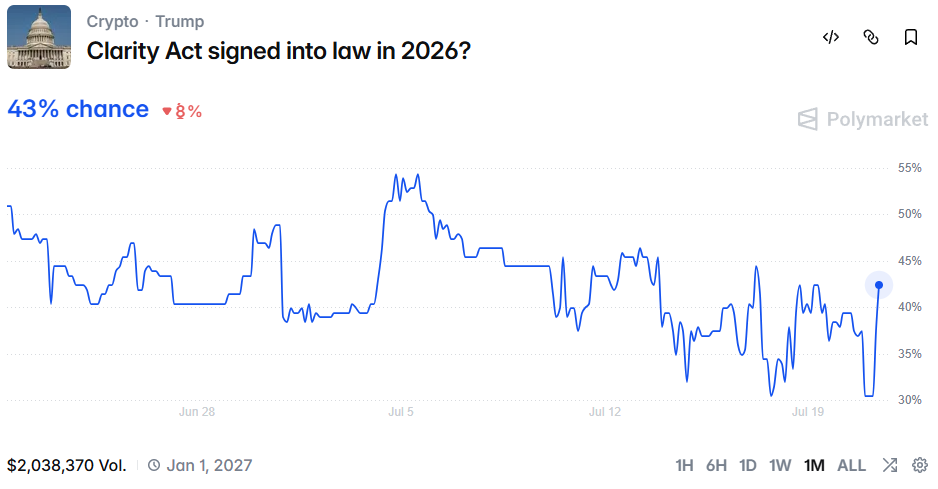
Earlier, on July 16, Trump did not reach an agreement during a meeting with Republican senators Bernie Moreno, Cynthia Lummis, and White House cryptocurrency advisor Patrick Witt, but an agreement was finalized by the President himself the following Monday evening. The clause aims to restrict federal officials, such as the President, Vice President, and members of Congress, from profiting from digital assets during their terms. The core controversy has revolved around the Trump family's meme tokens and World Liberty Financial. Financial documents disclosed last month showed Trump’s cryptocurrency income reached approximately $1.4 billion, which once stalled negotiations.
The Last Stretch Before the August Recess
If the "CLARITY Act" ultimately becomes law, it will provide comprehensive federal regulation of the digital asset industry for the first time, clarifying the jurisdictional division between the SEC and CFTC.
The U.S. House of Representatives previously passed the bill with a bipartisan majority of 294 votes to 134 votes in 2025. The Senate Banking Committee approved it on May 14 this year with 15 votes to 9, and it is currently stuck in the final negotiations before a full vote.
The bill text is expected to be published in the coming days, and then submitted for a full Senate vote; the opportunity only remains until the first week of August before recess (the Senate will enter recess on August 7 and will not reconvene until September 14). If passed, it must return to the House of Representatives for re-examination and merging of texts before finally being sent to the President for signature.
The Senate's vote count tightened in mid-July. Republican Senator Lindsey Graham of South Carolina died on the night of July 11 due to an aortic dissection after returning from a visit to Ukraine, at the age of 71, reducing the Republican seats in the Senate from 53 to 52.
According to the Associated Press, the state governor Henry McMaster appointed Graham's sister Darline Graham Nordone two days later to take over; she was sworn in on July 14, restoring the seat.
However, Republican Senator Mitch McConnell has been absent from voting since being hospitalized on June 14. As of July 12, he had stated he was not ready to return to the Senate, and there has been no further news about his return since.
According to the Senate Rule 22's termination debate procedure, if Mitch McConnell is still absent at that time, the bill must secure at least 8 Democratic votes in addition to the actual number of Republican votes present to pass.
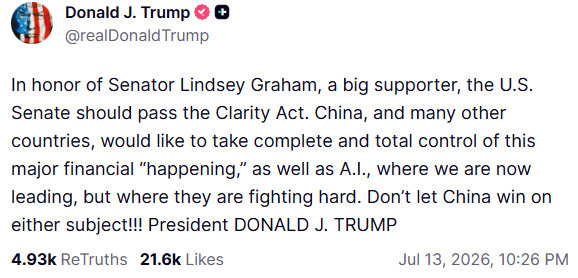
Trump had previously posted on Truth Social urging the Senate to pass the "CLARITY Act" as soon as possible, stating that this move is to commemorate the late Senator Lindsey Graham and emphasized that it also concerns preventing China from gaining dominance in the fields of digital finance and artificial intelligence.
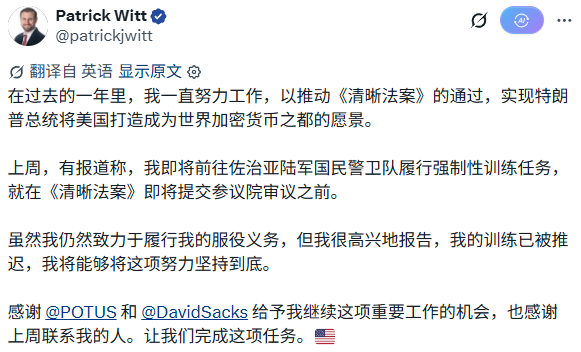
Personnel changes at the White House also indicate the urgency of advancing. Cryptocurrency advisor Patrick Witt was originally scheduled to leave for mandatory training with the Georgia Army National Guard this week, but the training has been postponed, and he will continue to work on advancing legislation; his deputy Harry Jung announced he will leave in two weeks.
"The Elephant in the Room" or "One Code Line"?
The stance from industry lobbyists is very straightforward. Blockchain Association CEO and former CFTC commissioner Summer Mersinger stated on July 16 at the Injective Summit in Washington D.C. that the core provisions of the bill are "very close to agreement, with only a few details remaining to be finalized," and noted that the ethical issue is "the elephant in the room," the current largest obstacle.
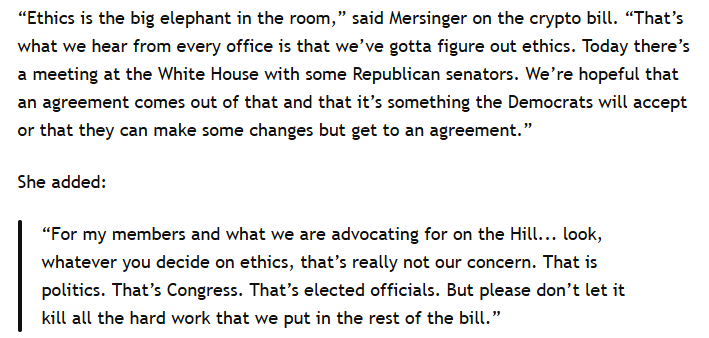
She addressed Congress: "Whatever decision you make regarding the ethical clauses, it really isn’t our concern; that’s politics, that’s Congress, that’s for elected officials. But please don’t let it ruin all the efforts we’ve made on the other parts of the bill."
Coinbase Vice Chairman and former SEC official Ryan VanGrack was even more straightforward in mid-July on CNBC: "The 'CLARITY Act' has reached the one code line, and the momentum for passing is evident." Senate Majority Leader John Thune offered a more cautious assessment: "There is indeed a path to reach an agreement, but time is running out."
What these statements essentially convey is the same sentiment: how the ethical clauses are written is not our concern, just don’t hold back the other parts.
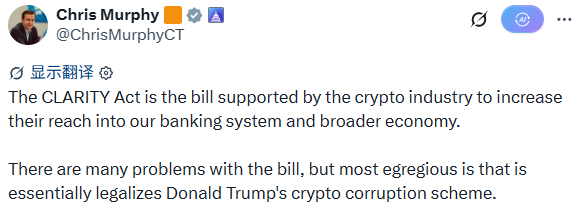
The skepticism mainly comes from the Democratic side, directly criticizing the ethical clauses for being insufficient. Senator Chris Murphy criticized on Facebook on July 14 that the "CLARITY Act" "is a bill supported by the cryptocurrency industry aimed at expanding its influence over the banking system and the broader economy," and clearly demanded that "the bill must include clauses prohibiting the President and their family members from issuing cryptocurrencies during their term, whether they are meme tokens or stablecoins... ethical clauses must cover the President and their immediate family members."
Senators Warren, Jack Reed, and Chris Van Hollen also jointly stated in mid-July that they "cannot support the current version of the 'CLARITY Act'," citing reasons that include the need for stronger consumer protections, stricter conflict of interest and ethical rules, and more safeguards against cryptocurrency fraud and market manipulation. Senator Mark Warner bluntly stated: "I am very pessimistic about the progress."
Whales, ETFs, and Trends in Cryptocurrency Treasuries
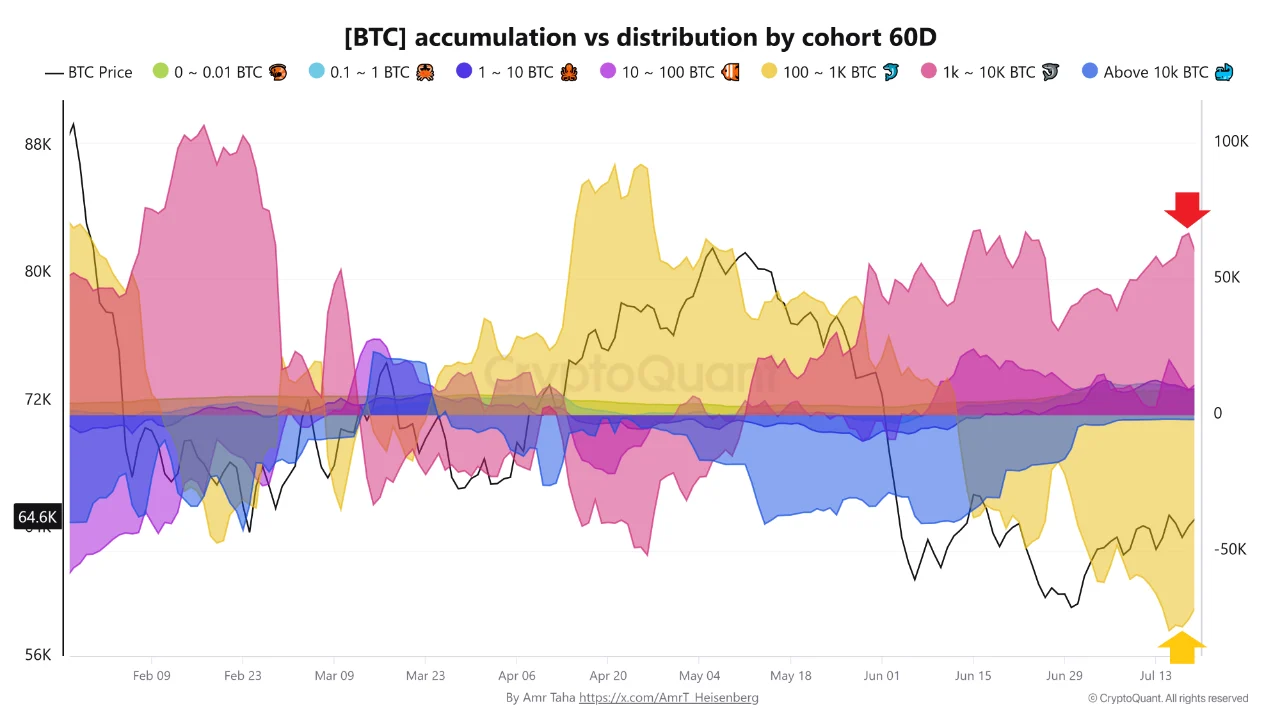
On-chain Whales: According to CryptoQuant data from July 20, the addresses holding between 1,000 and 10,000 BTC have net added about 66,700 coins in 60 days, the strongest buying wave since mid-February; meanwhile, medium-sized holders with 100 to 1,000 BTC sold about 77,800 coins during the same period. Data provided by Bitfinex analysts to CoinDesk shows that in the first two weeks of July, whale addresses collectively added over 270,000 BTC, worth about $16.7 billion.
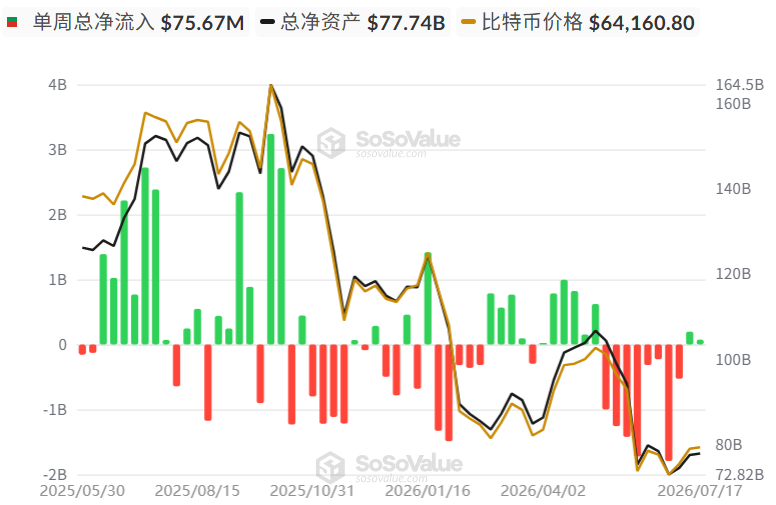
Spot ETFs: According to weekly data from SoSoValue, U.S. Bitcoin spot ETFs experienced consecutive net outflows for 8 weeks starting from the week of May 15, with the most severe outflow occurring in the week of June 26, reaching $1.79 billion; only in the week of July 10 did it turn positive with a net inflow of $197 million, followed by another net inflow of $75.67 million in the week of July 17.
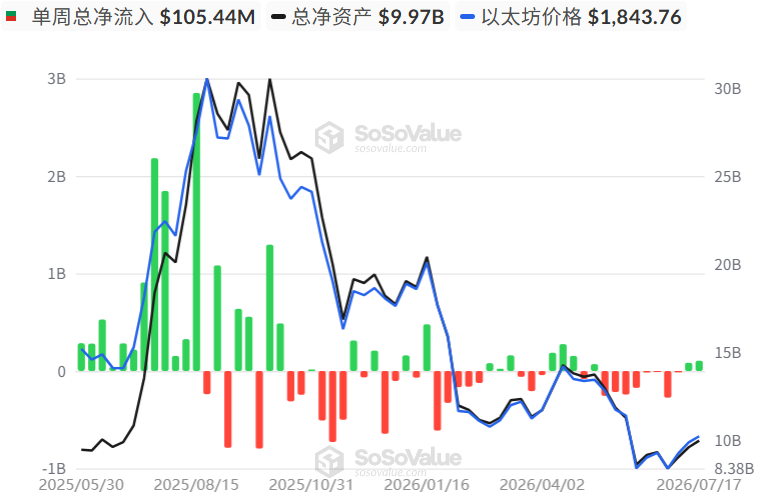
Ethereum spot ETFs saw almost identical trends: also recording consecutive net outflows for 8 weeks from May 15 to July 2, before turning to net inflows of $84.42 million and $105 million in the weeks of July 10 and July 17, respectively.
Cryptocurrency Treasuries: Strategy has maintained a holding of about 844,000 BTC, not purchasing Bitcoin for two consecutive weeks. In mid-July, it raised $263.5 million in cash through a new issuance, but did not immediately increase its positions, rather using it as a buffer for preferred stock dividends and interest. The publicly listed Japanese company Metaplanet increased its holdings by 2,823 BTC in the second quarter, raising its total to 43,000 BTC, ranking third among publicly listed companies globally; its subsidiary secured a deal for about $59.5 million in convertible bond financing on July 21, planning to continue purchases.
BitMine increased its holdings by 7,430 ETH last week, bringing its total to 5,777,468 coins, accounting for approximately 4.8% of the total ETH supply, with 85% already staked, yielding an annual staking income of approximately $247 million. During the same period, the company repurchased approximately 5.5 million shares of common stock at an average price of $15.62, with Tom Lee stating that the pace of purchasing has thus slowed, but the weekly accumulation has never ceased since the launch of the reserve strategy on June 30, 2025.
Arthur Hayes: According to the monitor from Yu Jin, BitMEX co-founder Arthur Hayes spent 2.5 million USDC on July 15 to buy 1,293 ETH at a price of $1,933; on July 20, he bought ETH again with 2.5 million USDC through FalconX and Cumberland OTC at a price of $1,876. The two transactions cost a total of 5 million USDC and acquired 2,625.7 ETH, with an average cost price of $1,904. Hayes had previously stated that the AI sector is absorbing market liquidity, causing BTC to face short-term pressure, but once the liquidity is replenished, the cryptocurrency market still has room for rebound.
免责声明:本文章仅代表作者个人观点,不代表本平台的立场和观点。本文章仅供信息分享,不构成对任何人的任何投资建议。用户与作者之间的任何争议,与本平台无关。如网页中刊载的文章或图片涉及侵权,请提供相关的权利证明和身份证明发送邮件到support@aicoin.com,本平台相关工作人员将会进行核查。


