Not sure if everyone has been paying attention to the Korean market recently. After that, there was no news... hhhhh.
Recently, there's a saying in Korea that's particularly popular, stating that the Korean stock market is entering a "golden era." The confidence behind this statement can probably be guessed—it comes from AI chips. SK Hynix has taken advantage of the HBM trend, Samsung Electronics has also been repriced by the market, and the KOSPI has been on an upward trend, with foreign investments and retail investors pouring in.
But in the market, when things move too quickly, volatility can also come abruptly.
A few days ago, the Korean stock market triggered a circuit breaker, SK Hynix plunged significantly, and Samsung Electronics also came under pressure. As of today, the KOSPI has slightly rebounded, moving from yesterday's low of 6561 back to around 7230. The SK Hynix stock on Bitget, RSKHY, has also returned to about 190 USDT, but short-term fluctuations remain significant.
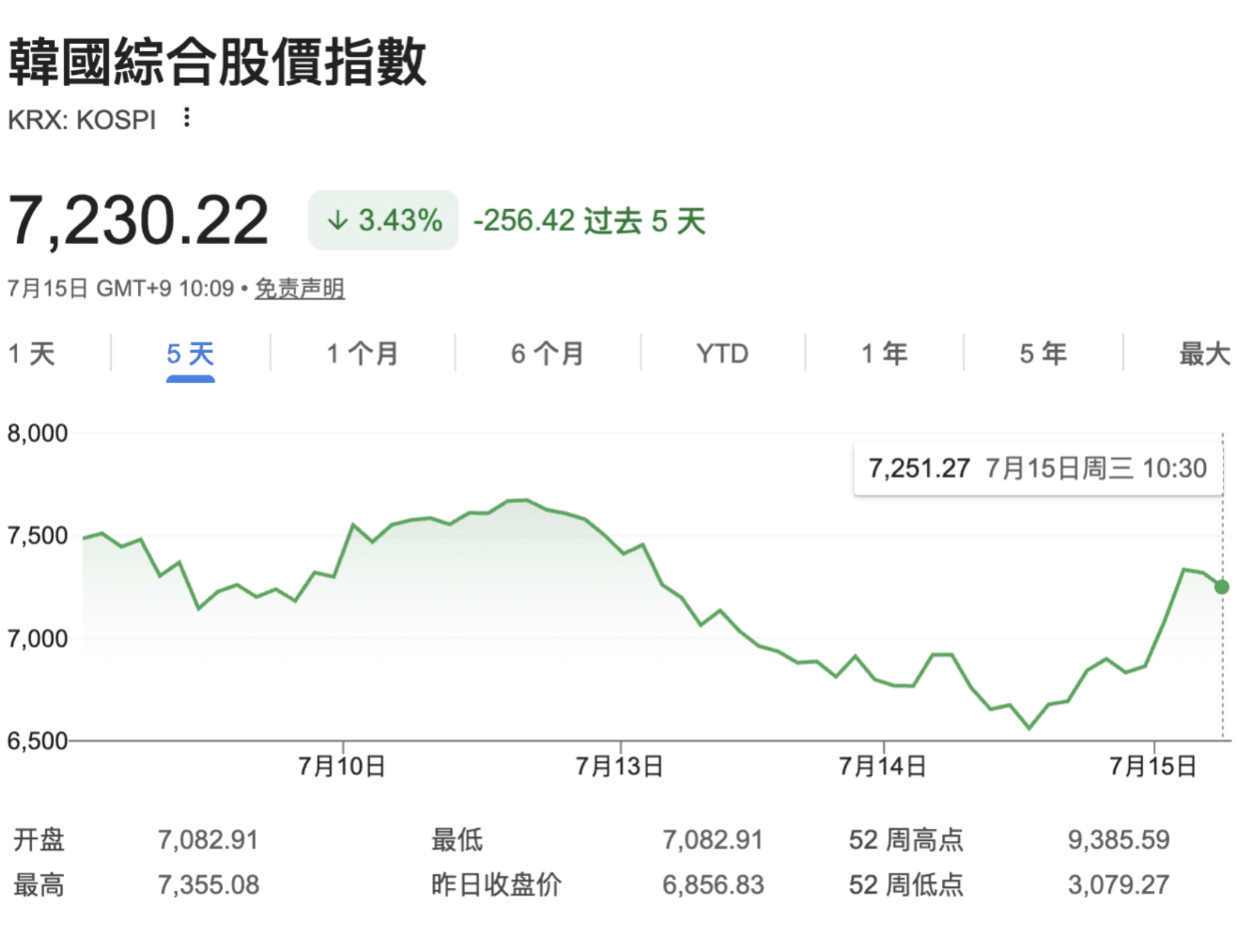
This matter is worth paying close attention to because it involves far more than just the local Korean market—it connects to AI chips, the global semiconductor industry, foreign funds, retail investor leverage, and the increasingly prominent focus on tokenized stocks and RWAs.
So today's theme is: How did the Korean stock market go from a narrative of 'golden era' to suddenly entering a 'golden week' level of volatility?
Let me interrupt with a benefit, otherwise I might forget to mention it later.
Bitget's latest registration activity, the easiest way for newcomers to earn some rewards: Register for Bitget, complete KYC, and once you make 100 USDT in contract trading volume, you can receive 7 USDT. If you reach 20,000 USDT in contract trading volume within 48 hours of signing up, you can get an additional 13 USDT, totaling an easy 20 USDT!
Click the link below to register and participate in the event, and also enjoy a 10% rebate:
https://www.bitget.com/zh-CN/events/activities/new/7742540c92615b20a43cc79ed4aeb208?color=dark&vipCode=hktb3191
Today's peripheral lottery also requires registration + KYC, so you can prepare in advance; once you win, you can register immediately, and the prize will be in your hands.
Okay, back to the main topic.
The key to this fluctuation in the Korean stock market lies in market position and funding structure.
SK Hynix has seen significant gains this year, primarily because AI has driven the demand for HBM high-bandwidth memory. HBM is a crucial component in AI servers; the stronger the demand from companies like Nvidia and AMD for AI chips, the greater the market's imagination for the storage supply chain. And SK Hynix just happens to be positioned here—it is a key supplier of HBM globally, so funds trade it as the core target for Asian AI chip dynamics.
But the issue also arises here.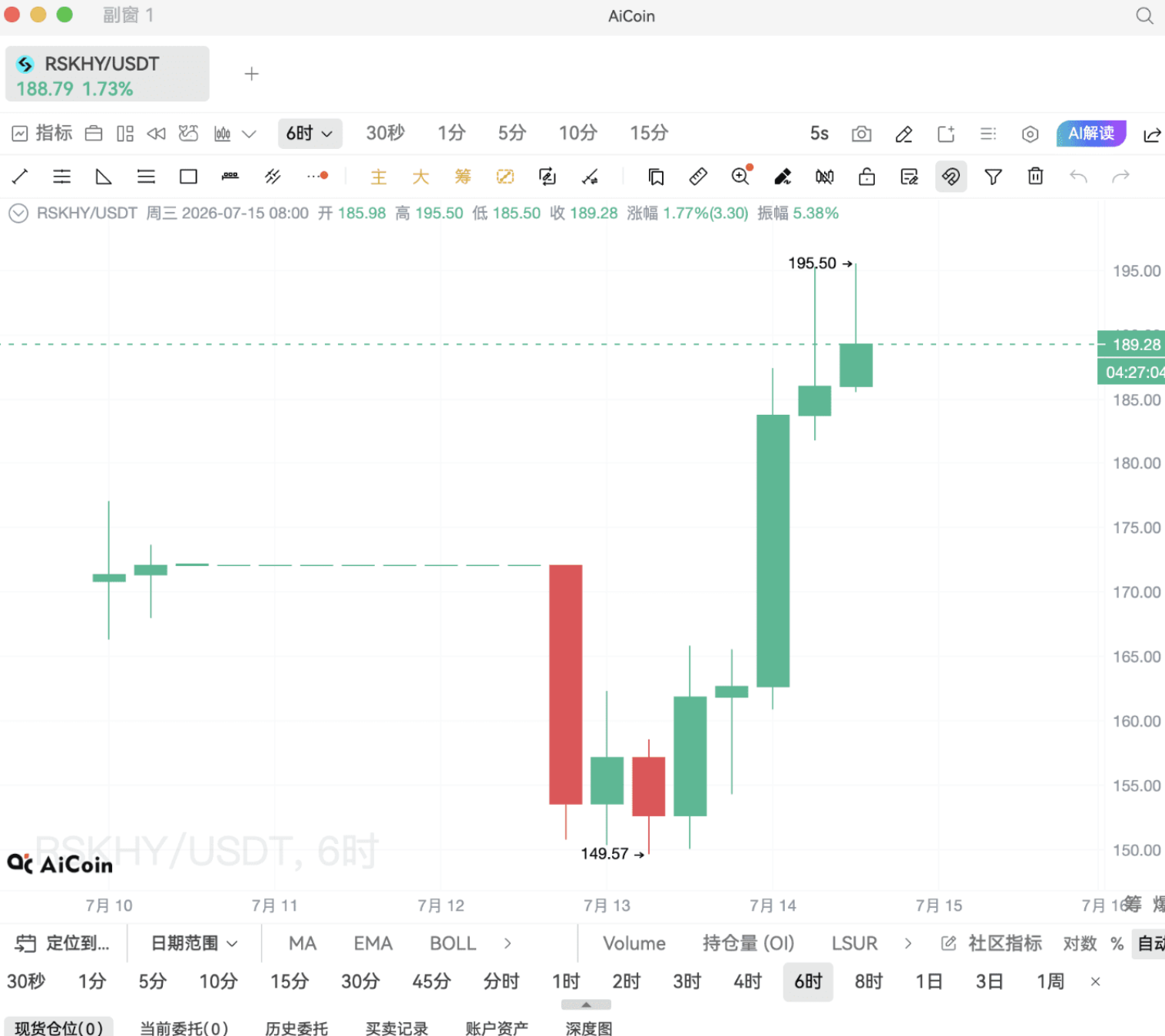
When a stock carries too many market expectations, its price becomes particularly sensitive. A slight shift in sentiment can trigger a significant drop. This is the first keyword to remember today: expectations.
The recent rise in the Korean stock market stems from industrial logic. Over the past year, global funds have been searching for the next layer of opportunities in AI. Initially, the market concentrated on trading Nvidia, while the value of HBM lies in its ability to provide higher bandwidth, allowing GPUs to work more efficiently. Therefore, when looking at SK Hynix, funds are not just viewing it as a Korean company—they are looking at the most scarce link in the AI computing power supply chain: high-bandwidth memory HBM.
This is also why SK Hynix has become the focus of the Korean stock market; its price movements now reflect the shadows of global AI trading.
However, in this market round, the elasticity of SK Hynix is indeed quite strong. The reason is straightforward—markets see HBM as the core increment in the AI storage chain, and SK Hynix's first-mover advantages in this field are even more evident.
This has created an interesting phenomenon: while the KOSPI appears to be the Korean benchmark index, the actual trading sentiment is being driven by a few leading semiconductor firms. When the index rises, everyone feels the Korean stock market is overall strong; when the index falls, the root often leads back to heavyweights like SK Hynix and Samsung.
This is the key structural aspect behind the fluctuations in the Korean stock market this time.
SK Hynix's plunge this time has another significant background—the global attention brought by ADR listings in the US.
What is ADR? Simply put, it is a certificate for an overseas stock traded in the US market, where investors purchase a product linked to the company’s stock in the American market. After the listing of Hynix's ADR, American investors can participate in trades more conveniently. The movements during the day in Korea will be followed by trading from American investors; sentiment in the US at night will also influence the opening in Korea the next day.
It's quite similar to the current situation in Korea—indeed, memory prices have risen again.
So, the root cause is that when global funds are trading the same story, price disparities will emerge between different markets. Once there are price differences, arbitrage funds, short-term funds, and quantitative strategies will all participate. When the market is stable, this can enhance liquidity; during periods of severe market volatility, it can also amplify price changes.
Hence, this time, SK Hynix's plunge witnessed local funds, foreign funds, and the ripple effects of cross-market trading all at play.
Korean retail investor funding is also worth mentioning separately.
Korean investors have high participation in tech stocks, especially in national-level stocks like Samsung Electronics and SK Hynix. When the market is strong, retail investors will participate through spot trades, margin trading, and leveraged products, igniting the market's enthusiasm. During the uptrend, leverage makes buying appear stronger; during the pullback phase, leverage makes selling seem more urgent.
The characteristics of such markets are—during rallies, a consensus on expectations can easily form; during declines, concentrated stop-losses can form easily. Once the price breaks through a key position, margin and short-term trading can act simultaneously, leading to a plunge.
Thus, the focus of this fluctuation is not on any single piece of news but rather on multiple funding levels turning simultaneously.
The biggest takeaway from such market movements for ordinary users is: global hotspots are increasingly difficult to view from just one market. Korean trading during the day responds to actions in Europe and the US at night; news about AI chips may arise during US market hours and may also affect the opening in Asia the next day.
This is why more and more people are beginning to pay attention to on-chain stocks and global asset trading. In the past, when ordinary users wanted to buy overseas stocks, they had to open accounts, exchange currencies, and wait for the market to open. But now it's different—stocks can also be turned into on-chain assets, allowing users to participate directly using USDT!
Bitget's UEX and stock-related products are part of this direction. Users can view different assets like crypto, stocks, and gold on one platform, and can also use USDT to keep up with global market hotspots.
Friends who want to experience this entrance to global assets can enter the official activity page via the Bitget link to understand the rules:
https://jump.do/zh-Hans/xlink-proxy?id=6
This time SK Hynix is a very good example—it is the leading chip producer in Korea and an important player in the AI supply chain. Looking at the on-chain stock of Hynix on Bitget, RSKHY, the current price is around 190 USDT, having surged to 195.5 USDT at one point before pulling back. This trend indicates that Hynix's popularity remains, but short-term volatility is also evident.
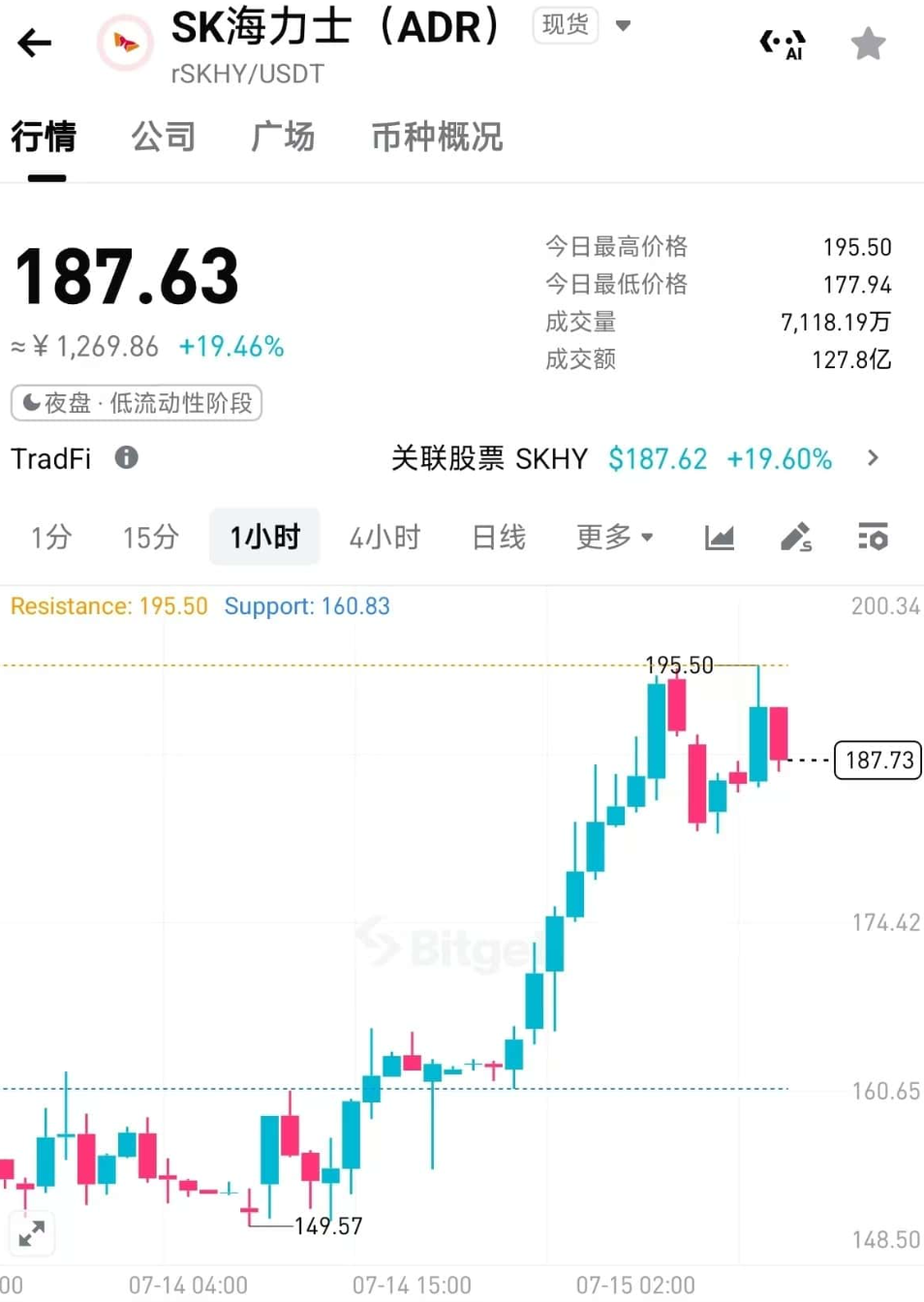
Finally, let's summarize three points; make a note of this:
First, see what position it stands in. SK Hynix is under attention because it produces the high-speed memory needed for AI. Whenever looking at similar assets in the future, first ask: is it in a critical link of the supply chain?
Second, see if it is already too hot. If an asset is rising rapidly and there are many discussions about it, the volatility thereafter will often be larger. Hotspots can be watched, but leave some room for positions.
Third, understand the product rules clearly. On-chain stocks differ from traditional stocks; you should check the trading time, how prices are determined, and the cost calculations on the page.
Here I also remind everyone that this round of movements in the Korean stock market is suitable for observation, but you must maintain discipline in operations.👌
Assets like SK Hynix that are being closely watched by global funds will be subject to various influences from US stocks, Korean stocks, exchange rates, and industry news in the short term. Newcomers are advised to first understand the market, then familiarize themselves with the product using small amounts. If using contracts or leverage, be sure to set stop-loss and take-profit in advance. When the market is highly volatile, controlling your position is more important than guessing the direction.
Today, regarding the circuit breaker in the Korean stock market and the plunge of SK Hynix, let’s summarize briefly:
The rebound after this plunge indicates that market enthusiasm remains, but the preceding rapid rise and concentrated buying have pushed the short-term into a high-volatility stage. For Bitget, this is also a great educational scenario for on-chain stocks—users can see that traditional stock hotspots are being noticed by more people through new product forms.
If the Korean stock market continues to experience significant fluctuations, we can continue tracking the correlations between SK Hynix, Samsung Electronics, US semiconductor stocks, and related on-chain stocks. Friends who want to keep track of this line can search for relevant stock tokens and AI-themed assets on Bitget; specific products will be based on the launch page.
Currently, there are live broadcasts every day, and we welcome you to keep following AiCoin partners! Reserve in advance 👇
https://www.aicoin.com/zh-Hans/live/list?tab=upcoming
Join our community, let’s discuss together and become stronger together!
Official Telegram community: https://t.me/aicoincn
AiCoin Chinese Twitter: https://x.com/AiCoinzh
This article represents the author's personal views and does not reflect the position or views of this platform. This article is for informational sharing only and does not constitute any investment advice to anyone.
免责声明:本文章仅代表作者个人观点,不代表本平台的立场和观点。本文章仅供信息分享,不构成对任何人的任何投资建议。用户与作者之间的任何争议,与本平台无关。如网页中刊载的文章或图片涉及侵权,请提供相关的权利证明和身份证明发送邮件到support@aicoin.com,本平台相关工作人员将会进行核查。


