Original Title: "The semiconductor sell-off heavily impacts the Asia-Pacific stock market, South Korean stocks plummet 7% triggering a circuit breaker, Brent oil rises for the fourth consecutive day above $85"
Original Author: Zhao Ying
Original Source: Wall Street News
A new round of selling in semiconductor stocks puts pressure on Asian stock markets, raising doubts about the sustainability of AI trading, while the escalating situation in the Middle East continues to drive oil prices up for the fourth consecutive day.
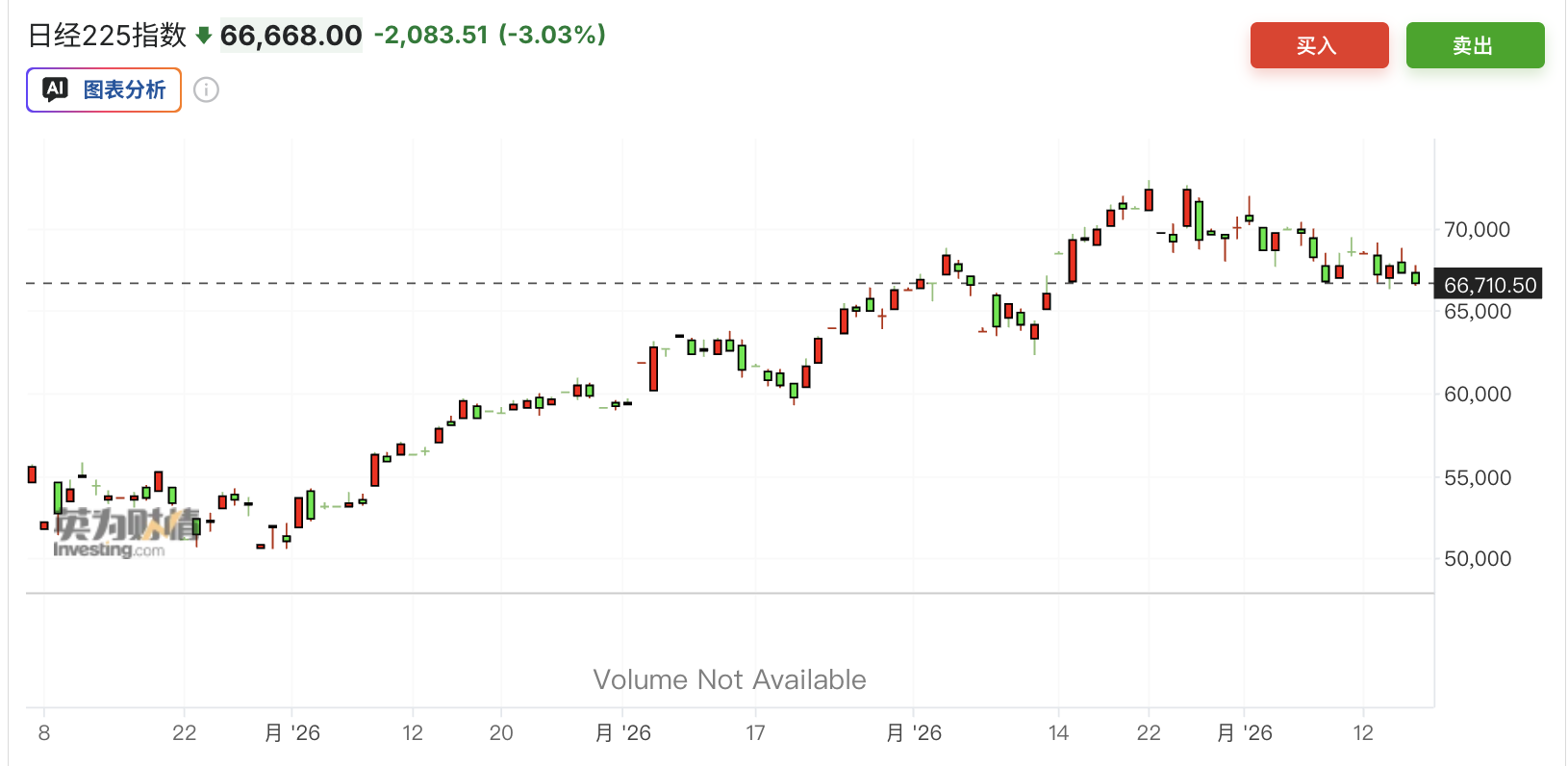
The South Korean Composite Stock Price Index (Kospi) widened its loss to over 7% on Wednesday, with SK Hynix and Samsung Electronics contributing significantly to the decline. The loss of Kioxia Holdings, listed in Tokyo, exceeded 13%, and the Nikkei 225 index's loss briefly widened to 3%. This round of selling dragged the MSCI Asia-Pacific stock index down by 1.5%, ending its previous two-day rise.
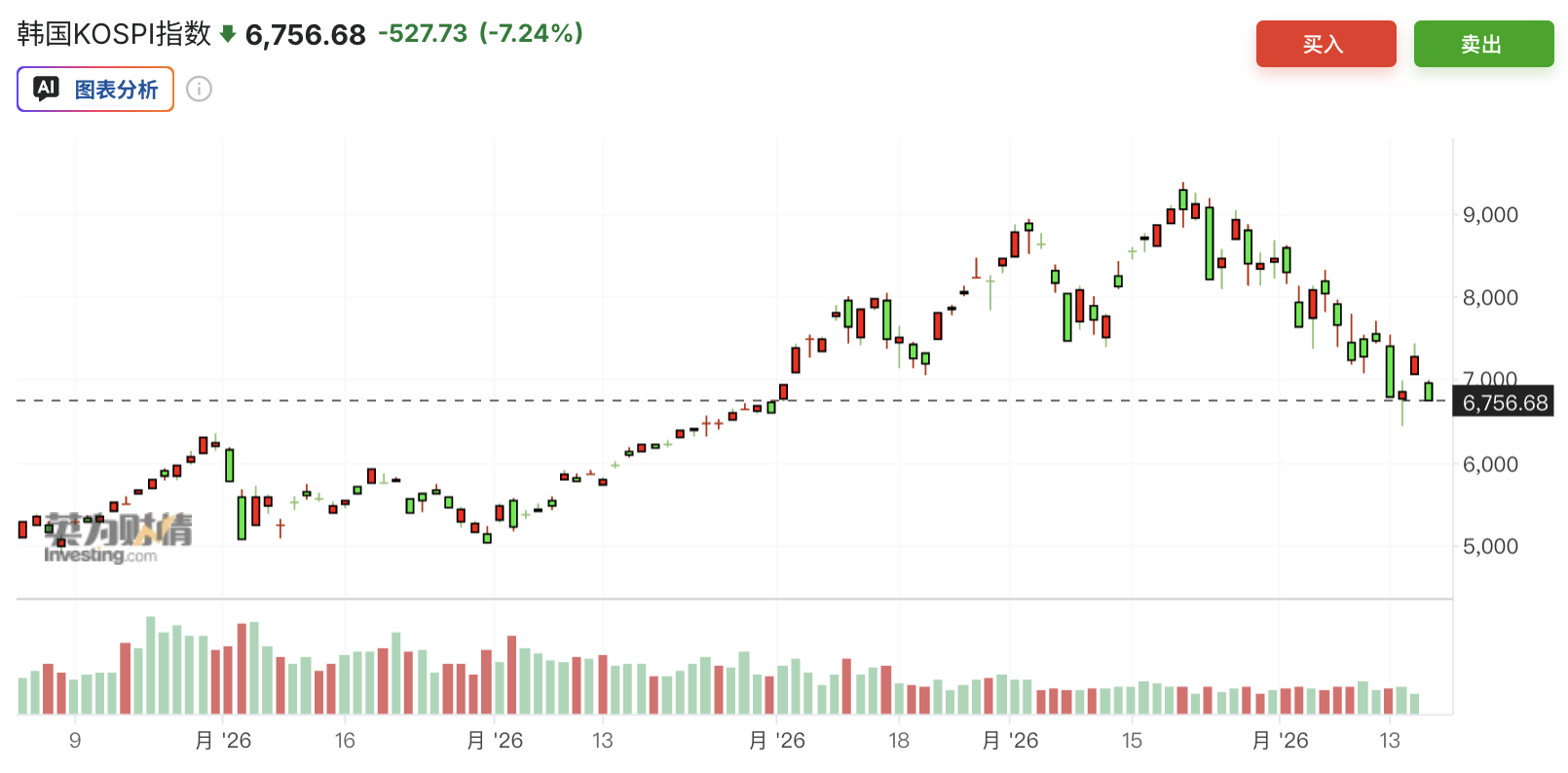
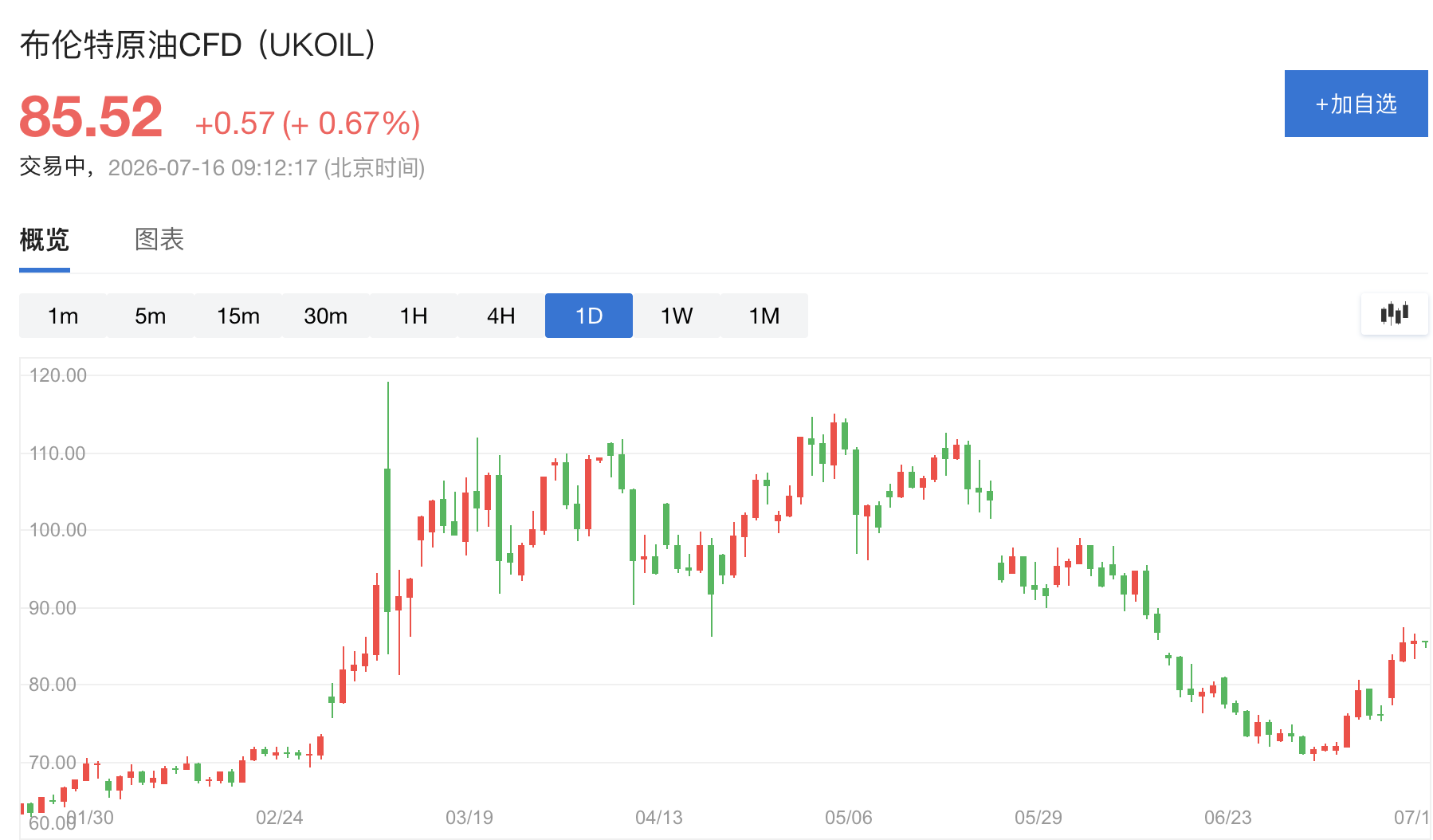
Meanwhile, Brent crude oil rose for the fourth consecutive day, surpassing $85.25 per barrel. The new round of U.S. airstrikes against Iran has intensified market concerns about disruptions in Middle Eastern energy supplies.
The chairman of the Financial Services Commission of South Korea stated that authorities would soon announce measures related to leveraged ETFs to address concerns that leveraged ETFs linked to Samsung and SK Hynix are exacerbating stock market volatility. Additionally, the Bank of Korea raised the benchmark interest rate from 2.50% to 2.75%, in line with market expectations.
Selling of chip stocks intensifies, AI trading resilience is tested
The semiconductor sector remains under pressure, becoming the core driving force behind the recent decline in Asian stock markets.
After several months of significant price increases, investors are beginning to demand stronger evidence that the surge in AI capital expenditures can translate into sustained profit growth across the semiconductor supply chain. Bloomberg strategist David Savage pointed out that the market's tepid response to ASML's impressive earnings report has deepened a concerning trend—strong preliminary results from Samsung Electronics and TSMC's steady sales figures have yet to support the increasingly fragile rise of chip stocks.
ASML had already raised its full-year sales forecast for the second time this year, and according to The Information, the company plans to increase prices for chip manufacturing equipment, citing four informed sources. Nonetheless, the market reaction remains muted. TSMC is set to release its financial report later that evening, viewed as the next key indicator for assessing the progress of AI infrastructure development. David Savage stated that as Asia's most valuable company, TSMC faces extremely high expectations, and whether it can reverse the overall regional market sentiment remains to be seen.
South Korean market triggers circuit breaker mechanism, regulators respond urgently
The severity of declines in the South Korean stock market triggered market protection mechanisms. The Kospi 200 index futures fell over 5%, prompting the Korea Exchange to activate the "sidecar" mechanism, suspending program trading for Kospi. The Nikkei 225 index's loss briefly widened to 3%.
The chairman of the Financial Services Commission's statements reflect the regulatory body's high alert towards market volatility. The leveraged ETFs linked to Samsung and SK Hynix have recently been deemed to exacerbate stock price fluctuations, and authorities have promised to introduce countermeasures as soon as possible. The Bank of Korea announced on the same day a 25 basis point rate hike, raising the benchmark interest rate to 2.75%, consistent with market expectations.
Escalating Middle East situation drives oil prices higher
Geopolitical risks have become another main line driving oil prices upward.
The temporary peace agreement signed between the U.S. and Iran approximately a month ago has nearly collapsed in the past week, with both sides locked in disputes over control of the Strait of Hormuz. Most of the energy exports from countries like Saudi Arabia, Qatar, and the United Arab Emirates must be transported through this strait. Trump stated he would increase bombing until Iran stops attacking ships in the Strait of Hormuz and agrees to open the waterway.
According to Xinhua News, a spokesperson for the Iranian Islamic Revolutionary Guard Corps posted on social media early on the 16th, stating that Iran's current actions are focused on destroying "offensive infrastructure" of the U.S. in the region, with further actions to follow. The spokesperson wrote, "The enemy should not think it can continue to maintain the current state of combat and drag the conflict into a war of attrition."
David Russell of TradeStation stated, "The Federal Reserve does not face short-term rate hike pressure, but in the longer term, oil prices are the dominant factor. The energy sector supported the market in June, but if the Strait of Hormuz does not open soon, this history may quickly become a thing of the past."
Inflation data eases Fed rate hike expectations, bond market strengthens
Apart from the turmoil in the stock and oil markets, the bond market benefits from cooling inflation data.
The U.S. Producer Price Index (PPI) for June came in below expectations, pushing U.S. Treasury prices up on Wednesday, prompting traders to further lower their projections for the magnitude of rate hikes by the Federal Reserve this year. This also led to Australian and New Zealand government bonds strengthening concurrently. The yield on U.S. two-year treasuries fell further from the highs of 2026.
The core contradiction facing the market currently is: the softening of inflation data provides the Federal Reserve with room to remain on hold, but the ongoing deterioration of the Middle East situation poses upward risks to energy prices, which could reopen inflationary pressures over a longer time horizon, complicating the outlook for monetary policy once again.
免责声明:本文章仅代表作者个人观点,不代表本平台的立场和观点。本文章仅供信息分享,不构成对任何人的任何投资建议。用户与作者之间的任何争议,与本平台无关。如网页中刊载的文章或图片涉及侵权,请提供相关的权利证明和身份证明发送邮件到support@aicoin.com,本平台相关工作人员将会进行核查。


