AI, energy, and cryptocurrency weave a super growth curve.
Written by: Raoul Pal, Founder of Real Vision
Translated by: Luffy, Foresight News
Let’s start with a fun math puzzle: If one cent doubles every day for 30 days, how much would you end up with? The vast majority would guess a few hundred dollars. But the real answer is over 5 million dollars.
Almost no one can answer this correctly on the first try because the human brain is not good at processing these kinds of calculations. Our thinking tends to lean toward linear logic by nature. When crossing the street, a quick glance at oncoming vehicles allows the brain to intuitively judge whether it's safe; however, when we imagine something growing exponentially each year, we always severely underestimate the final scale, often by thousands or tens of thousands times.
Throughout human history, this limitation of thought has been almost irrelevant. Every tool we've created and every system we've built has developed at a pace that aligns with human linear intuition.
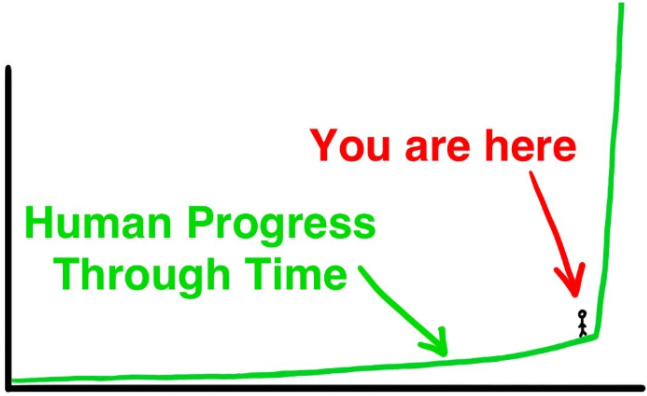
But today, for the first time, humanity has a nonlinear operating intelligent system: it can self-reinvest, self-feedback, and continuously accelerate. Concurrently, multiple exponential growth curves have reached the steep ascent phase of the S-curve, with multiple transformations arriving simultaneously.
In April 2021, I first proposed this set of ideas in my GMI column "The Era of Exponential Growth." Looking back now, I didn't fully realize at the time that the trend I was observing was much larger in scale than I had anticipated.
What did I guess right, and where was I wrong?
In 2021, my core viewpoint was very clear: the devaluation of fiat currencies happens much faster than market pricing, and only a few assets can achieve compound growth rates that outpace inflation, among which Bitcoin and tech stocks are representatives. This assessment still holds true today. However, I severely underestimated the scale of the subsequent transformations.
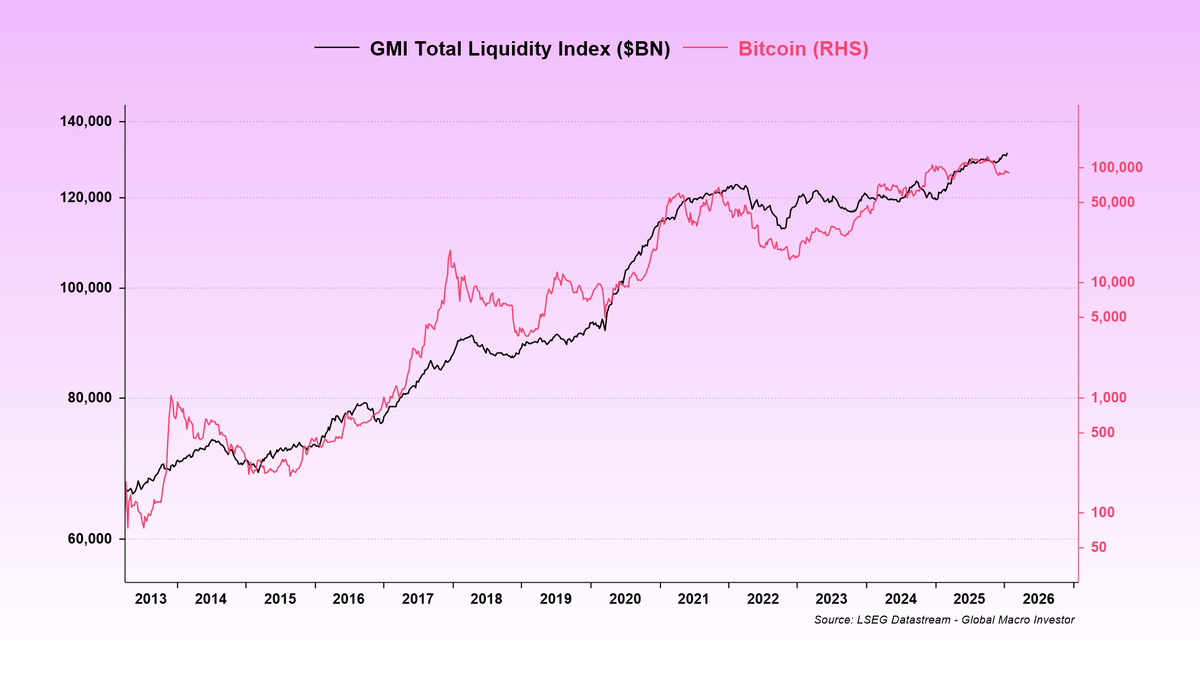
At the time, I mainly focused on the balance sheets of various central banks, paying particular attention to the Federal Reserve. This analytical direction was not wrong, but the perspective was incomplete. The real core driver is not a single central bank but global total liquidity: major global central banks, financing debts of various countries, and commercial banks expanding credit – all are working in sync like a relay race. When the Federal Reserve tightens, China or Europe picks up the baton of easing.
If one only focuses on a single central bank, they are likely to misjudge the entire market cycle. 2017 is a typical case: the Federal Reserve was shrinking its balance sheet, yet the global market continued to rise unilaterally due to synchronized easing in China and Europe, with global total liquidity continuing to expand. Those who only tracked the Federal Reserve completely failed to anticipate this bullish market.
Currently, global liquidity is expanding at an annual rate of about 8%, combined with standard inflation; to maintain the existing purchasing power of assets, the actual minimum yield you need to achieve is close to 11%.
The true new transformational force
The logic of currency depreciation can explain why money is becoming less valuable, but it cannot fully account for the feeling that everything is accelerating right now. It’s not just the market movement that's accelerating; the entire pace of social change is rapidly increasing.
This is an independent force layered on top of liquidity, and it is also the core reason why the logic of "The Era of Exponential Growth" has become even more critical five years later.
In 2021, I identified five major growth curves: artificial intelligence, robotics, photovoltaics and energy storage, biotechnology, and blockchain networks. The list of sectors hasn’t changed; what has changed is their growth stage.
In 2021, most of these technologies were still on the eve of theoretical implementation. Observant people could foresee the trends, but large-scale commercialization had not yet arrived. Five years later, the five major technologies have accelerated simultaneously, empowering each other and developing synergistically. This technological integration has completely rewritten the logic of development.
Artificial Intelligence
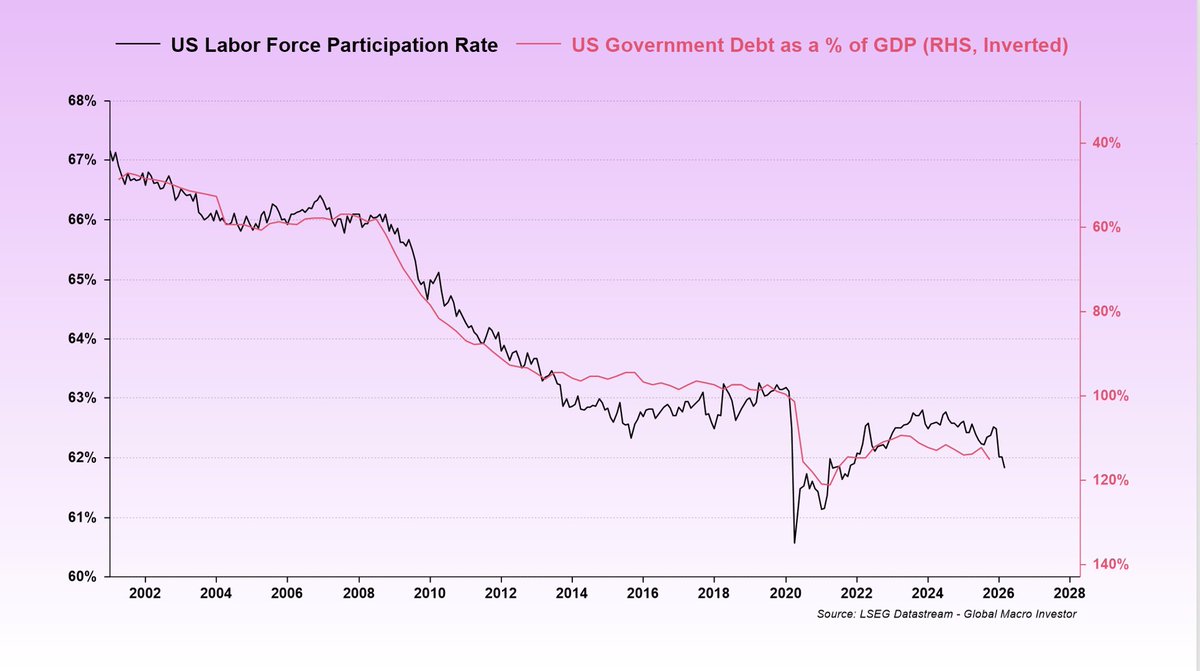
Most people overlook the underlying logic behind debt expansion. Countries continue to expand debts not out of stubbornness or lack of ability from their leaders, but due to demographic structure. Aging populations and shrinking labor forces mean fewer producers and more recipients of social welfare. Relying solely on manual labor no longer achieves natural economic growth; countries can only expand debts to bridge the gap by enlarging their balance sheets.
However, artificial intelligence breaks this cycle. AI entities can perform knowledge work typically done by white-collar workers, and humanoid robots can take on physical labor, meaning economic growth is no longer constrained by the number of eligible laborers. We have created "artificial labor supply." The productivity curve, hampered by demographic structure, is once again trending upwards without the debt expansion relied upon for the past fifty years.
At the same time, a deflationary force is also at work. The marginal cost of intelligent services approaches zero, leading to rapid decreases in prices for a large number of goods and services. This cannot immediately eliminate the problem of currency depreciation, but it will reshape the logic of yield calculations. As AI compresses costs across the entire industrial chain, the previously mentioned 11% yield threshold will also change in significance.
The speed of all these developments is astonishing and merits careful examination. In the past six years, the duration of complex tasks that AI can autonomously complete has approximately doubled every seven months. OpenAI's O3 model has already surpassed human PhDs in its performance in relevant research fields, and its development speed has not slowed down at all.
Energy
All technological transformations face a core bottleneck: energy. AI and robotics operate on computing power, which consumes electricity. Currently, the scale of computing power being built globally is unprecedented, making energy a hard constraint for the entire technological transition. Microsoft's investments in nuclear power and Google's geothermal projects are not merely to achieve carbon neutrality; the local power grid's supply is inadequate to support the operation of computing clusters.
China was the first to recognize this, and its efforts are the most aggressive. In just 2024, China's new photovoltaic installation capacity will exceed the sum of new installations in all other countries worldwide.
The core behind this is a little-known economic law - the Wright's Law. This law was derived from production data in airplane manufacturing in 1936: for a certain type of product, each time total cumulative production doubles, the production cost per unit decreases by a fixed percentage. Workers’ skill levels improve, defect rates decline, and engineers optimize materials (such as reducing silver or thinning silicon wafers), continuously driving down costs.
Photovoltaics is among the technologies known to humanity that most closely aligns with Wright's Law. For every doubling of global photovoltaic capacity, manufacturing costs drop by more than 20%. China leverages its massive production capacity to significantly boost the global total cumulative photovoltaic output, accelerating the entire industry towards completing its downward curve.
Today, the price of photovoltaics has plummeted by 90% compared to a decade ago, and there is still ample room for cost reduction. Photovoltaics has four unique advantages: low cost, short construction period, distributed deployment, and the potential for unlimited scalability – fossil fuels cannot compete with it at all. Other energy categories will always encounter capacity ceilings at some point in the supply chain, while photovoltaics' only limit is the available sunlight area.
Energy storage, once the biggest weakness of photovoltaics, is now rapidly being addressed. Tesla Megapack's energy storage business is growing at an annual rate of 50%–70%, and new factories are continually coming online to meet demand. The cost for grid-scale storage batteries is rapidly dropping, and most people aren't yet aware of how significant this transformation will be.
More crucially, there is a positive closed-loop cycle: AI optimizes grid scheduling, lowering electricity costs; reduced electricity prices further decrease computing costs; and cheap computing power iterates to develop stronger AI, which once again optimizes the energy system. The growth curves no longer develop in parallel but instead amplify each other's growth rates.
Cryptocurrency
The linkage between Bitcoin and global liquidity has been well documented. Since 2012, approximately 90% of Bitcoin price fluctuations have corresponded to liquidity cycles, and this core logic still holds today, possibly even more strongly than the correlations I observed back then.
However, the cryptocurrency industry has a core logic that was almost nonexistent in 2021 but is now impossible to ignore. AI entities will need to trade, and the future will birth millions or even billions of intelligent entities that autonomously procure services, allocate resources, and settle automatically among machines. The current human financial system, which includes clearinghouses, agent banks, and three-day settlement cycles, simply cannot accommodate this kind of demand. Intelligent economic entities cannot be built on top of traditional finance.
Cryptographic technology just happens to meet this need: programmable, no need to trust third parties, and immediate settlement without counterparty risk. Blockchain is the only financial infrastructure capable of adapting to super-intelligent economic entities and expanding simultaneously. The past logic of the cryptocurrency sector has already become persuasive, and the pressing need for autonomous trading with AI makes cryptocurrency an inevitable trend.
Integration
The uniqueness of this round of transformation lies in this. Every past wave of technology has emerged separately, taking decades to complete its proliferation: the internet was an independent growth curve, and mobile internet was another. The two reshaped the economy sequentially, leaving ample buffer time for various institutions to gradually adapt.
But now, multiple exponential curves are simultaneously reaching the steep ascent section of the S-curve and pushing each other. AI designs more advanced chips, advanced chips train stronger AI; cheap energy supports vast amounts of computing power, and this vast computing power optimizes energy scheduling; the crypto network completes transactions and settlements among intelligent entities without human or bank involvement.
A single technological curve can sustain growth; when layered with integration, the overall growth rate far exceeds that of a single technology developing independently.
Global cloud service providers have capital expenditures exceeding $600 billion annually, up 36% year-on-year, and this figure does not yet account for Tesla, xAI, cutting-edge AI laboratories, or various Middle Eastern countries' national-level computing infrastructure investments. The share of corporate capital expenditure relative to GDP has already surpassed the scale of each country's investment in atomic bomb research in prior years.
Dual Exponential Growth
This composite effect has a specific name—it's the true reason human intuition cannot keep pace with development. Single exponential growth has already exceeded the field of human comprehension. When multiple curves empower each other, it does not form a steeper ordinary exponential curve, but rather gives rise to dual exponential growth—where the growth rate itself is accelerating, backed by a clear operational mechanism.
We can layer our understanding using three network laws:
- Shannon's Law: The value of a broadcast network increases linearly with the number of users;
- Metcalfe's Law: In a network where any two points can communicate, the value is proportional to the square of the number of users (n²);
- Reed's Law: In networks that support the formation of free groups, value grows exponentially (2ⁿ), and the number of possible cooperative groups increases at a rate far exceeding simple pairwise connections.
For a long time in human history, Reed's Law was merely a theoretical concept because network nodes were all human: humans act slowly, and have limited supply, participating in only a few communities at the same time.
Now, network nodes have transformed into intelligent AI entities that are never fatigued, can replicate themselves infinitely, and can quickly assemble, disband, and reorganize cooperative groups at machine speed, achieving scales beyond human networks. This is the first time in human history that network nodes themselves possess intelligence, and Reed's Law has wholly been realized at the macroeconomic level. 2 raised to the n is not a steep straight line; even plotting the data logarithmically, the curve continues to bend upward.
This is the true form of the growth curve today.
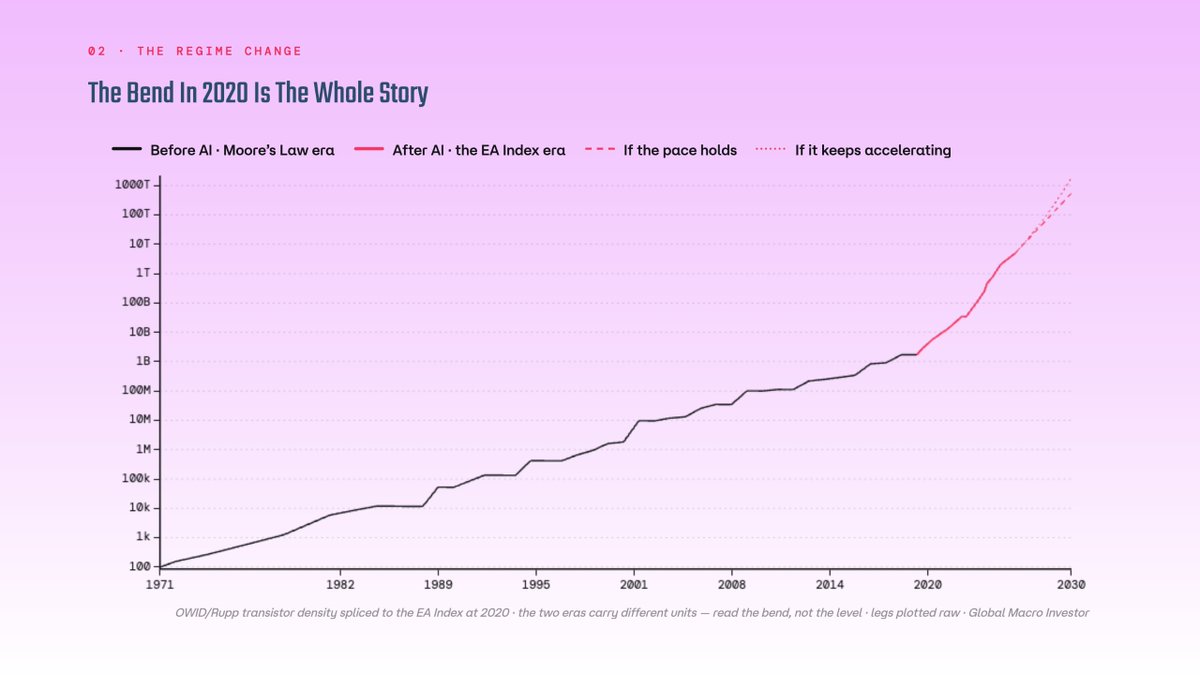
Returning to the coin example: single exponential growth has already surpassed human intuition, while dual exponential growth belongs to a completely different magnitude. No life experience, cognitive model, or evolutionary instinct can predict its scale; neither you nor I can outline this curve in our minds.
This is also where the real change has occurred since 2021; the technological sectors themselves haven't introduced new components; I had already thoroughly listed the five major directions back then. But I underestimated one key point—that they no longer grow independently; instead, they have fused into a super curve racing toward the top of the charts. Currently, we are still at the gentle starting phase of this curve, and the future potential is unimaginable.
How should ordinary people respond?
So, how should you respond to all this?
If you acknowledge that artificial labor will replace human labor, and that AI entities and robots will become the core productive forces in the economy, you need to understand that profits will ultimately flow to those who own machines and the underlying infrastructure.
The core question is no longer "how to keep your job from being replaced by machines," but rather "how to hold a share of machine-related assets." The underlying logic that AI replaces human labor simultaneously points to the track of value accumulation, and ordinary people can also engage in layout.
This logic, when amplified to society as a whole, is referred to as "universal basic fairness." The public directly owns the assets of the production machines, and the gains from increased productivity are returned to the owners in the form of asset appreciation, rather than relying on fixed wages. This is also one of the mainstream solutions to address the failure of wage systems.
I define the years 2030 to 2032 as the "Economic Singularity" window, at which point all technological trends will fully integrate, and the economic system will undergo fundamental changes, rendering traditional economic models completely ineffective. Whether this transition is smooth depends on the choices made by everyone right now.
I am not just predicting the future; I am revealing the facts that are occurring: quantifiable expansions of global liquidity, mappable technological proliferation curves, dual exponential growth breaking chart ceilings, and a few core assets that directly anchor all trends. Even if you define the current market as a bubble, the objective data does not support that judgment.
This is the era of exponential growth.
免责声明:本文章仅代表作者个人观点,不代表本平台的立场和观点。本文章仅供信息分享,不构成对任何人的任何投资建议。用户与作者之间的任何争议,与本平台无关。如网页中刊载的文章或图片涉及侵权,请提供相关的权利证明和身份证明发送邮件到support@aicoin.com,本平台相关工作人员将会进行核查。


