Coinbase quietly opened registration for mainland users, and the exchange war has first hit KYC
Written by: ChandlerZ, Foresight News
On July 14, multiple social media users discovered that Coinbase had opened account registration for users in mainland China. Wu confirmed with a Coinbase employee, who confirmed that users can now use their Chinese resident identity card and a mainland residence address for identity verification, replacing the previously required Chinese passport and Hong Kong address. According to user feedback, the entire verification process can be completed in about 1 minute at the fastest.
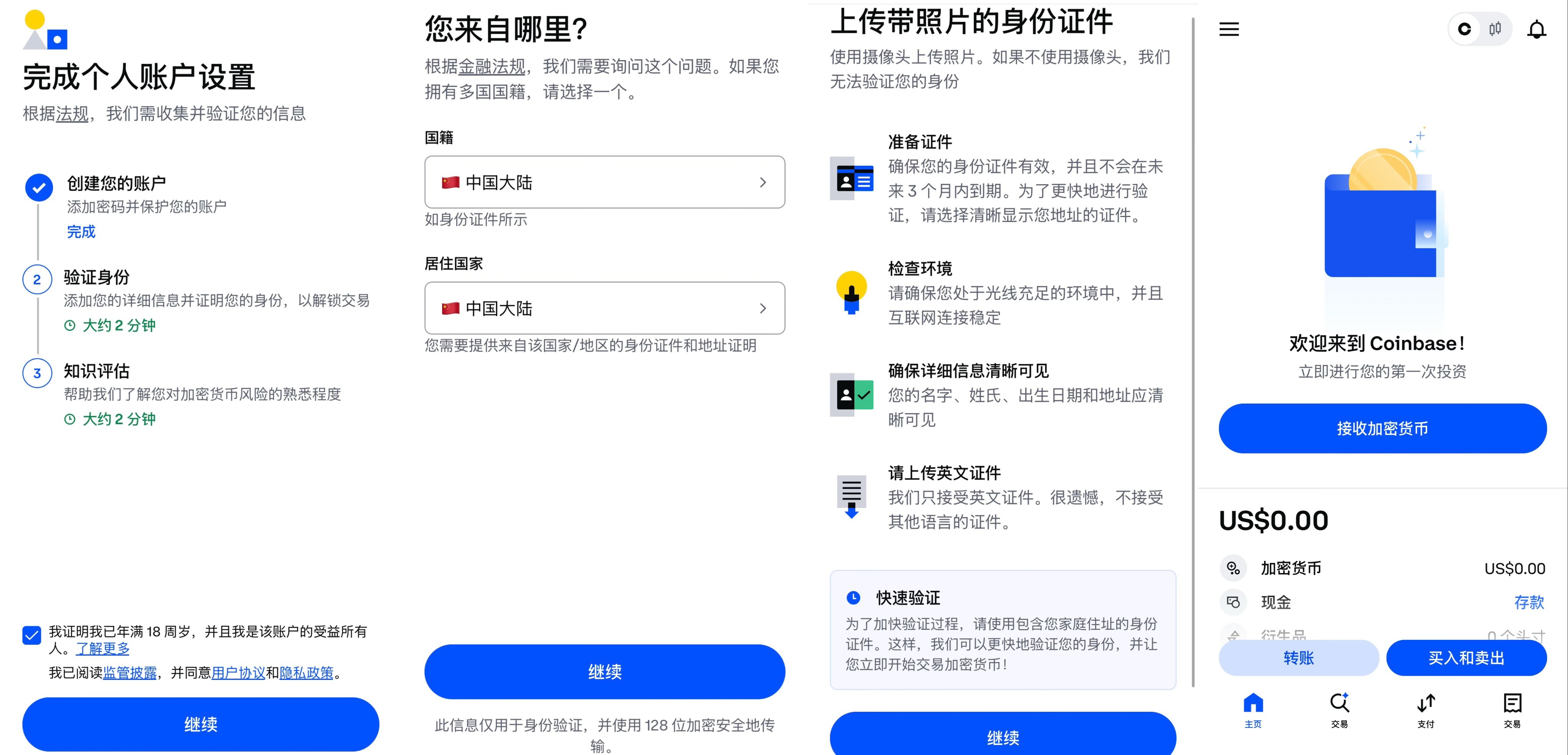
COIN's stock price rose over 2.6% on the same day, closing above $160.
Previously, mainland users wanting to complete KYC verification on Coinbase had to submit a Chinese passport and fill out a Hong Kong address. The vast majority of regular users in mainland China do not meet these two requirements, which effectively excluded them from the process.
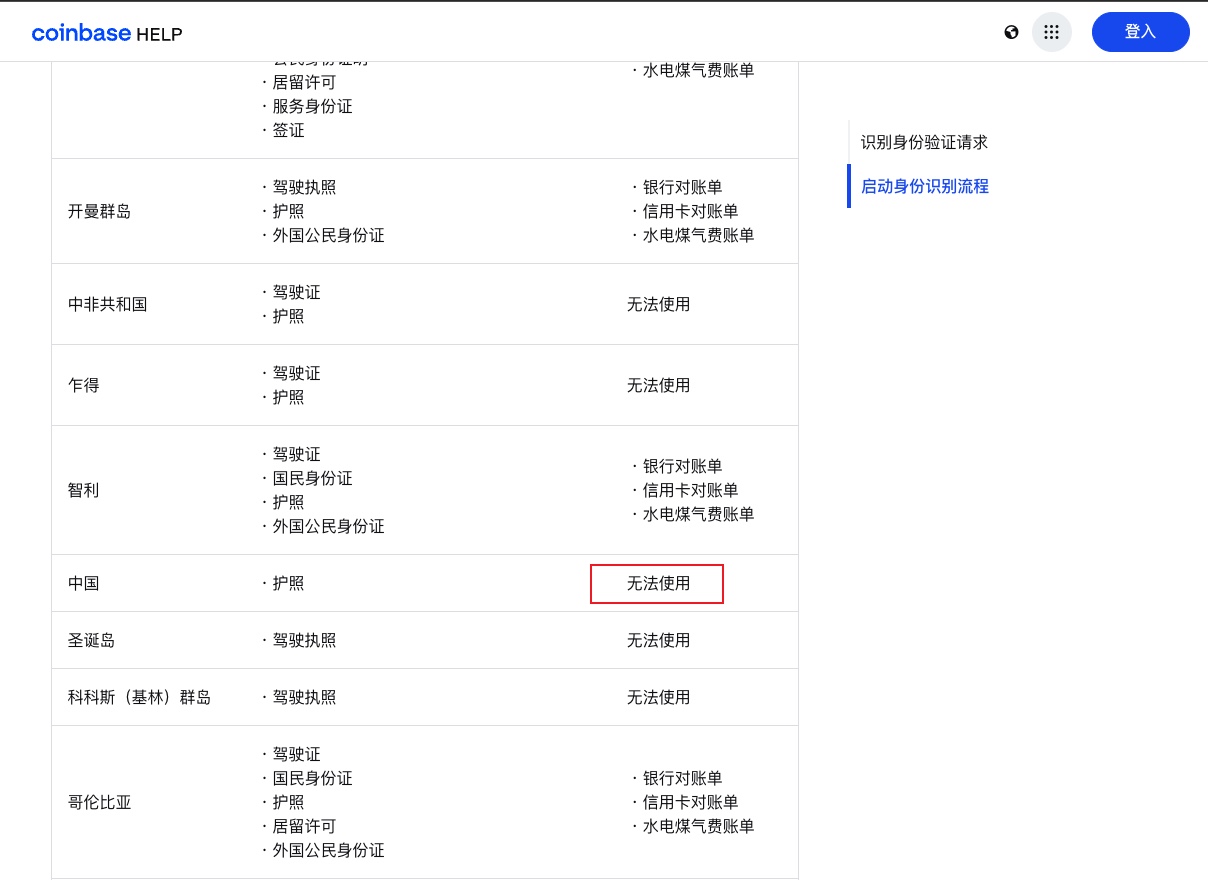
Coinbase has not issued any official statement regarding this, and the content of the help page documents has not been modified. As of publication, Coinbase's identity verification documents still show that only passports are supported as identification for China, and address proof is marked as "Not available." The document does not mention the identity card option.
BeInCrypto confirmed with Coinbase's International Communications Director Mary-Kate Collins, who responded: "Coinbase International Exchange allows users from over 100 countries to register and trade a variety of products, including cryptocurrencies, stocks, and commodities." She pointed to Coinbase's offshore trading platform and did not directly address the changes to mainland identity card verification.
Market share rises to 8.6%, Binance still leads global trading
According to Coinbase, the platform's share of cryptocurrency trading volume rose from about 3.2% a year ago to 6.4% in 2025, and further reached a historic high of 8.6% in the first quarter of 2026. During the same period, Coinbase's derivatives trading volume increased by 169% year-on-year, and the cryptocurrency assets managed by the platform accounted for about 12% of the global total.
Additionally, Coinbase reported total revenue of $1.41 billion in Q1 2026, a year-on-year decline of 31%, with a net loss of $394 million. The simultaneous occurrence of record market share and net loss indicates that Coinbase needs more trading volume to fill the revenue gap.
CoinDesk Data indicates that Binance accounted for 37% of global centralized exchange derivatives trading volume in 2026, OKX for 16.8%, and Coinbase for 6.74%. Meanwhile, self-reported data released by Binance on July 14 showed that it has increased its registered accounts to 323 million, with cumulative trading volume reaching $156 trillion.
In the market of mainland Chinese users, Coinbase was previously almost nonexistent. Based on existing product conditions, this adjustment is most likely to attract users who already hold cryptocurrency assets. They can directly transfer USDT, USDC, BTC, or other assets into Coinbase. Accepting mainland identity cards lowers the threshold for opening an account and gives Coinbase a chance to absorb assets from Binance, OKX, and self-custody wallets.
China's ban has never loosened and has added pressure this year
In September 2021, the People's Bank of China and nine ministries jointly issued a document categorizing all cryptocurrency-related business activities as illegal financial activities, explicitly prohibiting foreign exchanges from providing services to mainland residents. On February 6, 2026, seven industry associations in China jointly released a new notice that expanded the ban to stablecoins and RWA tokenization, reiterating that cross-border cryptocurrency transactions are also illegal, and requiring internet companies to block and report cryptocurrency-related content. The notice emphasized the principle of "same business, same risks, same rules," requiring overseas structures involving Chinese assets to also be filed or approved in advance.
Two months ago, the securities field provided a direct reference. On May 22, the China Securities Regulatory Commission, in conjunction with eight departments, announced investigations into Futu, Tiger Brokers, and Changqiao Securities, accusing them of providing cross-border securities trading services to mainland residents without permission. Futu was fined 1.85 billion yuan, and Tiger Brokers was fined about 410 million yuan (including confiscation of illegal gains).
The eight departments simultaneously issued a two-year concentrated rectification plan, prohibiting existing mainland users from opening new positions and depositing funds starting June 12, only allowing one-way selling and fund withdrawal; after the rectification period, the relevant foreign institutions must completely shut down their websites and trading software aimed at mainland users. Futu registration now requires proof of overseas permanent residency, and Tiger Brokers no longer accepts account openings from mainland residents. Analysts estimate that the two platforms hold $27 to $29 billion in assets from their mainland accounts.
The logic of cross-border securities brokerage regulation is entirely consistent with that of cryptocurrency trading; foreign institutions providing services to mainland users without permission are classified as "illegal cross-border business operations." This means that, to some extent, Chinese regulatory authorities could also impose penalties on Coinbase.
Coinbase is a Nasdaq-listed company regulated by the SEC. If Chinese regulatory agencies choose to respond, the compliance costs and reputational risks it faces are far greater than those of offshore competitors like OKX.
Interestingly, on July 9, Chief Legal Officer Paul Grewal, who had served for six years, announced his departure; during his tenure, he led Coinbase in years of litigation against the SEC. Five days later, the registration channel for mainland users was found to have been opened. Grewal's successor is current Vice President Molly Abraham, who will take over the legal team as General Counsel.
Coinbase lowering the registration threshold for mainland users at this time is extremely subtle. Clearly, without announcements, without updates to the help page, and with executives responding in a way that avoids core issues, these actions seem to leave a way out to withdraw at any time.
免责声明:本文章仅代表作者个人观点,不代表本平台的立场和观点。本文章仅供信息分享,不构成对任何人的任何投资建议。用户与作者之间的任何争议,与本平台无关。如网页中刊载的文章或图片涉及侵权,请提供相关的权利证明和身份证明发送邮件到support@aicoin.com,本平台相关工作人员将会进行核查。


