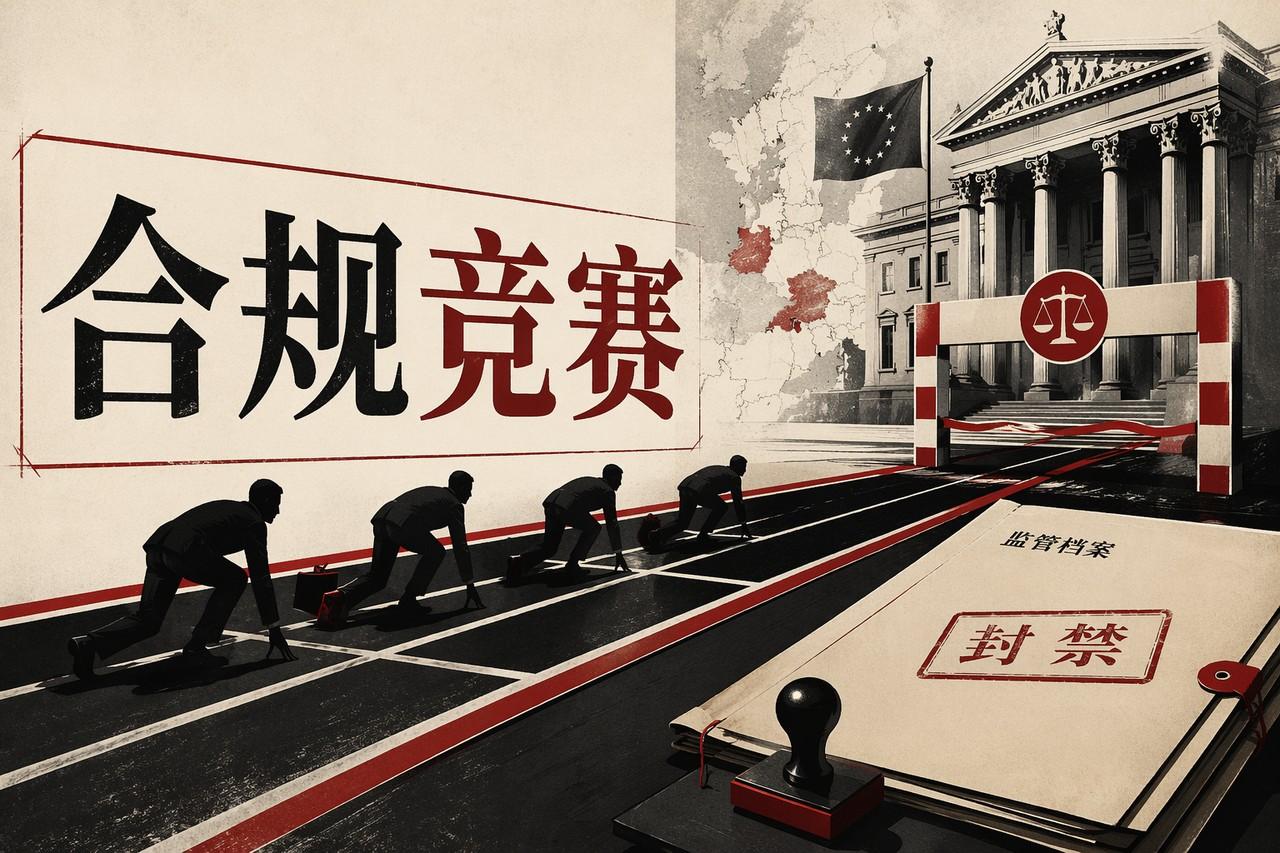
On July 15, 2026, the crypto world unusually saw three seemingly disparate pieces of news overlaid on the same timeline: on one hand, traditional brokerage Interactive Brokers added 12 new cryptocurrency trading pairs through Zero Hash and Paxos, and opened up withdrawals for USDC, PYUSD, and RLUSD, building a closed and controllable gateway for compliant funds to enter; on the other hand, the core protocol ENS within the Ethereum ecosystem completed a self-corrective restructuring by passing a new security committee proposal with a term until July 16, 2028, after co-founder Nick Johnson vetoed the extension of the old security committee. The on-chain vote received 712,350 votes in favor, 0 votes against, and 66,730 abstentions, with over a million tokens participating, locking security power back into the DAO's rules; almost simultaneously, U.S. Treasury Secretary Yellen announced the freezing of over $130 million in Iranian digital assets, extending the previous cooperation backdrop in which Tether froze approximately 131 million USDT on the TRON network, truly stretching the long arm of sovereign sanctions into the blockchain. On the surface, this is merely three unrelated puzzle pieces involving brokerage business expansion, internal DAO elections, and geopolitical sanctions, but a research report has highlighted their resonance on the same compliance pulse: from trading platforms to protocol governance to state machinery, compliance forces have begun to permeate and solidify at every key interface of the crypto system. The industry is thus transitioning from a long phase of barbaric growth into a new cycle of institutionalized games involving regulatory agencies, traditional finance, protocol communities, and sovereign governments.
Brokerage Expansion: Compliant Fund Entry into Crypto
The actions of Interactive Brokers are one of the most tangible interfaces of this wave of compliance pulse. As a traditional large brokerage, it recently added 12 new cryptocurrency trading varieties all at once and opened the withdrawal function for three types of U.S. dollar-denominated tokens: USDC, PYUSD, and RLUSD, allowing users to transfer these tokens directly from their existing brokerage accounts. This means that the compliant funds that previously had to navigate multiple channels and cross-border transfers to enter the blockchain can now be migrated from "account to address" within familiar trading software and risk control systems, forming a formally operated bi-directional channel between traditional finance and crypto assets for the first time.
What's even more critical is that this pathway is not opened through technical "grey areas" but is completed embedded within the existing regulatory framework. Interactive Brokers outsources the settlement and custody of cryptocurrency assets to compliant service providers like Zero Hash and Paxos, entrusting them with the responsibilities for on-chain asset recording, clearing, and custody, while the brokerage maintains a complete set of risk control, compliance, and customer verification mechanisms developed in its traditional securities business. For regulatory agencies, risks are locked into identifiable and auditable legal entities; for brokerages, operational risks and compliance uncertainties are transferred to licensed crypto infrastructure service providers, allowing for rapid expansion of crypto trading and withdrawal functions without restarting the business architecture.
As such compliant channels began to emerge in concentration in 2026, the structure of trading volumes and user profiles also shifted accordingly. On-chain funds are no longer just comprised of early participants who are high-risk tolerant and anonymity-seeking, but have an added layer of funding sources that enter through brokerages, possessing clear account records and risk constraints; the same crypto transaction may correspond either to a reallocation of a traditional asset portfolio or directional explorations of on-chain assets by compliant institutions. The traceability of transaction behaviors has been enhanced, and the compliance of funding sources has improved, making it easier for regulatory departments to identify systemic risks, while protocol governance also gets earlier insights into the preferences and constraints of "regulated funds." Such compliant entries are reshaping the sources of funds and behavioral trajectories, providing a new starting point for subsequent regulatory and governance disputes surrounding crypto assets.
ENS Restarts Security Architecture Post-Rejection of Old Committee
While traditional funds are testing the on-chain world through compliant entries, the core domain service protocol ENS in the Ethereum ecosystem is also taking action regarding its security hub. About two weeks ago, ENS co-founder Nick Johnson vetoed the extension proposal of the original security committee during the governance process, breaking many token holders’ default expectations that the "technical core team would smoothly take over control" and placing the internal DAO conflict over "who should manage the critical security module" in the spotlight. The veto is not an exit but a reconstruction: shortly thereafter, Johnson submitted an on-chain execution proposal to establish a new security committee and initiated voting on the same day, bringing the dispute from private games back into the realm of public governance rules.
The new security committee proposal quickly provided an answer: the term is locked in until July 16, 2028, with members elected by EP 6.50 holding control, shifting governance powers from "default renewal" to "clear authorization." The voting results show 712,350 votes in favor, zero votes against, and 66,730 abstentions, with over a million tokens participating; this not only represents an overwhelming approval but also confirms the necessity of "security architecture restructuring" through action by the ENS community. The long term combined with the member structure defined by EP 6.50 will shape the focus of protocol security decision-making in the coming years: on one hand, it reduces instability caused by frequent changes, and on the other hand, it concentrates more risks and responsibilities in the hands of a batch of "security stewards" elected on-chain, transitioning ENS governance from trust in its founders to a long-term bet on programmatic authorization and collective responsibility.
On-Chain Sanctions Becoming the Norm
If the ENS security committee represents an "endogenous regulation" of tightening self-control within the protocol, then almost concurrently, U.S. Treasury Secretary Yellen's announcement to freeze over $130 million in Iranian digital assets pulls crypto assets directly into the external regulation of sovereign games. The specific types of the frozen assets have not been disclosed, but the payment level correlates with on-chain assets, and the key signal is not in the technical details but rather in the Treasury department's public claim: sovereign governments can not only track on-chain flows but can also link specific addresses to geopolitics, export controls, or even security threats and implement asset freezes based on these links.
This action did not come from thin air; it continues the previous backdrop of Tether freezing approximately 131 million USDT on the TRON network—when the issuer actively or passively executes freezing orders under the framework of regulation and sanctions, the U.S. dollar-denominated tokens transform from "neutral on-chain accounting tools" into chips within the policy toolbox. In fact, the controllability of U.S. dollar-denominated tokens is increasingly being institutionalized: they can be named, defined within risk scopes, and required to cooperate with law enforcement and sanctions; at the narrative level, the imagining of "anyone, anywhere, uninterruptible" decentralization is being continually eroded by the reality of being freezeable and black-listable. As sovereign sanctions and crypto assets regulation converge more frequently, on-chain sanctions are transitioning from exceptional events to a systemic norm that the crypto world must face for the long term.
The Tug of War Between Compliance and Decentralization
In the same time window, Interactive Brokers and ENS presented nearly opposing governance paradigms. The former chose a typical top-down approach: through regulatory-approved service providers like Zero Hash and Paxos, embedding crypto settlement and custody within the existing compliance framework, and then adding 12 new token trading varieties on this basis, opening the withdrawal portals for USDC, PYUSD, and RLUSD. For users, this means that behind every purchase or withdrawal there are identifiable licensed institutions and clear lines of responsibility, also implying that once regulators or the judiciary intervene, the flow of funds and asset status can be quickly "seen" and responded to. The expansion of Interactive Brokers is essentially exchanging more controllable structures for larger business space, firmly securing governance power within the triangle of licenses, partners, and regulatory bodies.
ENS's scenario is entirely different. Two weeks ago, co-founder Nick Johnson directly vetoed the extension proposal of the original security committee, exposing a power structure that could have followed inertia to community scrutiny. Subsequently, he submitted a new security committee on-chain execution proposal, locking the term until July 16, 2028, with members elected by EP 6.50 holding the key security modules. In this vote, there were 712,350 votes in favor, 0 against, and 66,730 abstentions, with participation tokens exceeding one million; the security architecture completed a self-correction with strong consensus backing. This is a bottom-up governance: rules are not generated by regulatory documents or board resolutions but derived from the votes and public discussions of token holders, with security power being reorganized within the protocol. However, as the perspective widens, U.S. Treasury Secretary Yellen's announcement to freeze over $130 million in Iranian digital assets, combined with Tether's freezing of approximately 131 million USDT on TRON, reminds the market that even in the on-chain world, key nodes may at any time form compliance collaborations with sovereign regulations. The compliant expansion of Interactive Brokers, the decentralized governance restructuring of ENS, and the freezing capabilities exhibited by the U.S. government and Tether in sanction scenarios land on three dimensions of trading platforms, protocol governance, and sovereign regulation, yet collectively sketch the same picture: in the current cycle, compliance, governance, and security have intertwined into a single rope, and each redefinition of "who can intervene in asset how and when" constitutes the core battlefield of institutional games within the crypto industry.
From Barbaric Growth to Institutional Games
From Interactive Brokers relying on Zero Hash and Paxos to expand the crypto token trading and withdrawal entry points, to ENS completing a self-corrective governance through vetoing old proposals and restructuring its security committee, to U.S. Treasury Secretary Yellen announcing the freezing of Iranian on-chain assets in conjunction with Tether freezing USDT on TRON, these three seemingly disparate threads have aligned the current evolution path of the crypto industry: traditional finance, on-chain protocols, and sovereign governments are beginning to rewrite asset boundaries with "institutions" and "authorities." In the short term, compliance entry, security committees, and risk control clauses will gradually become standard provisions in projects—brokerages and custody institutions will need to incorporate compliance rules into settlement assets like USDC, PYUSD, and RLUSD, infrastructure like ENS must reserve security committees and emergency powers within the DAO structure, and sovereign regulatory bodies will continue to refine their operational manuals for on-chain freezing and cross-border cooperation. The real focus of the game is shifting from price fluctuations to power distribution: sovereign governments assert their regulatory scope through sanction tools, protocols attempt to safeguard technological sovereignty with autonomous mechanisms and decentralized structures, while users maintain their rights to choose and exit in the processes of asset migration, governance participation, and entry selection. Thus, the crypto industry has thoroughly entered a long-term institutional game era revolving around "who governs and how to decentralize."
Join our community, let's discuss and grow stronger together!
Exclusive Hyperliquid benefits for AiCoin: https://app.hyperliquid.xyz/join/AICOIN88
Exclusive Aster benefits for AiCoin: https://www.asterdex.com/zh-CN/referral/9C50e2
On-chain Telegram community: https://t.me/AiCoinWhaleData
On-chain community: https://www.aicoin.com/link/chat?cid=N6OVMor5g
AiCoin On-chain Twitter: https://x.com/aicoinwhaledata
免责声明:本文章仅代表作者个人观点,不代表本平台的立场和观点。本文章仅供信息分享,不构成对任何人的任何投资建议。用户与作者之间的任何争议,与本平台无关。如网页中刊载的文章或图片涉及侵权,请提供相关的权利证明和身份证明发送邮件到support@aicoin.com,本平台相关工作人员将会进行核查。