The core problem of STRC is the collapse of trust.
Written by: Protos
Translated by: Luffy, Foresight News
On Monday morning, Michael Saylor widely promoted that he had more cash on hand to support dividends, aiming to reassure the market, but STRC's price barely saw any uplift. The core issue in the market is not about cash reserves, but the collapse of investor confidence.
As the largest publicly listed company holding Bitcoin globally, Strategy last week increased its cash reserves by $450 million through the dilution of common stock equity. The total cash scale of the company has now reached $3 billion, compared to $2.55 billion disclosed on July 5, resulting in a cash increase of 17%.
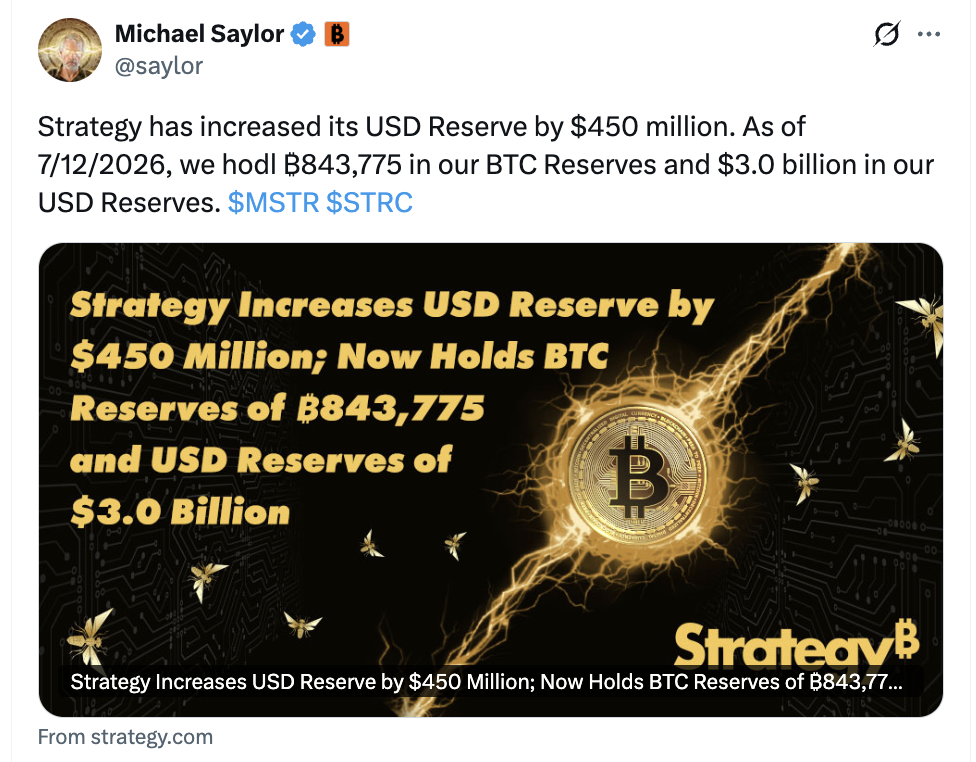
Ample cash should provide a sense of security to the market, but STRC preferred stock investors, who rely on cash for semi-monthly dividend payouts, are not convinced. As of Monday morning, STRC's price dropped to $86.60, a decline of 1% from last Friday's closing price.
With the increase in the company's cash reserves, theoretically, it should support longer periods of STRC dividend payouts. In any other financial product, this would be a significant boost to confidence, yet STRC's stock price continues to fall. This company has a deep-seated problem that no amount of cash can solve.
The market is completely indifferent to good news
Strategy originally designed STRC with the expectation that its price would fluctuate steadily in the long term, but instead, its extreme ups and downs frequently make headlines in financial news. Strategy regularly adjusts the dividend rate, claiming the goal is to stabilize the stock price around the $99 to $100 face value range, but this goal has never been realized.
When the stock price declines, Strategy raises dividends to attract buyers, propping the price closer to the $100 face value; when the price is too high, the company issues more stock to suppress the increase. Ironically, since the product's issuance, the dividend rate has been raised from 9% to the current 12%, yet STRC's price continues to decline.
Even with the company holding enough cash for 20 months of dividend payouts, yielding way above most junk bonds, today's trading price of STRC is still at a 13% discount to its face value.
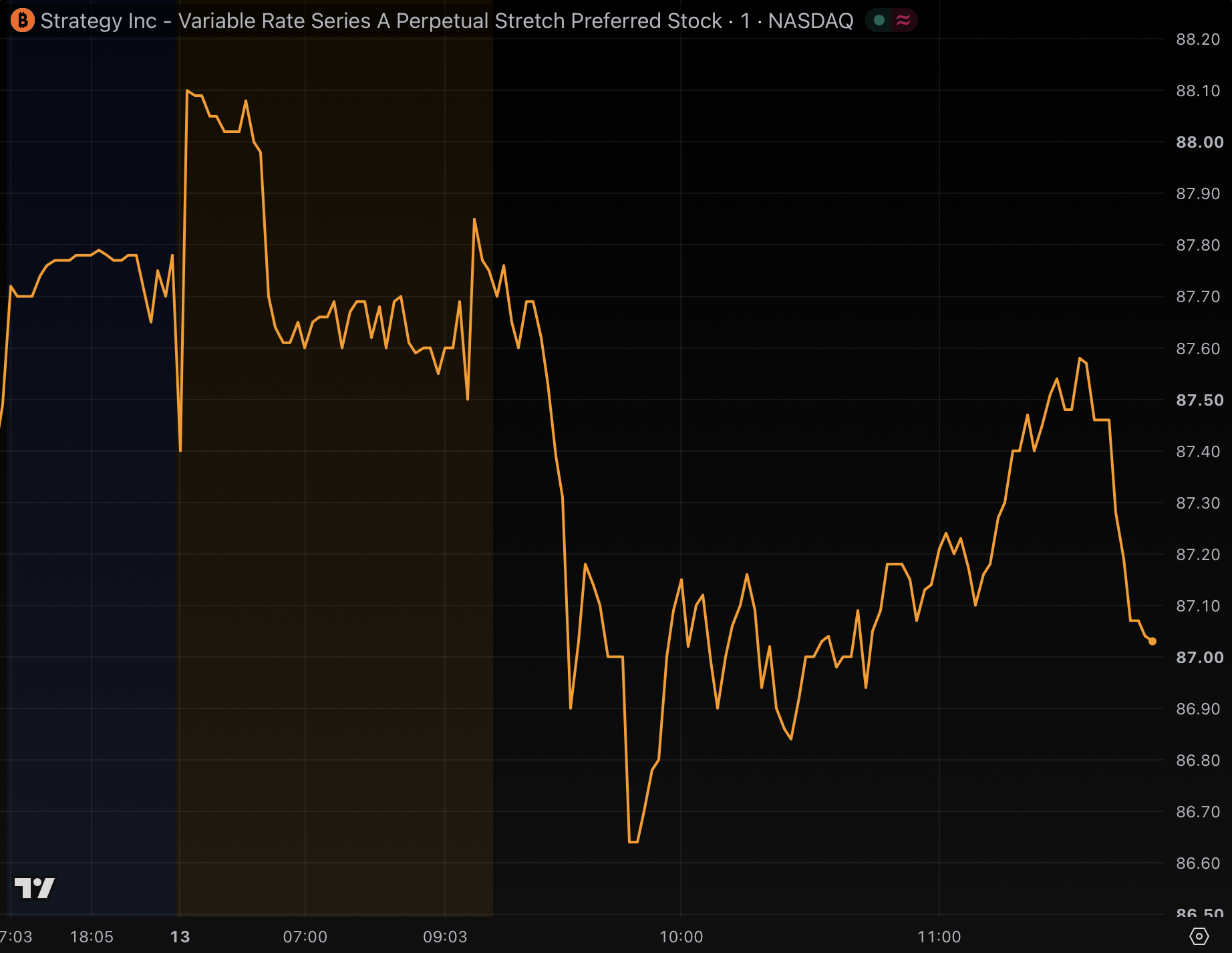
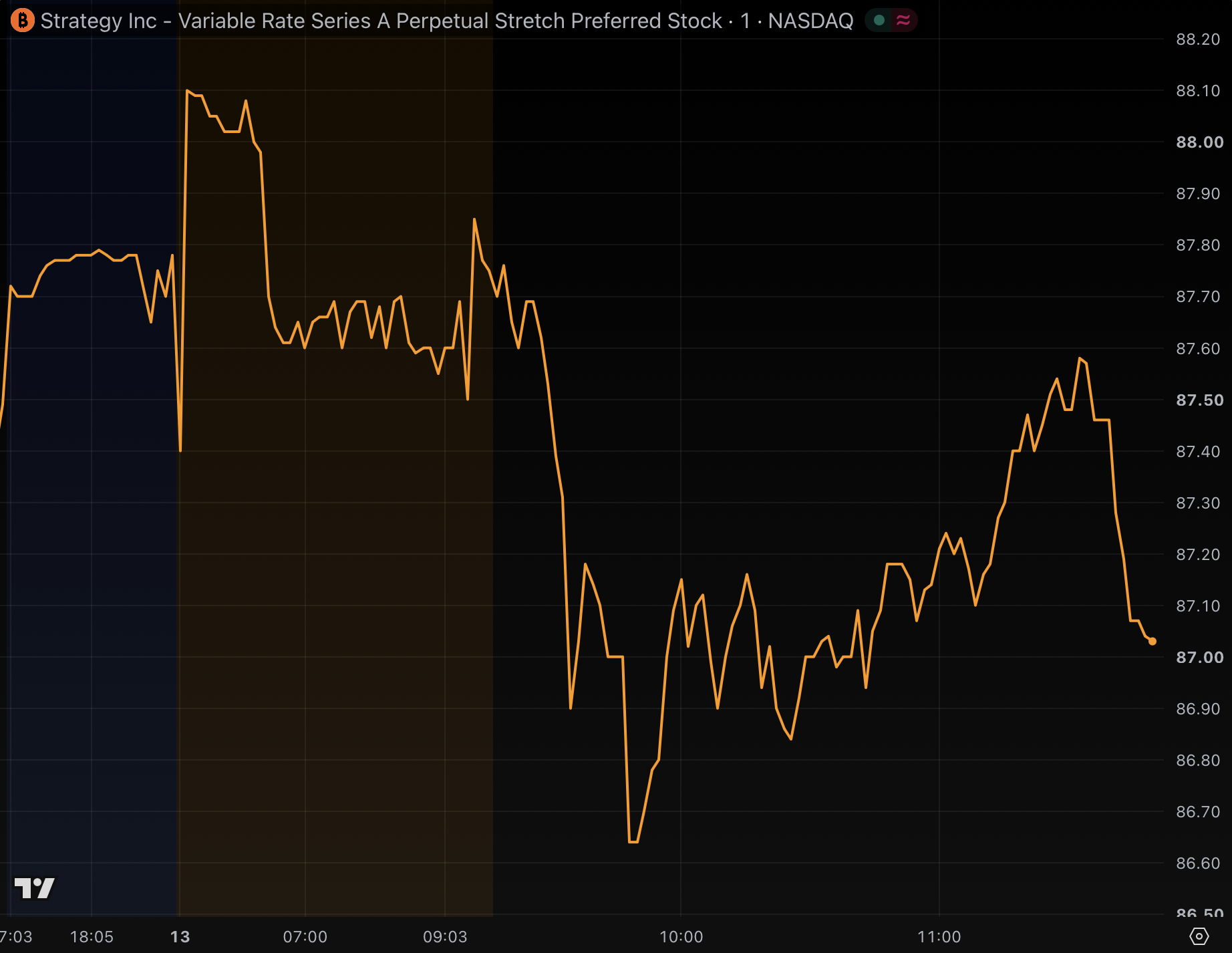
STRC price chart, time range from last Friday's close to Monday noon. Source: TradingView
After the 17% increase in the company's cash reserves, STRC's current price is actually below the level before the cash increase.
The logic behind this is much simpler than the cash scale, equity dilution ratio, or leverage calculations; the root of the problem is the lack of trust in the market. The Bitcoin market has not seen a bullish trend, failing to uplift the valuation of the company's vast Bitcoin treasury assets. The only reason investors are willing to pay a premium to buy back STRC to face value is that they believe the management is determined to maintain long-term dividend payouts. However, now the market has many reasons to doubt the management’s commitment to fulfilling those promises.
The essence of preferred stock is a contractual promise: to pay dividends on time, adhere to issuance terms, and fulfill all agreements in the prospectus. Investors' decisions are also highly dependent on the performance guidance and forward judgments provided by the management. Investors are bearish on STRC, not because they doubt the existence of the $3 billion cash, nor that they cannot calculate how long this fund can support dividend payouts; rather, they no longer trust the person who made the promise of dividend payments - Michael Saylor.
Saylor repeatedly changes commitments, draining market trust
Strategy founder Saylor has repeatedly overturned his previous expectations communicated to the public, and each reversal has significantly undermined the market's trust in him.
Last summer, the company promised investors that unless it was for paying interest and preferred stock dividends, it would not issue more MSTR common stock below a price-to-net-asset-value (mNAV) of 2.5 times. However, just a few days later, the company quietly modified their commitment by adding an exception clause: as long as the management deems it beneficial, issuance can occur without restrictions. Shortly thereafter, the company sold hundreds of millions of dollars of stock below the 2.5 times mNAV threshold.
An even more representative case is that for many years, Saylor repeatedly claimed to the public that the company would never sell Bitcoin, with various interviews and social media comments available for verification. However, from late June to early July, Strategy sold a total of 3,588 Bitcoins while also being approved for over $1 billion in capacity for further sales. There are many other contradictory incidents similar to this.
At the beginning of 2026, Saylor assured the market that even if Bitcoin entered a bear market, the company would rely on debt financing for turnover and would not sell Bitcoin. He stated in a CNBC interview that during a bear market, the existing debt could simply be extended through refinancing. Just a few months later, the company chose not to restructure its debt, but rather relied on selling Bitcoin to raise funds for dividends.
Moreover, Saylor has significantly lowered performance expectations, making it difficult for investors to trust his subsequent predictions. Last December, Strategy lowered its 2025 fiscal year earnings guidance from $80 to under $19 per share, directly wiping out 76% of expected profits.
Even with cash backing, STRC is far from a principal-protected investment
Saylor previously likened STRC to high-yield savings accounts and money market products. However, in June, STRC once dropped to a historical low of $71.25, leading to paper losses of over one-third for holders, which is not comparable to insured bank deposits or money market funds.
Saylor previously claimed that STRC prices would stabilize around $100, yet the reality fell to $71.25, causing significant losses for investors, making it difficult for the market to believe his predictions regarding product stability.
STRC is neither a deposit nor a money market fund and does not have independently secured Bitcoin assets as collateral, nor does it provide the right to redeem freely. Investors wishing to sell their STRC at $100 must find other buyers; the company itself will not enter the market to support repurchases.
The management's repeated policy reversals have long been on record, predating the company's accumulation of Bitcoin. In 2000, the U.S. SEC sued Saylor and two other executives, accusing the company of inflating revenue and profits, violating accounting standards. Eventually, Saylor paid over $8 million to settle the civil lawsuit.
After more than twenty years, the market remains cautious about Saylor. This time, the company's new 17% cash reserve was initially intended to stabilize STRC at its $100 face value, but the good news proved entirely ineffective: on Monday morning, the stock price was still at a 13% discount to $100, even experiencing a slight decline from last Friday. No amount of cash can remedy the long-term overdraft of market trust.
免责声明:本文章仅代表作者个人观点,不代表本平台的立场和观点。本文章仅供信息分享,不构成对任何人的任何投资建议。用户与作者之间的任何争议,与本平台无关。如网页中刊载的文章或图片涉及侵权,请提供相关的权利证明和身份证明发送邮件到support@aicoin.com,本平台相关工作人员将会进行核查。


