Key Takeaways
- Bitcoin held near $63,000 while Brent crude jumped 4.5% at the open after new US strikes on Iran.
- Tehran declared the Strait of Hormuz closed “until further notice,” leaving tanker traffic well below normal.
- June CPI lands July 14, testing how the oil shock feeds inflation ahead of the Fed’s next rate decision.
U.S. Central Command said its forces began launching more strikes against Iran over the weekend, the third round in a week, in a campaign officials said targets Iran’s ability to attack commercial vessels. The escalation followed Iranian forces hitting a Cyprus-flagged container ship, and Iranian state media reported explosions along the country’s southern coast, including the energy hubs of Bushehr and Asalouyeh and the port cities of Bandar Abbas and Bandar-e Dayyer.
Tehran responded by declaring the Strait of Hormuz, the chokepoint for roughly a fifth of the world’s oil, closed “until further notice.” Vessel-tracking data showed traffic through the strait well below normal, though some movement continued during Asian trading hours.
Oil markets moved first, with Brent crude surging 4.5% as futures reopened Sunday evening. The reaction has precedent, i.e. when Iran first closed the strait in early March, Brent jumped past $100 a barrel for the first time in four years and later peaked near $120.
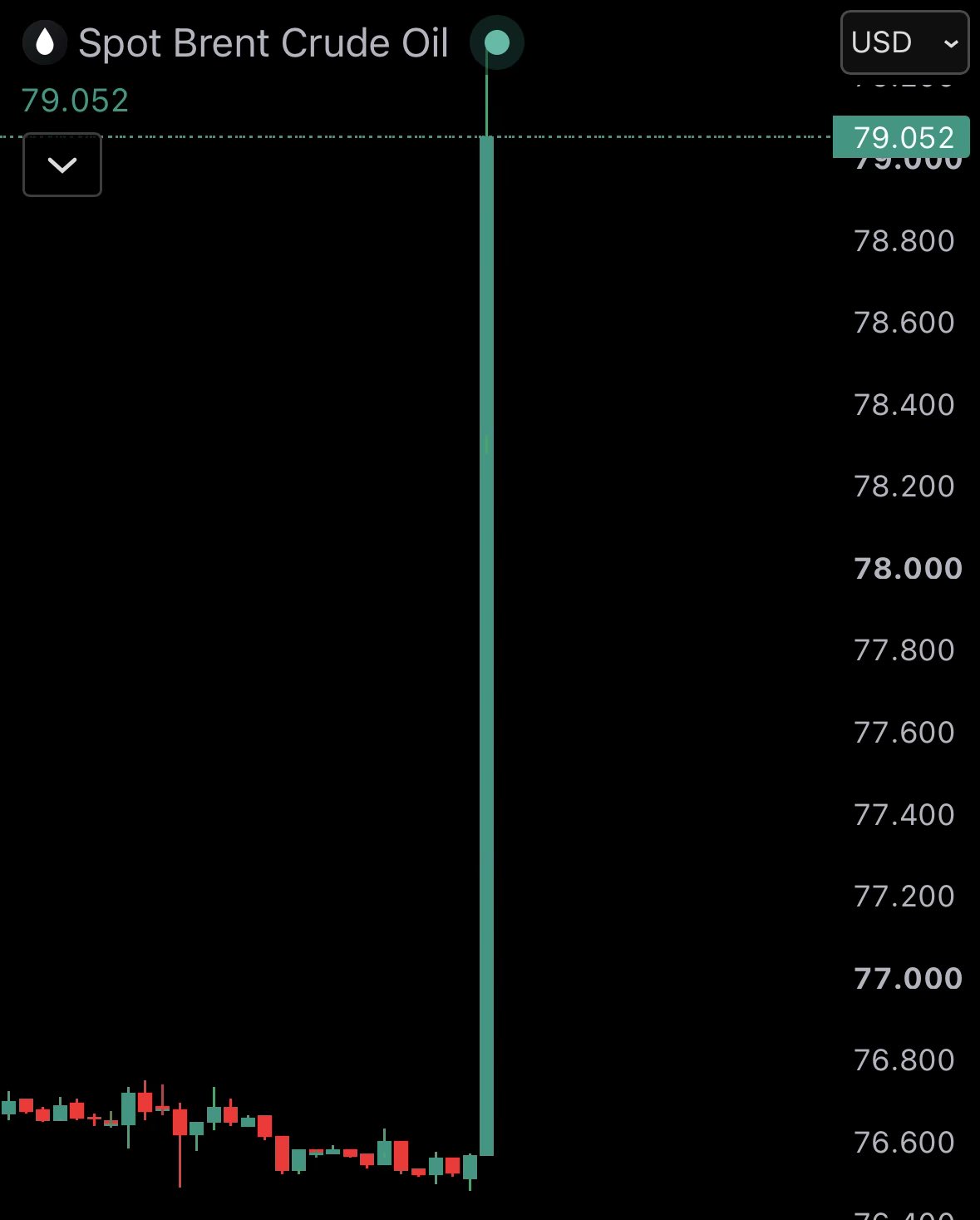
Crude price movement over the past 24 hours.
With stock, bond, and commodity markets shut for much of the weekend, bitcoin was one of the few assets pricing the escalation in real time. Similarly, ether hovered near $1,800, also up 1.7% over seven days, while XRP changed hands at $1.09 and solana lagged at $76, down 5% for the week.
The somewhat tame reaction was in stark contrast with earlier rounds of the conflict, given bitcoin tumbled below $62,000 last week when the U.S.-Iran ceasefire first showed signs of unraveling, and an earlier bout of Middle East escalation liquidated $310 million in bullish crypto positions. The 60-day ceasefire framework agreed in mid-June now appears effectively dead.
The timing of the oil spike is awkward for the Federal Reserve, especially since the Bureau of Labor Statistics is set to release the June consumer price index (CPI) on Tuesday at 8:30 a.m. Eastern time, followed by producer price index (PPI) data on Wednesday.
Fed Chair Kevin Warsh described inflation as still “too high” earlier this month, and a sustained rise in energy prices would complicate the case for rate cuts, spelling a potential headwind for risk assets, bitcoin included.
The next signals to watch are whether tanker traffic through Hormuz resumes, how crude trades once global markets fully reopen, and whether Tuesday’s CPI print shows the inflation pressure that would keep the Fed on hold. Bitcoin’s ability to hold the $63,000 area through all three would strengthen the case that the market has learned to live with the conflict.
免责声明:本文章仅代表作者个人观点,不代表本平台的立场和观点。本文章仅供信息分享,不构成对任何人的任何投资建议。用户与作者之间的任何争议,与本平台无关。如网页中刊载的文章或图片涉及侵权,请提供相关的权利证明和身份证明发送邮件到support@aicoin.com,本平台相关工作人员将会进行核查。


