Source: "Anthony Pompliano"
Compiled by: Felix, PANews
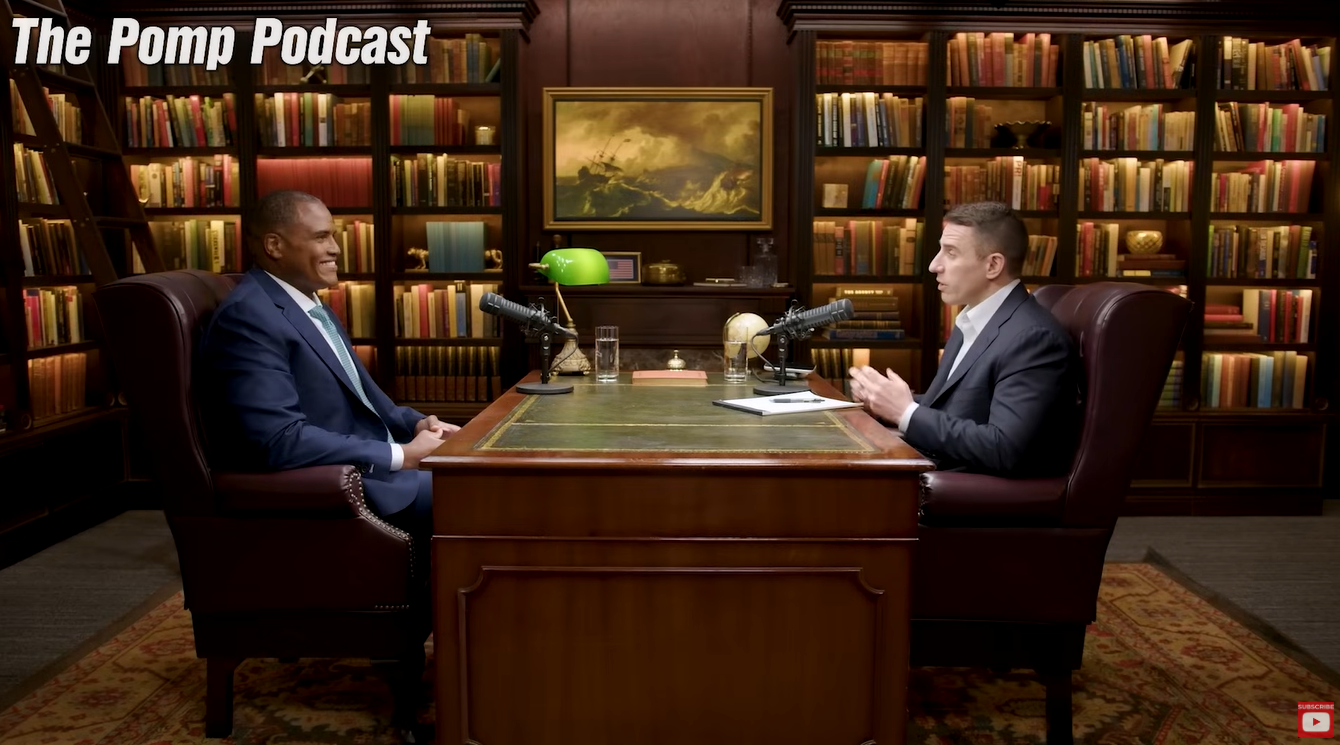
Darius Dale, founder and CEO of the investment research firm 42 Macro, recently participated in the "Anthony Pompliano" podcast. During the interview, the two discussed the implications of Kevin Warsh’s tenure as Federal Reserve Chairman on monetary policy, the consumption dilemmas faced by Americans due to the K-shaped economy, and why every investor must engage in the asset market to survive financial repression.
PANews has compiled the highlights of the interview.
Host: What do you think of Federal Reserve Chairman Kevin Warsh's first press conference? How is he different from his predecessor?
Darius: About your question, I want to first say that we view Kevin Warsh as a "dove in hawk's clothing."
Host: What does that mean?
Darius: It means he ultimately hopes to implement looser monetary policy. This could be due to his relationship with the current government, but I doubt it. I believe he genuinely believes AI has tremendous deflationary potential. However, he has to put on a hawkish armor to create space and a landing point for the Fed. Therefore, we believe that over the next two to three quarters, the Fed will either have to tighten monetary policy or use its communication tools to signal to the markets the possibility of tightening policy, or both, in order to create space for subsequent easing policies.
Host: Why do you think tighter monetary policy is needed? If we look at the inflation expectations over the past few weeks, they seem to be starting to decline. Do you think this will change the Fed's need for it?
Darius: Good question. Regarding inflation expectations, we have conducted extensive statistical analysis on the drivers of inflation and studied which indicators lead or lag inflation. The results indicate that there is almost no statistical causal relationship between inflation expectations and future actual inflation outcomes. What meaningfully affects future inflation outcomes are the monetary drivers of inflation, such as the rate of change in money supply, and the expansion or contraction of money velocity, which are very important. Additionally, there are policy-driven factors, the most notable being deficit spending and the monetization of debt by the Fed. Furthermore, if there is substantial deregulation in banking, promoting a credit growth cycle, this will also be a leading indicator for inflation. Finally, there’s the "output gap" driver, which I don't necessarily agree with entirely: when economic growth exceeds the potential growth rate, or when the unemployment rate is below the "non-accelerating inflation rate of unemployment" (NAIRU), these are all leading indicators for inflation. While no single indicator can perfectly predict inflation, when considering these factors collectively, they currently send a very strong hawkish signal to policymakers and the market: the Fed must act.
Host: So, these data indicate that inflation is either rising or is at an uncomfortably high plateau, and thus the Fed must act.
Darius: Correct, these signals indicate two things: first, inflation is rising; second, inflation may be peaking, but at a very uncomfortable level and plateauing at that level. Current data indicate that we are not on a credible anti-inflation path, and it is certainly impossible to achieve the Fed's 2% inflation target in the short term. Let’s break down these inflation drivers.
From the output gap perspective, the current output gap is about 110 basis points; usually when it reaches around 200 basis points, the Fed has to tighten policy until a recession occurs, so we are already a little more than halfway there. We also see that the unemployment rate has dropped below NAIRU, currently about 20 basis points lower. In the context of AI, I don't know if we will push it down to 100 basis points below NAIRU, but typically by that time, the Fed has to tighten the business cycle to a downturn. In terms of policy-driven factors, the Fed's annualized change in deficit spending is currently about 8%, far above historical trend lines. The annualized growth rate of the Fed's debt monetization is also around 7% to 8%, similarly far above historical trend lines. Year-on-year growth in bank credit is about 7%, also significantly above historical trend lines. The growth rates of these statistics are completely inconsistent with a 2% inflation environment. In addition, according to the validation of our business cycle model, changes in policy interest rates have about an 18-month lag on economic outcomes, which means the lagging effects of the previous 175 basis points rate cut are now being transmitted to the economy.
Host: Do you think the Fed has abandoned the 2% target?
Darius: Absolutely. You and I have been discussing this for at least five or six years. The Fed does not genuinely want 2% inflation, but they must signal to the bond market that they want 2%, or they will lose control over the long-end of the yield curve, which would negatively impact their dual mandate of "maximizing employment and price stability." 42 Macro has been telling the global investor community for years that we are all "frogs being cooked alive in the pot of financial oppression and currency depreciation." In my view, Kevin Warsh is a very competent Fed Chairman at executing this task. The Fed's job is to cook us alive, but not let us jump out of the pot. If we jump out, it will create financial stability issues, and the real economy and asset markets will face worse problems than high inflation, so it’s a case of choosing the lesser of two evils.
Host: Even though inflation levels are currently high, there are no clear signals indicating that it will spike sharply from now on. However, the recently released PCE (Personal Consumption Expenditures) data surprised many, leading to market sell-offs and rising concerns. Different indicators are conveying different messages, which is causing confusion among many. Is this the reason the Fed chose to "watch and wait" (neither raising nor lowering rates) and delay decisions, letting this complexity play out and waiting to see a clearer picture before acting?
Darius: Exactly, this hits at the heart of "complexity theory." I have been in this field for nearly twenty years and have tried to build various models. If there truly were a "Occam's Razor" (simple) method to predict every inflation data or non-farm payroll data down to the decimal point, we would have cracked it. Since we can create AI, statistically predicting non-farm data should not be difficult, but the problem is that the variance and standard deviation of these often revised time series data are just too large. Therefore, when facing financial markets and macroeconomic models, you must adopt a "mosaic perspective." It is not isolated data points, but a tapestry and resonance of all data points like a school of fish swimming together or a flock of birds shifting formations in the sky.
Host: A vivid description, the "school of fish" and "flock of birds."
Darius: Indeed. The current "fish" are sending a message to the Fed and financial markets: "Stop kidding yourselves that the current policy is restrictive." I believe the Fed has received this signal, and the latest summary of economic projections and dot plot confirms this. And we believe that the next step, which has not yet reached a consensus in the market, is that the Fed may need to implement further substantial tightening measures, or significantly raise forward guidance via tools like the dot plot, or even make major changes to its balance sheet. Because we know, Kevin Warsh does not like verbose verbal interventions.
Host: What about energy prices? Oil prices previously surged but have recently retreated, even falling below $70 per barrel in the past few days for a few hours. If energy prices remain moderate or decline further, will this relieve inflation pressure, thus benefiting American consumers?
Darius: Of course it would be beneficial. We saw this moderate resilience in today’s PCE report. Real personal consumption expenditures showed a slight positive impulse with an annualized growth rate of 2.1%, though slightly lower than the 2.5% historical trend line, it still exists. It is noteworthy that this consumption occurred against a backdrop of real disposable personal income decreasing by about 1.5% on a monthly annualized basis, which is far below trend levels. In the face of significantly reduced income, consumption is only slightly below trend, indicating that American consumers have remarkable resilience. This was also a point I raised back in the summer of 2022 when everyone was shouting "recession." Remember, in the fall of 2021, I told your show that in the following 12 months, everyone would start discussing a term that no one was mentioning at that time: “R” (Recession). By the fall of 2022, I said everyone should shut up about recession because the economy is highly resilient, and people were focusing on the wrong "R" word. All current data supports our theme of "the American economy has resilience," which gives the Fed the confidence and room to tighten monetary policy.
Host: Now asset prices are soaring again, and American consumers appear very resilient, but everyone is complaining that everything is unaffordable. My view is that all three phenomena can be true at the same time. Due to rampant price increases over the past five or six years, the cost of living has indeed become unaffordable. Yet we simultaneously live in a society that is madly outputting and comparing consumption: The Knicks are about to make it to the finals? Buy a ticket. Someone on Instagram bought a new gadget? I must buy two. A certain travel destination is cool? I want to go take a picture. Has this all become the norm of our consumerism?
Darius: Since we proposed the theme of economic resilience in September 2022, this has become the norm. Tell me, what "median" or "average" statistical indicator in the world can accurately describe and formulate policies or govern your four children?
Host: Of course not, each child is completely different.
Darius: Exactly, macroeconomics is the same. While aggregate statistical data is very useful for predicting financial market and policy responses, these general statistics are not homogeneous at all; once you break them down, they are extremely heterogeneous. In the reports we release to global investors, we emphasize the characteristics of the "K-shaped economy" shown through two dimensions.
At the bottom tier of families (K-shaped bottom), the 90-day or longer serious delinquency rates on credit cards, auto loans, and student loans have equaled or even surpassed the peak levels reached during the 2008 global financial crisis and the Great Depression. In a macroeconomic boom where U.S. stocks are hitting new highs, nominal economic growth far exceeds trend lines, and corporate profits are at record levels, the delinquency rates of lower-tier families are at crisis-level conditions, indicating that life at the bottom is extremely tough.
Conversely, those at the top of the K shape are, frankly, making a lot of money. The core driving force stems from the "West Village-Montauk effect" I shared previously on your show. The essence of this effect is that when you have very high savings, you do not need to draw as much from current income to save. Thus, from the data, the savings rate is extremely low, but consumption is very high.
How did I reach this conclusion? For the past ten to twenty years, I have conducted field research in Montauk and West Village. I noticed that in high-end venues that are difficult to enter, the people spending the most money are not necessarily middle-aged or balding like you and me, but young people in their twenties whose parents are wealthy. I say this without any derogatory sense; rather, it’s because they do not need to save for retirement, prepare for the future, or support their parents, so they can spend a higher proportion of their income on consumption every month because they don’t have the pressure of savings.
Applying my personal experience to macroeconomics, we see that the cash stock on U.S. household balance sheets (checking deposits plus exposure to money market funds) has grown from $3.5 trillion pre-pandemic to nearly $12 trillion, adding about $8 trillion in cash.
Host: That's crazy.
Darius: Indeed. When households at the K-shaped top across the U.S. hold nearly $8 trillion in new cash stock, they can keep personal savings rates extremely low. No matter what happens to current income, they can tap into these massive savings at any time to support daily and luxury consumption.
Host: How do you view the current stock market? Is AI truly a groundbreaking salvation, or a super bubble we need to tread carefully around?
Darius: You have touched on the core issue. Everyone must participate in investment. If you do not bind yourself to the wealth creation activities of those at the K-shaped top, you will be left far behind and suffer the historic "Cantillon effect" of relentless harvesting in the process. I believe that the enormous political anxiety and anger currently surging within this country stems from this nationwide Cantillon effect driven by large-scale monetary issuance.
(PANews Note: The Cantillon effect refers to the concept that newly issued currency does not simultaneously and proportionally raise the prices of all goods, but rather seeps through a specific path like "dripping water," leading to the financial institutions and wealthy individuals who get the new money first benefiting from purchasing assets at lower prices before inflation hits, while those at the end of the currency chain, like wage earners and ordinary people, bear the loss in purchasing power after overall prices rise, leading to a hidden transfer of wealth from the latter to the former.)
Host: Are you referring to the phenomenon where the wealthiest counties in America are all surrounded by Washington D.C. (the political power hub)?
Darius: Yes, that is part of it, and it is the result of both parties feeding off the government. I recently saw another shocking statistic: among seniors over 65, 89% support raising taxes on the young to ensure their own retirement benefits are fully disbursed.
Host: Why is that percentage not 99%? The remaining 11% may genuinely feel for their grandchildren.
Darius: In fact, these seniors are also victims. The prices of essentials they rely on for daily survival are skyrocketing, and most of them are now in their later years, living off fixed or very limited incomes. I completely understand and sympathize with their anxieties, but the solution is certainly not to tax a group of young people who have neither savings nor significant income. Scholar Peter Turchin specifically points out in his works that we are currently in a powerful "wealth extraction machine." Ray Dalio has hinted at this in his research. For various reasons (mainly due to campaign funding), we allow the so-called "elite class" to amend regulations, fiscal policies (especially the lengthy, self-serving, and loophole-ridden tax laws), and monetary policies to crazily plunder and exploit the ordinary masses at the K-shaped bottom.
Take 2021 as an example; right before inflation exploded, the Fed kept the policy interest rates at an absolute low that was 1,000 basis points below the classic Taylor Rule. In contrast, the infamous Arthur Burns in the 1970s, in his worst moments, only kept rates 700 basis points below the Taylor Rule. At that time, the Fed's balance sheet had inflated to 36% of nominal GDP (currently down to 21%).
Why does the central bank keep diluting the purchasing power of money, continuously shifting wealth from the bottom to the stock market and the wealthy class? If we're to save this country, we must immediately shut down this wealth extraction machine. But the question is whether the vast baby boomer generation is willing to sacrifice their own interests for future generations. I see that most people are still thinking: "What can I still get out of this?"
Host: Speaking of the stock market, another interesting dynamic is the famous "tech seven giants." I recently heard someone joking that they are no longer the "Mag 7," but have become "Lag 7," while the other 493 stocks are skyrocketing. On one hand, this is a healthy mechanism of self-correction within the index; but on the other hand, does this imply that cracks are appearing on the armor of tech stocks? The valuations may not be as indestructible as people believe? What is your take on it?
Darius: Regarding the seven giants, I have two points to make. First, since last fall, we have believed that investors are treating the seven giants as "cash cows," siphoning off profits to inject into broader "AI application companies." As investors feel excited about the penetration of AI into the entire traditional economy, they are starting to turn their attention to the other 493 stocks in the S&P or even 3,000 stocks at large, seeking those that are quite attractive in relative valuation.
Second, from a long-term business operation perspective, as the seven giants shift from their original "asset-light model" to bear substantial capital expenditures in a "heavy asset model," their maintenance capital expenditures will be pushed to an astounding height and remain high for a long time. You can't just build a data center and leave it unattended for ten years; you must constantly rebuild and upgrade it. Currently, Wall Street sellers expect these companies’ free cash flow to exhibit a perfect "hockey stick" deep V rebound in 2029 or 2030, but based on all historical capital expenditure bubbles (like those of railroads, canals, and internet technology), such extreme overbuilding typically shatters these unrealistic fantasies.
Host: No wonder Musk is now promoting the idea of "building data centers in space" to escape from the angry crowds on Earth.
Darius: Indeed, if we do not proactively turn off this K-shaped adjustment mechanism that creates class conflict, if we continue to condone the leniency of the Supreme Court towards monopolistic giants in recent years, and condone the complex tax laws tailored specifically for the wealthy, which extend to millions of words, then eventually, the lower class will inevitably revolt.
Host: In this country, with 400 million guns and 300 million legal gun owners, if a revolt really occurs, the sound will definitely reverberate across the sky.
Darius: I lived in New York for a long time before moving to Miami. But now I have the privilege of living in a unique area that is neither rural nor a major city. While the core area here is affluent, the surrounding towns are what the mainstream elites consider the typical "Trump Country." I go to church with these people, and this experience has shattered my perception.
Because this is the first time in my life that I have truly lived with a "poor white demographic." I grew up in extremely impoverished communities comprised of Black, Latino, Samoan, Tongan, and African immigrants. Then I went to Yale, which was filled with affluent white people; then I moved to New York and Miami, where there were wealthier white and Latino elites. Until I moved here and saw the white residents in the ordinary towns at the K-shaped bottom.
I want to tell everyone two things.
They are by no means as the media portrays them. The media has demonized this group in an extremely vicious and unfair manner, labeling them as "racists," "sexists," or even "pitiful." This is entirely a lie. They are the sweetest, kindest, and most warm-hearted people I have ever met in my life.
The essence of human joy and sorrow is shared. After witnessing the bottom-tier blacks, Latinos, Samoans, African immigrants, and now the bottom-tier whites, I can say with absolute certainty that what everyone wants is entirely the same: to be able to dignifiedly support and care for their families. It's that simple.
Related reading: Dialogue with Bitwise Advisor: How Bitcoin Can Save Young People from the K-shaped Economy and AI Job Stealing?
免责声明:本文章仅代表作者个人观点,不代表本平台的立场和观点。本文章仅供信息分享,不构成对任何人的任何投资建议。用户与作者之间的任何争议,与本平台无关。如网页中刊载的文章或图片涉及侵权,请提供相关的权利证明和身份证明发送邮件到support@aicoin.com,本平台相关工作人员将会进行核查。


