The Asian payments market is demonstrating a shift toward distributed ledger technologies, as regulatory trends show. In this context, experts from fintech platform Stronghold Japan, which was included in the prestigious Forbes FinTech 50 list, see development in the country specifically through the XRP ecosystem and identify four key prerequisites for this shift.
How XRP ecosystem scales in Japan
The first factor is the cross-border corridor between Japan and the Philippines, developed by SBI Remit. Bank tests have officially confirmed that direct settlements in XRP reduce costs by 60% compared to SWIFT, while the total transaction volume through SBI's infrastructure has already exceeded $15 billion.
The second prerequisite, according to Stronghold Japan analysts, is the expansion of liquidity pools, or AMMs, on Asian routes, with their target volume in June approaching $24 million. Potentially, this allows major players to conduct cheap automated exchanges of regional currencies without relying on traditional exchanges.
HOT Stories Dogecoin (DOGE), Shiba Inu (SHIB), Toncoin (TON), and Ethereum (ETH) Price Analysis For June 12: Getting Back in Bull Market Ripple Nemesis to Run US Intelligence
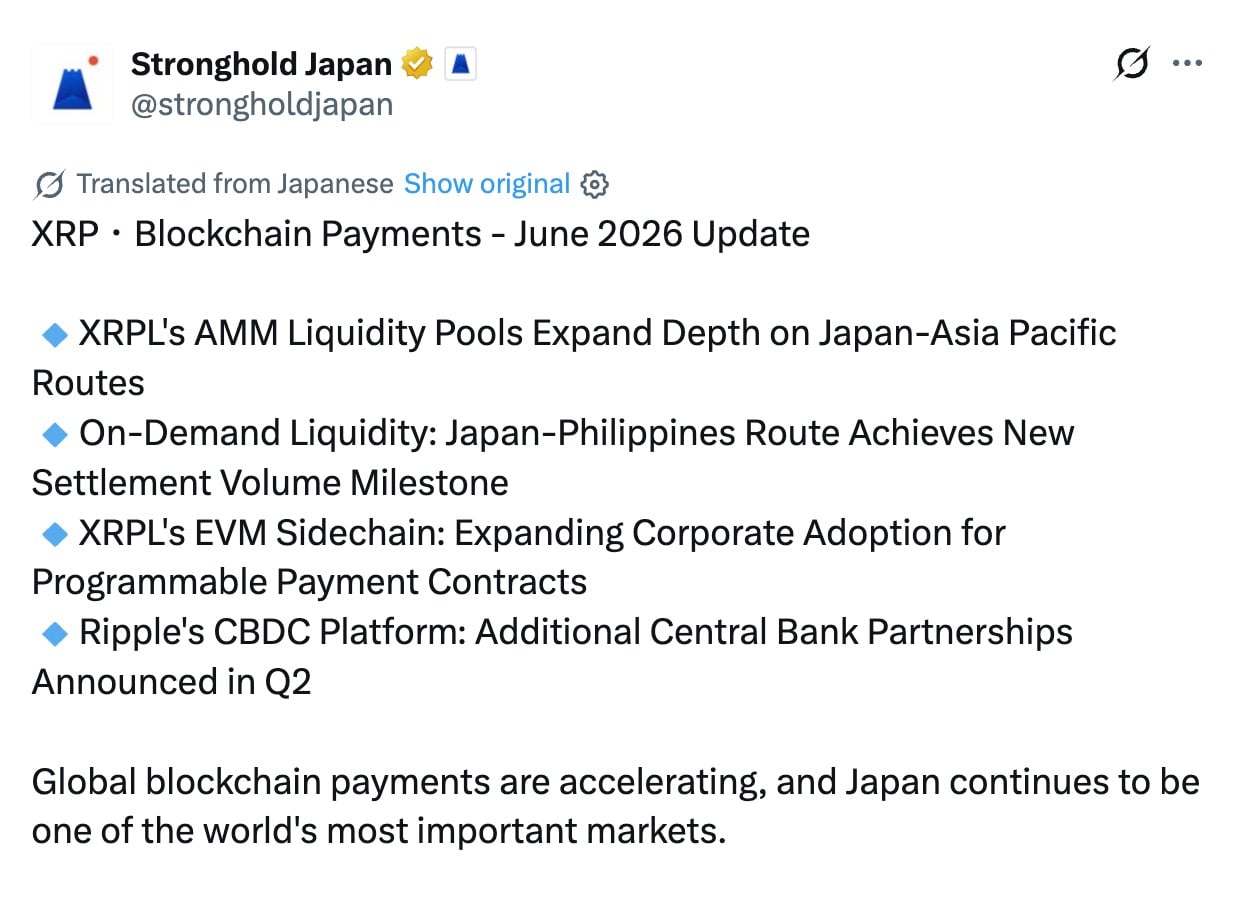
Stronghold Japan June 2026 update on the XRP Ledger ecosystem, Source: X
The third important signal is the massive influx of large businesses into the new Ethereum Virtual Machine-based sidechain, where corporations have already deployed around 1,400 smart contracts to automate settlements, while XRP is used as the native token to pay gas fees.
The fourth driver is government initiatives in Asia. In the Q2 of 2026, Ripple signed a series of new agreements with central banks, supported by the full-scale digitalization of the yen and updates to Japan's financial instruments laws.
You Might Also Like

Fri, 06/12/2026 - 11:00 XRP FUD Reaches Extreme Levels, That Could MatterByTomiwabold Olajide
At the same time, integration has also reached the country's retail banking sector.
Stronghold Japan itself launched its own cross-chain bridge to the XRPL, while SBI Shinsei Bank began testing a program that allows clients to receive interest on regular deposits directly in XRP.
How this dynamic will fluctuate further will become clear in the near future, as June 15 is now on the agenda for the XRP community. On that day, the XRPL network will receive a core update to version 3.2.0, which will reduce the load on banks' server nodes by 40% and rename the program from rippled to xrpld.
免责声明:本文章仅代表作者个人观点,不代表本平台的立场和观点。本文章仅供信息分享,不构成对任何人的任何投资建议。用户与作者之间的任何争议,与本平台无关。如网页中刊载的文章或图片涉及侵权,请提供相关的权利证明和身份证明发送邮件到support@aicoin.com,本平台相关工作人员将会进行核查。


