pump.fun has turned the act of "hiring people for stunts" into a "serious" product.
Written by: angelilu, Foresight News
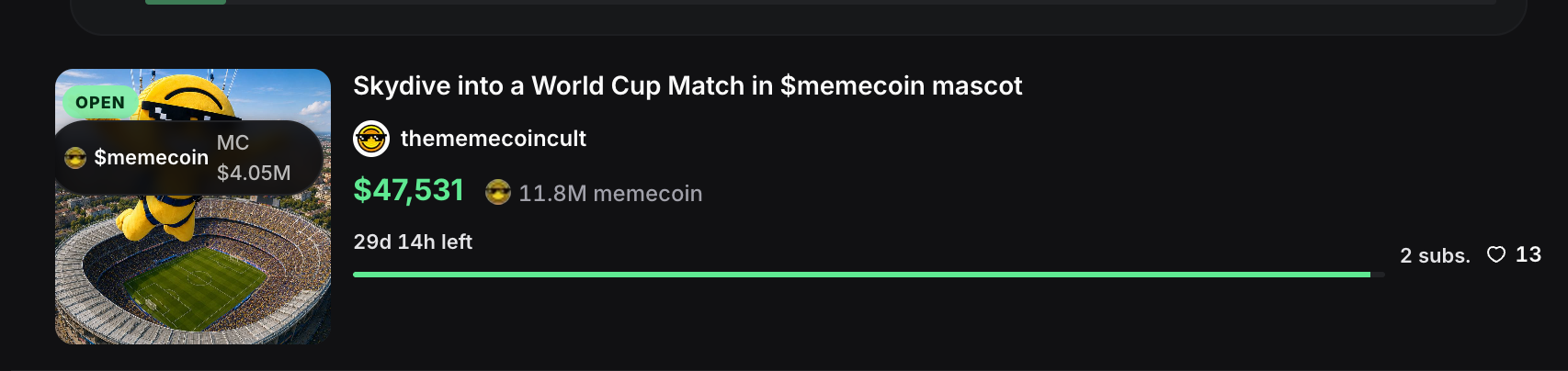
If someone asked you to skydive into the World Cup venue while wearing some outrageous outfit to attract everyone's attention, offering you a $50,000 bounty for doing so, would you consider it?
Most likely, no one would do it, because in most countries, unauthorized intrusion into an ongoing sports event is considered illegal trespassing, which can lead to serious jail time. This demand is absurd, like one of those jokes, at least it serves as a marketing strategy, but this is exactly the highest bounty task on the newly launched task bounty platform "Pump.fun GO" from pump.fun on its launch day.
Pump.fun GO Mechanism
Pump.fun GO aims to transform the attention competition around Meme assets from passive dissemination into an active task economy output. The mechanism of GO is not complicated: the publisher (often a holder of some Meme) connects their wallet, locks the bounty in an escrow smart contract, and offers a reward for completing a specific task;
The executor completes the task, uploads proof, and waits for pump.fun to approve it before receiving payment. The bounty starts at a minimum of $5, with no upper limit. The official release statement is grandiose: "Paying to make anyone do anything."
Each task publisher holds a specific Meme coin—the task is a marketing activity customized for their coin, and the bounty is promotion money they draw from their holdings. The coin comes first, the task comes second; GO is not a "simple" task platform, but an outsourcing tool for marketing existing Meme coins.
However, there has been significant controversy within the community regarding this new product. One point is that there are already professional platforms in the Web3 bounty space, such as Dework, Gitcoin, Layer3, and pump.fun is being accused of being another poor "imitation"; another point is that the tasks currently available on the platform have a certain "subtle craziness" about them, and the platform has complete discretion over the adjudication of events—terms state: the platform has the right to approve, reject, modify, or cancel any task and any submission, and its decisions are not subject to appeal.
Why Launch GO Now
However, to understand why pump.fun is launching GO at this time, one must first look at a set of numbers.
In January 2025, the platform's daily revenue peaked at over $15 million, accumulating nearly $1 billion for the entire year. But by August 2025, daily revenue had dipped below $300,000, and it has recently hovered around $1 million.
The PUMP token has fallen from its issuance high of $0.006 to today's $0.0016, while SOL has also dropped over 55% from a high of $150 this year.
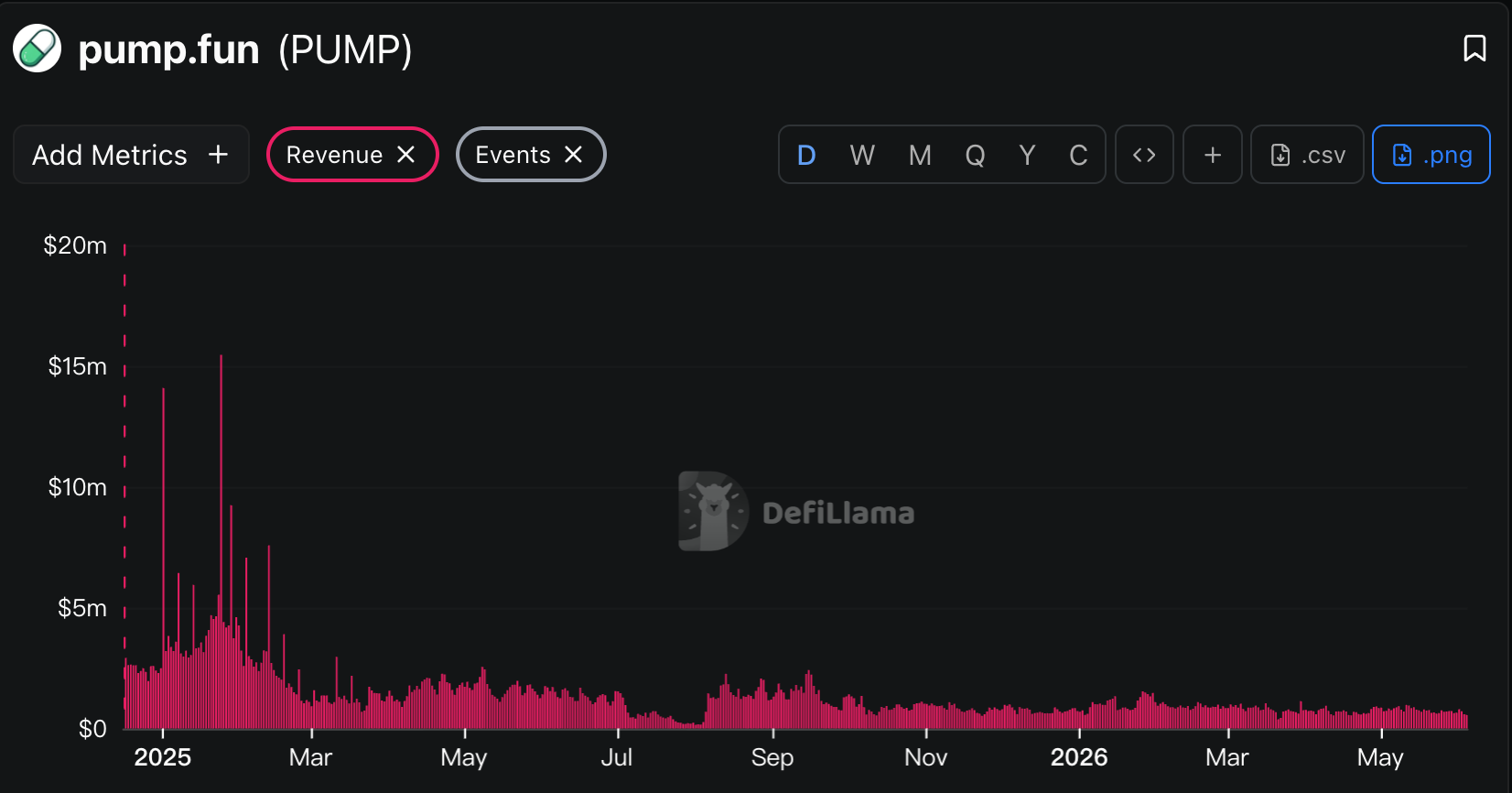
Meanwhile, pump.fun changed its policy of using "all revenue to buy back and burn PUMP" in April this year to a 50-50 split—half continuing to buy back, and the other half allocated for product development, recruitment, and marketing. GO is the first application of this budget.
Popular Content on GO
If you open the task list on GO and take a closer look, you'll find that most content is "quite fun."
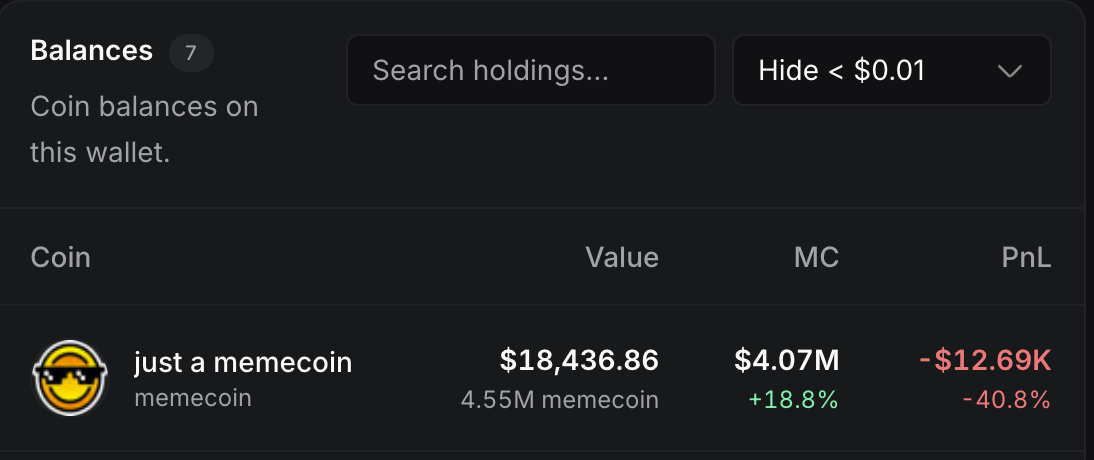
As of the publication of this article, the task "requesting the participant to skydive into the World Cup competition venue while wearing a memecoin mascot costume" may be "too sensitive" and is no longer displayed on the page, possibly related to the day’s trending GO tasks. The memecoin price increased by 18.8% on the day this task was published, with a market cap exceeding $4 million and a current market cap of $3.73 million.
Its bounty publisher "thememecoincult" has also published two other "headline-grabbing" tasks: breaking a long-distance running world record while wearing the same mascot costume; spray-painting the token code and logo on cars while in their mascot costume.
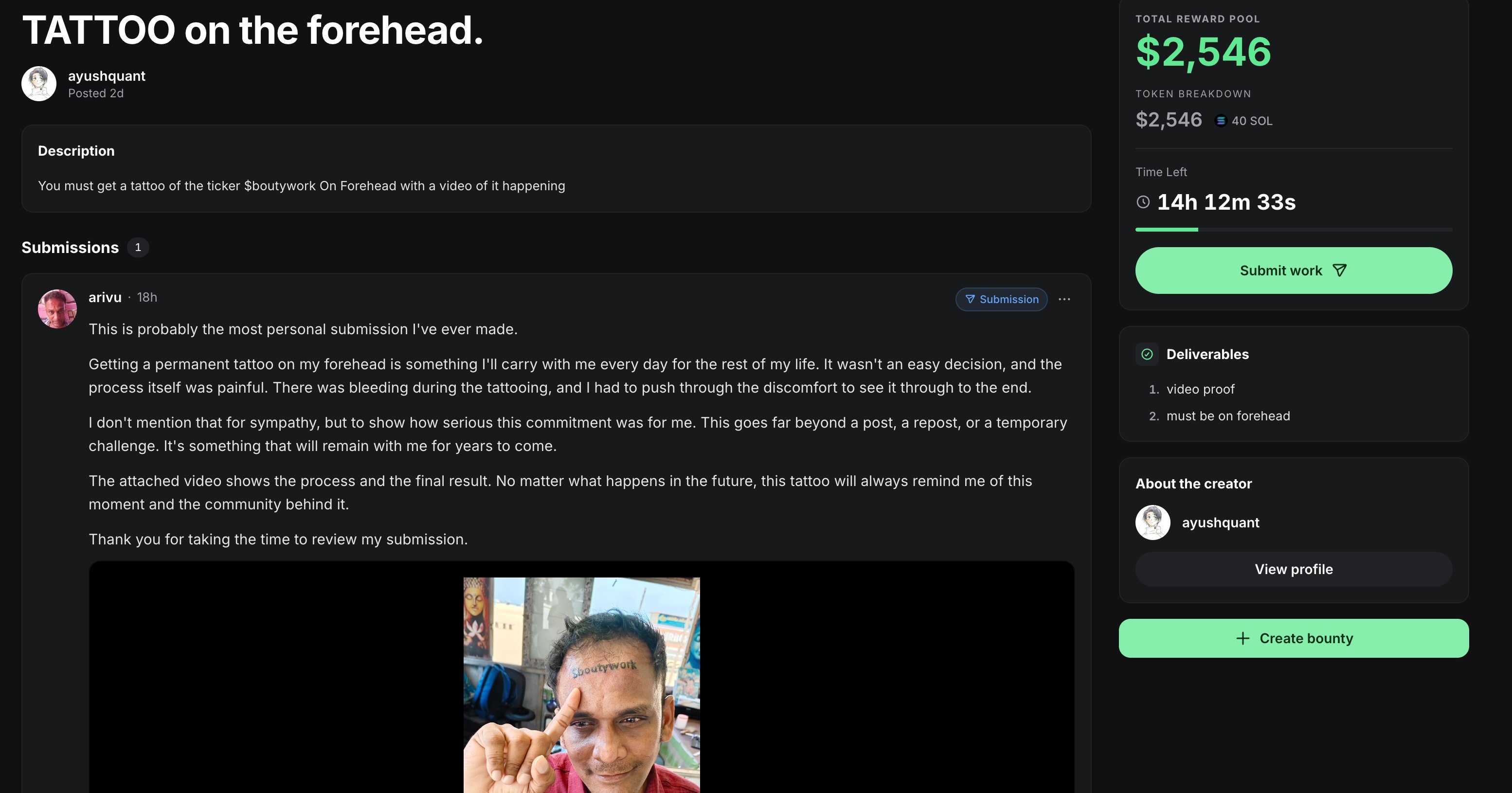
But there are indeed people willing to do some "crazy" things for the bounty. An Indian named arivu accepted a bounty task for 40 SOL (approximately $2,640) and, as per the publisher's request, tattooed the words "$boutywork" on his forehead, and documented the whole process in a video. However, he misspelled "$bountywork" by leaving out an "n", which sparked a debate over the validity of the reward. Some say he won't earn a penny, and the publisher has opened another bounty task aimed at correcting the tattoo. In the end, he must wait until the task closes to see if the platform decides he can receive the bounty.
The situation doesn’t end there; after the photos and videos circulated, the community independently launched a Meme coin featuring the man's photo as a logo, currently valued at $220,000, allowing him to earn $15,000 from transaction fees.
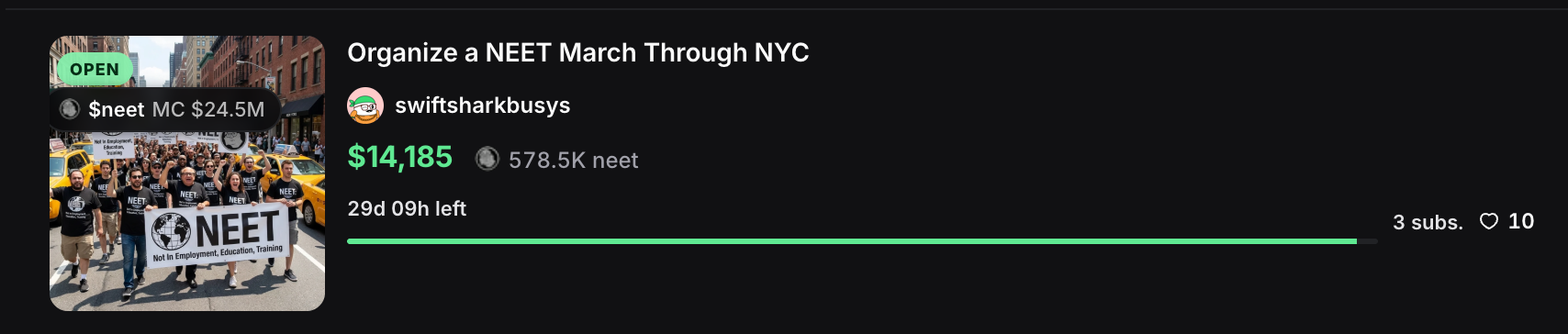
Other popular tasks include someone offering a bounty of $13,728 to "organize a NEET parade across New York City," with the logic being to swap on-chain money for an offline crowd and slogans, taking videos to post back on-chain to drive up the NEET coin price, completing the closed loop. Currently, the market cap of the related token NEET is $25.4 million, and there are 7 submissions.
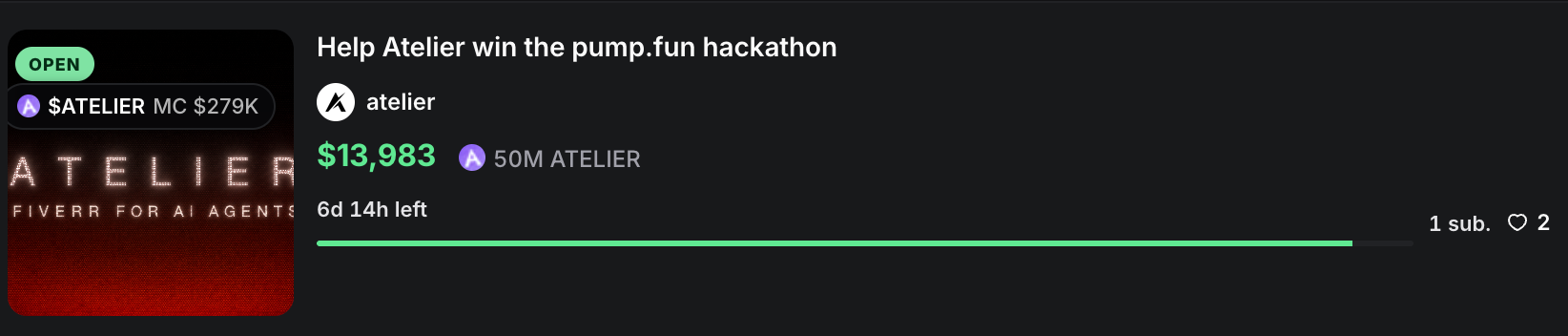
Additionally, the Atelier project team won the pump.fun hackathon—meaning they used pump.fun's own platform, employing people to win a competition hosted by pump.fun itself.
These tasks lay bare the survival logic of Meme coins. These types of assets lack fundamentals, surviving solely on sustained attention. Attention comes from events, and events require people to create them; however, project teams either cannot or dare not do it themselves. GO formalizes this long-hidden chain: lock money into a contract, post a bounty, and wait for someone in the world to take the task.
Here, the employers are a group of token holders, and the purpose of the task executors is to make more people aware of this token, ultimately directing all profits towards one goal: to prevent its value from falling further.
From Live Streaming to Bounties
This logic is one that pump.fun has actually gone through before. In 2024, the platform launched a live streaming function, which quickly became an uncontrolled content experiment: some streamed drug use, threatened self-harm, while others claimed to initiate streams from prison or use Russian roulette to manipulate prices. The only goal was—to make Meme coins rise. In November 2024, the live streaming feature was urgently taken offline; five months later, it quietly returned with a new content review policy.
Live streaming is about having users voluntarily perform on stage, while GO is about paying people to perform. The underlying logic is the same.
Moreover, this time, pump.fun cannot defend itself with "there's too much content to review." Every task on GO must be manually reviewed by the platform before going live, and every bounty requires the platform’s approval before payouts. What pump.fun has clearly learned from "the shutdown of live streaming" is not "don’t do such things," but rather "continue to do so with a different structure."
免责声明:本文章仅代表作者个人观点,不代表本平台的立场和观点。本文章仅供信息分享,不构成对任何人的任何投资建议。用户与作者之间的任何争议,与本平台无关。如网页中刊载的文章或图片涉及侵权,请提供相关的权利证明和身份证明发送邮件到support@aicoin.com,本平台相关工作人员将会进行核查。


