Deciding the $BTC Bitcoin bear market trend and the core five questions related to bottom buying price!
Recently, many people have been predicting Bitcoin's positions and the best price at which one might buy the dip.
However, I think the following five questions are more important.
1️⃣ What exactly is the market pricing Bitcoin as an asset now?
This is the most critical question.
If the market treats BTC as "digital gold," then it should be more like a long-term store of value asset, with the logic of resisting fiat currency devaluation, credit expansion, and sovereign currency risks.
But if, as I've mentioned before, the nature and narrative of Bitcoin change, and the market treats BTC as a "high Beta tech stock/liquid asset," then its price will be more influenced by U.S. Treasury yields, the dollar, Nasdaq, AI funds siphoning, and risk appetite.
Recently, the strong U.S. employment data has raised interest rate expectations, putting pressure on risk assets; this type of macro environment is very crucial for BTC's pricing method.
2️⃣ Who will provide the next real marginal buying?
The price of Bitcoin is currently rising due to marginal buying.
Now the question is: where will future buying, that pushes BTC up, come from?
Will it be from continued ETF absorption? Corporate treasury purchases? Sovereign funds? Pensions? Retail investors returning? Or just short-term leveraged funds re-entering?
This question is very important because recently, ETF fund flows have ceased to be one-sidedly friendly. Farside data shows that the cumulative net inflow into U.S. spot BTC ETFs is still significant, totaling approximately $53.992 billion, but short-term outflows indicate that the "long-term institutional narrative" and "short-term fund withdrawal" are both present.
If the marginal buying is from long-term institutional funds, a pullback may be a structural buying opportunity.
If the marginal buying is primarily from leverage and short-term speculation, then the rebound may just be a selling liquidity opportunity.
Personally, I believe that the next Bitcoin, the real marginal buying, is most likely not retail investors, nor is it "believers continuing to shout," but rather three types of funds returning: ETF/traditional asset management funds, short covering and trend funds, and strategy/corporate treasury funds.
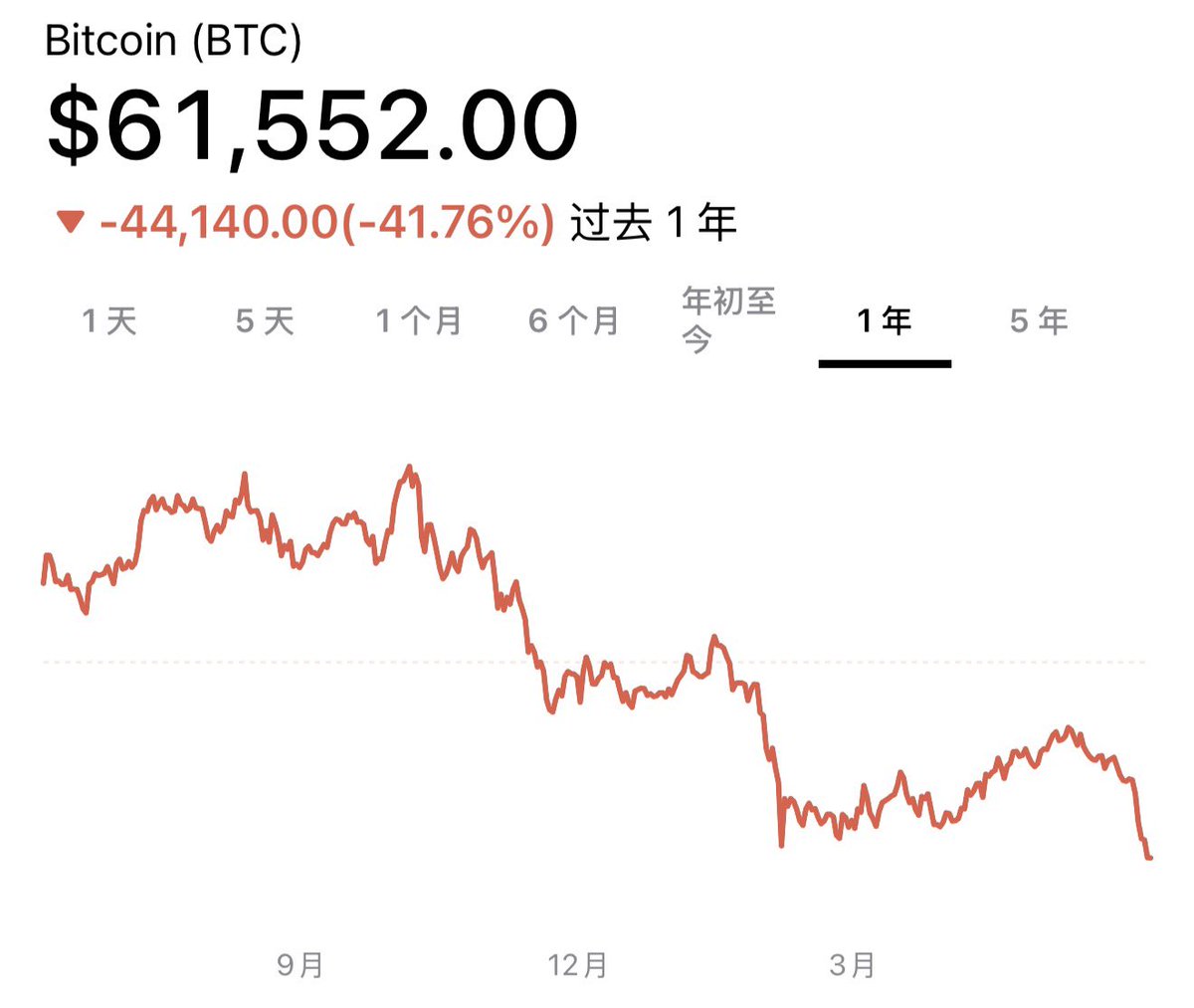
Now BTC has reached around $60,000, and if this is where it can stop the decline, typically three signals need to be seen:
ETF outflows must significantly decrease;
BTC should not fall below $59,000-$60,000 and quickly lose support;
The rebound should be able to re-establish above $63,000-$65,000, not just be hit hard again after a rebound.
3️⃣ Is this decline a "leverage washout" or a "long-cycle distribution"?
If it’s just a short-term leverage clear-out, one would typically see: contract liquidations, short-term holders losing money, emotional panic, but long-term holders not selling in large amounts.
If it’s a long-cycle distribution, one would usually see: long-term holders starting to continuously sell coins, ETFs continuously flowing out, weak rebounds, and every rise being suppressed by trapped positions and institutional redemptions.
4️⃣ Can the narrative of Bitcoin's scarcity still overpower opportunity cost?
Many people talk about BTC, only mentioning "21 million coins," "halving," and "long-term scarcity." These are, of course, important but not enough. Scarcity alone does not automatically lead to a price increase.
Price increases require three conditions to be present simultaneously:
Scarce supply + sustained demand + a sufficiently loose or risk-tolerant funding environment.
The current question is: with U.S. Treasury yields still attractive, AI/tech stocks siphoning large amounts of capital, and ETFs experiencing phase-out, can BTC's scarcity narrative continue to attract new capital?
Reuters recently also mentioned that capital is moving from BTC to hotter directions like AI, semiconductors, and large IPOs, putting significant pressure on Bitcoin's performance since 2026.
5️⃣ If your judgment about Bitcoin is wrong, under what conditions would you admit you were wrong?
This is the question that most affects investment outcomes.
I need to constantly ask myself, under what circumstances would I admit that my BTC judgment was temporarily wrong?
For example:
BTC fails to recover after breaking key cost zones?
ETF outflows continue for multiple weeks?
Long-term holders keep distributing?
Macro rates continue to rise, and risk assets undergo valuation cuts?
During rebounds, volume and capital flows do not keep up?
The market narrative shifts from "institutional allocation of BTC" to "BTC no longer providing excess returns"?
Shifting from "predicting price" to "managing positions," meaning under what conditions do I add to my positions? Under what conditions do I stay put? Under what conditions do I reduce risk? Under what conditions do I admit the trend has changed?
6️⃣ The price range I consider possible
My personal view would be:
Short-term support level: $58,000-$62,000 (already reached)
A higher quality bottom area: $52,000-$56,000.
Extreme panic opportunity zone: $45,000-$48,000.
If ETF outflows significantly decrease in mid to late June, BTC may complete the first round of stopping the decline around $60,000.
If ETFs continue to flow out and macro factors continue to pressure, the true bottom is more likely to be delayed until July-September, and the price may drop to the mid-$50,000s or even high-$40,000s.
Be patient, wait, keep thinking, and stay alert!
免责声明:本文章仅代表作者个人观点,不代表本平台的立场和观点。本文章仅供信息分享,不构成对任何人的任何投资建议。用户与作者之间的任何争议,与本平台无关。如网页中刊载的文章或图片涉及侵权,请提供相关的权利证明和身份证明发送邮件到support@aicoin.com,本平台相关工作人员将会进行核查。


