Behind the optimistic statements about "an agreement is imminent," the communications between the US and Iran around sensitive issues remain stuck in division. US officials are sending signals to the media suggesting that a consensus is close, while at the same time, they have paused on key issues such as unfreezing Iranian funds. Almost simultaneously, the US Treasury announced a new round of sanctions related to Iran's networks, incorporating them into an "Economic Fury Action," extending the narrative of sanctions from state-to-state actions to covert supply chains and financial networks procuring goods for Iran's defense sector. Parallel to this geopolitical tension is the US Space Force signing a significant contract worth approximately $4.16 billion with SpaceX, solidifying the logic that "technology is national defense" into the budget rather than remaining just a slogan. On a macro level, these concurrent signals together constitute a picture of institutionalized security anxiety and continuously heightened defense spending. For risky assets, particularly for the cryptocurrency market that heavily relies on narratives, this picture is turning into cold numbers on emotional indicators— the crypto fear and greed index is reported at 23, classified as "extreme fear" by the index provider. Although existing data does not directly link this reading to any singular event, investors are voting with their feet: lighter positions, shorter durations, and stronger defenses. The real question becomes— how will geopolitical friction and defense investment elevate risk premiums in this round of crypto pricing?
Negotiating While Pressuring: The Dual-Track Pressure in the US-Iran Stalemate
In public narratives, the current round of confrontation between the US and Iran always carries a sense of misalignment. Washington is sending goodwill signals through the New York Times, with senior US officials claiming that both sides are “on the verge of reaching an agreement,” acknowledging that key topics, including unfreezing Iranian funds, are still under negotiation. Meanwhile, the Treasury is raising the volume of economic pressure by incorporating a new round of measures against Iran into a sanctions framework named "Economic Fury Action." Tehran is also drawing lines with discourse: Iranian Foreign Ministry spokesman Baghaei emphasized that the West should not use terms like "must" during negotiations, insisting that any decision by Iran should be based on the interests and legal rights of its own people. On the surface, there is an optimistic expression of “nearing an agreement,” but at a deeper level, there remains an uncertainty where both sides refuse to make concessions on principles and stances.
The subjects of this round of sanctions have been publicly described as a network suspected of defrauding US companies and procuring goods for Iran's defense sector, marking a shift in the US toolbox from previously targeting state entities to increasingly covert multinational supply chains and financial networks. For businesses, banks, and capital markets, this “naming names” no longer just targets officials within the capital but penetrates account books, contracts, and cross-border payments, with any intricate chain related to Iran potentially appearing in the next set of listings. Maintaining communication channels at the negotiation table while continuously expanding the target on the sanctions list, the US’s dual-track strategy adds a layer of uncertainty to the rules, pushing an already strained geopolitical game into a more unpredictable and harder-to-hedge risk range.
Concerns Over Hormuz Rise, Oil Bulls Bet on $100
As the sanctions lists extend deep into supply chains, crude oil traders' attention turns to the most sensitive shipping lane on the map— the Strait of Hormuz. This route, highly coinciding with Iran's geopolitical location and long viewed as a high-risk zone, has once again been written into risk models: even though actual shipping schedules and loading volumes have not visibly decreased, the possibility of geopolitical conflict and lane blockage has already seeped into the forward curve in the form of “risk premiums.” The market understands well that the US Treasury has not announced specific quantitative impacts of this round of sanctions on Iranian oil exports or global supplies, and both official and public data similarly lack accurate estimations of the extent of damage to Iran's overall economy. Therefore, the current price is more a bet on scenarios rather than a settlement of an already occurred supply gap.
In this opacity, bulls opt for a more straightforward and forceful way to express their stances. According to a single source, Barclays maintains its target price of $100 per barrel for Brent crude oil by 2026, explicitly indicating that this target carries upward risks, considering US-Iran tensions and potential disruptions in the Strait of Hormuz as key variables for medium to long-term oil prices. To them, even if short-term production data appears stable, as long as negotiations are repeated, sanctions continue, and the nominal openness of shipping lanes can be rewritten by events at any time, oil prices need to pay a premium for unexpected blockades or escalation of misjudgments in advance. In the absence of specific quantitative evidence of impact, the risk premium accumulating around concerns of Hormuz is essentially a medium to long-term strategic placement regarding future uncertainties, not a simple reflection of current supply shocks.
Space Force Drops $4.16 Billion, Security Narrative Sweeps the Tech Sector
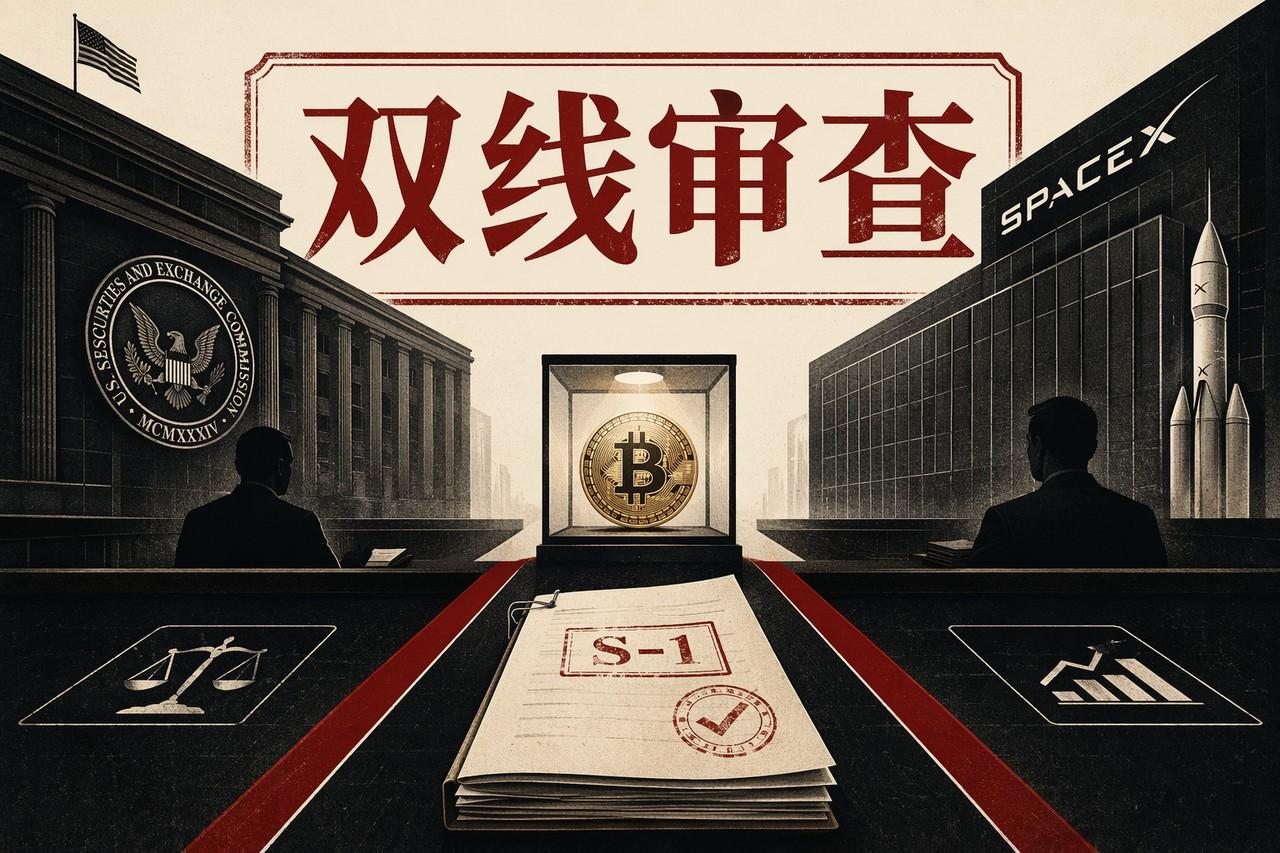
While Wall Street continues to argue over how much premium the Hormuz risk should add to oil prices, the US Space Force has already provided its answer with a massive order. According to a single source, the US Space Force has signed a significant contract worth approximately $4.16 billion with SpaceX, which is not only a major defense-related order but also serves as a written declaration of security in the budget: during a time when geopolitical friction is elongated and negotiations and sanctions are intertwined, the real boost is in space and defense assets. More dramatically, this contract emerges after Musk denies rumors of a downgrade to SpaceX's IPO valuation; regulatory battles and valuation controversies have not diminished SpaceX's appeal within the national security framework but rather highlight a simple and harsh reality— as long as the US wants to maintain an advantage in space, it cannot do without private companies that control launch windows and orbital resources.
For the market, this increase in defense and space spending is rewriting an old slogan: technology is no longer just a growth story, but a tangible national defense asset. The narrative that "technology is national defense" has pushed private space companies to the forefront of the security chain and packaged related companies' stock prices as hedging tools against long-term security risks, with large defense contracts now viewed as cash flow anchors that can hedge against geopolitical uncertainties. The result is that, in the same macro environment filled with uncertainty, some funds are more willing to pay valuation premiums for "safety-themed tech" such as defense, aerospace, and energy, while increasing discounts on high-risk assets that lack national security backing and have more volatile cash flows; this relative repricing itself is direct evidence of the security narrative deeply embedding in the capital market.
Fear Index Drops to 23, Crypto Funds Tighten Risk Exposure
As "safety-themed tech" is elevated to a higher platform by the capital market, assets like cryptocurrencies that lack cash flow anchors and exhibit significantly higher volatility naturally become the first to be discounted. The emotional reference commonly used in the cryptocurrency market, the "fear and greed index," measures emotions on a scale from 0 to 100, with lower values indicating fear and higher values indicating greed; the latest reading is reported at 23, categorized as "extreme fear" by a single source. This level corresponds to a significant cooling of overall risk appetite— funds are no longer willing to pay a premium for extreme volatility and are beginning to reduce positions in high-beta tokens and forward narrative projects, retracting exposure from the most peripheral risky assets.
From previous cycles, it is observed that under the simultaneous influence of macro interest rates, regulatory news, black swan events, and other multiple factors, uncertainty rises, and such emotional indices often decline under the joint action of multiple variables, rarely led by any single news event. Existing public data do not clearly list specific catalytic events that place the current index at the low of 23, nor do they directly correlate it with the volatility of any single asset, and there is no evidence to prove that its change was triggered directly by any geopolitical friction. Rather than seeking a "culprit," a more reasonable interpretation is: in the same macro environment where negotiations are ongoing, sanctions are persistent, and the so-called safety asset premiums are elevated, investors are proactively lowering exposure to high-volatility assets based on existing experience, gradually pushing cryptocurrency market sentiment into the "extreme fear" range.
From Oil Prices to Bitcoin: Geopolitical Conflicts Reshape Risk Pricing
As the US and Iran tug at the negotiation table while continuing to escalate pressure through sanctions lists and "Economic Fury Action," the old risk point of the Strait of Hormuz is resurfacing in the market. Barclays reiterates its target price of $100 per barrel for Brent crude oil by 2026 and explicitly indicates upward risks, incorporating geopolitical tension and supply security concerns into the medium to long-term curve. Meanwhile, the US Space Force throws out a significant contract of approximately $4.16 billion with SpaceX, concretizing the narrative of “technology is national defense” into cash flows and orders, while Musk confronts the capital market expectations by denying IPO valuation rumors. The valuations of crude oil, defense contractors, and space companies are embedded with geopolitical premiums, while the risk budget is finite; as funds pile onto assets under the security narrative, they often need to maneuver space elsewhere.
At this time, the crypto market's fear and greed index is reported at 23, categorized as "extreme fear" by the index provider, indicating another end of emotional contraction in the same macro environment. The key debate is: during this cycle interwoven with geopolitical conflict and inflation expectations, are crypto assets more often being used as a "digital gold" to hedge macro risks, or are they treated as a basket of high-beta tech targets that get sold first during the rise in risk aversion? Currently, there is no unified conclusion among industry and academia; different narratives take turns dominating in different stages. However, against the backdrop of unresolved US-Iran negotiations, sanctions extending to hidden supply chains, and oil and defense contracts paying premiums for geopolitical uncertainty, investors are very likely to reallocate risk budgets between energy, defense-related assets, and crypto assets, adjusting the weight of various assets in their portfolios.
Join our community, let’s discuss together and become stronger!
On-chain Telegram community: https://t.me/AiCoinWhaleData
On-chain community: https://www.aicoin.com/link/chat?cid=N6OVMor5g
AiCoin on-chain Twitter: https://x.com/aicoinwhaledata
Exclusive Hyperliquid benefits for AiCoin: https://app.hyperliquid.xyz/join/AICOIN88
Exclusive Aster benefits for AiCoin: https://www.asterdex.com/zh-CN/referral/9C50e2
免责声明:本文章仅代表作者个人观点,不代表本平台的立场和观点。本文章仅供信息分享,不构成对任何人的任何投资建议。用户与作者之间的任何争议,与本平台无关。如网页中刊载的文章或图片涉及侵权,请提供相关的权利证明和身份证明发送邮件到support@aicoin.com,本平台相关工作人员将会进行核查。