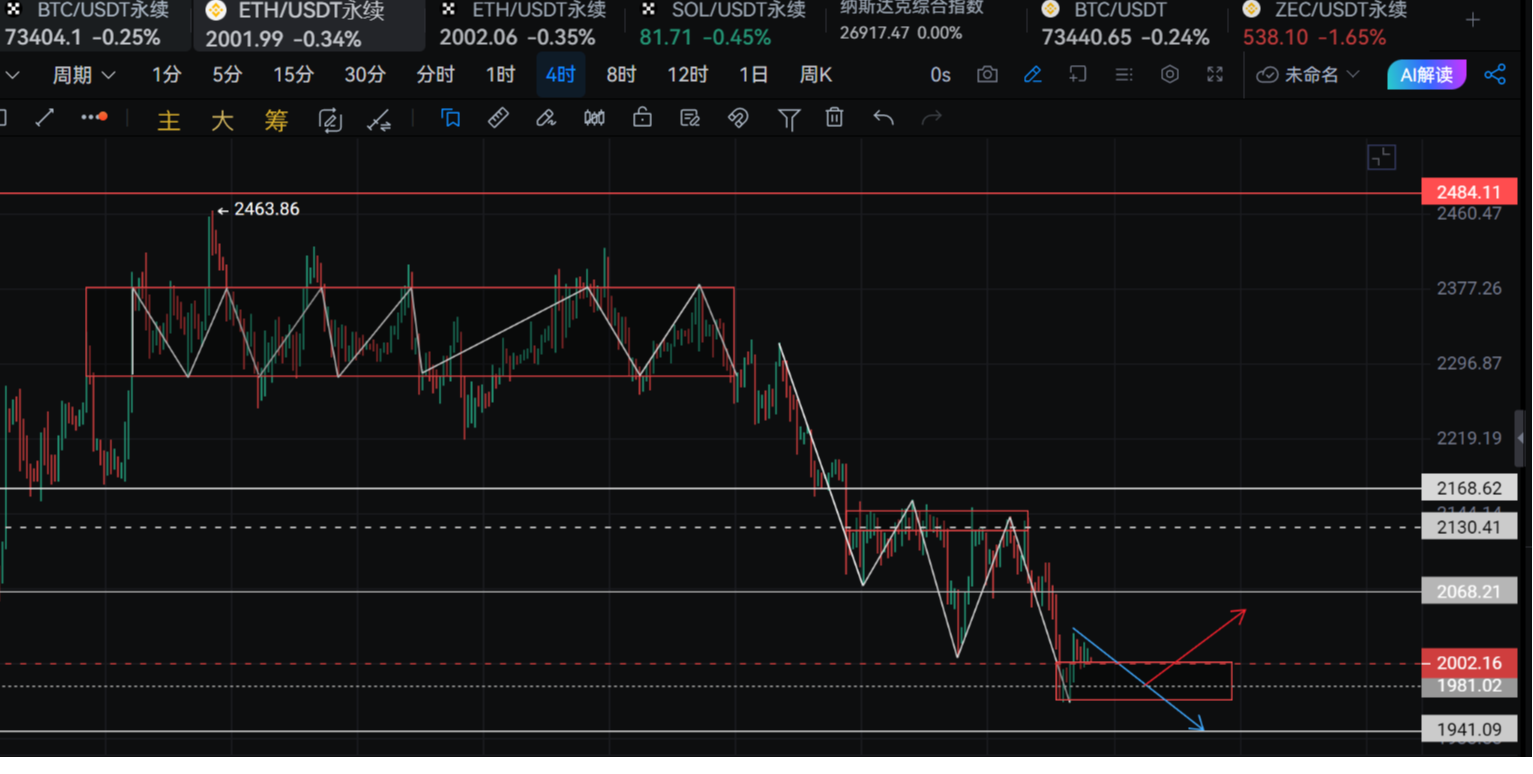
On or around May 29, 2026, Ethereum stood at a peculiar crossroads: on one side, 10x Research was focusing on derivative data, indicating that the flow of funds for put options with execution prices of $1,800 and $1,900 had surged to about five times the usual, further intensifying the pressure on an already weak coin price and bearish sentiment; on the other side, Nasdaq-listed Bit Digital announced that it had increased its ETH holdings, with CEO Sam Tabar repeatedly emphasizing that making "prudent and wise capital allocation" for clients is his duty—against a backdrop where many believed Ethereum had "gone bad in the past two years," he chose to stand against pessimism with real money. While 10x Research acknowledged that current prices seemed "cheap," it stressed that this did not automatically constitute a buying opportunity, as it is fundamentally the underlying factors that ultimately determine prices, rather than transient marketing narratives; Bit Digital, meanwhile, chronicled its "long-term bullish" stance through publicly traceable actions in the market. When put option flows surged in one direction like a black tide, while institutional spot positions quietly moved in another, the question of whether "cheap" was discounting for the next wave of selling pressure or opening a rare entry for long-term buyers became one that all participants could not avoid.
Options Market Alert: 10x Research's Bearish Voice
In the report by 10x Research, what was truly eye-catching was not the price of ETH, but the numbers on the options chain: put options with execution prices of $1,800 and $1,900 saw a flow of funds magnified to about five times the normal amount, and the magnification clearly indicated bearish contracts, rather than bullish ones. Such structural skew often implies that the other end is not retail sentiment but rather substantial professional funds—either holding a large amount of spot above the current range necessitating insurance for paper profits with put options, or simply making unilateral bets on further declines in the future. The options market has always been seen as a pricing venue where funds are more "intelligently" deployed; when such a large demand for downside protection suddenly appears at two critical price levels, the outside world will naturally interpret it as a collective reassessment of risks by institutions.
10x Research's interpretation of this flow of funds is equally firm: they acknowledge that from historical and emotional perspectives, ETH's current price "indeed appears cheap," but within their framework, "cheap" is merely an adjective and does not automatically equate to a buying opportunity. The report emphasizes repeatedly that only the fundamentals can truly dictate price trends; however sophisticated the marketing narrative, it can only temporarily push prices away from reality, and ultimately has to concede to cold metrics like on-chain activities and income structures. It is precisely under this logic that that string of amplified put option data is no longer just an anomalous peak in the corner of a chart, but is viewed as a signal by 10x Research: professional funds are expressing a judgment with hard cash—short-term, Ethereum's fundamentals are insufficient to support an optimistic story of "cheap should rebound." This round of explosive put options volume appears more like a harsh vote against the current valuation, rather than just a momentary noise of sentiment.
Cheap Does Not Equal Opportunity: Contrasts Between Fundamentals and Sentiment
Ethereum, which "appears very cheap," now finds itself in the midst of two completely opposing narratives: on one side are the mispriced assets—over the past two years, prices have been far lower than many early optimistic forecasts, which supporters believe means a mean reversion is bound to come; on the other side is the typical value trap—a continuously weak trend, where the momentum of rebounds repeatedly falls short of expectations, leading to a more pessimistic viewpoint where this is not a discount, but rather a penalty for failing fundamentals. In late May 2026, as Ethereum prices continued their weakness, the market lacked convincing upward momentum, compounded by the past two years' performance leading many investors to feel "increasingly disheartened," resulting in a natural tilt toward bearish sentiment; comments of "it is no longer viable" were commonly heard in social media and trading rooms.
10x Research poured cold water on the idea of "cheap" in such an atmosphere: they acknowledged that while the current price may seem relatively low compared to historical comparisons, they emphasized that "cheap does not automatically equal buying opportunity," and repeatedly brought the focus back to a single point—fundamentals ultimately determine price, and narratives created through marketing can temporarily push prices away from the fundamentals. According to some reports (pending further verification), 10x Research even described the current situation as "the Ethereum narrative is collapsing," one reason being that key indicators such as on-chain activity have not seen significant improvement, which directly reflects in the options market: the flow of funds for put options with execution prices of $1,800 and $1,900 spiked to about five times the norm; in the context of professional funds, this is not just a casual purchase of an insurance policy, but a concentrated pricing of a risk—short-term, Ethereum has not presented sufficiently strong fundamental changes to support a decent recovery, and the so-called "cheap" could potentially evolve into "even cheaper" as a transitional station.
Nasdaq Company Increasing Holdings Against the Trend
While derivative traders used put options to "leverage" the downside risk of Ethereum, the other end was represented by a Nasdaq constituent whose board of directors must take responsibility and whose quarterly reports must be disclosed: Bit Digital. Although it is a crypto-related participant, it is firmly embedded within the traditional capital market framework, and every asset allocation adjustment it faces is not with anonymous addresses, but with regulatory documents and shareholder inquiries, giving its attitude toward Ethereum a naturally “accountable” signal meaning.
Bit Digital CEO Sam Tabar publicly stated that the company has increased its ETH holdings, intentionally framing this increase as a duty rather than a short-term gamble—in his words, this is the rightful meaning of "making prudent and wise capital allocation decisions for clients." Compared to the cautious or even pessimistic stance seen in the options market with a rush to buy put contracts, Tabar chose to stand on the opposing side during this coldest moment of sentiment: he pointed out that many people, upon observing ETH’s price performance over the past two years, directly concluded that it was "finished," while he expressed his stance through counter-cyclical accumulation, believing that the current price reflects more sentiment rather than an endgame. Thus, the same weak market condition is viewed in the options market as needing urgent hedging against downside risks, but from the perspective of a Nasdaq-listed company, it became a chip to be recorded in long-term asset allocation; this very rupture itself became one of the most important market notes regarding Ethereum at present.
Short Term Bearish, Long Term Bullish: Fund Game Under Time Dimension
If we place this round of explosive put options a
免责声明:本文章仅代表作者个人观点,不代表本平台的立场和观点。本文章仅供信息分享,不构成对任何人的任何投资建议。用户与作者之间的任何争议,与本平台无关。如网页中刊载的文章或图片涉及侵权,请提供相关的权利证明和身份证明发送邮件到support@aicoin.com,本平台相关工作人员将会进行核查。