In the first half of 2026, the crypto market can only be described in two words: difficult to hold on
BTC, ETH, SOL, these former "blue chip assets" continue to decline, the activity level of public chain ecosystems has dropped, and communities have lost the ability to create new hotspots; meme coins are tirelessly staging "news - pump - dump" scenarios, as soon as the retail investors rush in, the project teams are already preparing to pop the champagne.
In poor markets, it’s not just users who suffer; exchange owners are equally troubled. If users lose money in the spot market, trading frequency will decrease; with a drop in trading frequency, trading fees naturally shrink; as trading fees shrink, the bosses' OKRs start to set off alarms. The feedback from contracts is even more direct; in a bear market, when a user gets liquidated once, they are very likely to choose to quit, and the cost of recalling a major client is extremely high.
Acquiring new users, retaining users, activating users—over the past few years, the operational chain of the internet industry has been moving slower and slower in the crypto industry. Essentially, it is because investor attention is limited, and without a wealth effect in the crypto field, investors naturally shift their attention to other profitable industries.
Thus, a question stands before all exchanges: Where will the next wave of growth come from?
Tokenization of US Stocks and Prediction Markets
The market has basically reached a consensus that the main directions for growth in 2026 are: tokenization of US stocks and prediction markets. The former is responsible for creating FOMO emotions, while the latter is responsible for producing dopamine. Stocks in storage companies like Sandisk, SK Hynix, and Western Digital are surging, with a strong profit effect, causing a large number of crypto users to realize for the first time that "US stocks are easier to profit from than altcoins." And prediction market trading is even faster; users don't need to analyze on-chain data, they just need to place bets: Will the Strait of Hormuz open? Will the Federal Reserve cut interest rates? Compared to holding BTC or ETH and being hammered by volatility, prediction markets are clearly more appealing.
Thus, the tokenization of US stocks and prediction markets quickly became the new battlefield for major exchanges, with the intensity of competition continually rising. June not only marks the exam month for high school seniors changing their fates but has also become a critical testing point for major exchanges.
SpaceX IPO
First up is the largest IPO in human history, the finest work of Silicon Valley's Iron Man, the creator of the Starlink era, the igniter of space AI narratives, a super giant with a valuation soaring to $2 trillion—SpaceX.
The listing of SpaceX is not only a big event for Wall Street but also a liquidity stress test for the entire crypto industry. It can be anticipated that many users will start selling BTC, ETH, and SOL, converting to USDT or USDC; then withdraw funds from exchanges, exchange into dollars, and rush into the secondary market to participate in SpaceX.
In other words, for the past few years, exchanges have been figuring out how to convert dollars into stablecoins; but now, SpaceX may turn those stablecoins back into dollars.
However, huge crises often contain huge opportunities, and Bitget has provided their answer: to launch SpaceX's Pre-IPO shares ahead of time. (This is not an exaggeration; it is merely stating some facts, and other exchanges will be mentioned later)
This operation has already led the way, drawing traffic to Bitget. For many ordinary users, the real barrier is not cognition but the complexities of dollar accounts, cross-border brokers, and compliance processes. What exchanges are doing is: "You can participate in SpaceX without leaving the crypto space." But new issues arise. The SPV shares released by SpaceX are exceedingly limited. The total amount is only $61 million. The result is that there are many people in the market wanting to buy, but the chips available to sell are quite limited. 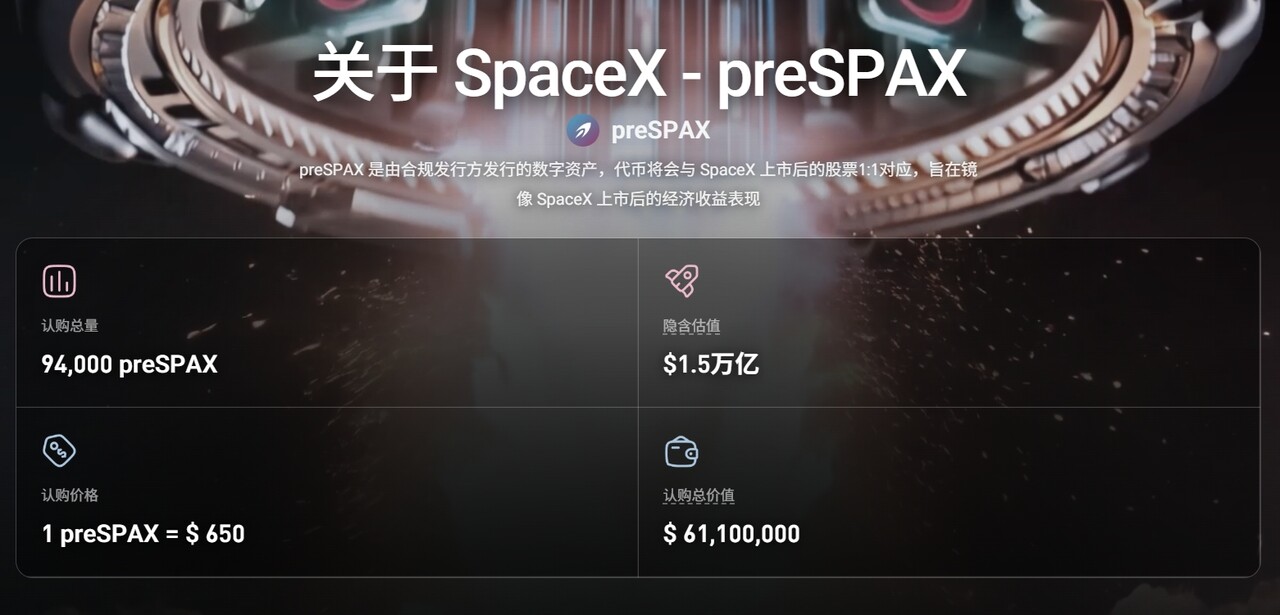
How Will Exchanges Capture SpaceX's Traffic?
Personally, I believe that Bitget has made a good move, but the real determinant of which exchange can capture the largest traffic benefits is not the Pre-IPO, but the day SpaceX officially IPOs on June 12.
The first competition is naturally speed of listing. Whoever can list the related spot of SpaceX first can capture the first wave of the fiercest traffic. This logic resembles the MEME wars of previous years. Why did TRUMP create a huge influx for exchanges? Because when user FOMO is at its peak, it often lasts only a few hours. The first to go up takes the meat; those who are a beat slow will find users opening accounts at other exchanges. Of course, whether SpaceX stocks can be quickly tokenized will also depend on the response of Ondo and xStocks. For both of them, the SpaceX IPO may determine who will be the king of on-chain US stocks.
Next, from the product research side, the pressure brought by the listing of SpaceX presents a tough challenge for exchanges. No user wants to miss an opportunity on the day of the listing due to app lag, delayed K-lines, or inability to place orders. But this is not uncommon among exchanges in recent years. When big markets arrive, a massive influx of users will simultaneously refresh market data, place and cancel orders, and leverage; the backend’s market push, matching system, database read/write, and WebSocket real-time communication will be instantly pressured; any minor issue can ruin user experience.
Furthermore, from the product side, how to enable users to complete transactions more smoothly will directly determine conversion rates. Every additional click by the user halves the conversion rate. Designing how to make it easier for users to buy SpaceX on the trading interface, reducing slippage, and providing a better trading experience are key considerations for product managers. For example, how to arrange homepage resources, whether the market page can jump to trading with one click, whether the order process is short enough, and whether users can "buy without thinking" after viewing the K-lines; these details will affect the final transaction.
Finally, the key on the operations side is how to turn "SpaceX" into a nationwide FOMO event. Trading competitions, airdrop rewards, recharge cashback, invitation campaigns, and KOL collaborations will certainly appear simultaneously. Larger exchanges have inherent advantages in operations, with higher exposure and more channel placement. But smaller exchanges also have opportunities; if they can engage users at a deeper level, they can achieve massive growth. Users may not remember which exchange was the first to list SpaceX, but they will definitely remember where they made their first pot of gold. 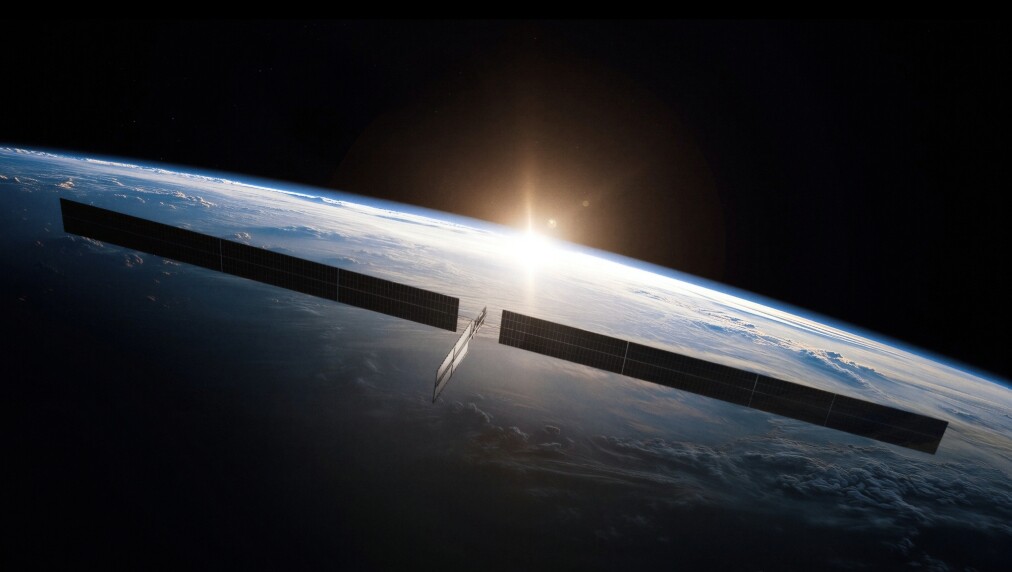
Futu, Tiger, ChangQiao Fined, Where Will Domestic US Stock Investors Go?
At the end of May, Futu, Tiger, and ChangQiao, three internet brokers, successively received regulatory fines. For many domestic users, the impact of this matter is actually larger than imagined. Simply put, old users will only be able to sell and not buy for the next two years, and platforms will not be able to continue adding new domestic users. Many people's first reaction is: "Isn't this just broker rectification?" However, if we look at this matter alongside the SpaceX IPO, it begins to get interesting.
In recent years, a large number of domestic investors have been trying to obtain Hong Kong cards and open overseas accounts, essentially for one reason: to buy US stocks. And this year, SpaceX happens to have become one of the strongest narratives of wealth globally, with many originally waiting to rush in on the day of the IPO. However, now, traditional internet brokers have suddenly started to tighten their access. This means that a large amount of money that was originally intended to flow into the US stock market hasn't disappeared, it has merely started seeking new outlets. However, much of this capital will not return to trade A-shares. Therefore, a very realistic question arises: Who can catch this wave of capital outflow?
The answer is becoming quite clear: Hong Kong brokerages, centralized exchanges.
Both have their advantages. The biggest advantage of Hong Kong brokerages is that they provide a "complete US stock market." Although platforms like xStocks and Ondo have already tokenized a number of US stocks, the coverage still mainly involves highly liquid core assets like Tesla, Nvidia, and Google. Compared to the thousands of stocks in the entire US stock market, currently tradable targets cover less than 5%. This means that if users want to buy relatively obscure Chinese concept stocks like Beike, Manbang, or Atour, they will ultimately have to return to traditional brokerage systems.
However, exchanges also have their killer advantage: user experience. As mentioned earlier, every additional step in trading causes user conversion to drop by half. Most Hong Kong brokerage apps require about 6-7 clicks to reach the US stock trading page, and US stock trading permissions need to be separately activated. In contrast, the US stock trading on centralized exchanges is often placed in the most prominent position. It typically only requires 3 clicks to engage in tokenized US stock trading. Most users' selection criteria still lean toward: who is simpler, who is faster, who resembles an internet product.
Of course, whether opening an account with a Hong Kong brokerage or registering on an exchange, both are in a gray area; users must rely on their own skills to get it done, and I won't elaborate here, DDDD.
When the World Cup Meets SpaceX
Coincidentally, the start date of the 2026 World Cup is June 12, the exact day of the SpaceX IPO. Whether this timing was intentional on the part of the US is something to ponder. One is the most watched IPO in human history, and the other is the largest sporting event in terms of global traffic. When "rockets" and "football" collide on the same day, all global spotlight will be focused on the US.
The commercial value of the World Cup goes without saying, as it is already the largest gateway for gambling traffic globally. According to Forbes, during the 2022 World Cup, global betting reached $160 billion. By 2026, the World Cup will only become crazier. On one hand, the number of participating teams has expanded from 32 to 48, which will clearly increase the number of matches, discussion intensity, and betting demand; on the other hand, on-chain prediction markets are no longer dominated by Polymarket, as multiple platforms like Kalshi, Myriad, and Predict.fun have entered the game. In other words, the 2026 World Cup could become the first major user education event for on-chain prediction markets.
Exchanges will certainly not let this opportunity pass. However, the regulatory risks associated with such business are always present, as gambling is a highly sensitive field in many regions. Thus, most exchanges are unlikely to directly engage in prediction markets and prefer to take a "roundabout approach." More than a few exchanges, including Binance, OKX, and Bybit, are currently more inclined to connect with prediction market protocols like Polymarket, Kalshi, Predict.fun, and then participate in World Cup betting through Web3 wallets. What exchanges truly desire is not just the betting itself, but to cultivate users' habits of using Web3 wallets.
Because in the vast majority of exchanges, the proportion of users who frequently open Web3 wallets is actually not high. If users start to get used to connecting wallets, signing, and interacting on-chain for World Cup betting, then subsequent DApps on their own chain will naturally become more active. Particularly after the heat of on-chain products like Binance Alpha and OKX Boost has gradually declined, the World Cup may become an opportunity for many users to reopen their Web3 wallets.
However, from the challenges faced by exchanges, the World Cup and SpaceX are not on the same scale of events. Even exchanges like Gate that aggressively promote prediction markets essentially direct users to Polymarket, meaning that the pressure is on the prediction market protocol itself, not on the exchange's backend. Secondly, most World Cup betting can be placed in advance, unlike the SpaceX IPO, where users need to rush orders at a specific moment. Therefore, for exchanges, the World Cup feels more like a "long-lasting operational battle" rather than a sudden surge in traffic on a particular day. Compared to a single-day stress test, exchanges need to think about how to continuously convert the heat of the World Cup into user activity and on-chain trading volume over the next 40 days.

Hyperliquid Lurking
Currently, centralized exchanges are facing competition that is no longer just a fight between themselves. What truly keeps them awake at night might be unicorns like Hyperliquid, a Perpetual DEX.
If we compare centralized exchanges like Binance, OKX, and Bybit to elephants, then Hyperliquid resembles a cheetah hiding in the shadows. It is small in size but moves extremely quickly. When it comes to trends, it is often sharper than the larger exchanges; when it comes to market conditions, it can respond faster. Many times, while centralized exchanges are still in meetings evaluating risks, Hyperliquid has already launched the product.
For the two most important hot topics in June—SpaceX IPO and World Cup betting, Hyperliquid has already completed its layout in advance. Regarding SpaceX, Hyperliquid has launched the SpaceX pre-IPO perpetual contract (SPCX-USDC) through Trade.xyz; even if users do not actually hold SpaceX stock, they can directly engage in leveraged trading. For the World Cup aspect, on May 26, Hyperliquid's HIP-4 test network launched the “2026 World Cup Champion” prediction contract, which also means Hyperliquid has officially begun to enter the on-chain prediction market and betting track.
Hyperliquid has always been known for its "small team, high efficiency." In the crypto industry, smaller organizations often mean fewer processes, shorter decision-making chains, and faster product reaction speeds. While many centralized exchanges might still be waiting for legal, risk control, operations, and market approvals, Hyperliquid has already launched the trading market.
However, elephants still have their strengths. The vast operational, customer service, content, and channel teams of centralized exchanges can still cover a broader base of ordinary users. For many novices, they may not care about whether something is natively on-chain or truly value "decentralization." They care more about: how to open an account, how to buy, why they can’t buy, and who to contact when facing liquidation. Often, a customer service representative who can respond promptly is more important than a narrative of being "completely decentralized."
Even if the HYPE token surges wildly in 2026 while platform tokens like OKB, BGB, and KCS perform weakly overall, I, as the author, do not believe that Hyperliquid will one day completely replace all centralized exchanges. Because whether in the stock market or the crypto market, truly professional high-frequency traders and quantitative funds always remain a minority. The vast majority of users are still ordinary retail investors. 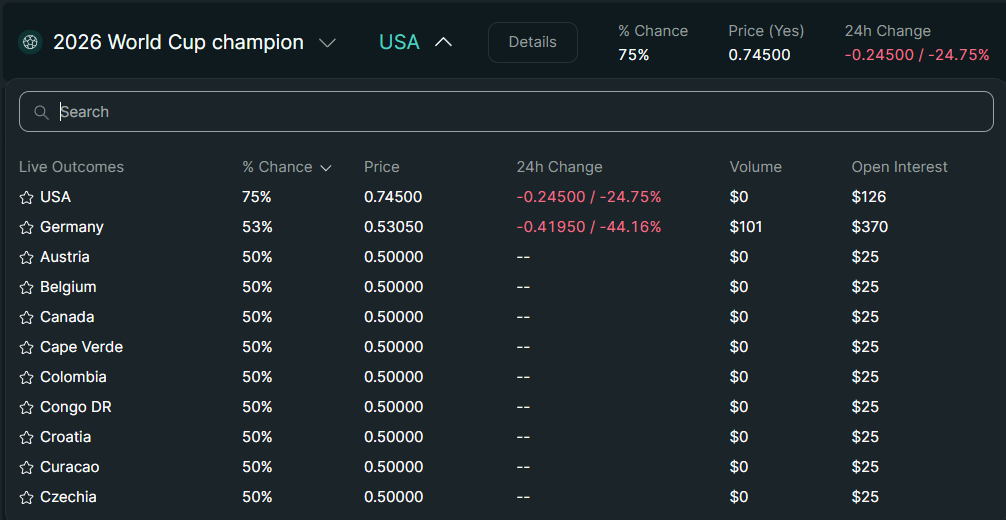
Conclusion
The tokenization of US stocks is undoubtedly one of the important branches of RWA. It boasts high standardization, high liquidity, and relatively large volatility, which makes it a natural fit for the Crypto world. Prediction markets, in a sense, are an on-chain reflection of real-world events. From the US elections to World Cup betting, they essentially bring the emotions, opinions, and odds from the real world onto on-chain trading.
The concept of RWA has been a topic of discussion in the circle in 2023, focusing on the 5% on-chain US Treasury bonds; in 2024, BlackRock will issue a US Treasury bond fund BUIDL on-chain; and by 2025, stablecoins, on-chain US stocks, and on-chain gold will begin to enter the mainstream financial view.
Soon, the "rockets" and "football" from the real world will come to Web3.
The battle for traffic among exchanges begins in June.
免责声明:本文章仅代表作者个人观点,不代表本平台的立场和观点。本文章仅供信息分享,不构成对任何人的任何投资建议。用户与作者之间的任何争议,与本平台无关。如网页中刊载的文章或图片涉及侵权,请提供相关的权利证明和身份证明发送邮件到support@aicoin.com,本平台相关工作人员将会进行核查。


