This article will conduct fundamental research on the overall framework of the tax system and regulatory system for cryptocurrency assets in Indonesia, focusing on its basic tax system, tax treatment of cryptocurrency assets, division of responsibilities among regulatory agencies, and its core rules.
Written by: FinTax
1 Introduction
As the largest archipelagic country in the world, Indonesia comprises over 17,500 islands spanning the Pacific and Indian Oceans, known as the "thousand islands country." Indonesia holds an important position in the cryptocurrency market. In Chainalysis' 2025 Global Crypto Adoption Index, Indonesia ranks 7th in the world, also excelling in dimensions such as DeFi activities, the use of centralized services, and institutional trading. Against this backdrop, Indonesia has been continuously adjusting its regulatory and tax treatment of cryptocurrency assets in recent years. According to Indonesia's newly enacted Minister of Finance Regulation No. 108 of 2025, the Directorate General of Taxes is now authorized to obtain account and transaction data directly from e-wallets, electronic money, and cryptocurrency service providers, ensuring that it fulfills the same data reporting obligations as traditional financial institutions. The continuous adjustments in Indonesia's tax arrangements and regulatory methods for cryptocurrency assets have led participants in the cryptocurrency market to re-evaluate compliance requirements. Based on this, this article will conduct fundamental research on the overall framework of Indonesia's tax system and regulatory system for cryptocurrency assets, focusing on its basic tax system, tax treatment of cryptocurrency assets, division of responsibilities among regulatory agencies, and its core rules.
2 Indonesia's Basic Tax System
2.1 Overview of the Indonesian Tax System
Indonesia implements a two-level tax system involving central and local taxation, where the legislative and collection powers are primarily concentrated in the central government, while local governments have the authority to formulate specific regulations for certain local taxes. Indonesia has a wide variety of taxes, including corporate income tax, individual income tax, value-added tax, luxury goods sales tax, land and building tax, stamp duty, entertainment tax, motor vehicle tax, and advertising tax. The core legal basis of Indonesia's tax system includes the Income Tax Law (ITL), the Goods and Services Value-Added Tax Law, the Luxury Goods Sales Tax Law, the General Taxation and Procedure Law (GTL, No. 6 of 1983), and the Taxation Regulation Unification Law (UU HPP) No. 7 of 2021; these laws apply throughout Indonesia, including its exclusive economic zones and continental shelf.
2.2 Tax Resident Identification
2.2.1 Resident Enterprises
Any organization established in Indonesia or managed in Indonesia, except for certain government agencies meeting specific criteria, is considered a tax resident for tax purposes. To determine whether a foreign enterprise is recognized as a tax resident in the local area, it often requires assessment of both the place of registration and the actual management location.
According to Indonesia's Income Tax Law and the Directorate General of Taxes Regulation No. 23 of 2025, “resident enterprises” refer to entities established or registered in Indonesia, regarded as registered in Indonesia in the following circumstances: (1) the company’s articles of association specify its registration location in Indonesia; (2) the headquarters, administrative center, or financial center office is in Indonesia; (3) it has a control office in Indonesia responsible for management activities; (4) board meetings for strategic decision-making are held in Indonesia; (5) managing members reside or settle in Indonesia. In short, even if an enterprise is not registered in Indonesia, if its actual management location (also known as "place of management and control") is in Indonesia, it is still considered a tax resident. The actual management location refers to where strategic decisions and daily operational decisions are made, taking into account factors including but not limited to investment decisions, management appointments, board meetings, dividend oversight, and financial control.
2.2.2 Resident Individuals
Any individual who resides in Indonesia for more than 183 days within a continuous 12-month period, or who resides in Indonesia and plans to stay longer, is considered a resident taxpayer. According to the Minister of Finance Regulation No. 18 of 2021, individuals meeting any of the following conditions are viewed as resident individuals in Indonesia:
(1) Residing in Indonesia, meaning having a permanent residence, center of interests, or habitual residence in Indonesia;
(2) Residing in Indonesia for more than 183 days within any continuous 12-month period;
(3) Residing in Indonesia for a taxable year and planning to continue residing (proof of intent to stay may include permanent residency permits, limited residency visas or permits valid for more than 183 days, employment or business contracts lasting over 183 days, leases exceeding 183 days, or documentation of relocating family members in Indonesia).
2.3 Common Taxes
2.3.1 Corporate Income Tax
Resident enterprises and permanent establishments in Indonesia are required to pay corporate income tax on income sourced both domestically and overseas, while non-resident enterprises only pay corporate income tax on income sourced from within Indonesia. The corporate income tax rate for resident enterprises and permanent establishments is generally 22%, whereas non-resident enterprises not constituting a permanent establishment typically pay a 20% withholding tax on income sourced from Indonesia. Certain enterprises that meet specific criteria may enjoy tax rate incentives, for example, a resident enterprise with annual income not exceeding 50 billion IDR may have half of its taxable income up to 4.8 billion IDR subject to reduced tax, while specific small and micro enterprises with total annual income not exceeding 4.8 billion IDR are assessed a final income tax at a rate of 0.5% on total income.
Indonesia's income tax is primarily levied in the form of withholding tax on eight types of income, including dividends, interest, royalties, service charges, and capital gains, where resident enterprises, government agencies, activity organizers, permanent establishments, or non-resident enterprise representatives must withhold tax when paying the income.
2.3.2 Individual Income Tax
Resident individuals are required to pay income tax on their global income, including capital gains. Individual income tax generally applies a five-tier progressive rate, while resident taxpayers may enjoy tax benefits such as exemptions, professional expense deductions, pension expense deductions, and donation deductions. Non-resident taxpayers only pay tax on income sourced from Indonesia at a flat rate of 20% and cannot apply for tax deductions, exemptions, or credits.
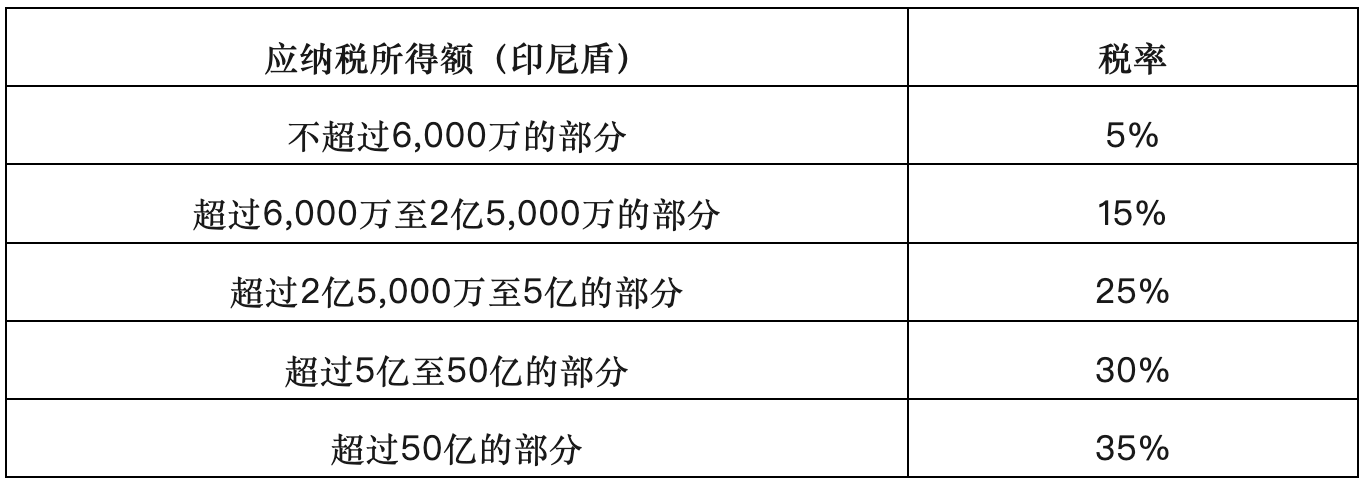
Table 1 Resident Individual Income Tax Rate in Indonesia
2.3.3 Value-Added Tax
The taxpayer for Indonesia's value-added tax (VAT) is the individual, enterprise, or government agency that sells taxable goods or services. Foreign sellers, service providers, or e-commerce platforms meeting specific criteria will be designated as VAT collectors. Starting January 1, 2025, the standard VAT rate in Indonesia is 12%, with an effective tax rate of 11%, and varying rates for different goods between 5% and 15%. Specifically, for imported and delivered luxury goods subject to luxury goods sales tax, the VAT rate is 12%; for other non-luxury goods, the rate is calculated based on the import value, sale price, or compensation amount at a rate of 11/12, resulting in an effective VAT rate of 11%. Additionally, a VAT exemption policy is implemented for basic necessities (such as rice, salt), medical and educational services, and financial services (loans, insurance), while specific exported services or labor may enjoy a zero-tax rate.
3 Indonesia's Cryptocurrency Asset Tax System
3.1 Tax Classification of Cryptocurrency Assets
The legal and tax classification of cryptocurrency assets has evolved from commodities to financial assets. As early as 2014, an official statement from Bank Indonesia (BI) clearly stated that virtual currency is not legal tender, prohibiting its use as a payment tool, and reiterated this in 2018. In 2022, Indonesia's Minister of Finance Regulation No. 68 (PMK 68/2022) defined cryptocurrency assets as intangible goods in digital form. With the promulgation of Law No. 4 of 2023, cryptocurrency assets were reclassified as Digital Financial Assets (Aset Keuangan Digital) and further clarified in Government Regulation No. 49 of 2024. In 2025, the Indonesian government issued Minister of Finance Regulation No. 50 (PMK 50/2025), which defined cryptocurrency assets as digital representations of value that can be stored and transferred electronically using distributed ledger technology (such as blockchain). These assets are not guaranteed by any central authority, but are issued by private entities and can take the form of digital currencies, tokens, or other assets, including backed (backed crypto-asset) and unbacked cryptocurrency assets (unbacked crypto-asset).
The tax treatment of cryptocurrency assets in Indonesia mainly involves value-added tax and income tax, the latter including final income tax and general income tax. In terms of VAT, the transfer of cryptocurrency assets alone is treated as the transfer of securities and is exempt from VAT; however, services related to cryptocurrency assets (such as providing cryptocurrency trading platforms, wallets, etc.) are still subject to VAT. Regarding income tax, sellers or miners earning income from the sale of cryptocurrency assets are subject to income tax. Simply holding cryptocurrency assets, transferring them between wallets, or purchasing cryptocurrency typically does not incur tax.
3.2 Tax Treatment in Different Scenarios
Transfer and Trading of Cryptocurrency Assets
The transfer and trading of cryptocurrency assets refers to the transfer and exchange of ownership of cryptocurrency assets, including purchasing cryptocurrency using fiat currency, swapping between cryptocurrency assets, and other forms of cryptocurrency trading.
In terms of VAT treatment, the transfer of cryptocurrency assets itself does not incur VAT; however, platform services related to the transaction and miner verification services may still constitute taxable services.
In terms of income tax treatment, income obtained from the sale of cryptocurrency assets falls within the scope of income tax and is subject to final income tax rules (PPh 22). The applicable tax rate depends on the type of electronic system transaction organizers (PPMSE): (1) transactions through domestic general PPMSE are taxed at a rate of 0.21% for final income tax, withheld and paid by the PPMSE; (2) transactions through domestic limited service PPMSE are taxed at a rate of 0.21% for final income tax, to be paid and declared by the seller; (3) transactions through designated foreign PPMSE are taxed at a rate of 1% for final income tax, withheld and paid by the PPMSE; (4) transactions through non-designated foreign PPMSE are similarly taxed at a rate of 1% for final income tax, but require the seller to declare and pay.
Services Provided by Trading Platforms
Refers to taxable services provided by PPMSE (Penyelenggara Perdagangan Melalui Sistem Elektronik, electronic system transaction organizers), including providing electronic channel services for cryptocurrency trading, deposit and withdrawal services, cryptocurrency transfer services between e-wallets, provision and management of cryptocurrency storage media or e-wallets, and other cryptocurrency-related services.
In terms of VAT, PPMSE pays VAT on the cryptocurrency trading facility services provided at a nominal tax rate of 12%, calculated based on other taxable bases, resulting in an effective tax rate of 11%; PPMSE must declare this in the VAT monthly return.
Regarding income tax, income obtained by PPMSE from providing cryptocurrency trading facilities and related services falls under the income tax scope and is taxed at the general income tax rate (22% is the general corporate income tax rate), and must be declared in PPMSE's annual income tax return.
Miners Providing Transaction Verification Services and Engaging in Mining Activities
Taxable services provided by cryptocurrency miners refer to taxable services in the form of cryptocurrency transaction verification services, whereby miners utilize their computational power and technical capabilities to verify and confirm the validity of cryptocurrency transactions and record them on the blockchain network. Currently, the applicable VAT effective tax rate is approximately 2.2% of the value of cryptocurrency obtained by miners, with the taxable base including block rewards earned by miners.
Income obtained by miners through mining activities, including service fees, block rewards, transaction verification fees, other income from the system, and other related income, is subject to taxation at the general rate of the income tax law, and must be reported in the miner's annual income tax return. If miners later sell cryptocurrency as sellers through PPMSE, their sale proceeds are additionally subject to applicable PPh 22 rules for sellers.
4 Indonesia's Cryptocurrency Asset Regulatory System
4.1 Regulatory Agencies and Their Responsibilities
In 2025, Indonesia conducted significant reforms to its regulatory framework for cryptocurrency assets, officially transferring the oversight and regulatory responsibilities of digital financial assets, including cryptocurrency and some financial derivatives, from the Commodity Futures Trading Regulatory Agency (Bappebti) to the Financial Services Authority (OJK, Otoritas Jasa Keuangan) and Bank Indonesia (BI), allowing cryptocurrency activities to be regulated alongside other financial services, marking a new pattern in the regulation of cryptocurrency assets in Indonesia. OJK becomes the core regulatory agency for cryptocurrency assets in Indonesia, implementing specific regulations in the fintech, digital asset, and cryptocurrency sectors, covering rule-making, admission management, daily oversight, and risk management, while Bank Indonesia takes over the regulatory responsibilities for financial derivatives related to the money and foreign exchange markets. Meanwhile, as the tax collection agency under the Ministry of Finance, the Indonesian Ministry of Finance and the Directorate General of Taxes (DJP, Direktorat Jenderal Pajak) are responsible for the tax administration of cryptocurrency transactions. Centered around OJK, BI and DJP cooperate with each other, fulfilling their respective roles to collectively establish the overall pattern of cryptocurrency asset regulatory agencies in Indonesia.
4.2 Core Legal Framework and Regulatory Policies
Indonesia's current regulatory framework for cryptocurrency assets can be summarized as a hierarchical structure, with Law No. 4 of 2023 (UU P2SK) as the foundational law and Regulation No. 27 of 2024 issued by OJK as the core rule, supplemented by other supporting regulations. On January 12, 2023, Indonesia promulgated UU P2SK, which authorized the transfer of the regulatory responsibilities of digital financial assets to OJK, BI, and other financial regulatory agencies, indicating a transition of cryptocurrency assets from "commodity regulation" to "financial regulation." To fulfill its responsibilities, OJK issued Regulation No. 27 of 2024 (POJK 27/2024) in December 2024, which revamped the original regulatory rules for cryptocurrency assets, systematically arranging matters concerning institution setup, licensing, governance, trading mechanisms, consumer protection, and personal data protection according to financial service regulatory standards, forming the new core regulatory rule. The regulation also identifies the four key participants in Indonesia's cryptocurrency trading ecosystem, including digital financial asset (DFA) exchanges, digital financial asset traders, clearing, guaranteeing and settlement institutions for digital financial asset trading, and digital financial asset custodians.
As an accompanying enforcement document, OJK simultaneously issued Circular No. 20/SEOJK.07/2024, which provided detailed operational guidance for cryptocurrency trading, clarifying the licensing application process, business plan requirements, periodic reporting system, and governance structure requirements. In 2025, OJK promulgated Regulation No. 23 of 2025 (POJK 23/2025), which made significant revisions to POJK 27/2024, focusing on expanding the regulatory scope of digital financial assets and filling in the business norms and risk control requirements for cryptocurrency derivatives regulation.
Overall, Indonesia's cryptocurrency asset regulation is shifting from a primarily commodity futures regulation model to a digital financial asset regulatory framework centered around OJK as the core agency. As POJK 23/2025 includes cryptocurrency derivatives into the regulatory purview, and authorities commit to starting CARF information reporting from 2027 onwards, the compliance focus for participants in Indonesia's cryptocurrency market has expanded from a single trading license to multiple dimensions including market access, trading governance, consumer protection, tax reporting, and cross-border information exchange.
5 Conclusion and Outlook
As one of the important economies in Southeast Asia, Indonesia's total cryptocurrency trading volume reached 4.8223 quadrillion IDR in 2025, with a monthly transaction volume of 292.4 trillion IDR in January 2026, indicating a continuously growing trading scale that reflects consumer confidence and market stability in the cryptocurrency sector in the Indonesian market. From the regulatory system characterized by the cooperation of various departments such as OJK, BI, DJP, to the establishment of a legal framework transitioning from commodity regulation to financial regulation, Indonesia aims to gradually build a governance system for digital financial assets that aligns with its national conditions. The future of cryptocurrency assets in Indonesia remains uncertain, but immense market demand, technological innovation, and opportunities for internationalization are emerging. Whether this "thousand islands country" can maintain a prudent regulatory approach while creating sufficient development space for the cryptocurrency industry to gain a favorable position in the Web3 competition in Southeast Asia and globally deserves continued attention.
免责声明:本文章仅代表作者个人观点,不代表本平台的立场和观点。本文章仅供信息分享,不构成对任何人的任何投资建议。用户与作者之间的任何争议,与本平台无关。如网页中刊载的文章或图片涉及侵权,请提供相关的权利证明和身份证明发送邮件到support@aicoin.com,本平台相关工作人员将会进行核查。


