David Hoffman, an Ethereum commentator and co-founder of Bankless, has explained why he sold his ETH holdings, claiming that the long-running 'ETH is Money' thesis has essentially come to an end rather than completely failed.
ETH falling behind Ethereum
Hoffman's central claim is surprisingly complex. He has become structurally neutral regarding ETH as an asset, but he is still optimistic about Ethereum as a network. He believes that while Ethereum was successful as open infrastructure, the ETH token itself did not directly capture enough value.
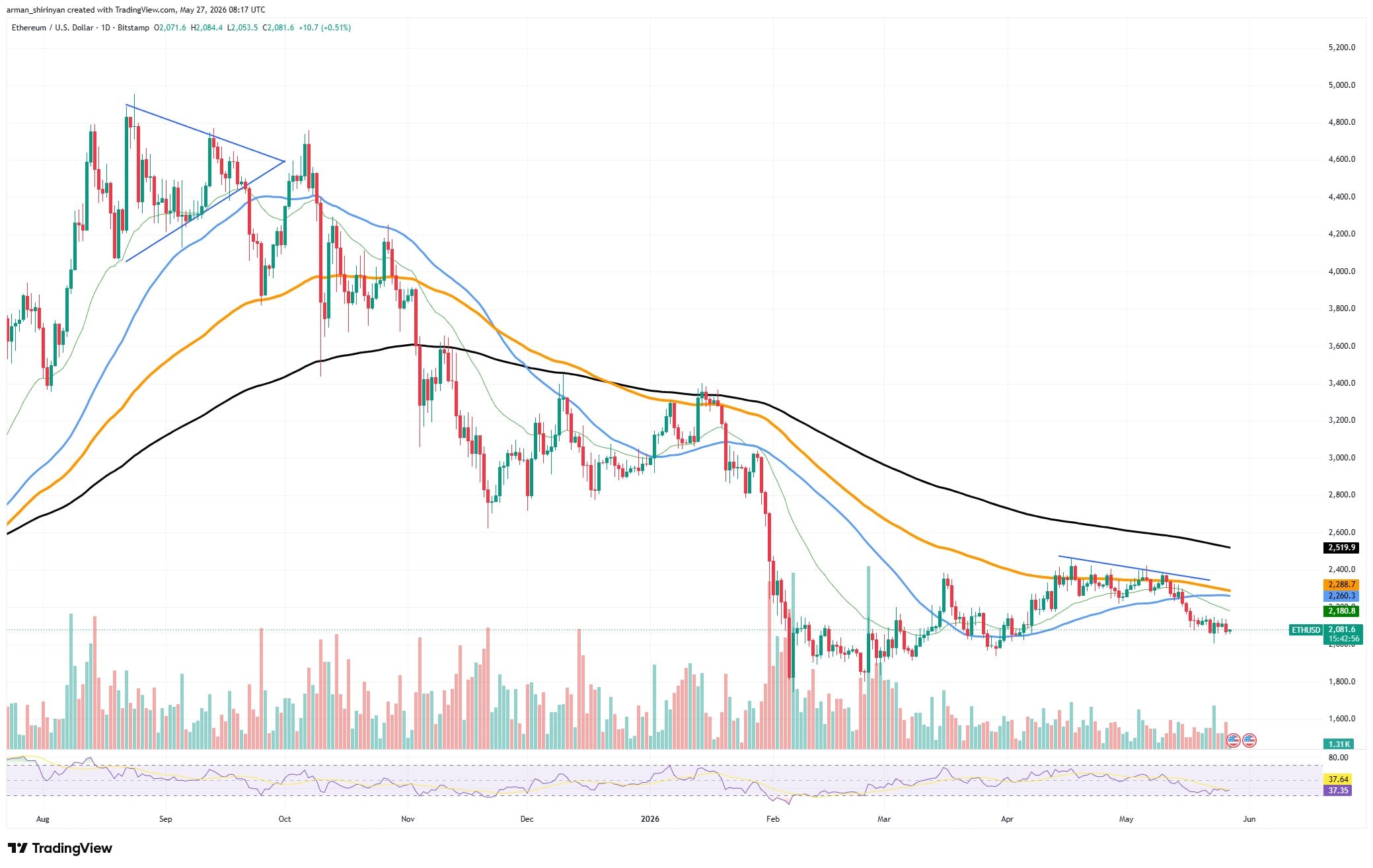
ETH/USDT Chart by TradingView
Hoffman claims that by putting utility, decentralization, and ecosystem expansion ahead of aggressively maximizing ETH's monetary premium, Ethereum took the hard path. Ethereum is optimized for applications, rollups, stablecoins, and wider network adoption, in contrast to Bitcoin, which is almost solely focused on bolstering BTC as the primary product. Although the ecosystem grew significantly as a result of that strategy, value capture was also dispersed.
HOT Stories XRP Hits $1.4B in ETF Cash Shiba Inu (SHIB) Sellers Exhausted, Dogecoin (DOGE) Zero Addition Question of Time, XRP Recovery Starts: Crypto Market ReviewThe dynamics of Layer-1 revenue are among Hoffman's strongest points. He contends that fees, network activity, and burn mechanics are becoming increasingly important factors in smart contract chains. He cites instances where robust revenue growth directly correlated with improved token performance, such as Solana, BNB, TRX, and NEAR.
AdvertisementYou Might Also Like Wed, 05/27/2026 - 06:15 XRP Hits $1.4B in ETF CashByAlex Dovbnya
Meanwhile, Ethereum moved toward a rollup-centric model, in which the majority of the economic upside is retained by Layer-2 networks. This criticism has objective merit. Ethereum purposefully pushed activity toward L2 ecosystems and lowered transaction costs. In contrast to previous bull market periods, when ETH burn accelerated rapidly, this enhanced scalability but also decreased fee pressure on the base layer.
Stablecoins pushed ETH away
Additionally, Hoffman contends that ETH's position as native internet money was undermined by stablecoins. More than $160 billion in stablecoins are currently secured by Ethereum, but the majority of this activity strengthens dollar dominance rather than directly increasing demand for ETH. Practically speaking, Ethereum did not become the dominant monetary asset itself; rather, it became the infrastructure for other financial assets.
AdvertisementSome of his conclusions, however, are still up for debate. ETH is still used throughout the ecosystem as collateral, staking capital, gas, and settlement infrastructure. Hoffman's thesis's detractors contend that rather than being speculative and explosive like in 2021, Ethereum's value capture simply became slower, more widespread, and more infrastructure-driven.
Hoffman's broader point, however, is hard to overlook: Ethereum prioritized ecosystem success while anticipating that ETH's financial standing would follow organically. Thus far, the network has been more successful than the asset.
免责声明:本文章仅代表作者个人观点,不代表本平台的立场和观点。本文章仅供信息分享,不构成对任何人的任何投资建议。用户与作者之间的任何争议,与本平台无关。如网页中刊载的文章或图片涉及侵权,请提供相关的权利证明和身份证明发送邮件到support@aicoin.com,本平台相关工作人员将会进行核查。


