AI High-Stakes Gambling and Crypto Lobbying: Capital's Multi-Front Battlefield in 2026

CN
3 months ago

Around May 27, 2026, several seemingly unrelated news items squeezed onto the same timeline: ByteDance's internal planning indicated that it would raise capital expenditures to a maximum of about $70 billion this year for the expansion of AI infrastructure, compared to an investment of about $25 billion last year, equivalent to stepping on the gas; across the ocean, a political action committee in the cryptocurrency industry spent about $9 million in the Texas primary, preemptively marking territory for the midterm elections in 2026; further north, a deputy minister of the Russian energy department revealed that a government committee recommended banning mining in parts of Moscow and Kursk until around 2032, locking energy and security pressures directly into regulatory texts; meanwhile, Bitget launched a financial product designed around Bitcoin holdings, with a total prize pool of 50,000 USDT and a maximum of 500 USDT per user, which was summarized by KOLs as “an opportunity to earn returns on Bitcoin holdings,” guiding retail investors to take positions in face of opaque yields; in Paris, the so-called "new stock god" Serenity publicly disclosed a market value of approximately $1.28 billion held in semiconductor company XFAB, which immediately surged about 10% upon opening on the Euronext Paris, leading public opinion to question the boundaries between KOL influence and market game; in the Middle East, a member of the Iranian parliament's national security and foreign policy committee, Brijedi, emphasized that any final agreement with the United States must conform to Iran's national interests, while the draft surrounding a ceasefire and asset unfreezing was viewed as a factor that could rewrite regional risk variables and asset preferences. Putting these fragments together, a clear underlying line emerges: whether it's big players betting on AI, cryptocurrency capital deepening lobbying, resource countries tightening mining, or platforms and KOLs continuing to ignite retail speculation, capital, technology, and regulation in 2026 are entering multi-front warfare; what truly deserves questioning is—who is doubling down, who is tightening, and how far can ordinary investors retreat amid all this.

$70 Billion Bet on Computing Power: ByteDance's Bold Gamble

By early 2026, ByteDance's capital expenditure plan landed like a heavy hammer in the global AI arena: building upon last year's roughly $25 billion capital spending, this year's internal planned cap was lifted to about $70 billion, primarily targeting the expansion of AI infrastructure, with detailed usage yet to be disclosed. AI infrastructure has already been viewed as a key investment direction in the current global tech competition, and such a doubling and re-doubling represents not just “capacity expansion,” but rather appears to be using an entire year’s cash flow to buy a ticket into the era of computing power. Some market perspectives suggest that ByteDance's aggressive posture within the domestic camp is unusually radical, aiming to shorten the power disparity with top American companies; however, these judgments currently seem more like emotional interpretations rather than conclusions backed by sufficient data.

Supporting this round of investment is a likewise astonishing profit hypothesis. According to a single source, the market estimates that ByteDance's profits may reach about $50 billion in 2025, which is seen as an important premise for the company's willingness to plan the maximum $70 billion AI capital expenditure: if the assumption holds, profit and investment would still barely maintain within an acceptable range; once actual profits fall short of expectations, the cost of this “front-row seat” ticket would quickly transform into asset return pressure. For other tech giants domestically and internationally, $70 billion not only raises the “minimum ante” for entering the AI arms race but also effectively exacerbates the crowding-out effect on computing resources—leading players securing more data centers, electricity, and chip quotas, while mid-tier companies are forced to make more painful trade-offs between profitability and long-term investment. Whether ByteDance's bold bet ultimately results in a solid AI moat or exposes financial elasticity first during the cycle's initial downturn will become a key variable in observing the evolution of the global tech landscape in the coming years.

$9 Million Bet on Texas: Cryptocurrency Impacts the Election Landscape

While Wall Street was still tallying the costs of AI capital expenditure, the cryptocurrency industry had already moved the poker table into the ballot box. In the first half of 2026, a cryptocurrency political action committee invested about $9 million in advertising and campaign funds in the Texas primary; this money ostensibly targets a state party primary, but is viewed in the industry as a key action for preemptively “marking territory” for the 2026 midterm elections. Texas was chosen for this not surprisingly: it is a significant hub for the U.S. energy and mining industries and exists within the policy gaps around electricity prices, load dispatch, and mining permits, where cryptocurrency funds hope to use a localized skirmish to test the boundaries of regulations and voter sentiment.

Behind this $9 million lies the industry's anxiety and ambition regarding the regulatory game: at the federal level, U.S. cryptocurrency regulation has long been tugging between Congress and various regulatory agencies, with instability in the definition of authority, enforcement, and exemption boundaries; at the state level, any slight shift in direction in a major energy state like Texas could amplify the signal of “whether mining can continue to expand.” Therefore, the PAC attempts to accumulate chips for future negotiations in Washington by selecting candidates based on their policy positions—who expresses a more favorable attitude towards cryptocurrency in public remarks and who is willing to vie for breathing space within the gray areas between state and federal. Currently, there hasn’t been a complete list of candidates or public victory declarations, but capital has already entered the mainstream political arena, and its direct consequence is further financializing the already wavering policy path: once the market perceives “Texas is friendlier to mining” or “Congress's attitude towards cryptocurrency hardens,” regulatory expectations will be quickly repriced, with price fluctuations not only responding to macro interest rates and technology cycles but also reflecting this new power distribution game surrounding ballots, energy, and algorithms.

Ceasefire Negotiations and Mining Ban Proposals: Policy Shadows Loom Over Risk Assets

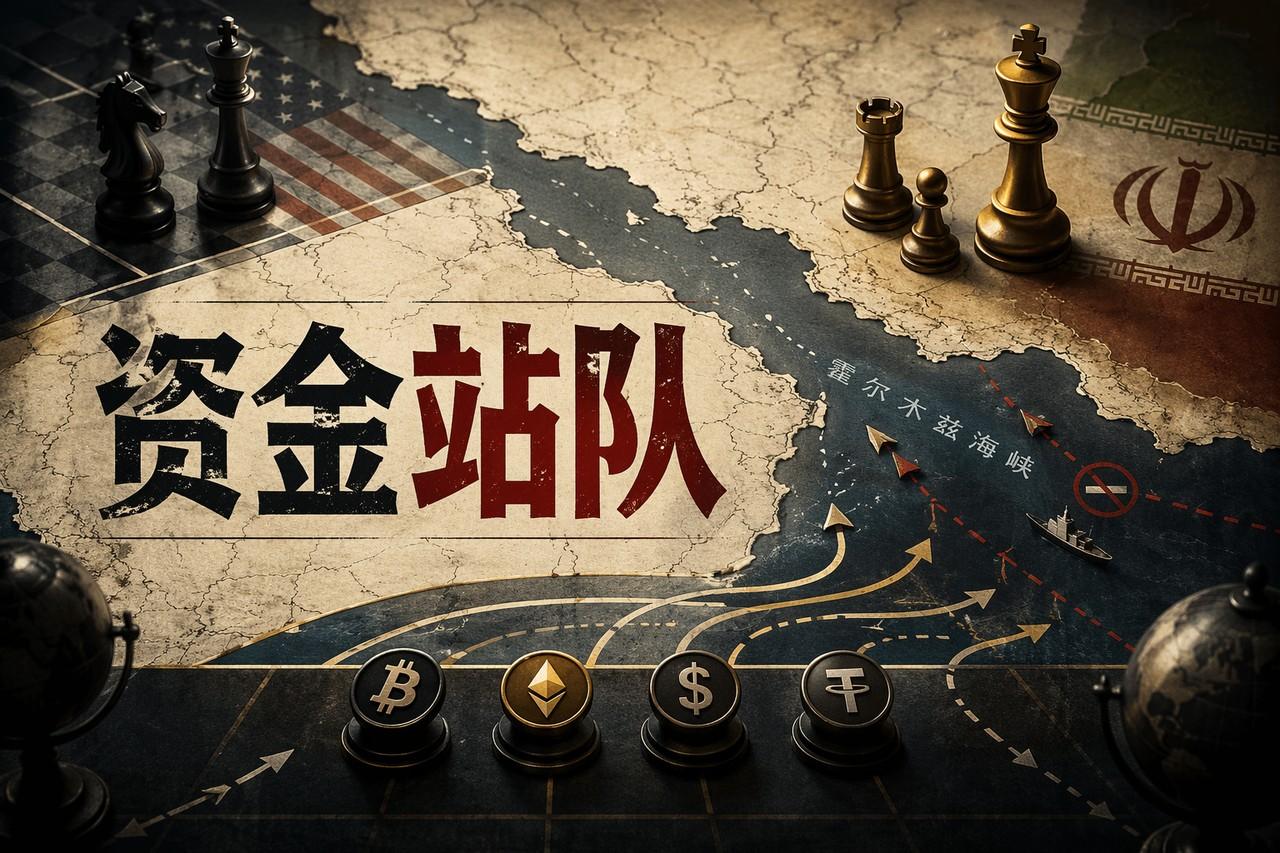
Parallel to the lobbying front driven by ballots is a more direct geopolitical negotiation that influences energy and risk preferences. In the first half of 2026, Iranian media disclosed a “preliminary draft agreement” between Iran and the United States: according to a single source, the U.S. would commit to a comprehensive ceasefire for 60 days on all fronts, including Lebanon, and envisage unfreezing most of Iran's frozen assets and lifting maritime blockades. If these terms materialize, it would mean a temporary pause in the Middle East's fire, with the geopolitical premium in oil prices likely to retract partially, while global risk aversion could cool off phase-wise, thereby raising the recovery space for risk assets, including cryptocurrencies under pressure. However, Brijedi, a member of the Iranian parliament's national security and foreign policy committee, immediately emphasized that any final signed agreement must align with Iran's “national interests,” adding another layer of uncertainty to a draft already limited in informational sources: failure to reach an agreement would lead to a repricing of oil and risk assets; reaching an agreement would require the market to preemptively digest the rollback of risk premiums in expectations.

Almost on the same timeline, another seemingly unrelated policy signal points towards the intersection of computing power and electricity. A deputy minister of the Russian energy department indicated that the government committee recommended banning cryptocurrency mining in parts of Moscow and Kursk, with the ban recommended to be effective until around 2032, although the formal start date and enforcement details have yet to be announced. This “mining ban proposal” in itself does not signal a shift in attitude toward a single industry, but is a reassertion of the prioritization of energy structure and financial risks: when security and electricity are viewed as scarce resources, mining is first pushed onto the reduction list. Together with the ceasefire negotiations in the Middle East, they shape the same pricing premise from dual dimensions—risk assets, especially those highly coupled with energy and computing power, will continue to passively bear the dual fluctuations of geopolitical and regulatory shadows.

BGBTC Financial Products and XFAB Speculation: Retail Investors Chasing Yields and Sentiment

As energy and regulation push computing power toward the cost side, platforms attempt to unearth “yield stories” from existing chips. Around May 2026, Bitget launched the BGBTC holding financial product, with a total prize pool set at 50,000 USDT and a maximum reward of 500 USDT per user, framed as “an opportunity to earn returns on Bitcoin holdings.” On the surface, this represents a mild incentive for existing Bitcoin holders—no leverage needed, just keep coins on the platform, participate in designated activities, and there’s a chance to earn from the prize pool; however, the actual yield rates, interest calculation methods, and distribution mechanisms have yet to be disclosed, leading users, while calculating “risk-free returns,” to essentially psychologically discount an opaque set of rules. The platform is not using strong stimuli, but rather constantly reminding: within the same price fluctuations, are you willing to forgo that potentially added few hundred dollars.

Parallel to this is another more direct emotional leverage: KOLs' public “bets” on new stocks. Serenity, known in the market as the “new stock god,” publicly stated before XFAB's IPO that it had built a position in this semiconductor company, considering its market value of about $1.28 billion “attractive,” effectively providing narrative heating in advance. The subsequent result was that XFAB's opening price on Euronext Paris was about €9.88, immediately rising about 10% over the issue price, and many onlookers instinctively attributed this 10% premium to Serenity's “stock-picking ability” and “influence.” Bitget’s activities guide holders to stay through rules and prize pools, while Serenity uses personal reputation and performance samples to push onlookers towards the buying button. Together, they form the reality of retail investors: on one side, a visible upper limit with unclear terms of detail sparking yield temptation, and on the other, a short-term market ignited by a single narrative. In the absence of complete information and checks and balances, individuals often only realize afterwards that, while chasing that extra yield or first-day spike, they are indeed also providing liquidity for potential manipulation spaces.

Where Will AI and Cryptocurrency Head Under Capital and Regulatory Tug-of-War

From ByteDance to retail investing, this round of capital games showcases an uncommon multi-line tugging: on one end, ByteDance is raising capital expenditure to a maximum of about $70 billion in 2026, betting on AI infrastructure, with support from a single-source forecast that 2025 profits may reach about $50 billion, meaning the returns of the heavy asset cycle in AI itself are built on an unverified profit hypothesis; on the other end, the cryptocurrency industry is trying to sidestep the “voting machine” to alter its fate—during the warm-up phase of the U.S. midterms, a cryptocurrency political action committee has already spent about $9 million in the Texas primary to vie for future regulatory discourse power, while on the Russian side, a government committee suggested banning mining in parts of Moscow and Kursk until approximately 2032, signaling certain national tightening tendencies on mining amid energy and security pressures; further afield, the potential agreement between Iran and the U.S. around a 60-day ceasefire, unfreezing assets, and lifting maritime blockades remains pending, which could rewrite global risk preferences through oil prices and risk aversion; nearby, Bitget's BGBTC financial activities and Serenity's lifting of XFAB serve as reminders that, in cases where yield rates, product terms, future corporate profitability, and regulatory details are all incomplete, retail investors will still repeatedly test the waters between narratives and price differentials. Therefore, what truly deserves close attention moving forward is whether these massive AI investments can deliver profits as expected, whether cryptocurrency lobbying can yield stable rules in U.S. elections, how geopolitical focal points like Russia and Iran will land regarding energy and security arrangements, and how regulatory details surrounding mining and speculation will tighten or loosen, as under this multi-line tug-of-war, the next round of repricing for risk assets is likely tied to the fulfillment of corporate profits, the direction of U.S. elections, the success or failure of geopolitical negotiations, and the seemingly technical variables of regulatory details.

Join our community to discuss and grow stronger together!
On-chain Telegram community: https://t.me/AiCoinWhaleData
On-chain community: https://www.aicoin.com/link/chat?cid=N6OVMor5g
AiCoin on-chain Twitter: https://x.com/aicoinwhaledata
AiCoin exclusive Hyperliquid benefit: https://app.hyperliquid.xyz/join/AICOIN88
AiCoin exclusive Aster benefit: https://www.asterdex.com/zh-CN/referral/9C50e2

免责声明:本文章仅代表作者个人观点,不代表本平台的立场和观点。本文章仅供信息分享,不构成对任何人的任何投资建议。用户与作者之间的任何争议,与本平台无关。如网页中刊载的文章或图片涉及侵权,请提供相关的权利证明和身份证明发送邮件到support@aicoin.com,本平台相关工作人员将会进行核查。

Share To
APP

X

Telegram

Facebook

Reddit

CopyLink