Short covering and options hedging may further drive up stock prices, but the upward trend is increasingly dependent on technical buying.
Written by: Li Jia
Source: Wall Street Insight
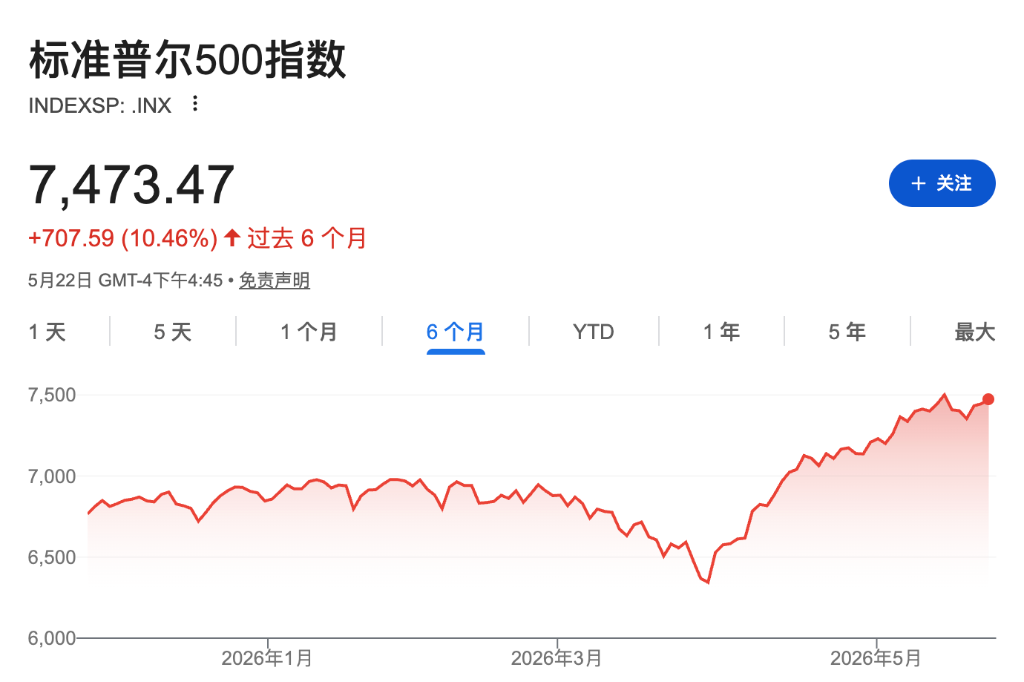
As the S&P 500 index rises for the eighth consecutive week, Goldman Sachs has noticed increasingly obvious signs of a short squeeze in the market. The report points out that the accumulation of short positions and the warming demand for call options are providing technical support for further gains in U.S. stocks, but it also means that the market's dependence on this type of capital-driven momentum is deepening.
Data from Goldman Sachs' prime brokerage shows that short positions in U.S. macro products (indices and ETFs) have risen to the highest level in the past decade. Faced with uncertainties such as geopolitics, interest rates, and oil prices, many investors are choosing to hedge through indices and ETFs while avoiding directly shorting individual stocks. However, if the market continues to rise, these shorts may be forced to cover, creating additional buying pressure and further driving up stock prices.
The options market is also signaling similar trends. Goldman Sachs derivatives trader Brian Garrett pointed out that approximately 25% of the S&P 100 constituents have shown an inverted skew in call options, a level close to that during the "retail investor meme stock" short squeeze in 2021. In his view, the market is clearly displaying characteristics of "upside optionality," with investors increasingly betting on gains, while market makers need to continuously buy stocks to hedge related risks, further amplifying the upward momentum.
Goldman Sachs believes this is both a support factor for the market and a potential hidden danger—currently, the upward trend is partly driven by short covering and options capital, rather than solely from improvements in the fundamentals. Once these technical buyings weaken, market volatility may also increase.
U.S. Stock Market Liquidity Warms: Technology Stocks See Increased Positions, AI Semiconductors Remain in Focus
Data from Goldman Sachs' prime brokerage shows that last week the U.S. stock market recorded a slight net buying overall, with the scale of long buying being about 1.2 times that of short covering. Meanwhile, the total leverage of U.S. long-short funds recorded the largest single-week increase in over three years, with general trading activity across industries showing significant improvement.
Looking by sector, individual stock sectors have seen net inflows for three consecutive weeks. Among them, information technology, consumer discretionary, and real estate are the most favored by capital, while consumer staples, materials, and energy sectors have faced net outflows. Notably, the total exposure and net exposure of the information technology sector have both risen to the highest levels in nearly five years, positioned at the historical 100th percentile.
After a month of reducing positions in U.S. technology stocks, hedge funds clearly shifted direction last week, increasing their holdings in the information technology sector at the fastest rate since mid-March. The Goldman Sachs Delta One trading desk noted that funds are still primarily flowing into semiconductors and AI-related fields, but compared to the "frenzied buying" seen in early April, current market sentiment has clearly become more rational.
Divisions Within Consumer Sector: Discretionary Consumption Receives Replenishment, Staples Face Withdrawal
However, within the consumer sector, the flow of funds shows a marked divergence.
After nine weeks of reducing positions in the consumer discretionary sector over the past 10 weeks, hedge funds significantly replenished last week, net buying that sector at the fastest rate in over two months. With the exception of automobiles, almost all sub-industries saw capital inflows, with diversified retail, textiles and apparel, luxury goods, hospitality and leisure, and durable goods being the most favored.
In stark contrast, the consumer staples sector faced concentrated capital withdrawal, not only becoming the industry with the largest net selling scale that week but also setting a record for the highest net selling in over five years. Fund managers generally adopted aggressive short strategies, with the consumer staples distribution and retail sector being the primary targets.
This divergence reflects the market’s complex judgment on the outlook for U.S. consumption. On one hand, capital is beginning to bet on improvements in discretionary consumption demand; on the other hand, the consumption fundamentals still face pressure. After Walmart published its earnings report, its stock price dropped 7% in a single day, marking the largest decline in three years; at the same time, the final value of the University of Michigan consumer sentiment index for May fell to a historical low, with high oil prices and interest rates continuing to suppress consumption willingness. The Goldman Sachs Delta One trading desk noted that despite recent signs of replenishment, the consumer sector remains one of the least favored areas in the market overall.
免责声明:本文章仅代表作者个人观点,不代表本平台的立场和观点。本文章仅供信息分享,不构成对任何人的任何投资建议。用户与作者之间的任何争议,与本平台无关。如网页中刊载的文章或图片涉及侵权,请提供相关的权利证明和身份证明发送邮件到support@aicoin.com,本平台相关工作人员将会进行核查。


