From 8.3% to 0.16%, the spending journey of the Ethereum Foundation.
Written by: Bibi News
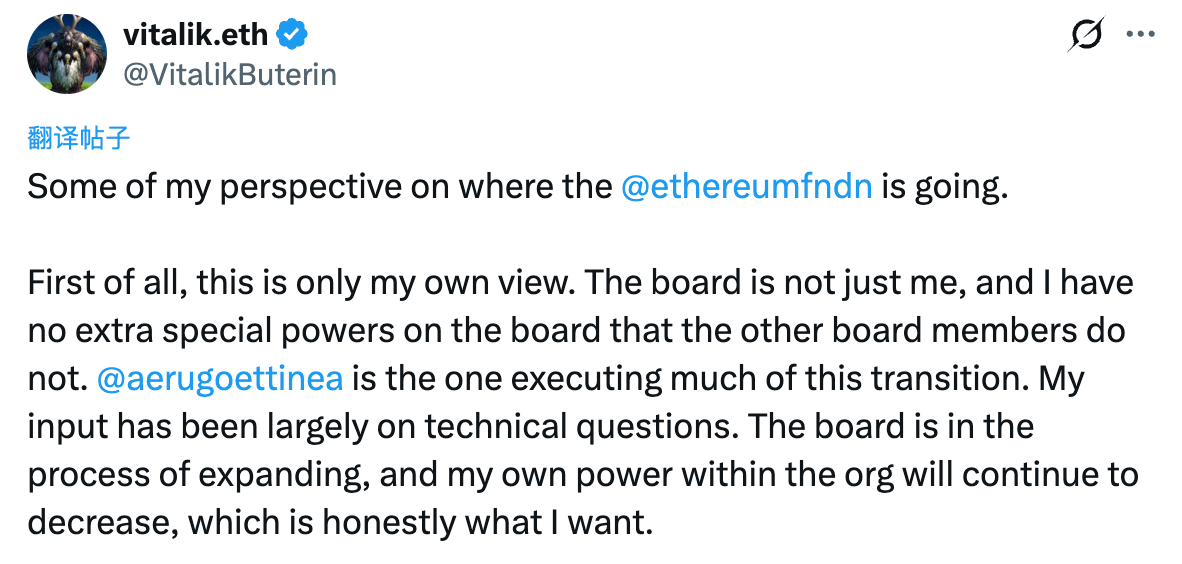
On May 24, 2026, Vitalik posted a 3,000-word article on X, centered around three things: the Ethereum Foundation will shrink, he will step back, and all remaining resources will be invested in a direction called CROPS.
In simple terms, the Ethereum Foundation and Vitalik, as parental figures, have decided to gradually step back, leaving the child Ethereum with not money, but a framework that allows it to survive independently.
What did Vitalik say?
There are three core messages.
First, the Ethereum Foundation will shrink. Vitalik's original words were "longevity over breadth," prioritizing existence over breadth.
Specifically, this entails two things: reducing the sale of ETH to let the Ethereum Foundation survive longer; and simultaneously narrowing the scope of funding, with some core talents and projects being pushed outside of the Ethereum Foundation, allowing external capital to step in.
Second, Vitalik himself will step back. The board is introducing new members, with Vitalik gradually shifting from a de facto decision-maker to just one vote in the board.
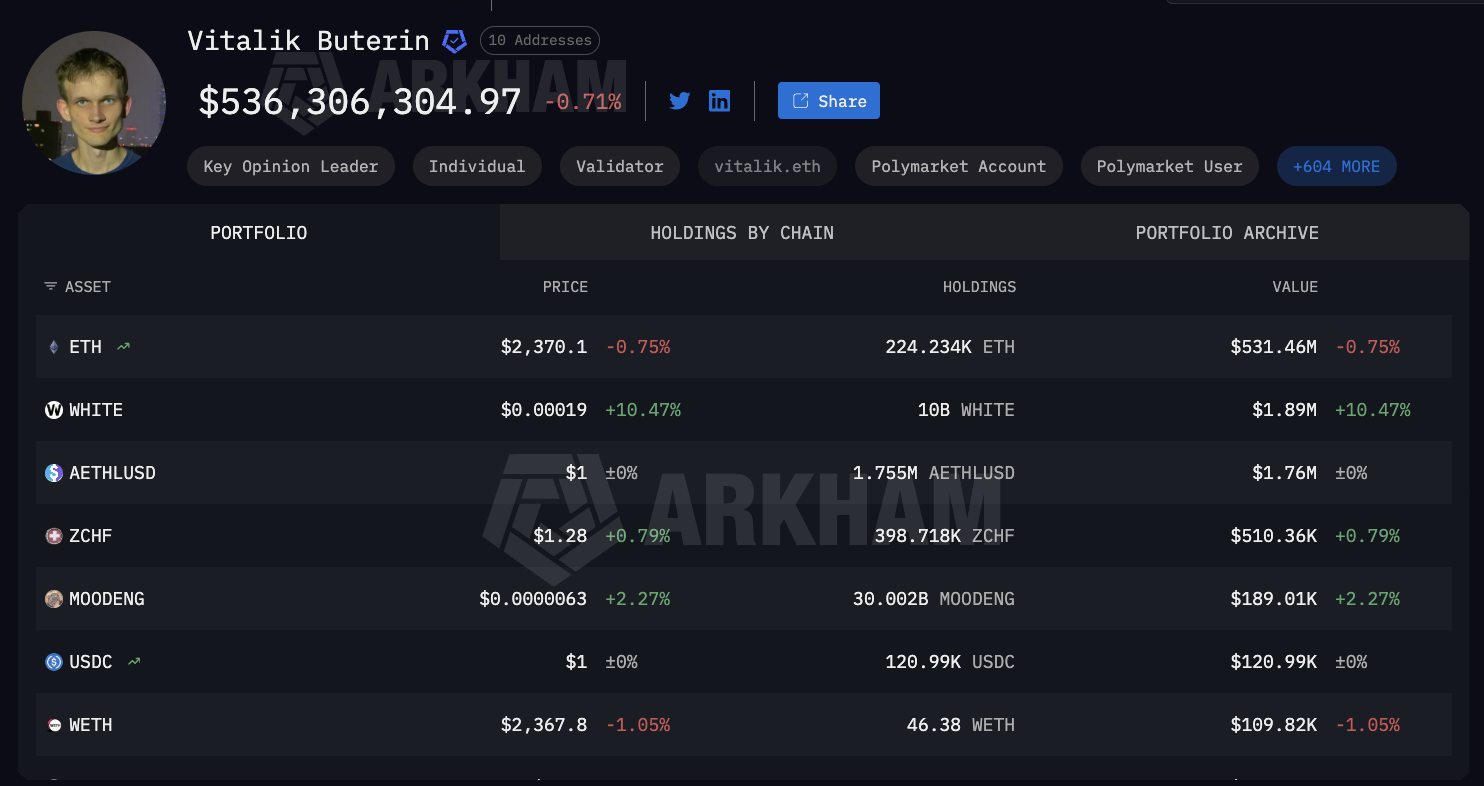
This is precisely what Vitalik wanted. He stated in the article, "nearly 90% of my net worth is in ETH, with about $40 million in on-chain fiat currency, each dollar already allocated to some open-source biotech, software, or hardware project."
Third, the technological direction is fully invested in CROPS, ensuring the Ethereum foundation cannot be shut down, censored, or tampered with. Using AI-assisted formal verification, achieving an Ethereum that can be proven to have no bugs; retaining Ethereum's unique consensus security attributes; and allowing ordinary users to send transactions without relying on third-party intermediary servers.
Vitalik clearly stated that Ethereum should not pursue 250ms latency and a million TPS, as taking that route "only leads to mediocrity, and we will lose."
He quoted Shaw's famous saying about "unreasonable individuals," implying that when the entire industry drifts towards commercialization and compromise, an organization needs to go against the tide and uphold seemingly unreasonable principles. The Ethereum Foundation has chosen to play that role.
From 8.3% to 0.16%, the spending journey of the Ethereum Foundation
At its inception, Ethereum minted 72 million ETH, of which 6 million were allocated to the Ethereum Foundation, accounting for 8.3% of the total supply. This became the funding source for all actions of the Ethereum Foundation over the next decade.
First, let’s look at how the money was spent.
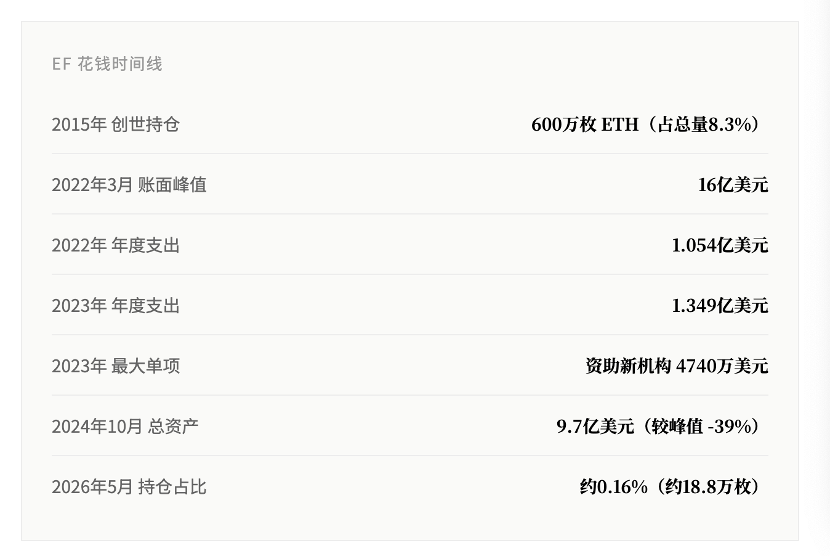
During the bull market from 2017 to 2021, the price of ETH skyrocketed, reaching a peak of $1.6 billion on paper. When the industry erupted in 2017, funding was widely distributed, wanting to do everything during DeFi Summer and the NFT boom.
In 2022, $105.4 million was spent, and in 2023, $134.9 million, with $47.4 million alone spent on funding new organizations, totaling $240 million over two years.
With continued significant expenditures, by October 2024, the Ethereum Foundation's total assets had shrunk to $970 million, down 39% from its peak.
By the time this article was published, the Ethereum Foundation’s holdings had dropped to about 0.16% of the total supply, which, based on the current total supply of around 118 million, amounts to approximately 188,000 ETH, lower than many individual large ETH holders.
Talking about expansion when at 8% and only discussing survival at 0.16% may be called a strategic choice, but the resource constraints are the real premise of this choice.
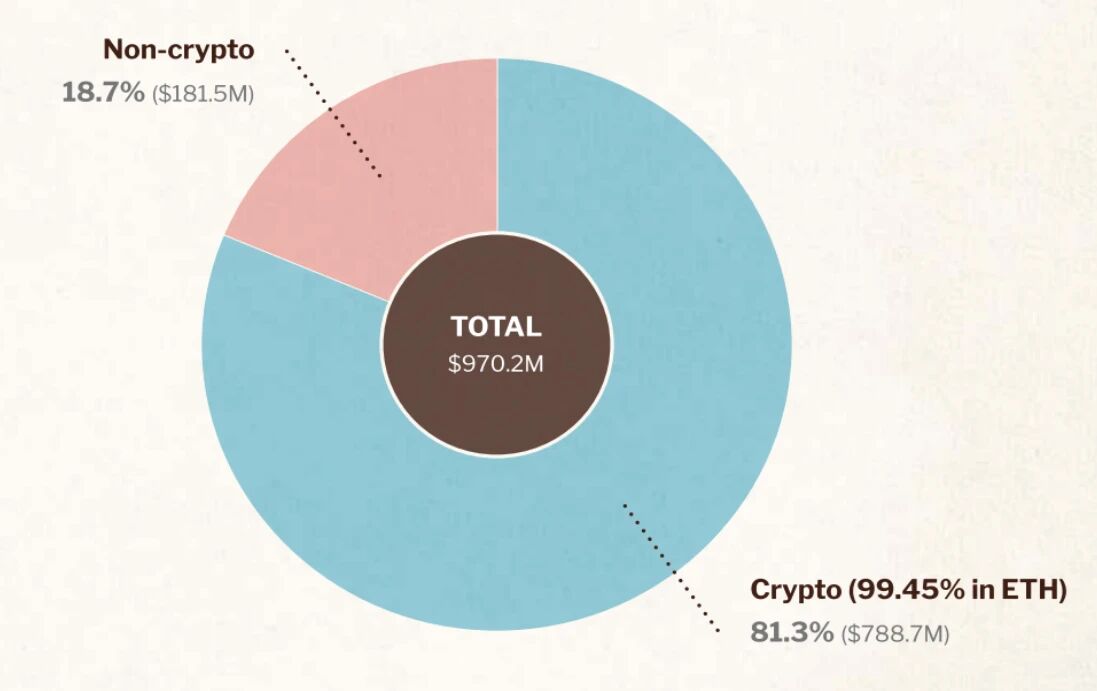
From the birth of Ethereum to the completion of its PoS transformation, the entire first phase mission was already finished when the merger was completed in 2022. In the following three years, it utilized its old identity to pursue new endeavors, not purely as builders nor competent managers.
Selling tokens is another ongoing sensitive topic.
In August 2024, on-chain data indicated that the Ethereum Foundation transferred 35,000 ETH (valued at about $94 million at the time) to the Kraken exchange, which sparked rapid community backlash once discovered, with many users on X accusing the Ethereum Foundation of "endorsing HODLing while dumping on everyone else."
This time, Vitalik explicitly stated that they would sell less ETH in the future; holding only 0.16% of the total supply, selling would fundamentally have no substantial impact on the market.
The real impact lies in the signal effect; when the Ethereum Foundation sells, retail investors panic.
This indicates that the community's reliance on the Ethereum Foundation is not financial, but psychological.
Starting in 2026, the Ethereum Foundation has already shifted. Between February and April this year, it completed the staking of 70,000 ETH, expecting annual returns of $3.9 million to $5.4 million. Daily operations have switched to exchanging small amounts for stablecoins using on-chain tools rather than directly selling on secondary markets.
This time, Vitalik publicly stating to sell less ETH is the most explicit signal of this transition.
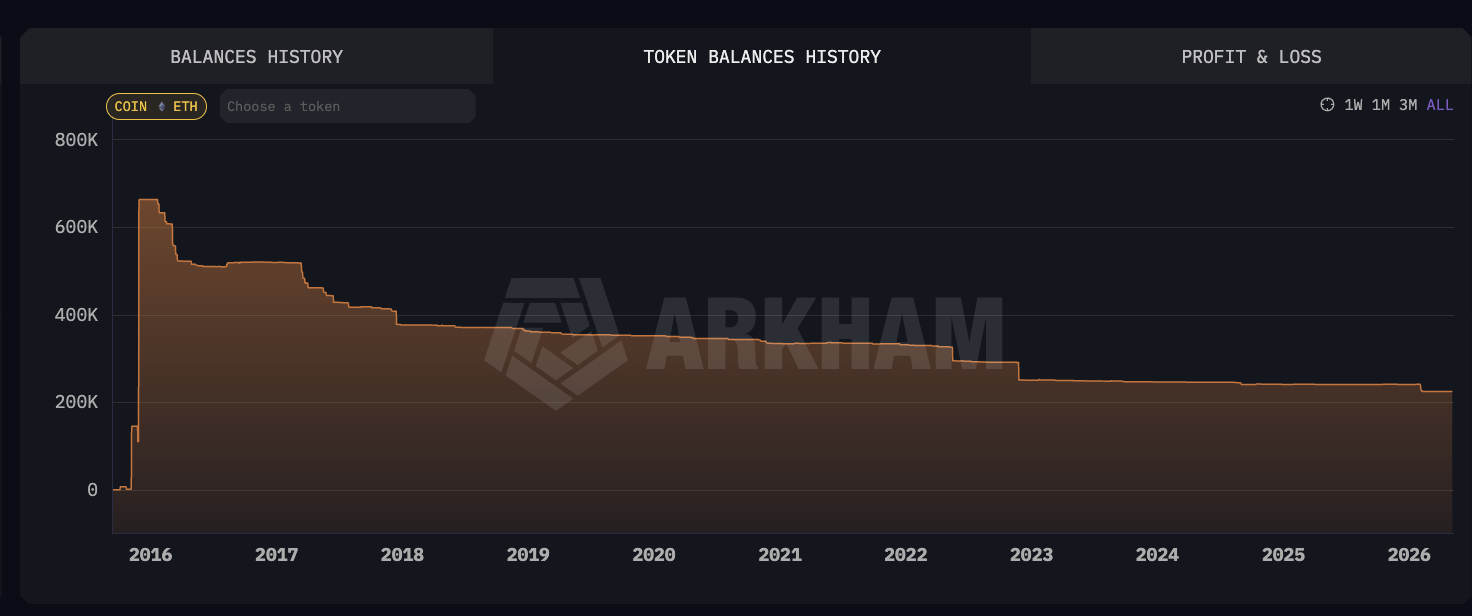
What is CROPS: not an offensive move, but a safety net
Understanding CROPS does not require knowing what each letter stands for. In short: ensuring the Ethereum foundation will not be shut down, censored, or tampered with.
Why is everything being bet on this now?
From day one, Ethereum promised to become a world computer, creating countless applications at the base layer. Ten years later, few have truly emerged. DeFi is basically self-circular within the industry, the NFT hype has cooled down, and most DAOs have not succeeded.
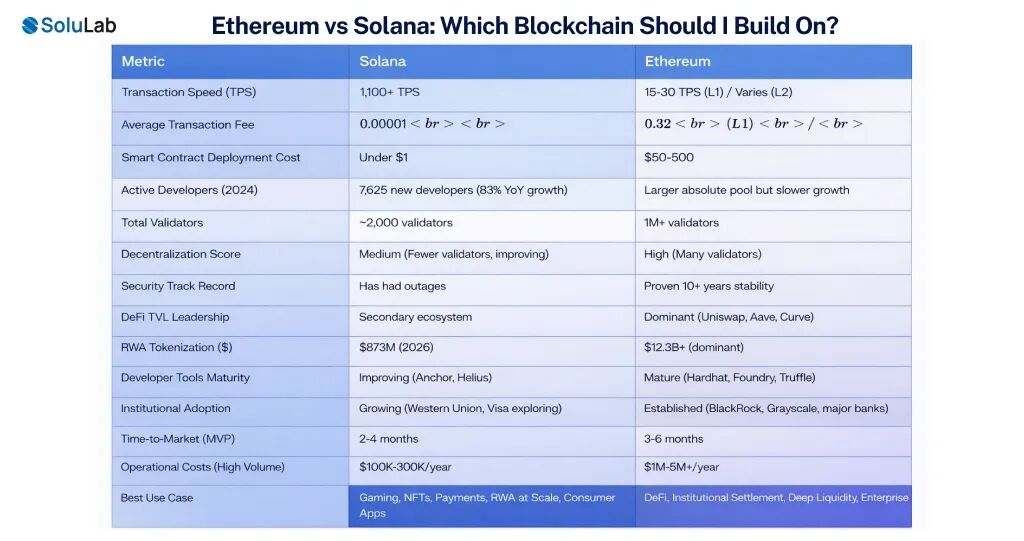
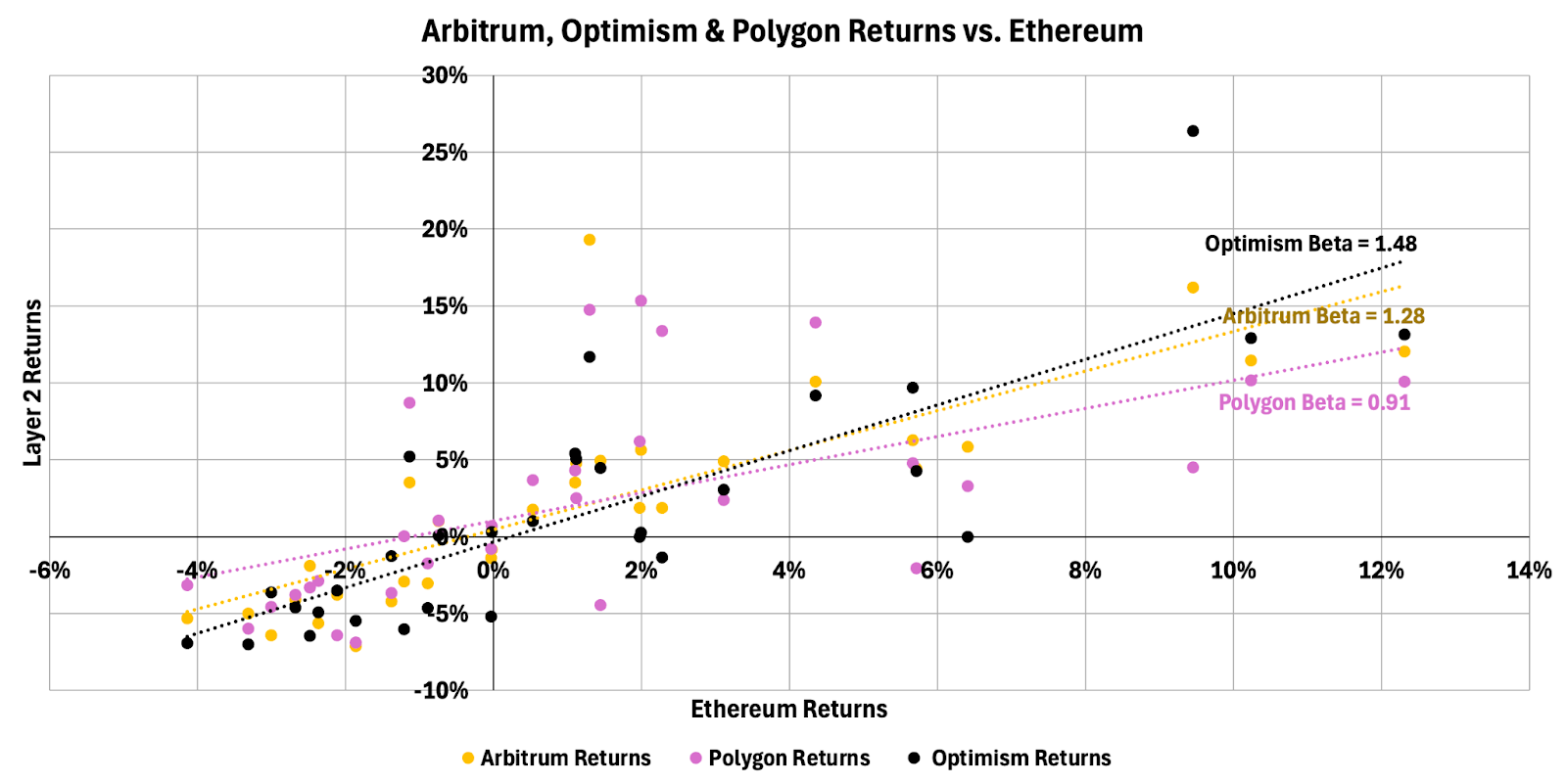
What Ethereum truly lacks is not performance, but demand. Gas fees have dropped to 1 cent, and Layer 1 daily transaction volume is reaching new highs, but the users are still just that group within the industry. Meanwhile, external conditions continue to worsen: Solana has greatly surpassed in user numbers, L2s have diverted liquidity from the mainnet, and AI has captured market attention.
In the absence of a clear growth path, Vitalik chose a different betting method.
Drawing a parallel to the early internet, no one knew whether the future protagonists would be search engines, social media, or short videos, but the TCP/IP protocol ensured that the underlying structure was open, allowing anyone to build on top of it. The logic behind CROPS is similar: not betting on a specific application, but ensuring the underlying layer is always open, waiting for the truly censorship-resistant applications to emerge.
These efforts naturally cannot be commercialized easily; they need someone to undertake them. At the same time, the Ethereum Foundation is aware that continuing to compete on TPS and speed will only result in losing its own position.
Does ETH still have a future?
Bitcoin's positioning is digital gold, supported by consensus and scarcity, not relying on any application ecosystem. ETH is different; its price mainly relies on growth expectations and narrative-driven logic, closer to that of tech stocks.
CROPS is about surviving and waiting, whereas the market typically pays for growth, users, and application surges.
If the CROPS narrative holds, the nature of ETH is actually undergoing a transformation, shifting from a growth asset to an option. Holding ETH is not betting on how much it will rise next year, but betting that one day the world will truly need a censorship-resistant settlement layer.
If that day comes, ETH will be one of the few infrastructures that are ready. If it does not come, this option may never materialize.
Satoshi disappeared, becoming a symbol, always correct. Vitalik is still alive, and living people make mistakes; every statement and every decision consumes his authority. The Ethereum community has been waiting for ten years for his next article to set the direction.
Vitalik's article, in some ways, is an attempt to end this waiting. But when the Ethereum Foundation shrinks and Vitalik steps back, is the Ethereum ecosystem truly ready?
免责声明:本文章仅代表作者个人观点,不代表本平台的立场和观点。本文章仅供信息分享,不构成对任何人的任何投资建议。用户与作者之间的任何争议,与本平台无关。如网页中刊载的文章或图片涉及侵权,请提供相关的权利证明和身份证明发送邮件到support@aicoin.com,本平台相关工作人员将会进行核查。


