Written by: Bao Yilong
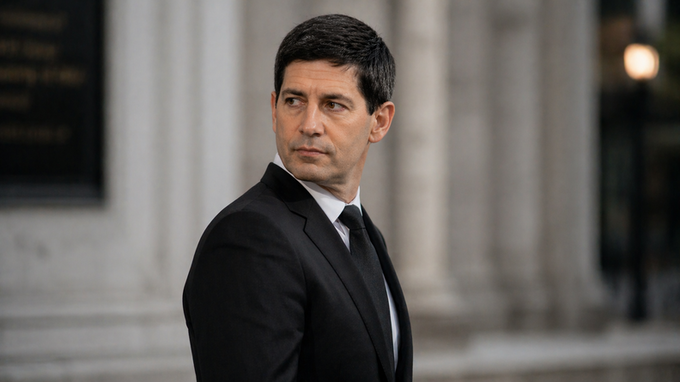
Walsh officially takes charge of the Federal Reserve, but is hit hard by the market on his first day in office.
On Friday, May 22, Trump hosted the oath-taking ceremony at the White House, officially handing the Federal Reserve's baton to Walsh. As Walsh takes over the Federal Reserve, the soaring energy and transportation costs triggered by the Iranian war are continuing to transmit into inflation.
Wall Street News mentioned that on the same day, Federal Reserve Governor Waller delivered a hawkish speech, clearly stating that inflation is the "driving force" behind future policy decisions, indicating that the prospects for interest rate hikes and cuts are "fifty-fifty," which directly fueled a surge in interest rate hike expectations.
On that day, the U.S. Treasury market saw a sell-off, with the 2-year Treasury yield, sensitive to interest rates, rising by 4 basis points, reaching a new high since February this year.
(U.S. Treasury yields by main maturities this week)
The futures market has now fully priced in a 25 basis points rate hike this year.
(Market expects the Federal Reserve to raise rates by 25 basis points this year)
TS Lombard economist Steven Blitz bluntly stated that if Walsh chooses not to raise rates at the monetary policy meeting in June when he first presides, the market will not give him any room for tolerance.
Waller's Tough Turn, Inflation Becomes Policy "Driving Force"
At the same moment when Walsh took the oath of office, Fed Governor Waller sent the most hawkish signal to date in a speech in Frankfurt titled "Policy Risks Have Changed," highlighting the significance of his stance change to the market.
Waller stated:
Inflation is not moving in the right direction, and I support removing the wording "accommodative bias" from the policy statement to make it clear that the possibilities of rate cuts and hikes are now approximately equal.
He further pointed out:
I can no longer rule out the need for rate hikes in the future if inflation does not fall quickly.
Waller admitted that recent labor market reports and inflation data prompted him to change his long-held accommodative stance.
He also stated that the impact of rising oil prices may soon dissipate, but emphasized that this does not mean "a rate hike should be considered in the near term." Rate hikes require conditions where inflation expectations are showing signs of "decoupling."
Earlier, the minutes of the Federal Reserve's April meeting indicated that "many" officials were inclined to give up the accommodative bias, including three regional Fed presidents who raised objections to this issue in the April statement, and Waller's latest remarks confirm this trend.
Walsh's Debut Approaches, Great Pressure for June Meeting
Walsh is set to preside over the Federal Open Market Committee (FOMC) meeting for the first time in mid-June, and market observers are not optimistic about the situation he will face.
The Fed's preferred measure of inflation has risen to its highest level in three years, with overall price growth reaching 6% in April. The market's implied one-year inflation expectation is around 4%.
TS Lombard economist Blitz stated, that if Walsh decides not to raise rates in June, even if economic growth remains robust and far from overheating, the market will interpret it as a form of accommodative easing. Blitz said:
In the context of broadly rising inflation risks, failing to raise rates in June would effectively equate to loosening.
KPMG's Chief Economist in the U.S., Diane Swonk, pointed out that the situation in the Middle East has compounded the existing price pressures. She said:
This is one of many reasons the Federal Reserve cannot afford to ignore the war and its inflationary impacts.
The current market expectation of a 25 basis points rate hike by the Federal Reserve sharply contrasts with the widespread bets on multiple rate cuts earlier in the year.
(Comparison of market expectations for the Fed's rate movements around February this year)
Despite the drop in energy prices this week, the 10-year Treasury yield has not seen a significant increase.
However, Goldman Sachs' George Cole pointed out that while long-term Treasuries appear slightly cheap relative to fair value, the valuation has not deviated to the extent that it could support a deeper rebound.
(Long-term Treasuries appear slightly cheap relative to fair value)
George Cole emphasized that as long as there is no substantive change in the macro risk landscape, long-term yields will still face supply pressures and structural upward risks from the debt financing cycle.
Test of Independence, Hidden Concerns Behind This Historic Inaugural Moment
Walsh is the first Federal Reserve chair to take the oath of office at the White House since Greenspan, and this detail alone has been interpreted by the market as a signal.
Trump hopes that this former Fed governor, whom he nominated in January, will be more compliant with rate cut demands. Previously, Walsh defeated White House economist Hassett, Waller, and BlackRock executive Rick Rieder in the nomination competition.
The pressure on the independence of the Federal Reserve has been particularly prominent recently.
Wall Street News mentioned that Trump's ally, D.C. federal prosecutor Jeanine Pirro, had launched a criminal investigation against Powell regarding the Federal Reserve's $2.5 billion headquarters renovation project; this investigation has been dismissed, but Powell indicated it was an excuse to pressure officials to induce a rate cut.
Walsh's term is set for four years, making him the 17th chairperson of the Federal Reserve.
However, the market has already indicated: regardless of the political environment, inflation is currently the most pressing issue, and this new chair has little time to lay out a strategy calmly.
免责声明:本文章仅代表作者个人观点,不代表本平台的立场和观点。本文章仅供信息分享,不构成对任何人的任何投资建议。用户与作者之间的任何争议,与本平台无关。如网页中刊载的文章或图片涉及侵权,请提供相关的权利证明和身份证明发送邮件到support@aicoin.com,本平台相关工作人员将会进行核查。


