As investor sentiment declines in both institutional and retail markets, Ethereum is about to enter one of its most uncertain periods in years. ETH, which was once thought to be the unquestionable second pillar of cryptocurrency behind Bitcoin, is currently facing increasing skepticism due to ETF withdrawals, slowing network growth, and an aggressive shift in market attention toward competitors that move more quickly.
Capital flows aren't looking good
A significant imbalance in demand was revealed by the recent launch cycle of spot cryptocurrency ETFs. Ethereum-related funds were unable to create the same momentum as Bitcoin products, which attracted billions in institutional inflows. Concerns that traditional investors no longer view Ethereum as the market's strongest growth story have been reinforced by the persistent outflows from a number of ETH ETFs in recent weeks.
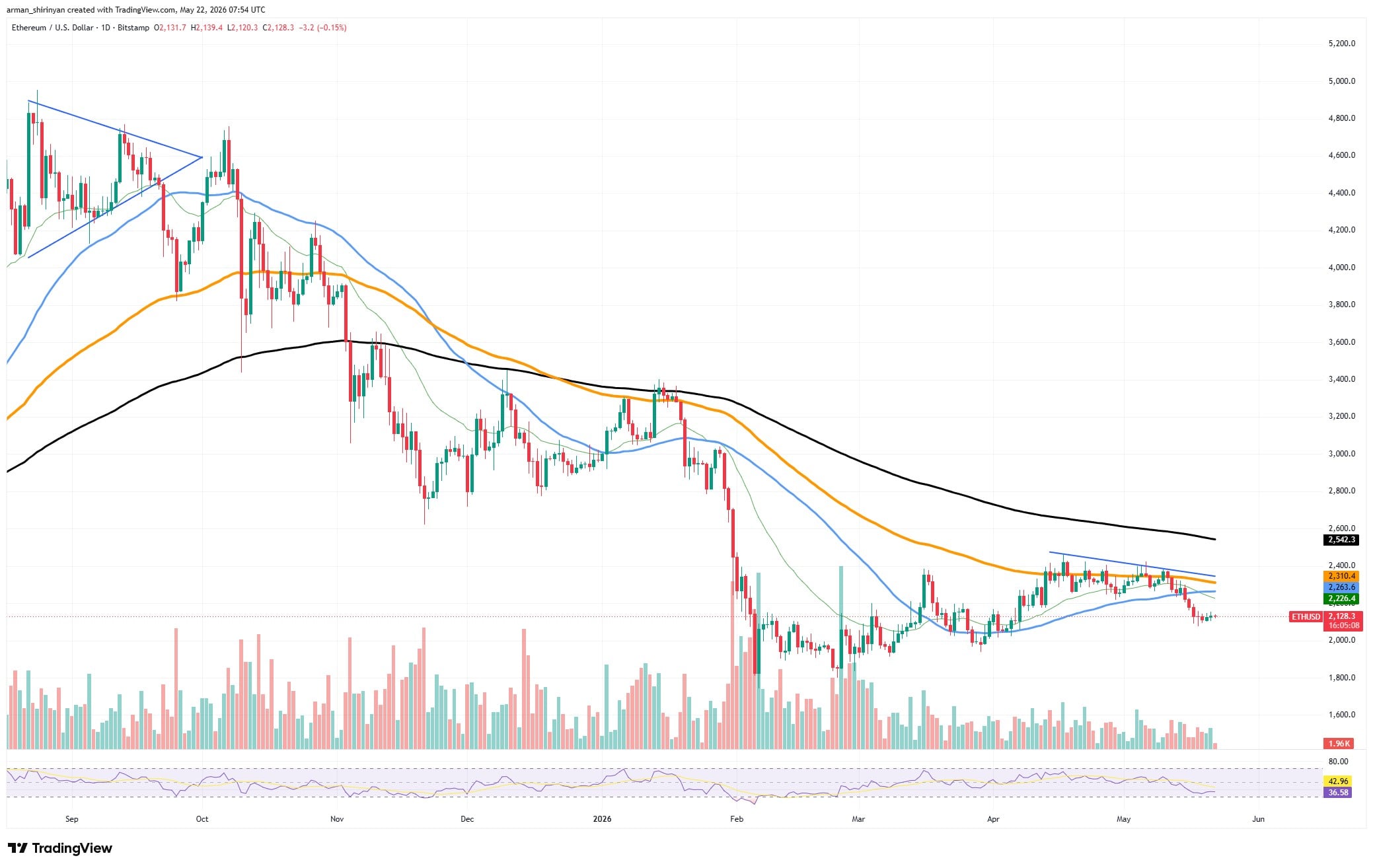
ETH/USDT Chart by TradingView
Retail traders, on the other hand, seem less and less inclined to wait for Ethereum's long-term strategy to materialize in terms of price performance. Higher-volatility industries, such as Solana-based assets, tokens connected to AI, and meme coins, have seen a quick rotation of capital. Ethereum benefited greatly from being the default destination following Bitcoin rallies in prior cycles. The rotation pattern appears to be weaker now than it has been since the bull market of 2021.
HOT Stories Beeple Drops Wild 2140 Michael Saylor Art Hyperliquid (HYPE) Nears All-Time High, Shiba Inu (SHIB) Faces Strong Downside Volume, Toncoin (TON) Returns to $2: Crypto Market Review
Fundamental issues arise
There are now more worries about Ethereum's internal organization. Critics contend that while the growth of Layer-2 networks like Arbitrum, Base, and Optimism aided in the ecosystem's scaling, they may also lessen direct value capture for ETH. Although base-layer fee generation has considerably slowed in comparison to peak-cycle expectations, network activity is still increasing throughout the larger Ethereum environment.
You Might Also Like

Wed, 05/20/2026 - 08:46 Vitalik Buterin Unveils 3 Steps That Will Change Privacy in EthereumByGamza Khanzadaev
The Ethereum Foundation has been the target of negative narratives that have further damaged sentiment. Traders who were already dissatisfied with ETH's comparatively poor performance reacted negatively to public wallet movements and treasury sales. With some market participants openly questioning whether Ethereum has lost its cultural and speculative dominance within the cryptocurrency space, online discourse has drastically shifted toward pessimism.
Ethereum continues to be the biggest smart contract ecosystem in terms of total value locked, developer activity, and infrastructure depth, despite the growing pessimism. But dominance by itself is rarely rewarded by markets. Ethereum currently finds it difficult to compete in areas where investors want acceleration, momentum, and stronger capital inflows.
The question of whether Ethereum will endure technologically is no longer up for debate. It concerns whether ETH can continue to inspire investor confidence in a market that has begun to look elsewhere.
免责声明:本文章仅代表作者个人观点,不代表本平台的立场和观点。本文章仅供信息分享,不构成对任何人的任何投资建议。用户与作者之间的任何争议,与本平台无关。如网页中刊载的文章或图片涉及侵权,请提供相关的权利证明和身份证明发送邮件到support@aicoin.com,本平台相关工作人员将会进行核查。


