
Organization & Compilation: ShenChao TechFlow
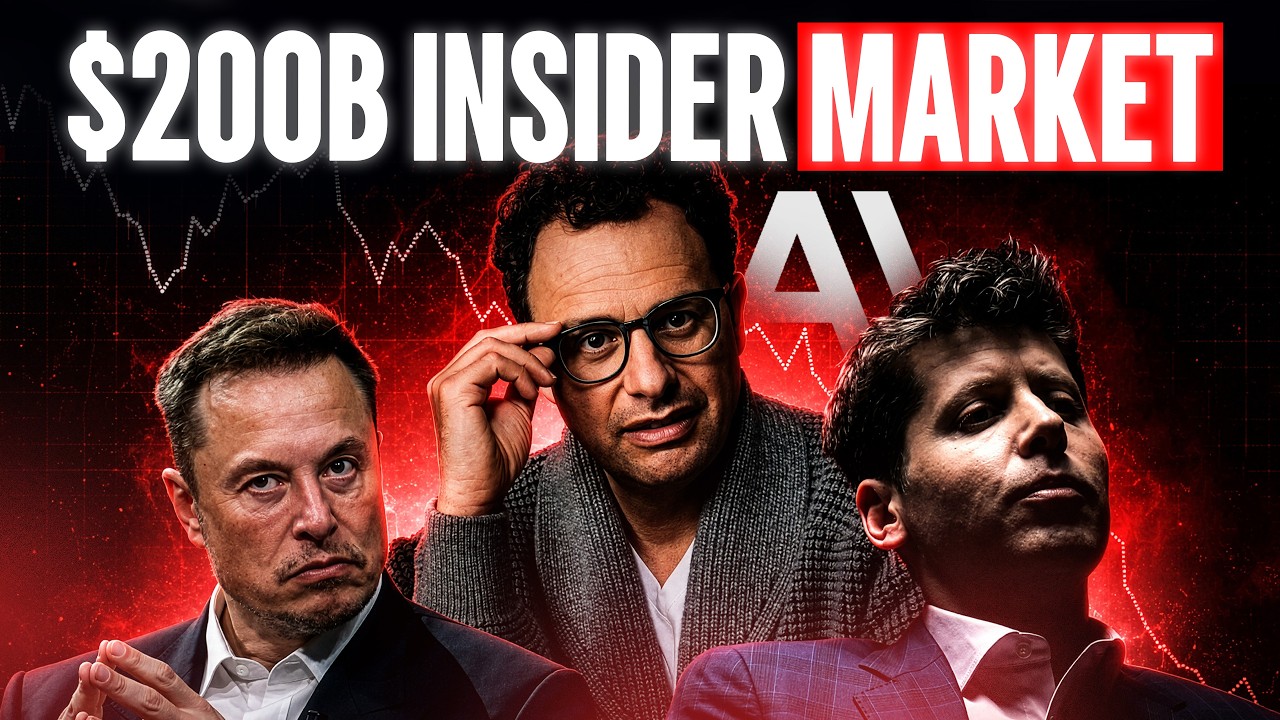
Guest: Dio Casares, Founder of Patagon
Podcast Source: Bankless
Broadcast Date: May 14, 2026
Editor’s Introduction
In this podcast, Patagon's founder Dio Casares unveils the insider details behind the secondary market trading of star companies like Anthropic. Patagon specializes in investments in digital assets and matchmaking in private secondary markets. Dio Casares states that the secondary trading related to Anthropic alone involves hundreds of billions of dollars, with single transaction fees as high as 10%. Approximately 10%-20% of completed transactions involve fraud or equity falsification, with fund practitioners earning more from these transactions than from their primary investment business.
More worrying is the nested SPV (Special Purpose Vehicle) structure, "forward contract" type employee equity, and "tokenized" private equity. Once Anthropic goes public, delays in the distribution of multi-layer SPVs in the DTCC system, whether GPs at each level choose to hold, and the possibility that some equity may be voided at the company level will trigger a wave of lawsuits lasting several years.
Highlights and Quotes
Market Structure and Arbitrage Opportunities
- “You can't just go to Anthropic and say ‘I want to buy $1 million worth of stock in this round’; it’s a market built on insider relationships.”
- “Some sell their shares, some sell buyer resources, and a few do both; that’s the structure of this market.”
- “Even people within the funds are making more from these secondary trades than their investment core business, so many are shifting to this market.”
Market Scale and Fees
- “The amount raised by the private market in the past few years has exceeded the amount raised in IPOs, with recorded secondary market transactions and financing rounds totaling over $200 billion.”
- “Many Anthropic transactions charge a one-time 10% fee plus long-term commissions. If $10 billion comes through this channel in one round, the fees alone represent $1 billion.”
Company-Approved and Unapproved Secondaries
- “Anthropic overall supports direct trading; the company recognizes it, adds to the shareholder roster, and then funds make joint distributions.”
- “The company despises platforms like Hive and Forge; they notice a bulk share and send mass emails to hundreds of thousands of unverified people saying ‘I have discounted shares,’ which directly disrupts Anthropic's fundraising efforts.”
- “OpenAI and Anthropic recently made offers to employees, allowing them to sell up to $30 million directly at this round's valuation. This is essentially the company ‘intercepting’ sellers who would have gone through gray secondary markets.”
Fraud and Bad Debt
- “In the transactions we’ve reviewed, about 10%-20% are fraudulent; equity certificates can be forged, leading to direct scams.”
- “More common than outright fraud is where someone claims to own shares but doesn’t, collects money, then fails to deliver.”
- “Under the presumption of ‘innocent until proven guilty’ in the U.S. legal system, if a position goes from $1 million to $50 million and it costs $10 million to sue for recovery, they might just default, netting $40 million profit.”
Nested SPVs and Post-IPO Settlement Hell
- “Why have two- or three-layer SPVs? Because it’s hard for buyers and sellers to align perfectly. An $8 million seller might have three buyers piecing it together.”
- “Anthropic has specifically called out Sidecar; they believe Sidecar's due diligence is insufficient, basically letting deals through just because the document seems okay.”
- “Post-IPO, the real chaos is that the first layer SPV takes days to weeks to secure the stocks, then has to ask LPs if they want cash or stock, transmitting to the second or third layers... at any layer, if a GP wants to hold and not distribute, everyone downstream gets blocked.”
- “After an IPO, companies typically don't try to recover problematic shares; they won’t conduct further rounds, and their motivation to maintain market order vanishes.”
Advice for Small Buyers
- “If you’re a small buyer, putting $100,000 to $1 million into some ‘tokenized version of Anthropic’ or similar vehicles means most times you can't even open it up to see the underlying assets; you’ll only see the vehicle where the money is going, which is usually the second or third layer.”
- “I trust my gut; if you have a really bad feeling about a position, you should pull out.”
The Real Operating Mechanisms of Anthropic’s Secondary Market Transactions
Host: Regarding Anthropic’s secondary market and the broader private market, there are many questions. Before we start, can you introduce yourself and why you have a unique observational perspective on Anthropic's secondary market?
Dio Casares: Patagon has two core business lines: self-operated investment and client-facing service. We have invested in secondary transactions ourselves and used them as products for clients to find share channels.
Host: So, as a service to clients, you go out into the market to find popular secondary shares and package them for sale to clients.
Dio Casares: That's completely correct.
Host: This puts you in the front row of observing this market. Currently, the hottest funding pools are the secondary markets, especially Anthropic, along with SpaceX and OpenAI. Can you explain what’s happening here? Most people have no concept of this area.
Dio Casares: Broadly speaking, there are two categories of secondary markets. The first type is primary secondary. The name itself is a bit contradictory, meaning instead of letting a fund invest directly, there are SPVs set up in the market, layered on top of each other, funneling new funds into the company, which does receive financing.
Employee share sales fall into this category as well since this is approved by the company. The company gains value from issuing stock to employees and allows them to liquidate those shares.
The second type is the true secondary. You are buying shares that someone has already bought from the company. This category has historically been troublesome. Traditionally, VCs hold out for IPOs or acquisitions, but today financing rounds can scale to hundreds of billions, far exceeding the traditional $10 billion IPOs, completely shifting the timeline for liquidity. When FTX went bankrupt, many Anthropic shares were forcibly sold due to the bankruptcy process.
Thus, the secondary market needs to be established, but at the same time, it is viewed with suspicion by many management teams because they believe it competes with their fundraising equity sales.
Host: So besides the allure of Anthropic itself, this phenomenon arises from two structural inputs: first, the market size is already vast and the amount of capital larger; second, these companies stay private longer, allowing the secondary market to mature and participants to increase.
Dio Casares: Yes, I agree.
Host: Can we first talk about normal circumstances? Anthropic is aware of the existence of the secondary market, some of which are company-approved secondary transactions. How does an Anthropic-approved secondary transaction get completed?
Dio Casares: Perhaps a more accurate term would be the SPV market. Some people in the market want to buy into Anthropic; they aren’t in the funds, they don’t have strong loyalty to the company, and they are purely looking to profit. Generally, Anthropic supports direct trading; the company recognizes it and adds it to the shareholder list, then the corresponding funds execute joint distributions, making money by helping raise funds for the company.
Currently, Anthropic is working with several large private equity funds on this round of financing. These institutions are low-key but indeed connecting many people with shares. They are not on Anthropic's list of “unauthorized institutions,” so it can essentially be deemed that the company approves of them.
Another category is which management is very averse. These companies often send legal letters directly to them. For example, platforms like Hive and Forge. Their practice is to see a bulk share and send mass emails to hundreds of thousands of unverified users on the platform saying “I have discounted shares,” directly interfering with Anthropic’s financing this round. They are engaging in “picking up bargains”: attempting to find shares cheaper than current secondary market prices or current round valuations.
The result is that family offices and large clients on the Anthropic side will say: “Hive and Forge say I can get a 20% discount, so why should I invest directly in this round?” This complicates Anthropic’s fundraising. Even worse is on a psychological level; if there appears a clear “sell low, buy high” price gap in the market, it often signals a lack of market activity, which is a bad signal; the company needs to eliminate it.
OpenAI and Anthropic recently made offers to employees, allowing them to sell up to $30 million directly at this round's valuation. This is essentially the company “intercepting” those sellers who were originally going to go through gray secondaries; many who initially wanted to sell already sold through the offer and won’t sign those kinds of “I’ll buy your stock a year later” private contracts.
Host: So there are two types of recognized transactions by Anthropic: one is non-competitive, where the company is fundraising and the money goes directly to the company; the other is improving future market structure, allowing employees or ecosystem participants who want to sell to do so before the IPO, thereby alleviating sell pressure. This is a positive sum transaction that aligns with Anthropic's interests. On the other hand, the bad type is the intermediaries taking a cut, benefiting neither the company nor appearing good.
Dio Casares: Correct. In the U.S., there is a regulation on unregistered securities: a six-month holding period. Therefore, some of the “tokenized private equity” you see might potentially violate this law if someone continuously trades back and forth. They might have some circumventions in the background, but historically, U.S. regulators tend to consider that as long as assets are linked to the U.S., they have jurisdiction. Another thing Anthropic doesn’t want is to be blamed by regulators for “knowing but not acting.”
Host: So, Anthropic legally has no room to “act like it didn't see” these markets; once they are aware, they must take action.
Dio Casares: Right.
Host: How large is this market? Are there hundreds of billions related to Anthropic? How much of it is an unhealthy dark market, and how much is the total market?
Dio Casares: This essentially represents the entire private side. Private equity comes in many forms: a few family offices combining funds, working with brokers, and engaging with institutions like us to raise fees; all are completely different. Plus, brokers are layered; the first-tier broker knows a bunch of buyers while also knowing another broker, who might actually have shares. So the market structure is quite complex, and there’s a lot of money.
An interesting data point is that private equity financing has now exceeded IPO fundraising amounts for several years. The total scale of recorded secondary market transactions plus financing rounds is over $200 billion. Given that the fees are not just a few basis points, but can be seen as a one-time 10% plus long-term commissions, if $10 billion flows through this channel in one round, that alone represents a $1 billion fee.
Host: I recently saw two comments on social media reflecting the intensity of the market. One was from a guy in San Francisco writing on his Hing profile “I know people at Anthropic, dating no commission,” using Anthropic stock shares to attract dates. The other was from a woman tweeting, “I earned more from brokering one secondary Anthropic deal than I did throughout my entire 20s working, this is absurd.” This is the state of social elite dynamics around Anthropic shares in San Francisco. How did this come about?
Dio Casares: I actually talked to the person who tweeted. From a buyer’s perspective, you want to buy into Anthropic, but the company’s articles and agreements are not public and not easy to obtain. You can’t just go up to Anthropic and say, “I want to buy $1 million worth of stock this round, thank you.” It's a market built on insider relationships; some sell their shares; some sell buyer leads, and a few do both. That’s the structure of the market.
Even people within the funds are making more from these secondary transactions than from their main investment business, so many are shifting toward this market.
Host: So people see Anthropic equity as a gold mine, and now a lot of people are selling pickaxes and shovels.
Dio Casares: Right, and now competition is much fiercer, which is a good thing. A few months ago, there wasn’t real competition; most people were just intermediaries, not directly connecting sellers. Now, more people are able to find both buyers and sellers simultaneously and manage the whole process, becoming more professional. But at the same time, the fees that can be charged have also decreased.
Furthermore, many people don’t realize the risks: in some cases, you may not be able to access the shares in the investor’s hands, and thus have to buy employees' forward contracts. Recently, this became a problem when a prominent institution sold a forward contract of an xAI employee, who was later named in the lawsuit against OpenAI, accused of corporate espionage, and had all of his shares reclaimed by the company. The result was that money was paid and fees collected, but it turned into chaos; all buyer brokers were left hanging, and the institution's attitude was, “If you paid the fee, that’s your problem, not ours; we can only return the original principal.” I believe that these “fake SPVs” will become more prevalent, and in the future, it will evolve into a reputation game, with a focus on who can create investment vehicles without blowing up.
10-20% of Transactions Involving Fake Share Certificates
Host: Let’s talk about why an investment vehicle might blow up. I understand it involves nested SPVs at two, three, or even four levels, each layer extracting fees, increasing uncertainty about whether the corresponding equity actually exists.
Dio Casares: The existence of two- or three-layer SPVs is due to “buy and sell intentions not aligning.” An $8 million seller typically does not have a buyer matching exactly $8 million; they might be pieced together by three buyers. Most people in this space are not licensed brokers; they cannot charge fees for making transfers. But if you set up a fund, you can charge front-end management fees for managing that fund, which is collected at the SPV level.
Host: Does Anthropic favor these funds or oppose them outright?
Dio Casares: It’s better than having none at all. Because at least there is tax reporting if managed properly. Anthropic is also publicly stating which fund administrative service providers they approve. They specifically named Sidecar, which is interesting because others are typically brokers in funds or SPVs, while Sidecar is simply a fund administrative service provider. They called out Sidecar because Anthropic believes Sidecar’s due diligence is inadequate; they basically approve a deal if they think the document looks fine.
Returning to your point about risk, the first is that the equity might not be real at all; share certificates can be forged, which constitutes direct fraud. We’ve seen at least ten cases that can be confirmed as fake after checking share transfer records, but there isn’t much you can do; you can only report it. Sometimes you can’t distinguish whether they personally forged it or if they’re reselling a counterfeit. There is indeed a fair bit of fraud on the market, but I don’t think it’s as prevalent as reported; roughly 10%-20% of completed transactions involve fraud. What’s more common is when someone claims to have shares but doesn’t, collects money, and then tries to find a product to fulfill, which often fails.
Host: Is there such a thing as “unintentional fraud,” where someone tries their best but because the market functions this way, they actually fail to procure the promised assets? Is there a gray area here?
Dio Casares: That’s called “gross negligence.” There aren’t many gray areas. Resources like Pitchbook, shareholder manuals, and other materials that would enable due diligence should have been used when directly connecting with sellers. If you haven’t done due diligence on your buyers or clients, that constitutes negligence; it shouldn’t happen. If you bought from a known seller with access to shareholder manuals and documents were reviewed, and he still engaged in dubious behavior, that’s a different matter, but the market also has a reputation; unreliable individuals are known in the circle.
Potential Lawsuits and Locked Stock Disputes After the IPO
Host: After Anthropic’s IPO, how will this speculative market “collapse”? Not a bad collapse, but rather settlement, share distribution, and cash exchanges.
Dio Casares: This mainly hinges on two factors: first, the accounts of brokers at the DTCC (Depository Trust Company) level and the AML (anti-money laundering) procedures; second, the distribution terms of each fund. Some funds have complete autonomy on when to distribute; some require immediate distribution in kind or cash once the IPO occurs and shares are tradable.
Imagine a three-layer SPV: the first layer gets the stock and then asks the LPs below whether they want stock or cash; if all LPs in the second layer say they want stock, it gets passed up; this depends on the DTCC, typically takes a few days, but can take two weeks if there are banking hassles, which accounts for a two-week delay. Then the second layer asks its LPs whether they want cash or stock again, transmitting this to the third layer, adding another three days to two weeks.
At any layer, if the distribution rules allow GPs to decide freely, for instance, if Anthropic's stock price soars after opening and the first layer GP says, “I have long-term commissions; I want it to rise a little longer”; or conversely, if the opening crashes and they don’t want to deliver immediately, wanting to hold for more months. If such scenarios arise, downstream parties cannot receive their stocks. There might also be individuals hedging their long positions on the open market, technically operating in a gray area; you might think delivery will happen in six months, but end up waiting another month, leading to numerous potential lawsuits.
Host: It sounds like Anthropic itself is not too concerned since for them once the shares are issued, it’s done, and higher SPVs handle it.
Dio Casares: Right. After going public, the company no longer needs private transfer agents; they only use transfer agents for the first stock issuance, then everything runs through DTCC, and they basically do not intervene. But many brokers and banks might scrutinize these transactions saying, “Anthropic declares this invalid; we need to first confirm if we can help you sell.” This could be quite troublesome.
From a gaming perspective, after an IPO, companies basically won’t try to reclaim problematic shares; they won’t conduct further private rounds, and thus the motivation to maintain market order disappears.
Host: How large can this get? How many lawsuits? How many dollars involved? How long will the cleanup take?
Dio Casares: Lawsuits will take several years, and some cases will definitely drag on for years. I can’t give a specific total; I think no one can. But this will be the “awakening moment” for this market.
Recently, I spoke with a person from a small family office in Europe, which was quite disheartening. I believe they invested in the problematic transaction mentioned earlier, and ultimately the money was returned. But I believe that GP did not tell the LP, that they held the returned money and wanted to continue operating, betting on Anthropic's appreciation. Such situations are quite common: using returned money as transactional capital to bet on appreciation. Unless they can achieve a 500% return, they won’t cover the gap. I am not very optimistic about their capability to do so. This bill will have to be borne by that fund itself.
Host: What you are worried about is: some people subjectively want to do well, but it goes awry, such as buying fake equity. But why, after a blow-up, would there still be client funds?
Dio Casares: Yes, or negligence occurs. My instinct is that in the fee structure of that large share, a heavy fee was taken by the GP, leaving no money to refund the LP; or for some reason, they believe they can’t refund. But the financial industry doesn’t work that way; when something goes wrong, someone must step forward and say, “I’m very sorry this didn’t work out; please return your money.”
Host: So the pathway to making a mistake is like this: you raise money from friends and relatives, set up an SPV, which has funds; you receive a verbal promise from someone that they will deliver shares. At that point, you have two choices: do nothing and leave the funds intact in the SPV, waiting for the shares to arrive; or count your chickens too early, thinking, “I just made a huge profit; I’ll buy a house, get a Porsche,” and then on the day of delivery, discover that the shares didn’t arrive, but money has already been spent, nothing to pay back.
Dio Casares: Absolutely correct.
Host: Let’s pull back a bit. The private market is huge, companies are delaying IPOs, and funds are being traded privately, gradually turning into their own internal market, which is the opposite of the public market. Yet, the coolest companies are staying in this market longer. How might this market evolve in the future?
Dio Casares: Saying “completely unregulated” isn’t very accurate; there is indeed some regulation, but it is “very wild,” and not strictly enforced unless there is clear fraud; regulators generally cannot keep up. Should the U.S. financial regulatory agencies catch someone not doing proper filings or catch illegal financing? Most people would say they would go after illegal financing. Sometimes the same group is doing both things.
The market always repeats similar patterns. This is similar to the low liquidity and high FDV experienced in crypto; limited supply creates insane market conditions, making it easier for companies to finance. There is indeed real technology behind this current wave; I personally use Claude, and their revenue is already quite considerable.
Interestingly, existing large institutions and banks themselves have or partner with secondary departments, and they are quite cautious, unable to keep up with the market's pace. So you see a wave of new companies coming in to fill this gap. At the same time, large funds are also creating SPVs, but with different structures and targeting only their LPs. This trend is shifting funds from “investments managed by funds” to “directly managed funds.” I believe this will continue for some time until this round finishes. A group of people will buy what amounts to “locked tokens” and lose a lot, ultimately saying, “Alright, I’ll just put the money back into a VC fund.” This wave of hot money will go elsewhere, but the secondary market in the U.S. will become more professional.
Patagon's Strategy and Philosophy
Host: Returning to what you are doing at Patagon, based on your experiences and understanding in the secondary market, can you share Patagon's strategy and philosophy?
Dio Casares: Initially, we only conducted proprietary trading. Later, a friend paid me a fee, and I asked why. He told me that another broker was going to charge him two to three times more, and what he paid to me was what he saved. This made me realize that growing up in the Bay Area, I know many people, understand who to contact and how to conduct background verification, while my friends often come from international backgrounds without such familiarity in San Francisco. I started part-time in this business and slowly realized this could be turned into a venture, especially in terms of branding and processes.
Look at platforms like Forge and Hive; they do not verify whether the equity is real, don’t vet buyers, and do not collect KYC information (only referring to their marketplace operations; their own direct investment opportunities are another matter), yet they still charge 3.5%. They just provide an introduction and a fake order book; you still have to negotiate via email, and they take 3.5% on the transaction. We think that’s absurd.
We find our own deals, create our own investment vehicles, and conduct due diligence ourselves; we ensure that the equity is real and that the structure is compliant. Clients can invest in these deals directly on the platform without first negotiating prices, requesting investment vehicle documents, signing, and communicating back and forth via email for remittances. Everything is completed in one place, and ultimately, we can also allow clients to use their holdings for credit financing. We aim to provide clients with far more value than simply “letting you invest then leaving you alone.”
We have handled complex deals, such as one from a crypto company that consisted entirely of employee forward contracts. Throughout the due diligence process, we conducted background checks on each employee to see if they had gambling issues or negative references. We identified one problematic person and did not work with them. The other employees posed no issues, and the entire transaction was successfully completed.
Host: This also helps build your credibility; when you're acquiring secondaries for Anthropic or other companies, you can say, “Our client base has undergone quality screening.”
Dio Casares: Exactly. We can also tell clients, “We’ve handled difficult transactions.” At that time, there were no other channels available for clients to access authorized shares in the market; we managed to bring clients into deals that others couldn’t access. Clients appreciate this, making them more likely to reach out for such matters next time.
Legal Risks of Tokenized Equity and Perpetual Contracts Before IPO
Host: If any listeners have already purchased Anthropic secondaries or those of other companies but are unaware of the authenticity behind the scenes, what advice or actions do you recommend?
Dio Casares: It’s hard to generalize because the market structures vary so widely. Some people currently hold perpetual contracts, which I personally do not recommend, but ironically, these are categorized under completely different legal subclasses of derivatives, making the risks less apparent. The fund rates may be aggressive, but this is the price you pay to align with the IPO opening price.
If you are a small buyer, placing $100,000 to $1 million in some “tokenized version of Anthropic” or similar vehicles often means you cannot open it up to fully see the underlying details. You might see only the vehicle where the funds are going, which is typically a second or third layer. I would recommend not adding more investment; if you have a really bad feeling about this position, generally speaking, I trust my instincts, and you should pull out.
Host: Regarding the tokenized perpetual contracts you mentioned, do they have genuine claims to the underlying equity, or are they merely predictions or subjective reflections?
Dio Casares: Many institutions are doing this now; although the mechanisms vary, the idea is that once these go live, the funding rates of such pre-IPO perpetual contracts will be extremely volatile. Pre-IPO perpetual contracts differ from ordinary perpetual contracts because market makers have underlying trades to act as hedges, and the hedging methods differ from those in the U.S. stock market structure. Ultimately, it will converge to a real stock and allow for arbitrage. Therefore, as the IPO approaches, the prices and funding rates of perpetual contracts will align towards “normal market” levels.
Host: Is there any topic I haven’t asked about?
Dio Casares: I think we’ve covered it quite comprehensively.
免责声明:本文章仅代表作者个人观点,不代表本平台的立场和观点。本文章仅供信息分享,不构成对任何人的任何投资建议。用户与作者之间的任何争议,与本平台无关。如网页中刊载的文章或图片涉及侵权,请提供相关的权利证明和身份证明发送邮件到support@aicoin.com,本平台相关工作人员将会进行核查。


