The rise of the US stock market over the past six weeks is one of the strongest in 70 years, with mechanical funds nearly fully invested long. Nearly 40% of the increase since March has been contributed solely by the semiconductor sector; without AI, this market performance would be mediocre. However, this bull market faces two major risks: the first is the excessive crowding of positions, and the second is whether the AI narrative can continue. Nomura warns that if a "DeepSeek-like" shock occurs, the Nasdaq could trigger a circuit breaker, and semiconductor ETFs may drop 15% in a single day.
Written by: Long Yue
Source: Wall Street Insights
The more the market rises, the harder it becomes to find reasons for a downturn—yet the risks have not disappeared; they have simply become more hidden.
On May 14, Bloomberg market analyst Jon-Patrick Barnert pointed out that the current rise in the US stock market has become quite significant, but the costs and timing of shorting remain difficult to gauge. What's trickier is that even the "most valid reasons to short" have become obscured.
The core contradiction of this round of market activity is: positions are already extremely crowded, but the fundamental narrative—especially concerning AI—still supports market sentiment. Between the two, which will collapse first?
Positions: The market is approaching "fully long"
From a pure price trend perspective, the signals for a pullback have become quite obvious.
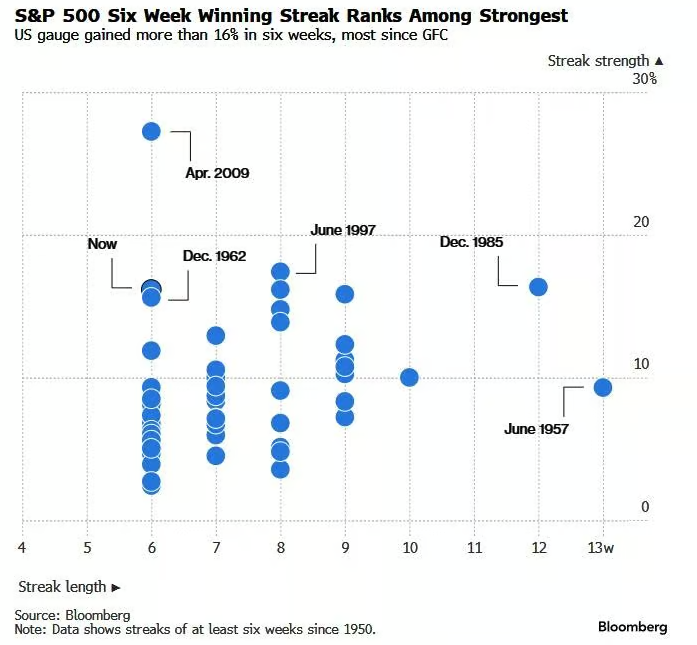
The S&P 500 index's continuous rise over the past six weeks is not only one of the longest in over 70 years, but its gains are also among the strongest in history. Barnert states that "taking a breather" is perfectly normal for this market.
The Goldman Sachs Risk Appetite Indicator has risen back to 1, the first time since the beginning of the year. It is extremely rare for this indicator to exceed 1, historically often predicting a potential pullback. The last time it broke this threshold was in 2021, after which the market entered a bear market.
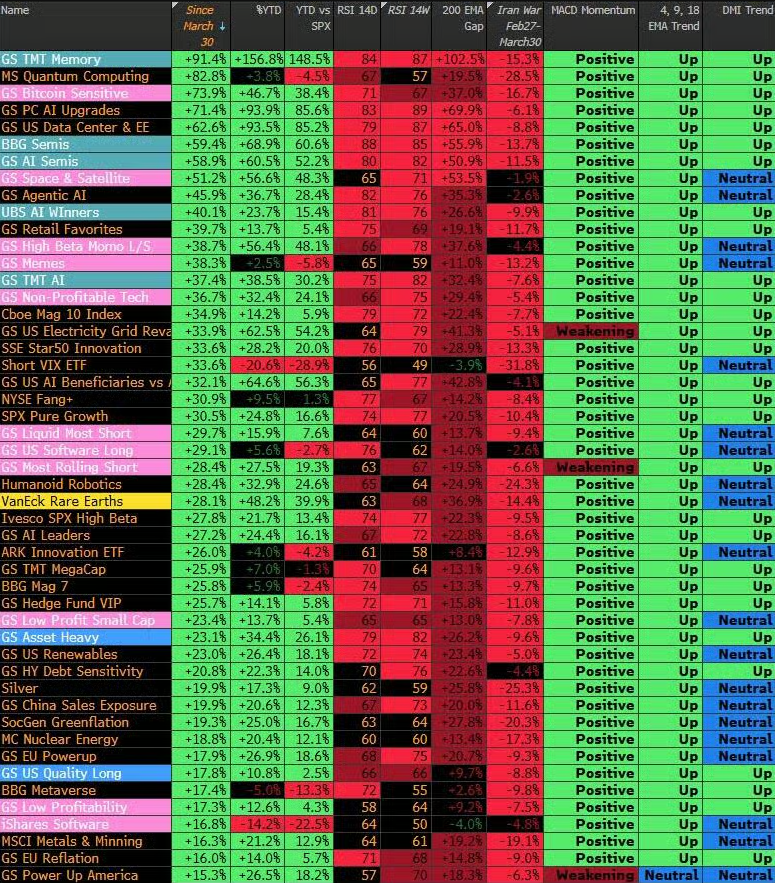
From the perspective of the hottest thematic stocks, Barnert describes this as a "market where everything is overbought," with some of the most popular sectors reaching extreme levels of overbuying. Coupled with mechanical fund inflows—currently appearing to be at or near maximum long positions—the overall picture is: limited upside, with significant potential pressure for position resetting.
But shorting is not easy. Barnert points out that position adjustments may be completed in a single day, making it extremely difficult to time entry and exit for short trades. If the market chooses to "slightly decline," volatility positions will quietly become ineffective in a moderate environment. The more likely scenario is that the overall sentiment remains bullish, and once shorts are forced to cover, it could trigger a new round of short squeeze, rising faster than anyone expects.
Some popular ETFs have started to show subtle changes in fund flows—leaning towards "locking in profits" rather than "chasing higher." But Barnert also admits that this trend has been ongoing for several weeks, and so far, it has not had a substantive impact on market trends.
Narrative: Without AI, the market is nothing
If positions are a technical layer of concern, then the narrative seems much more solid at the moment.
Barnert points out that there is currently a lack of clear signals that would trigger a fundamental bear market. Corporate earnings remain strong, inflation expectations have slightly increased but are not at extreme levels. The market has digested the impacts of high oil prices and the situation in the Middle East, and the latest US employment data has eased recession fears. As for interest rate hike expectations, they are no longer a catalyst suppressing the stock market.
But one issue cannot be ignored: the concentration of this round of market activity has become highly focused on "the concentration itself."
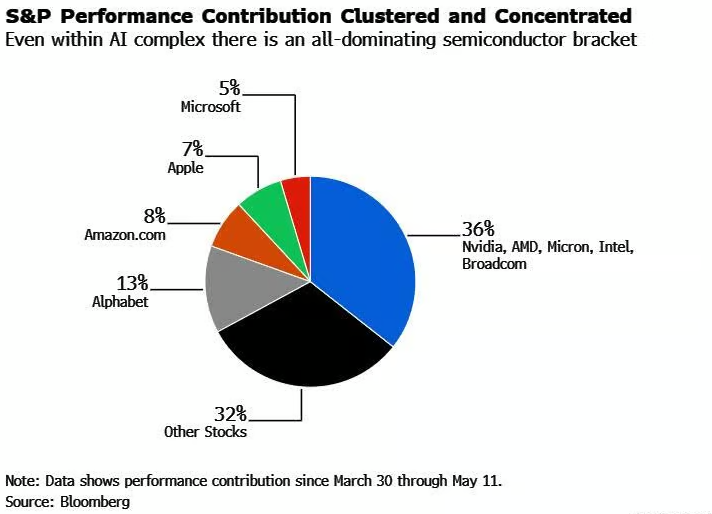
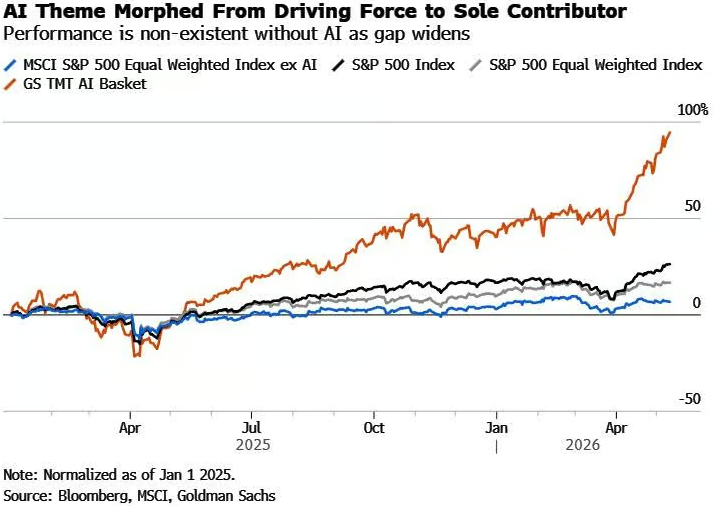
Barnert points out that whether comparing indices with AI versus those without AI, or breaking down the sources of gains since March, the conclusion points in the same direction: without AI, the market's performance can only be described as "mediocre." More notably, the semiconductor sector alone has contributed nearly 40% of the gains since March.
The market narrative surrounding AI has once again entered a "greed mode," rather than a rational pursuit of reasonable returns. Concerns that were hotly discussed just months ago—whether AI computing costs can be covered by layoffs, energy supply bottlenecks for data centers, AI pricing wars eroding profit margins, new competitors disrupting existing patterns at lower costs, significant increases in capital expenditures while stock buybacks stagnate, AI safety risks—now seem to have been collectively forgotten by the market.
The risk of a "DeepSeek moment" replay
Nomura Securities strategist Charlie McElligott has issued the most direct warning regarding this.
He stated: "Considering the current market structure and the high overlap of themes, if another comprehensive 'DeepSeek-like' shock catalyst occurs one day, it could likely directly trigger a Nasdaq-level limit-down trading."
McElligott further pointed out that in this scenario, the semiconductor ETF could easily see a daily drop of 15%—because "the presumed reversal of mechanical fund flows would lead to large-scale overshooting declines."
In other words, it is precisely those mechanical funds (such as CTA strategies, risk parity funds, etc.) that keep adding positions during the rise, which, once a reversal is triggered, will become amplifiers for accelerated declines.
This AI bull market faces two major risks, one technical (overcrowded positions) and one narrative (whether the AI story can continue). The former could trigger at any time, while the latter, once it bursts, will have deeper impacts. The combination of both constitutes the current market's most concerning structural vulnerability.
免责声明:本文章仅代表作者个人观点,不代表本平台的立场和观点。本文章仅供信息分享,不构成对任何人的任何投资建议。用户与作者之间的任何争议,与本平台无关。如网页中刊载的文章或图片涉及侵权,请提供相关的权利证明和身份证明发送邮件到support@aicoin.com,本平台相关工作人员将会进行核查。


