Author: Kuri, Deep Tide TechFlow
If you have recently browsed English Crypto Twitter, it is highly likely that you have seen a screen full of ZEC.
Names like Naval, Arthur Hayes, Mert Mumtaz, Balaji, and Cobie have been appearing one after another under the same topic, combined with Multicoin Capital publicly announcing heavy investment, and multiple privacy panel discussions at Consensus Miami, ZEC's social media presence reached its highest point since the 2025 market surge in the past week.
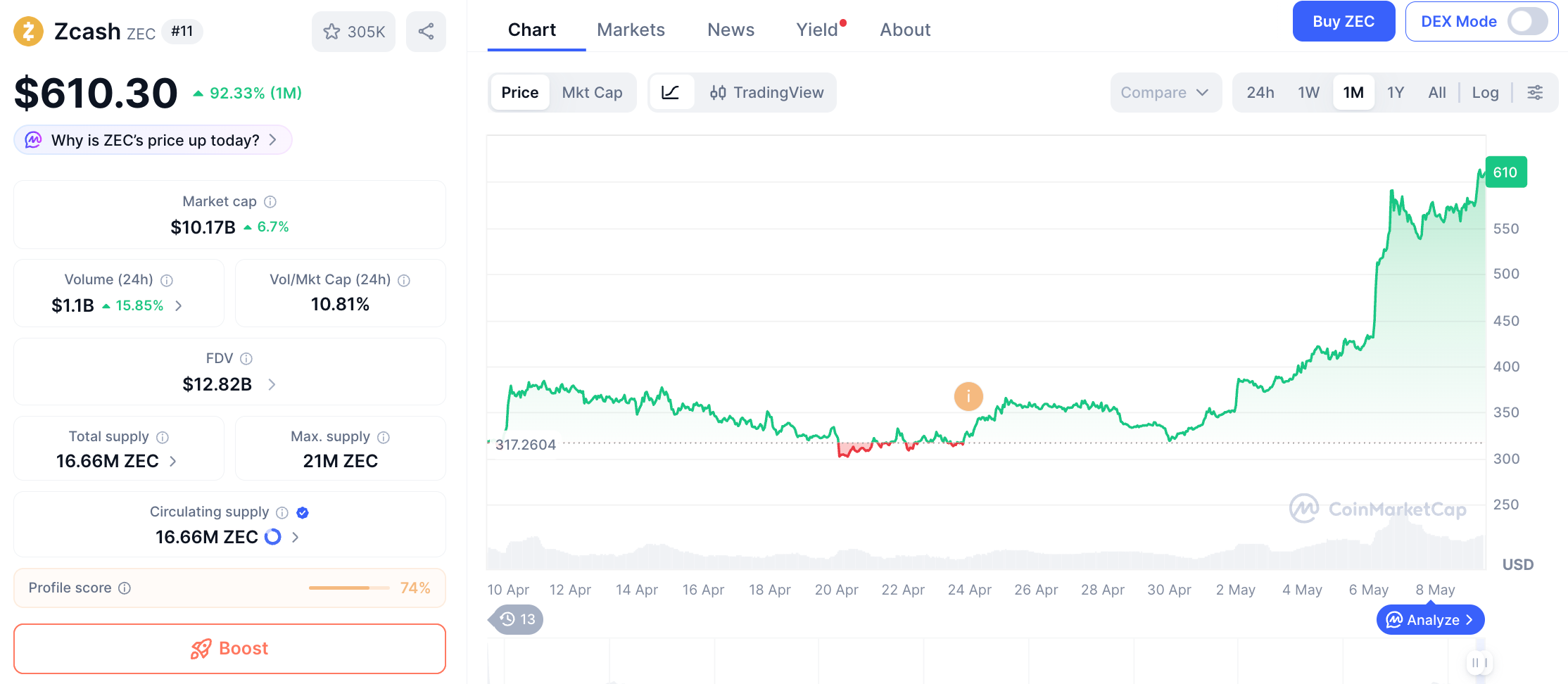
The price has already run ahead of the narrative. As of the time of writing, ZEC is priced around $580, with a more than 110% increase in the past 30 days and a cumulative increase of over 1500% this year. Its market capitalization has exceeded $9.5 billion, surpassing the well-established privacy coin Monero (XMR), rising to the top 20 on CoinGecko.
On May 6, ZEC surged nearly 30% in a single day, triggering over $62 million in short liquidations, with shorts accounting for $46.7 million.
So, the question arises: what is driving this wave?
Multicoin's Heavy Investment: "Bitcoin Can Resist Censorship, but Cannot Escape Property Tax"
The most direct catalyst comes from Multicoin Capital.
On May 6, Tushar Jain, co-founder and managing partner of Multicoin, publicly stated at a panel in Consensus Miami that the company has established a "significant position" since February of this year. He did not disclose the specific size but provided a clear investment logic framework.
In a subsequent long post on X platform, Jain wrote: "Bitcoin can resist censorship; no one can freeze your BTC or prevent you from using it. But this cannot prevent the government from seizing known holdings through property taxes."
His direct argument is based on California's Initiative 25-0024, which proposes a one-time 5% wealth tax (including unrealized gains) on residents with a net worth exceeding $1 billion, expected to raise about $100 billion.
Jain's core judgment is: Bitcoin is an insurance against fiat currency, but its on-chain balance is completely transparent; a tax authority with a blockchain explorer can see everything. ZEC's shielded pool uses zero-knowledge proof technology to hide the sender, receiver, and amount, making on-chain assets invisible to external observers.
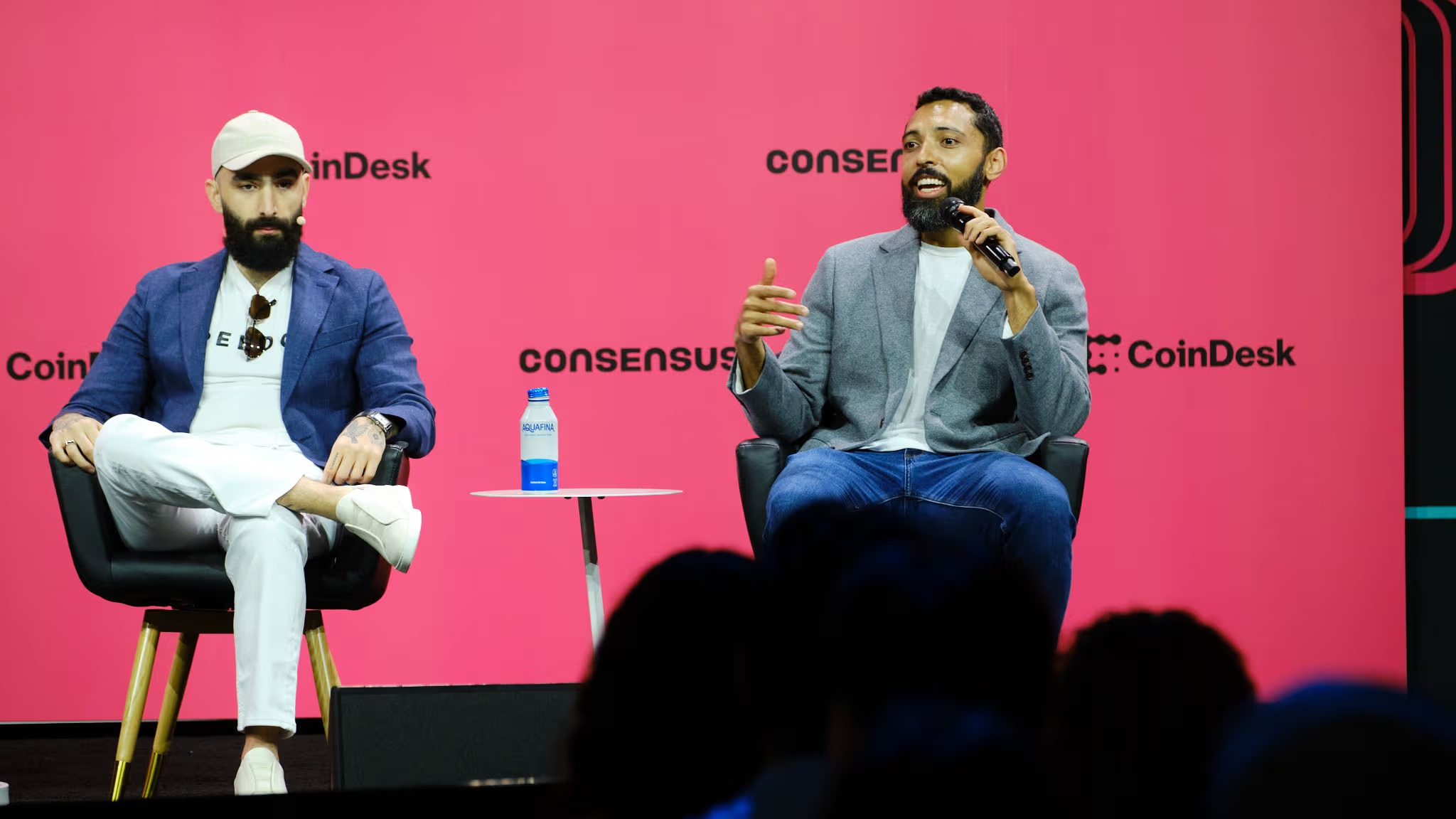
"We believe that truly private, censorship-resistant, and seizure-resistant assets have a clear product-market fit, and demand is accelerating," Jain wrote, "Zcash is the cleanest way to express this argument in the public market."
This represents a clear shift in stance for Multicoin.
In 2019, the fund wrote an article arguing that "privacy is a feature of valuable cryptocurrencies, not an independent product," stating that users should not sell BTC or ETH to buy ZEC for the sake of privacy.
Seven years later, this public statement seems like an overturning of its past conclusion with real capital.
KOLs Collectively Stand Up, Arthur Hayes Shouts "10% of Bitcoin Price"
The seeds of this ZEC narrative were actually planted in the second half of 2025.
BitMEX co-founder Arthur Hayes, AngelList co-founder Naval Ravikant (also an early investor in Zcash), Helius founder Mert Mumtaz, and top crypto KOLs like Balaji Srinivasan and Cobie, have been intensively voicing support for ZEC since last fall.
Naval tweeted in October last year: "Bitcoin is insurance against fiat currency; Zcash is insurance against Bitcoin."
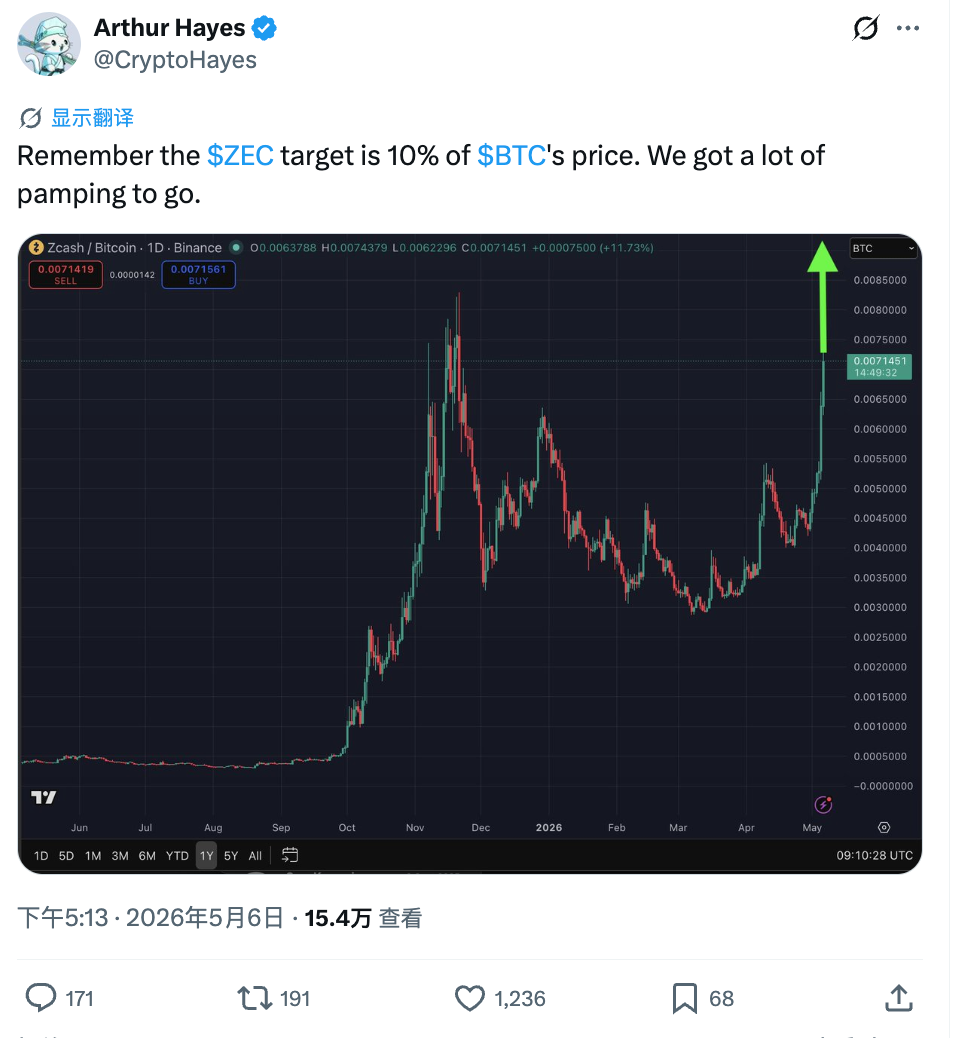
Hayes' statement is even more aggressive. He bluntly stated at Consensus 2026 that ZEC's long-term target price should be "10% of Bitcoin price." Based on the current BTC price of about $80,000, this corresponds to a target price for ZEC of about $8,000, which is still over 13 times the current price. Tyler Winklevoss also endorsed a $9,700 target price for ZEC capturing offshore wealth this week.
These shout-outs may not necessarily serve as investment bases, but their concentrated emergence indicates one thing: the top funds and voices in the English crypto circle are simultaneously leaning towards the privacy sector.
The Anti-Quantum Narrative at Consensus Miami
If Multicoin and KOLs provide the catalysts in terms of funding and narrative, the release of the technical roadmap at Consensus Miami gives the market a fundamental story.
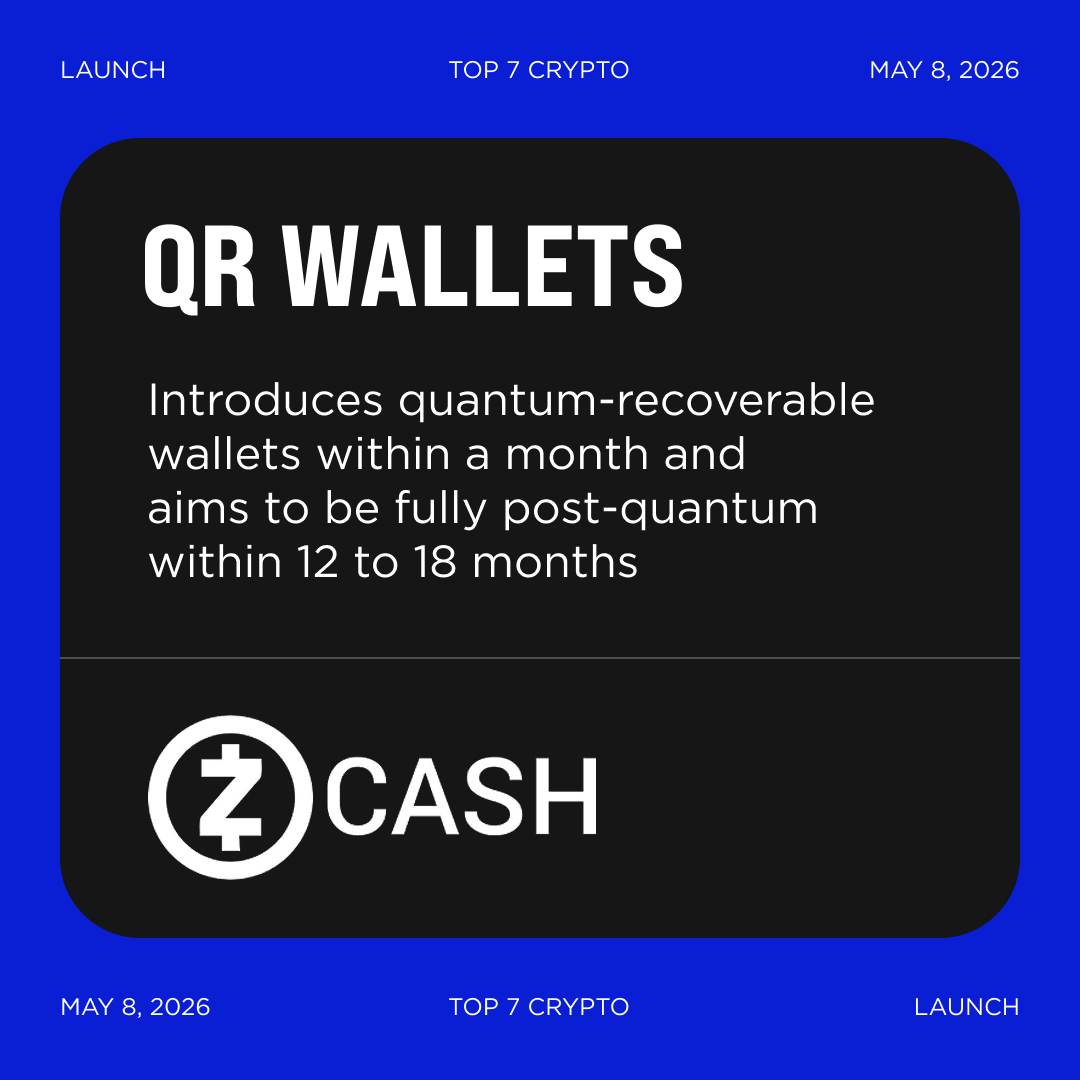
Josh Swihart, founder and CEO of Zcash Open Development Lab, announced on May 8 at a special session for the privacy track that quantum-recoverable wallets would launch within a month, and Zcash plans to achieve full post-quantum security status within 12 to 18 months.
The logic here is that the ECDSA signature algorithm currently used by most cryptocurrencies will become vulnerable after quantum computers mature. A more dangerous scenario is the so-called "harvest now, decrypt later" strategy, where adversaries record encrypted data now and decrypt it when quantum hardware matures. For a privacy coin whose value proposition is entirely built on transaction data confidentiality, this poses a survival-level threat.
Swihart also disclosed that since the ECC wallet integrated the Near Intents cross-chain exchange function last October, $600 to $700 million has flowed in and out through this channel, mainly exchanging for USD and USDC. Zcash's privacy pool currently holds about 30% of circulating ZEC, marking a historical high.
Institutional Entry Signals: Grayscale ETF, Robinhood Launch, Foundry Mining
In addition to Multicoin's heavy investment, ZEC is also accumulating more institutional-level catalysts.
Grayscale has submitted an application for a ZEC spot ETF, currently awaiting SEC ruling. Grayscale has previously stated that the upward potential of ZEC is closely related to "the repricing of financial privacy in an AI-driven world."
Robinhood recently launched ZEC trading, opening up retail access. Foundry (under Digital Currency Group) announced the launch of large-scale ZEC mining pool operations, marking it as the second asset supported after Bitcoin, adding backing to the security and institutional recognition of ZEC mining.
On the on-chain data front, Santiment's data shows that, driven by tightening exchange compliance rules and growing concerns over data tracking, retail investors' interest in privacy coins is increasing. A report released by CoinDesk Research in March of this year stated that Zcash has reached the critical point of "encryption supremacy," backed by three forces: AI tools can denormalize users on transparent blockchains by tracking transaction patterns, the threat from quantum computing to the security of current encrypted wallets is becoming increasingly real, and quarterly transaction volumes have surpassed $100 billion.
However, the team that built Zcash is now gone
The aforementioned catalysts piece together an optimistic picture, but one fact should not be overlooked: the core team that built Zcash is no longer there.
In January, Electric Coin Company (ECC) CEO Josh Swihart and the entire ECC team collectively resigned, citing governance conflicts with the Bootstrap Project Board, characterizing the resignation as "constructive discharge." ECC is the core organization that created and maintains Zcash, and its team's departure means that this blockchain is running without its original engineering team.
Therefore, the current situation with ZEC is that the narrative enthusiasm is clearly running far ahead of the fundamentals. KOL shout-outs, fund heavy investments, and numerous panels at Consensus are all stories of capital and attention, but the on-chain trading volume has not seen much growth.
Because transactions in the privacy pool are designed to be invisible, you cannot use on-chain data to distinguish between "real adoption" and "speculative capital accumulation."
However, lacking fundamentals is a common state for most coins. In this wave of "Old Tend" revival, ZEC is arguably the brightest one, but it is unlikely to be the last.
免责声明:本文章仅代表作者个人观点,不代表本平台的立场和观点。本文章仅供信息分享,不构成对任何人的任何投资建议。用户与作者之间的任何争议,与本平台无关。如网页中刊载的文章或图片涉及侵权,请提供相关的权利证明和身份证明发送邮件到support@aicoin.com,本平台相关工作人员将会进行核查。


